Signs of spring!
Milder weather has continued. Daytime temperatures are above freezing, and there is rain in the forecast instead of snow. The mild temperatures make it feel like spring, but of course, there will be snow again before spring actually arrives!
The cold nights and warmer days have produced mist and fog. The fog often obscures our view until noon when the sun finally appears.


We’ve heard Northern Cardinals and House Finches singing. Longer days trigger hormonal changes that increase the production of sex hormones in male cardinals and House Finches. Song centres in the brain also enlarge. Singing serves to establish a territory and either attract a mate or strengthen the pair bond in preparation for breeding and raising young.
Canada Geese are looking for places to nest, sometimes high on buildings with flat roofs, like this eight-storey apartment building in our neighbourhood. Mallards are also pairing up.


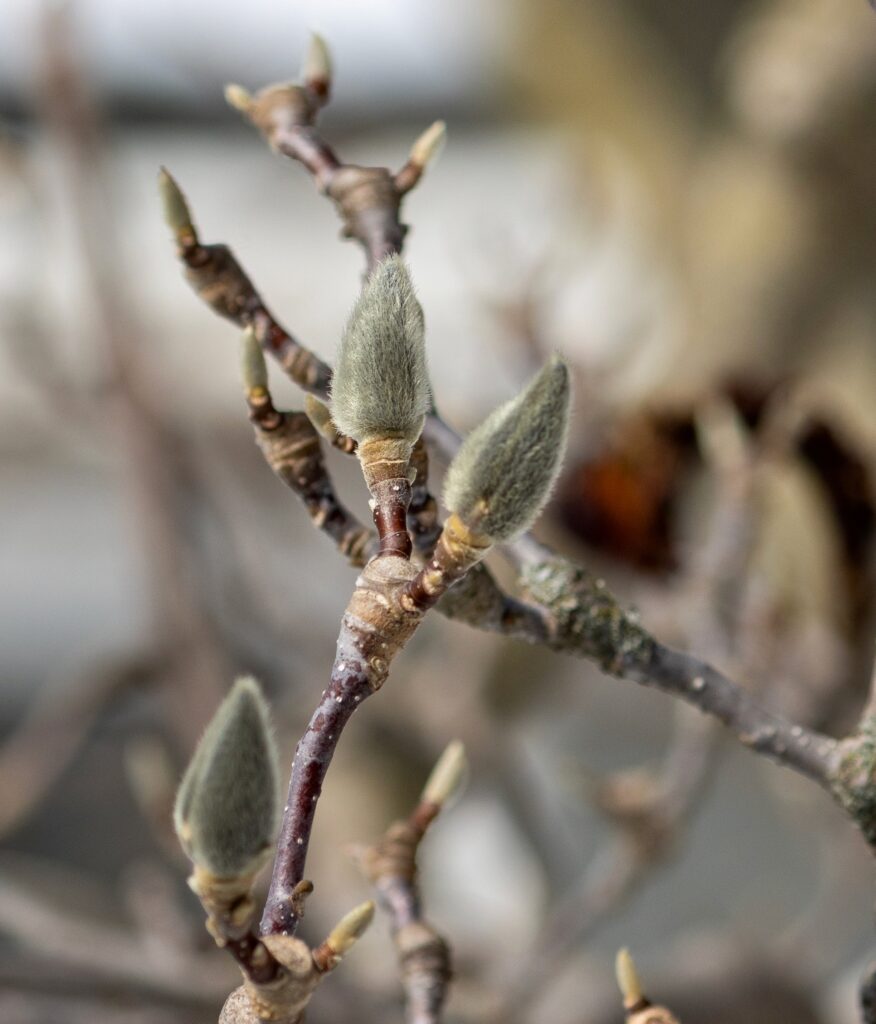
Magnolia buds are expanding.
Harris Park
On sunny afternoons, Harris Park beckons for even a short walk. Canada Geese are ever present.


We usually encounter wintering ducks diving in the river. A Redhead was a particularly happy sighting.
Below: Common Merganser (male), Redhead, Common Goldeneye (female), Common Goldeneye (male, two photos), Common Goldeneye (female) with Common Merganser (female), Hooded Merganser pair.


A Herring Gull, larger than the Ring-billed Gulls we usually see. Mourning Doves perch nearby, then visit the feeders on the apartment building. The male House Finch was singing from it’s perch on the feeder with the female below.


Cambridge Butterfly Conservatory
The conservatory hosts a variety tropical insects as well as butterflies. During our visit, we encountered this one scurrying across the floor. It is probably a Giant Cave Cockroach, not yet full grown.


Darkling Beetles were on display. These beetles are active at night, mainly in deserts and forests where they feed on decaying leaves, rotting wood, and fresh plant matter. There are many species of darkling beetles. The larval stage of the beetles is the mealworm. The mealworms of some species of darkling beetles are used as a high-protein food for birds, other domestic animals, and even humans.


Birds!
We were surprized and delighted to find a variety of tropical birds flying free in the conservatory. While there are concerns and challenges in keeping tropical birds in captivity, the space, care, and continuity provided by the conservatory appear to address many of them.
Green-cheeked Conure (Parakeet)


Chinese Painted Quail


A variety of tropical sparrows, finches and canaries landed in the trees and vines and visited the feeders.
Java Sparrow


Senegal Firefinch, Domestic Canary and Blue-capped Cordon Bleu


Society Finches


Orange-breasted Waxbill


Zebra Finch


Speaking of tropical plants…
…our orchids are still going strong.


Beautiful and Gentle Songs from Foxes and Fossiles
I enjoyed sampling other songs by F&F when compiling this playlist.