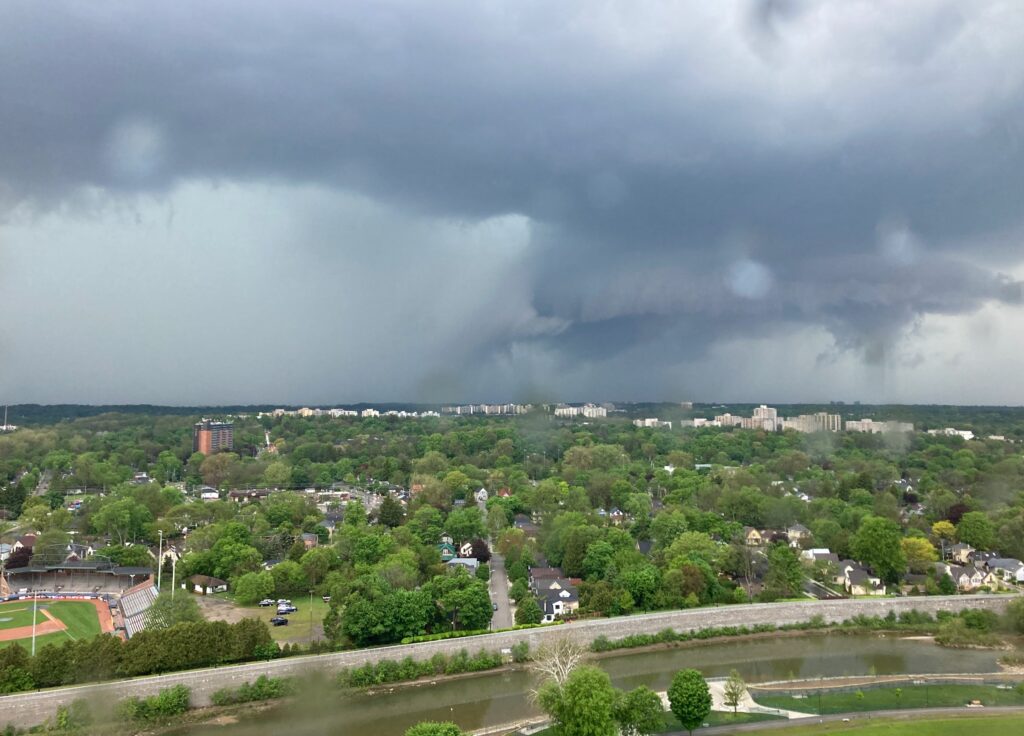
We have experienced wide fluctuations in weather over the past week. Heat and humidity warnings have been followed by plunges in temperature into the low teens and below. High winds and rapidly falling temperatures brought heavy rain and tornado warnings.
Hazy skies


Storm clouds gathering, tornado warning in effect…
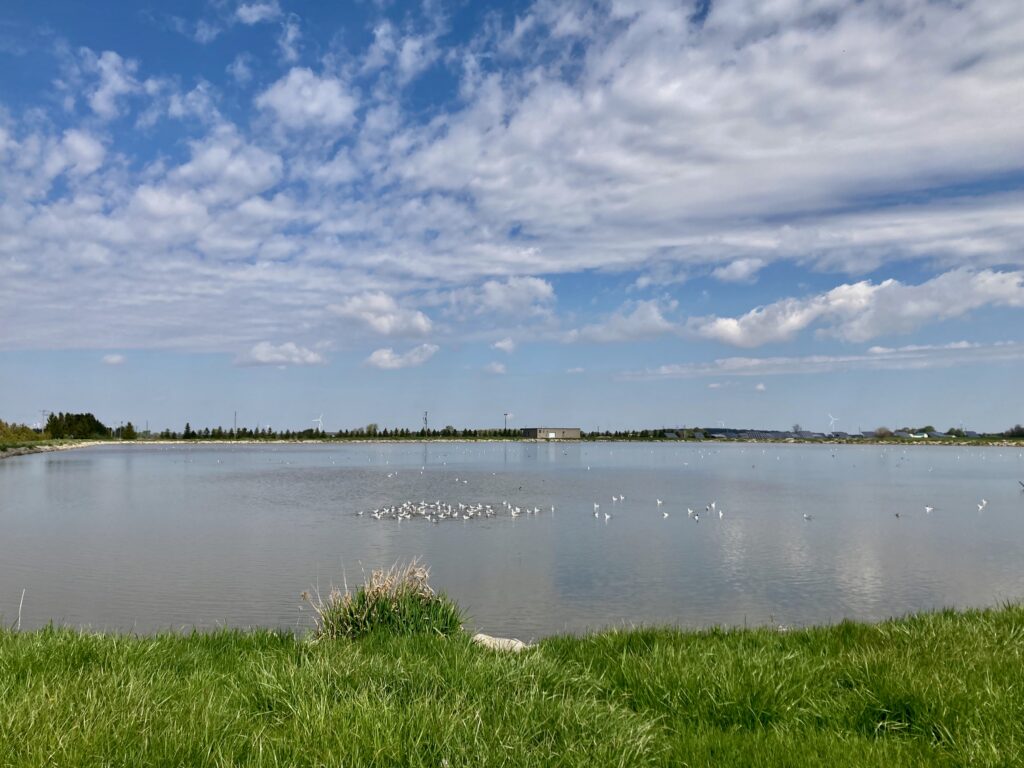
Blenheim Sewage Lagoons
Sewage lagoons are birding hotspots that attract migrating gulls, waterfowl, and shorebirds. The high levels of organic waste in the settlement ponds promote the growth of aquatic invertebrates, a calorie-rich food for birds. Ponds with mudflats or shallow water provide foraging habitat for wading birds and sandpipers. There is year-round open water for birds because the treatment process keeps water in the lagoons warmer all year. Sewage lagoons are typically fenced off and located away from human development, providing a safe haven for migrating birds. We had to apply for a permit to enter the locked gate at the Blenheim lagoons.
When we arrived, there was a flock of Bonaparte’s Gulls on one of the ponds. They were in mid-migration, on their way to breed in the marshy areas of the boreal forest.
Photos from right to left: Gulls on the water; a Ring-billed Gull flying over two Bonaparte’s Gulls; adult Bonaparte in breeding plumage; adult Bonaparte , perhaps transitioning to breeding plumage.


As we watched, the gulls coalesced and began to circle. Online sources indicate that this is a cooperative foraging strategy. Continuous circling helps to bring prey such as small fish and insects to the surface and makes them more easily accessible.
As we watched the gulls, a flock of circling and weaving shorebirds appeared overhead, sometimes moving together, sometimes breaking apart. What were they???


A flock of Dunlin!


These birds are long-distance migrants, on their way from the coastal regions of the United States to their nesting grounds in the subarctic and high arctic.
They forage for invertebrates in water that is less than 2 inches (5 cm) deep.
We found them foraging in the shallow ponds of the sewage treatment facility. We kept our distance to avoid flushing the birds. The distance and haze from the water made for misty photos.
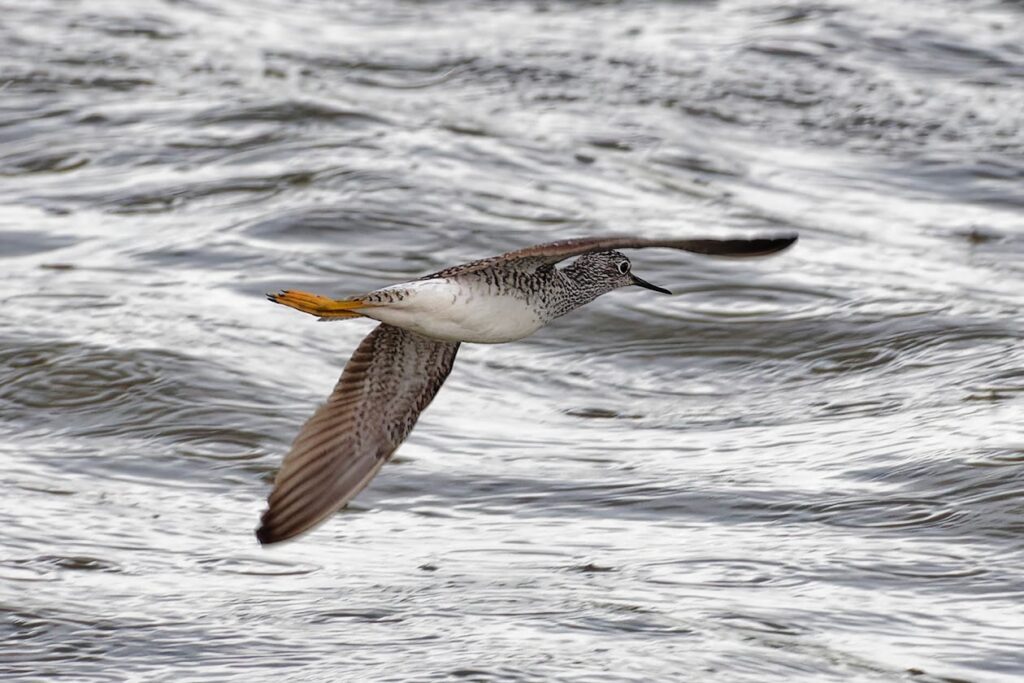
A bonus was finding Lesser Yellowlegs and Wilson’s Phalaropes in the shallow ponds with the Dunlin.


In a kind of role reversal, female Wilson’s Phalaropes are more colourful than the males. Once they’ve laid their eggs, the female leaves the male to raise the young by himself while she looks for other males to mate with.
Below: Female Wilson’s Phalarope in the background on the left, male Wilson’s Phalarope on the right.


Yellowlegs forage in slightly deeper water and tolerate people somewhat closer to them.


We returned the next day to explore a far pond we hadn’t made it to on our first visit. There, we expected to find a few more migrating waterfowl in addition to the Lesser Scaup, Bufflehead, Ring-billed and Ruddy Ducks we had seen. We also wanted to look for the Pectoral Sandpiper we hadn’t noticed on our first visit.
Unfortunately, the skies opened up just as we arrived. Fortunately, we were with our friend who is an accomplished birder and photographer. She managed to take a few distant shots of the Pectoral Sandpiper, (that was accompanied by a Lesser Yellowlegs, on the left) before heavier rain set in.


Here, for your viewing pleasure, is our friend’s superb Lesser Yellowlegs photo.
The lagoons also attract several species of swallows that sweep above the surface of the pond harvesting insects. The swallows perch on the overhead wires along the road.
Left: Bank Swallow, Cliff Swallow & Tree Swallow
Top right: Barn Swallow, Bank Swallow, Cliff Swallow & Bank Swallow
Bottom right: Bank Swallows


Sometimes, the Tree Swallows gathered in the willow tree across the road. They investigated the hole in the tree trunk, but it proved to be too shallow for a nest.


In the grassy field and along the the ponds, we had other happy sightings of birds that are likely to nest in the area – Brown-headed Cowbirds, a pair of Bobolinks, and a Savannah Sparrow that sang lustily.


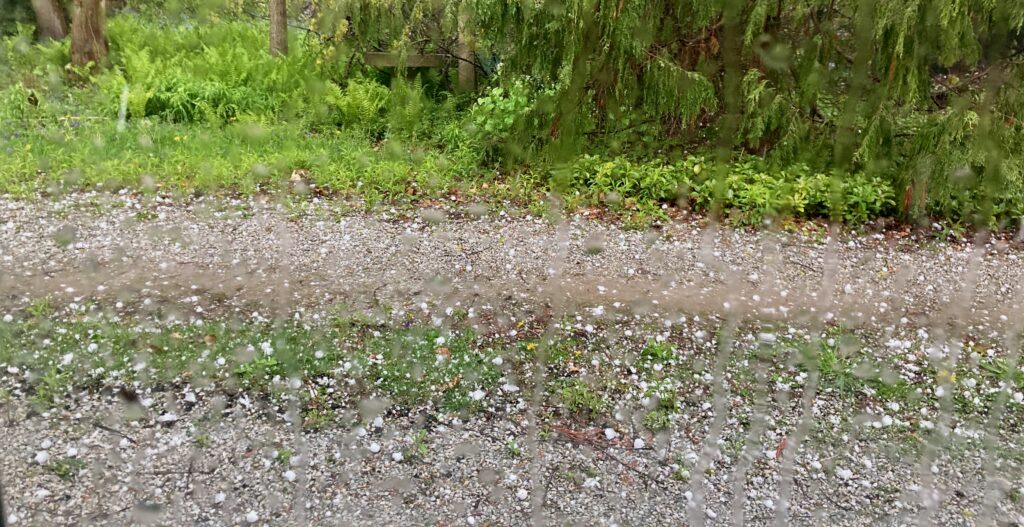
When we were safely back in our lodgings, rain poured down followed by several minutes of large, mothball-sized hail that left a few dimples in our vehicle. The sun returned the following day, so we were happy!
Osprey Update
We are watching expectantly as we are now in the 35- to 43-day incubation period for Osprey eggs. We have seen no evidence of feeding young in the nest. The only change we have noticed so far is that the male has started to perch on the nest beside the female from time to time, as if staying close by her.
We continue to see the male deliver fish to the nest. We sometimes see that he arrives with a whole fish. The female remains settled in the nest and shows no interest in the fish. After a few seconds, the male flies off to behead the fish before bringing it back to the female on the nest.
I felt like some Mamas and Papas
Sadly, the only videos of the original artists featured lip-syncing or poor audio. Luckily, some of my favourite performers do great cover versions.