Last week, smoke from the far north wildfires decended on London and much of Southern Ontario. We spent time away from London, but not far enough to avoid the smoke. With the air quality in the extremely high risk range (10+), we stayed indoors in air conditioned comfort for the duration. After two heavy downpours earlier this week, the air is now clear.


In the neighbourhood
Here are a few photos from our neighbourhood walks in June and July.
We saw this Northern Map Turtle just off the path in Harris Park. Its size suggested it was a female, possibly attempting to nest. In June through July, Map turtles dig nests 10 to 16 cm deep. About nine to 17 eggs are laid and hatch after 50 to 70 days, emerging in late summer, or sometimes remain in the nest through the winter.
Map turtles are a species of special concern in Ontario and Canada. We were concerned about how vulnerable this turtle and a potential nest were in this location. We took photos and submitted a report to to the Upper Thames Talbot Conservation Authority. These reports go directly to the Southern Ontario At Risk Reptiles (SOARR) team who rescue the eggs, incubate them, and release the young back into their natural habitat.


At this time of year, parks and city properties are overrun with grazing Canada Geese.


Red-winged Blackbirds take advantage of the lamposts along the river path to broadcast their songs and calls.


Female Red-winged Blackbirds, or possibly juvenile/immature birds


Along the river, Mallards are still tending their broods.


Kildeer breed along the river every year. Now that the young have fledged, there are small flocks foraging the shallows of the river and calling noisily.


Shorebirds are early “fall” migrants, some leaving their northern breeding grounds in late June to early July. We saw our first Greater Yellowlegs on the river on July 12.


Male Northern Cardinals are still singing.


Although there are many Northern Cardinals in the neighbourhood, we have never seen their nests or fledglings. When we were away, we were fortunate to see two fledgling cardinals (with their parents nearby) through a window.


Also through the glass, we spotted this Blue Jay drinking water from a toy dump truck at the end of the back garden.


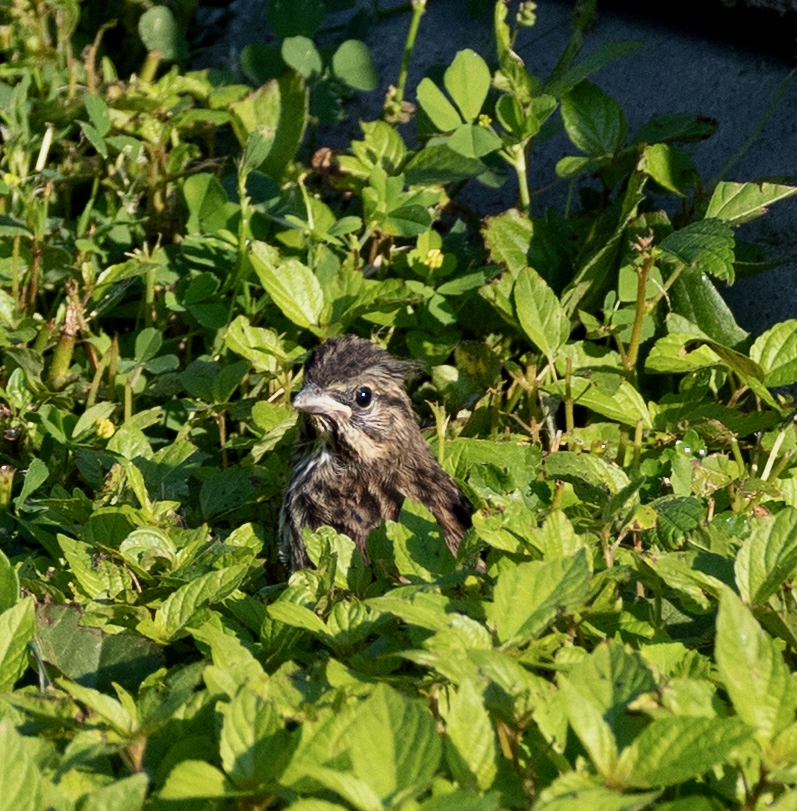
On one neighbourhood walk, we noticed this fledgling sparrow in the grass beside the path. We had seen a Chipping Sparrow nearby and thought this might be its young. Then we saw a Song Sparrow carrying food and decided that this was more likely a young Song Sparrow.


In a neighbourhood close to the river, we heard the distinctive chittering of Chimey Swifts overhead. We were happy to catch sight of a small flock flying low enough for a few recognizable photos. You can see why these birds are sometimes referred to as “flying cigars”.


Depending on the weather, Chimney Swifts typically fly at 20 to 150 metres (65 to 500 feet) high as they forage for airborne insects throughout the day. As sunset approaches, the swifts descend to roost in chimneys overnight.
Sometimes young birds seem unaware of danger. As we walked the road into Harris Park, a Gray Catbird landed in front of us and remained there peering at us for several seconds before hopping into the undergrowth.


On our walks, we encounter a variety of native and introduced wildflowers and shrubs in the parks and neighborhood pollinator gardens.
Crown Vetch (introduced; 2 photos), Common Motherwort (introduced), Common Milkweed, Ninebark, Butterfly Milkweed, Queen Anne’s Lace (introduced), Great Mullein (introduced).


With blossoms come insects, often the pollinators that are vital to supporting food production, habitats and ecosystems.
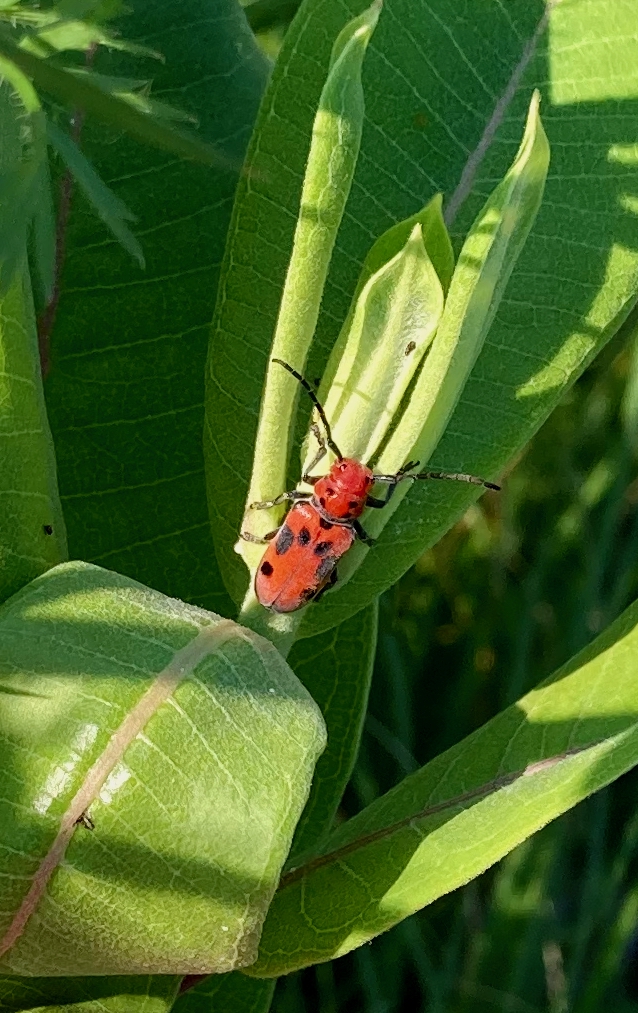
Cellophane Bee, Red Milkweed Beetle, Bicolored Striped Sweat Bee


Sometimes, we are amazed by the amount of pollen a bee can accumulate!


We sometimes stop by Eldon House to see what’s in bloom. This time, it was Sweet Peas.


Wandering Bee Sunflowers…
…and the vestiges of an old bouquet.


Exciting Osprey News!!!
We have been closely watching family life on the nest. There has been much flapping by the older of the two offspring as it works to strengthen its flight muscles. At times, it has lifted above the nest for several seconds. Still, it was a surprize yesterday for us to find the youngster perched on the light tower beside the nest. Fledging happens so unexpectedly!
For now, the young bird will remain close to the nest and dependent on the fish delivered more and more often by the diligent male Osprey. The younger sibling is flapping and may not be too far behind.
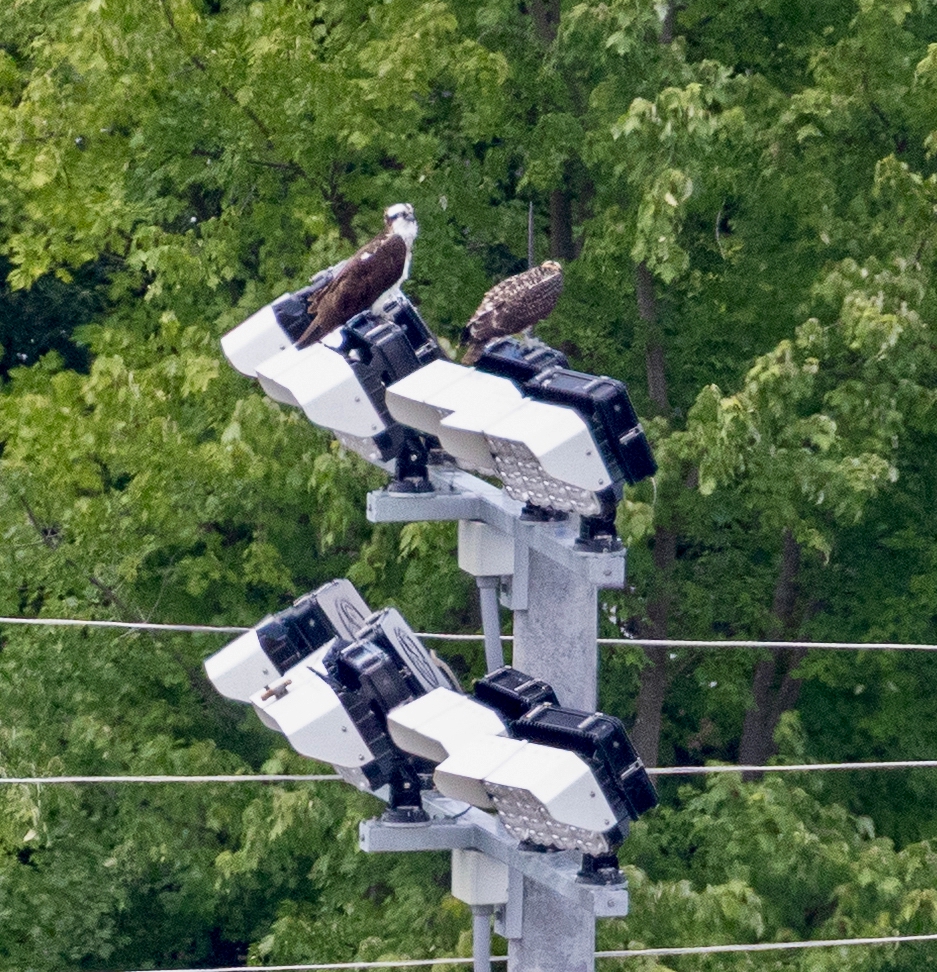
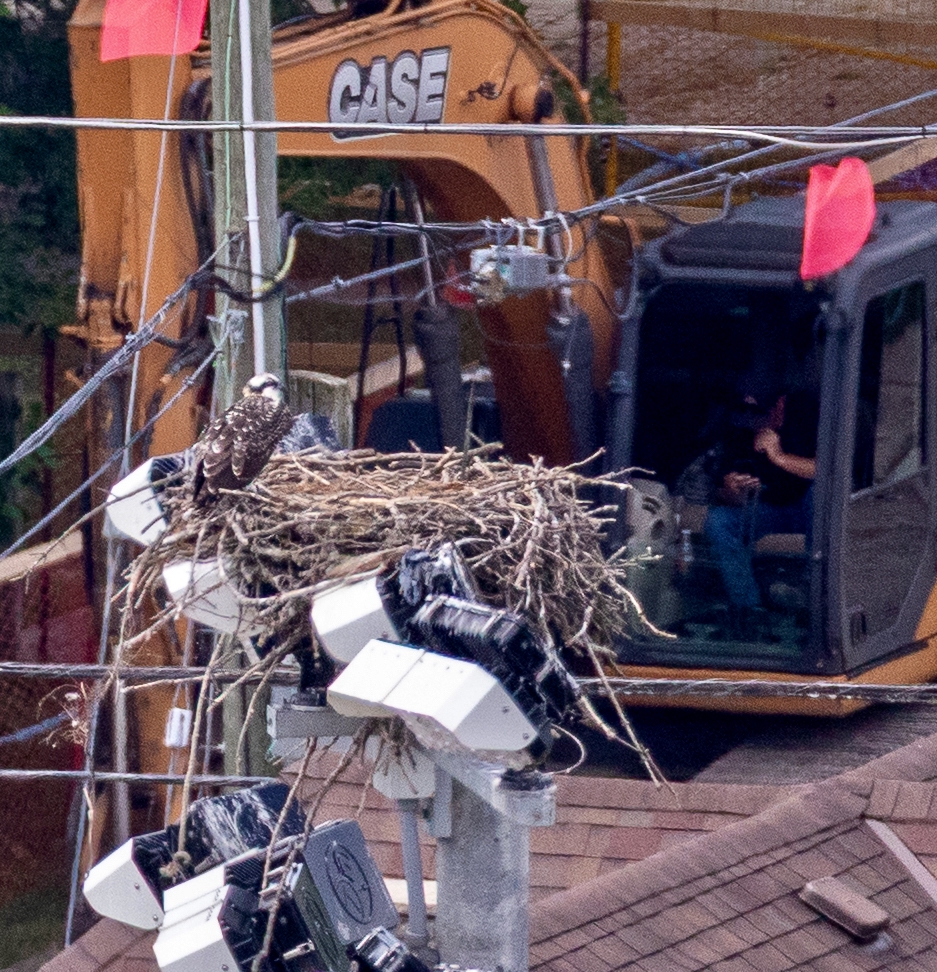
Alpha and mom on stadium lights beside the nest. Beta still on the nest, perhaps taking in the neighbourhood construction project.

There are two videos for us to process. You will see them before too long!
On a beautiful sunny day, Jimmy Buffet
