Author: New Admin

  • Port Stanley Sewage Lagoons & Solitude Nature Reserve – April 30, 2026

    Port Stanley Sewage Lagoons & Solitude Nature Reserve – April 30, 2026

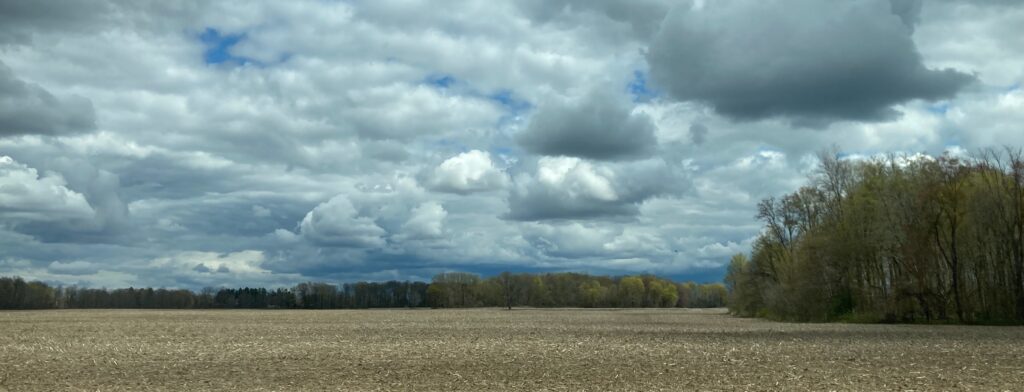
    Warmer spring weather has been slow to arrive. There have been overnight frost warnings with temperatures rising slowly through the day. The skies are often overcast and stormy.

    Still, there are some sunny days and temperatures are gradually creeping up. We hope that convinces the birds to continue their journeys north!

    The canopy is a little greener every week:

    Port Stanley Sewage Lagoons – April 30

    April 30 brought a brisk, cold wind. The temperature was below 10 C, but the sun occasionally broke through the clouds to bring some warmth.

    Port Stanley lies south of London, on the shore of Lake Erie in Elgin County. The sewage lagoons at Port Stanley were created in 1973 to naturally treat, store and dispose of wastewater. Following the construction of a new water treatment facility in 2017, two of the four lagoons were restored to wetlands. Lands adjacent to the lagoons were naturalized through the planting of 5,400 native trees and shrubs and the establishment of five acres of tallgrass prairie.

    Original lagoon on the left and restored wetland on the right.

    The lagoons attract shorebirds and waterfowl during during the spring and fall migrations. Although many waterfowl have already moved north, we found a variety of late migrators in the ponds.

    There are hides for viewing each set of lagoons. Most of the ducks were far away, but Glenn’s long lens captured a few.

    There were a good number of Ruddy Ducks resting in one pond where many Ring-necked Ducks and Buffleheads were diving far from shore.

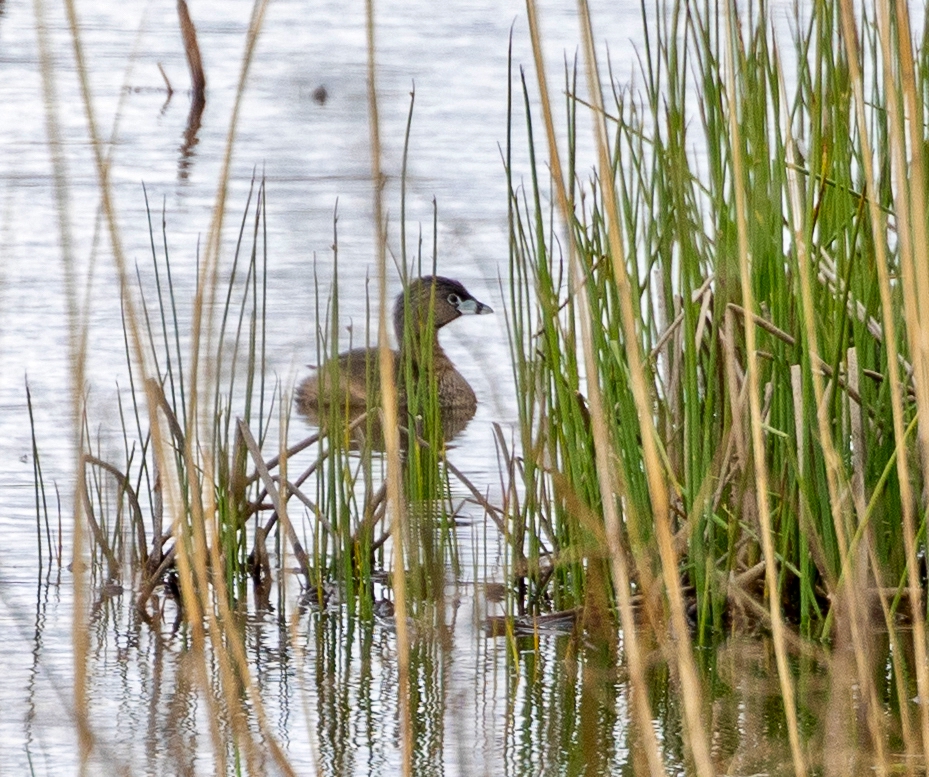
    Below: a pair of Gadwalls and a Ring-necked Duck beside two Canada Geese; a pair of Ring-necked Ducks and two American Coots in front; a Pied-billed Grebe in the grasses.

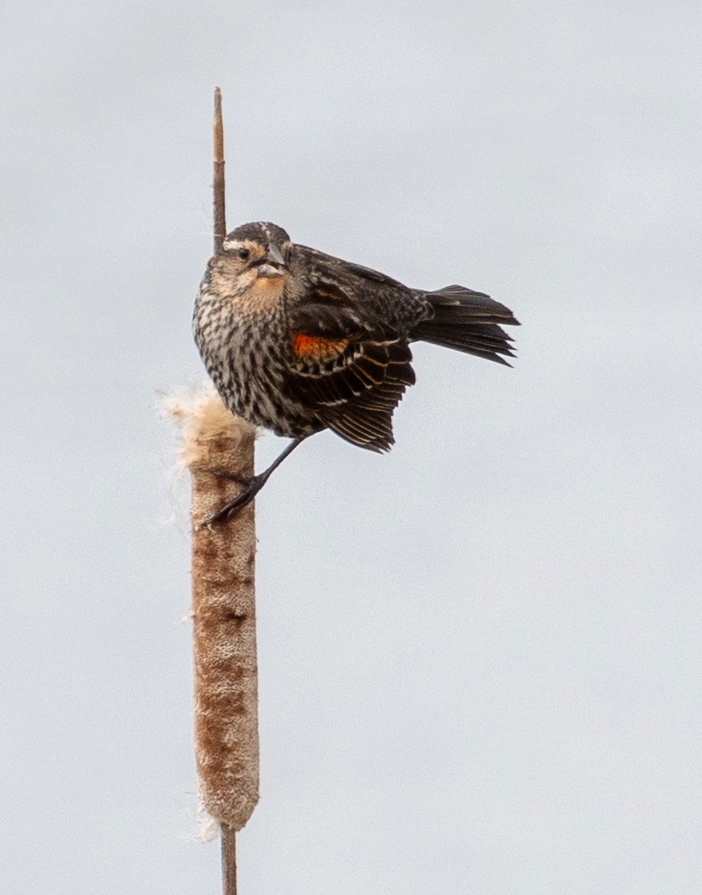
    Red-winged Blackbirds trilled from the cattails. Below is a first-year male with red-orange epaulets, not yet in mature/breeding plumage.

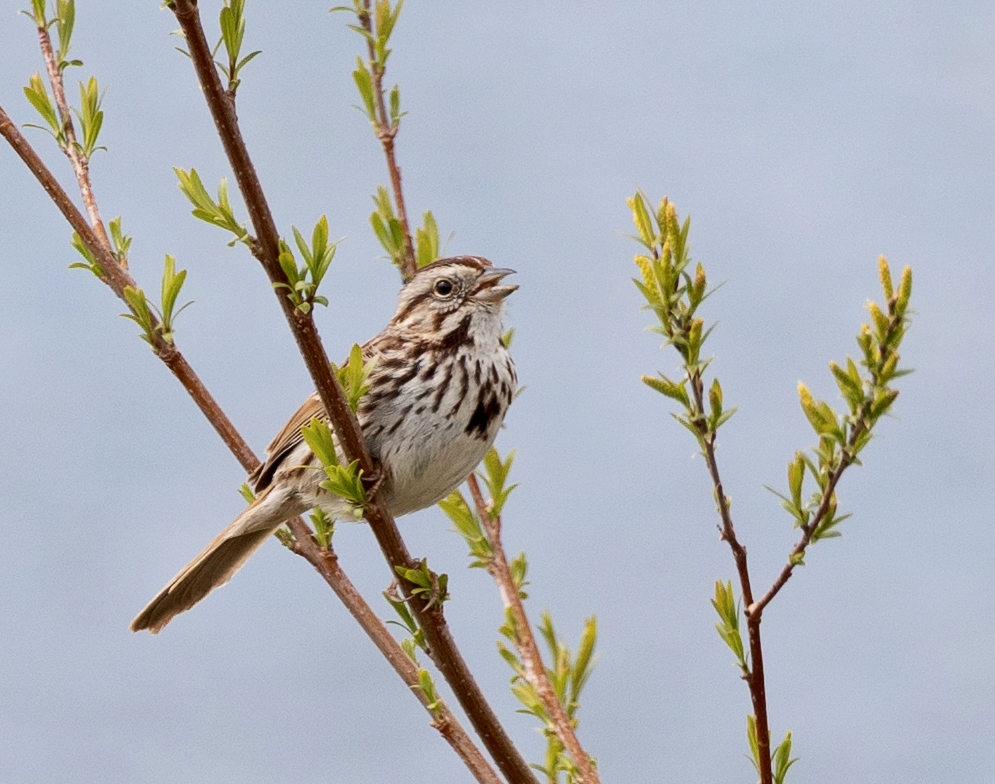
    Song Sparrows were also singing.

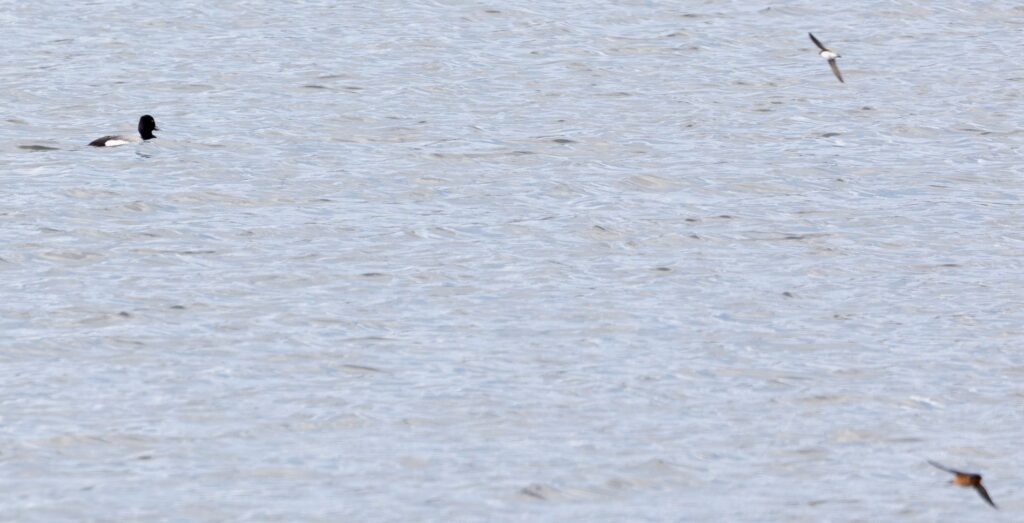
    Barn Swallows (bottom right) and Tree Swallows (top right) skimmed close to the water, scooping up whatever insects they could find.

    Tree Swallows vied for a spot atop a nearby pole.

    Solitude Nature Reserve

    Also in Elgin County, Solitude Nature Reserve is a small woodlot with trails and boardwalks through wet woods and around a constructed pond.

    There were robins and cardinals in abundance and signs of a Pileated Woodpecker at work. A Yellow-bellied Sapsucker drummed, but we could not locate it. There were few other spring migrants in evidence. We didn’t hear or see Wood Thrushes or Hermit Thrushes as we had previously at this time of year.

    We missed seeing the earliest spring flowers in bloom, but there was still much to see.

    Trilliums were in full glory.

    Phytoplasma is an organism that infects trilliums, causing green stripes in petals and distortion of the leaves. As the disease progresses over the years, it causes sterility, severe distortion, and eventually kills the plant.

    Several plants were affected by this organism.

    Marsh Marigolds and Skunk Cabbage flourish in the wet places.

    We were almost too late to see Trout Lilies in bloom. Most had gone to seed, but we did find a few blossoms.

    Jack-in-the-Pulpit

    Virginia Spring Beauty

    Long-spurred Violet

    Purple Cress

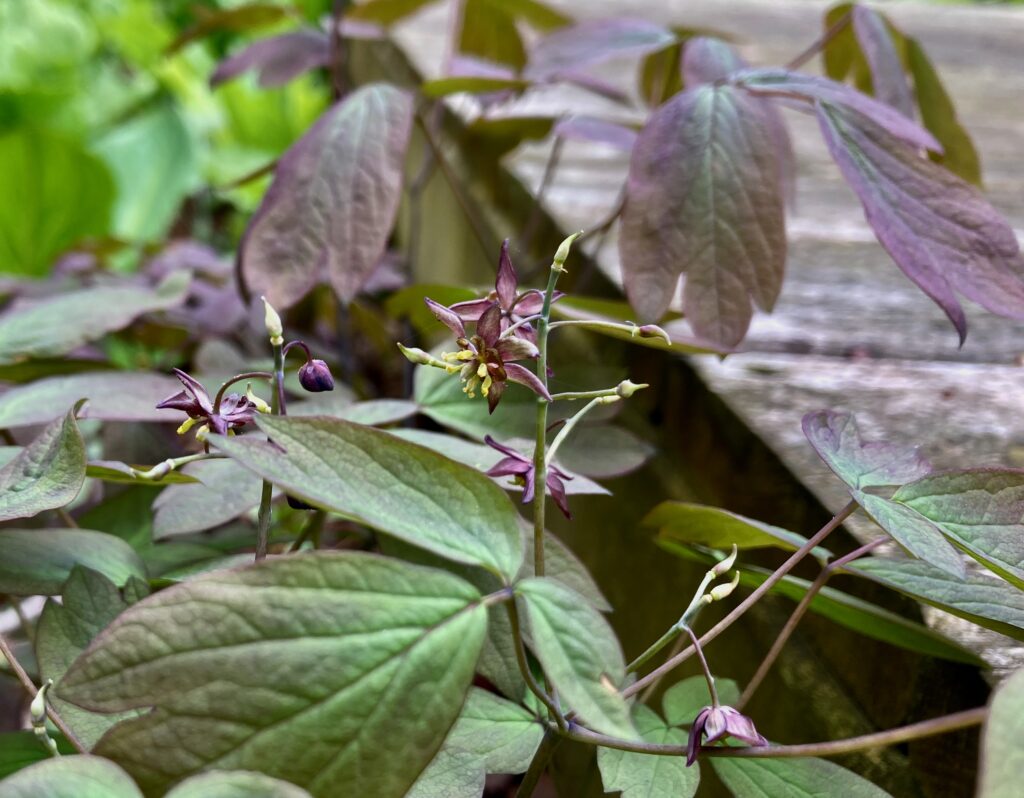
    Early Blue Cohosh

    Christmas Fern

    The damp wood was host to mosses and fungi.

    Osprey Update

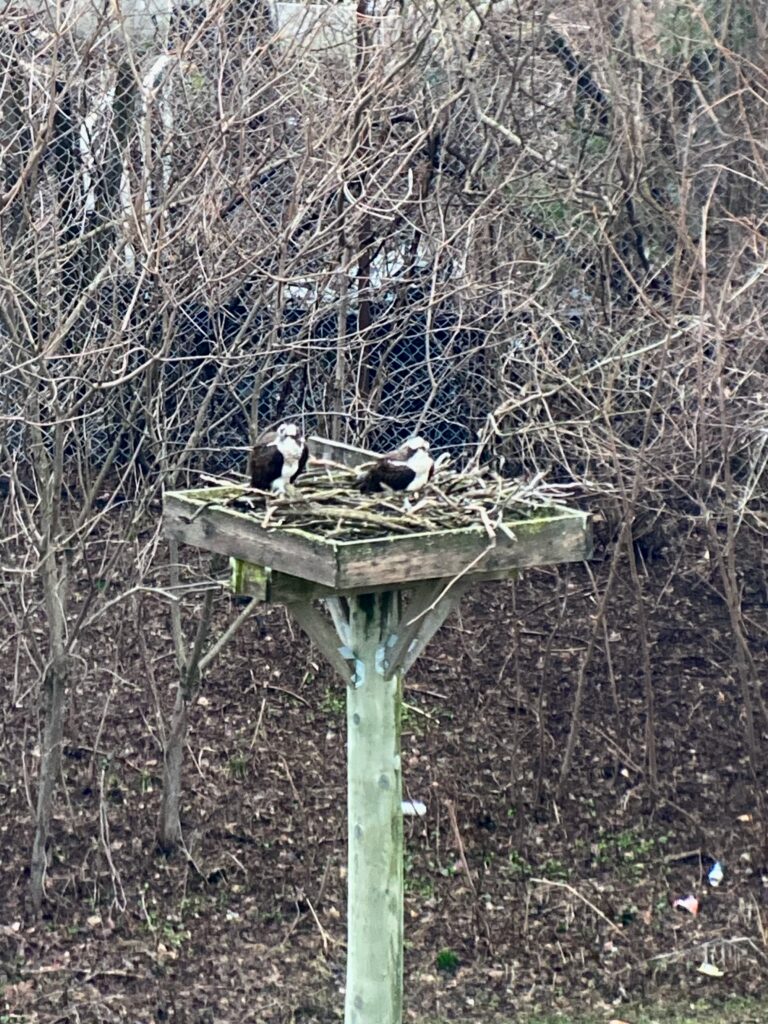
    All is well with our Osprey pair despite the rain and cold and nearby bridge reconstruction. The female remains steadfastly on the nest, except when she accepts a fish delivery and takes it away for a quiet meal. We have observed the male land on the nest with a fish, as if to reassure his partner that food is on its way. He then flies off to devour the head of the fish before delivering it back to the nest. When the female flies off with his offering, he settles down into the nest to take on incubation duties. When the female is on the nest, we often see the male standing guard on the low platform or in a large tree nearby.

    Fading tulips…

    Late Night Skits about First Drafts

    I found this idea too dark for May. I scrapped this idea in favour of…

    Joyful Pop Songs

    I can’t remember if I shared this playlist before. I love all the songs and these versions of the songs.

  • The Coves – April 24, 2026

    The Coves – April 24, 2026

    The temperature continues to swing as spring gradually unfolds. The canopy is noticeably greener.

    Around town and in the parks, trees are in bloom.

    Cherry and serviceberry in Harris Park and magnolia at Eldon House .

    The Coves Environmentally Significant Area

    The day was sunny, perfect for a visit to the Coves.

    We found this handsome Great Blue Heron wading in a watery ditch.

    The paths along the east pond are lined with Wild Garlic. Foraging in nature reserves is not permitted.

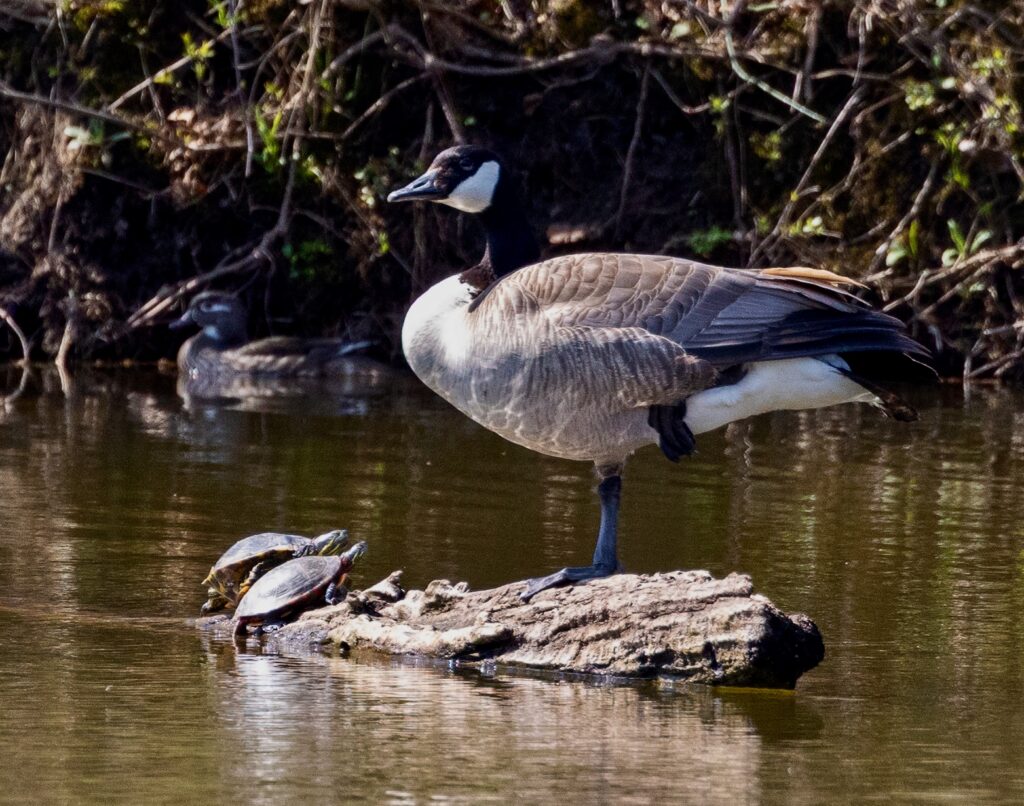
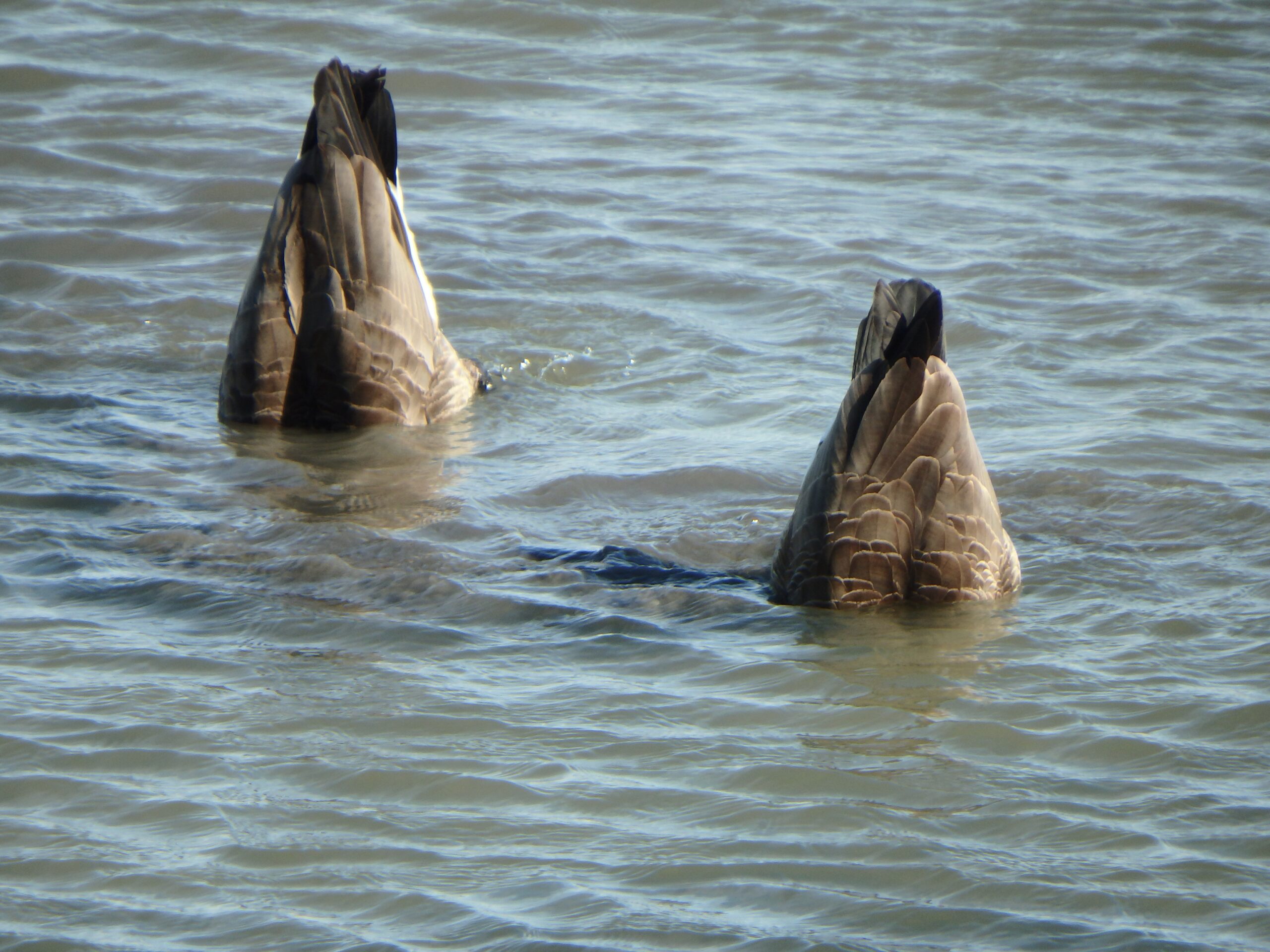
    Canada Geese populate the ponds, as do Midland Painted Turtles and Red-eared Sliders. Red-eared Sliders are native to the Mississippi River waterways. They have become invasive in Canada, at least in part because they are sold as pets that are then released as they grow too large.

    Below, a Red-eared Slider shares the log with a Painted Turtle (on the right) and a Canada Goose. A female Wood Duck is passing along the shore behind them.

    One goose was lining its nest with feathers plucked from its body.

    A Redbud tree in bud.

    American Golden Saxifrage and Swamp Dock growing in shallow water.

    A vernal pond farther inland was full of life. Vernal ponds are described as temporary wetlands found in forests that often dry up in the summer. These provide critical breeding sites for frogs and salamanders because the ponds do not support a fish population (predators of frog and salamander eggs and young).

    Keeping their distance at the back of the pond was a pair of Wood Ducks.

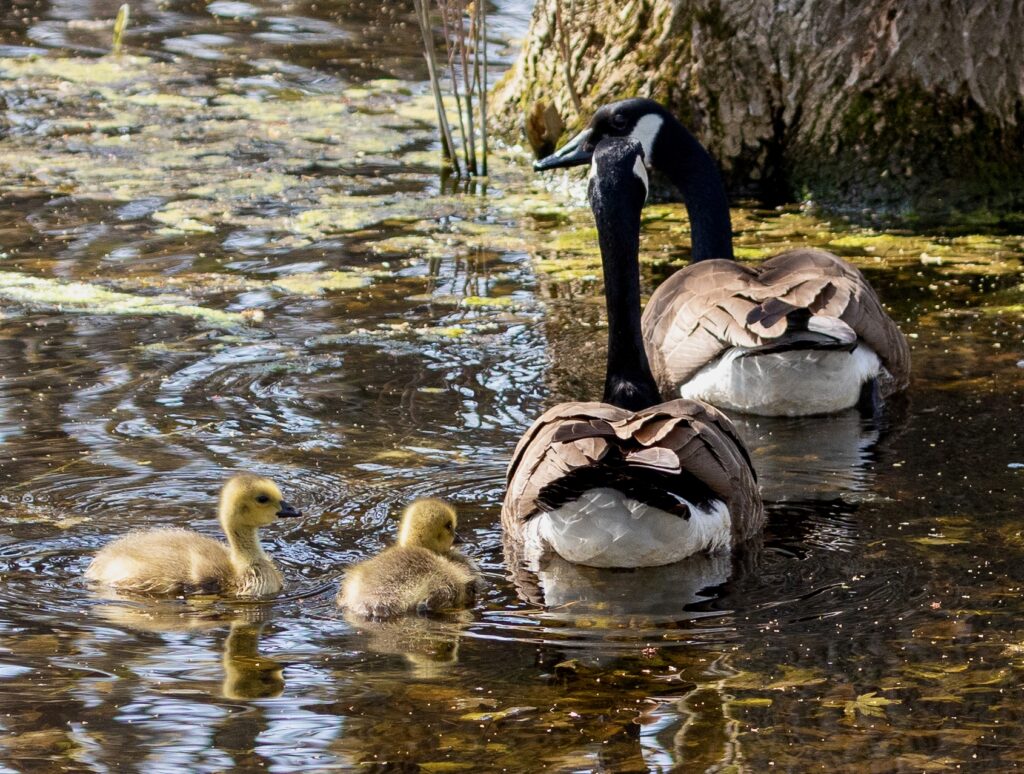
    We saw our first goslings of the season, accompanied by their parents.

    There was much bird activity in this area.

    A Song Sparrow sang from a snag. A female Brown-headed Cowbird sculked in the undergrowth, prospecting for other birds’ nests in which to lay her eggs.

    A Common Grackle repeatedly dove at an American Crow and eventually drove it away. We also saw our first female Red-winged Blackbird of the season.

    These two Northern Cardinals were snacking on the blossoms of a Norway Maple tree.

    An Eastern Gray Squirrel and White-throated Sparrows foraged on the ground, as did a lone Field Sparrow (note the pink bill, eye-ring and rusty cap) and an American Robin.

    Tulips…

    …from Wandering Bee.

    Recent Clark Family Videos

    Every so often I view the growth of the kids as musicians.

  • April 2026

    April 2026

    Be careful what you wish for…

    In our last post, we lamented the humidity and sudden rise in tempertures into the mid-20s Celsius. We wished for cooler temperatures and our wish was granted!

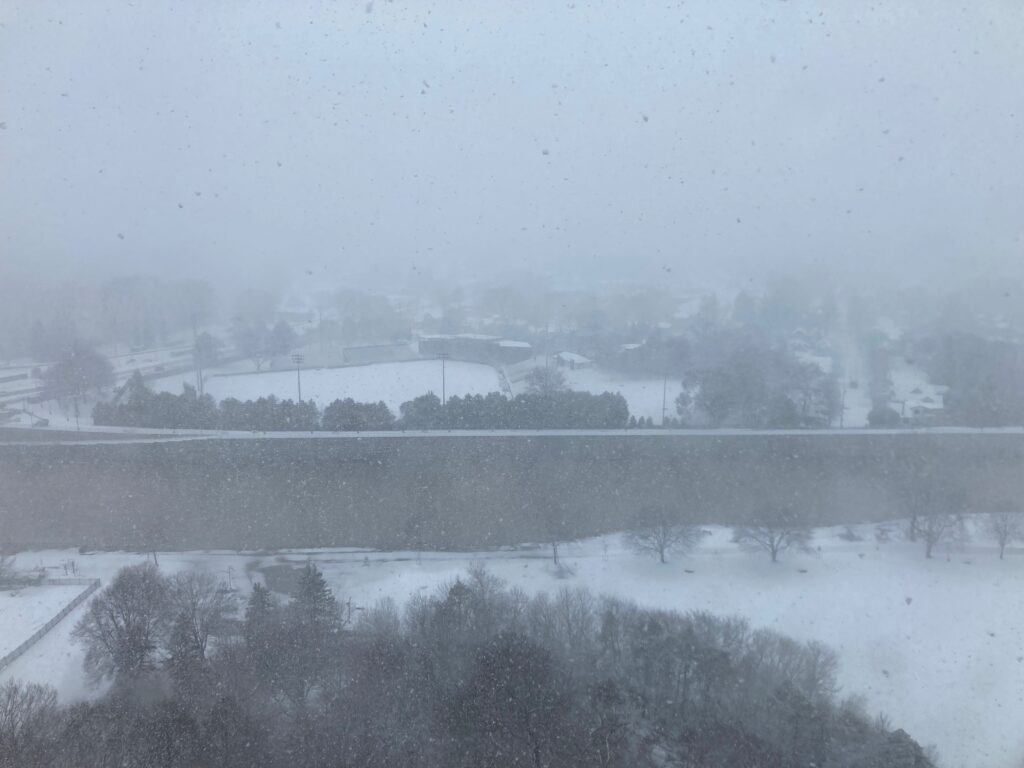
    Temperatures plummeted and strong winds brought frequent snow flurries and rain.

    Variable weather as spring arrives. More recently, temperatures are slowly rising.

    Neighbourhood signs of spring

    The few warmer days have brought the magnolia trees and spring flowers into bloom in the gardens at Eldon House.

    Kilally Meadows Environmentally Significant Area

    Wednesday was sunny with temperatures in the mid-teens. We could only get out briefly in the afternoon to walk the trails.

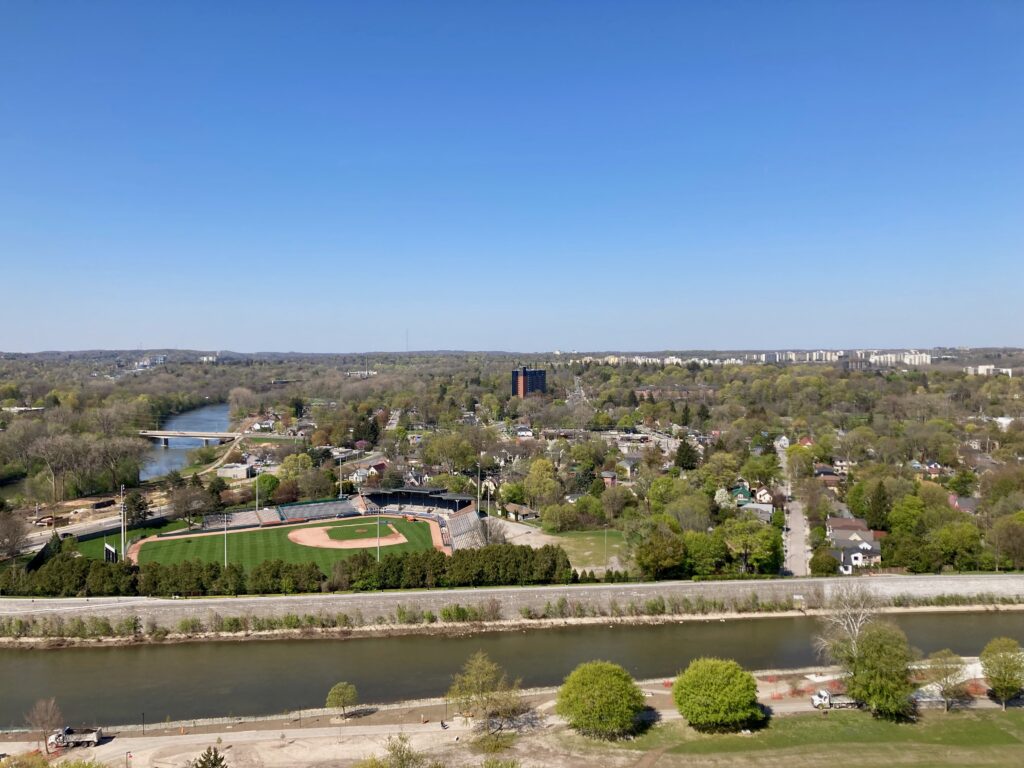
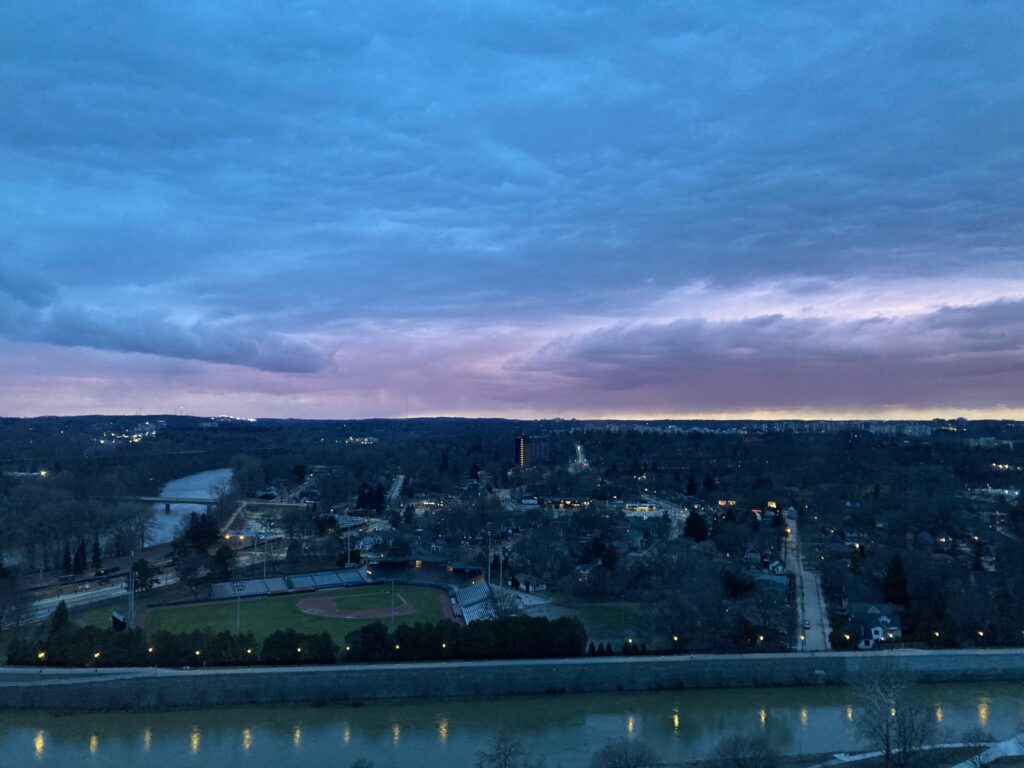
    As we exited the car, we heard Ospreys calling. There was one Osprey on a nest in the nearby ballpark and three Ospreys in the sky. The male was chasing off intruders. The Osprey on the nest stood the whole time. The nest occupants don’t seem to be incubating eggs yet.

    Northern Cardinals were in full voice throughout the park. Turkey Vultures soared overhead. We watched a Ruby-crowned Kinglet perform acobatics as it foraged in a tangle of branches. We did not spot any of the early-arriving warblers that had been seen early in the day.

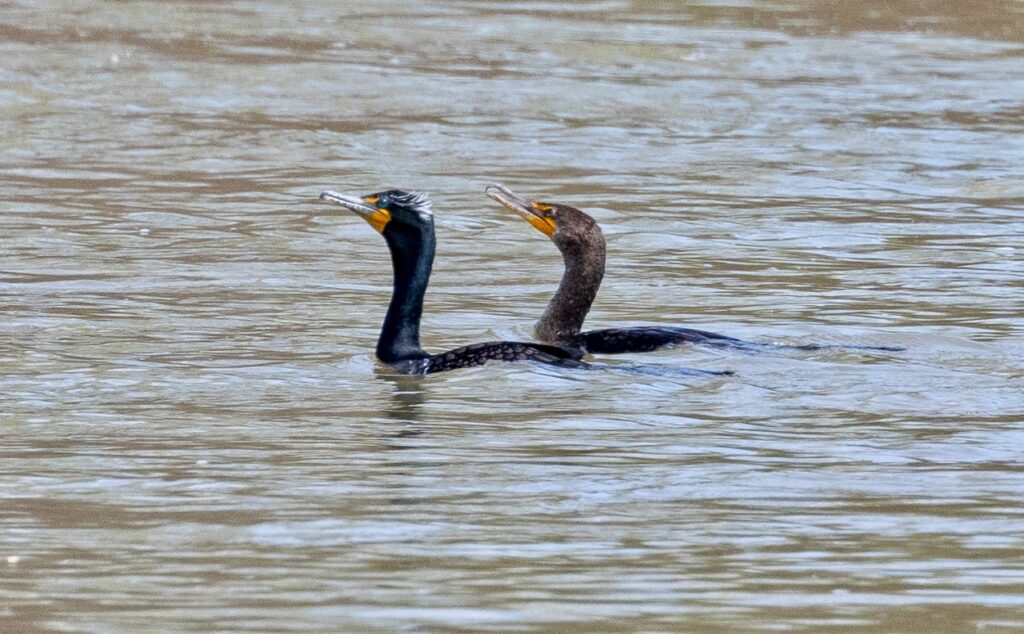
    The Thames was running high and very fast. At a bend in the river, where the water was calmer, we found two Double-crested Cormorants diving and a pair of Mallards.

    Adult in breeding plumage with white crest, accompanied by a juvenile Double-crested Cormorant

    A dragonfly landed by the path near the water – a Common Green Darner. It didn’t move after landing. We saw in the photos that it was missing most of one wing…

    There were interesting beetles on the the sunny paths – a Six-spotted Tiger Beetle and an Oil Beetle

    There were few plants in bloom. One, Bloodroot, is a native wildflower. The other, Lesser Celandine, is an introduced plant that is both poisonous to grazing animals and highly invasive. It forms dense, mat-like monocultures that smother native spring wildflowers like Bloodroot. 

    Osprey Update!

    We missed putting an update in our last post. There is much to report! Our Osprey pair settled into life in the ballpark without delay. They spent time together on the low platform, often sitting side by side. The male reliably delivered fish to the female. On one occasion, the fish delivery was followed by a brief episode of mating. No doubt there were other episodes that we failed to witness.

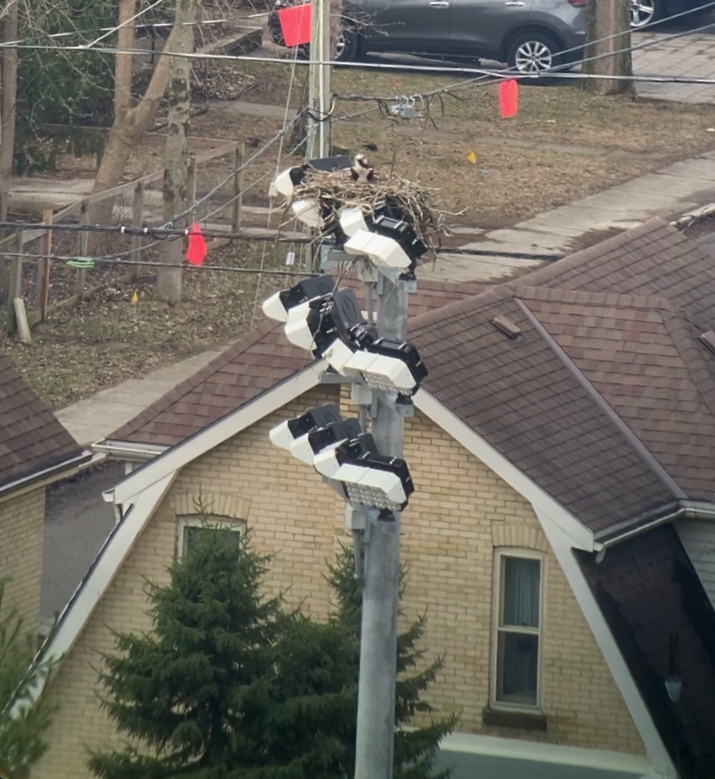
    Both Ospreys added sticks to the nest on the stadium light tower and the female began spending more time there. Since April 14, she has been sitting low in the nest, day and night, through rain and snow. This is a good indication that she is sitting on at least one egg!

    According to https://avianreport.com/osprey-breeding/, incubation takes between 35 and 43 days, with an average time of 39 days. This means that we will be looking for signs of new life on the nest sometime in late May. The male has been a faithful protector, staying nearby much of the time on the low platform or perched in a nearby tree in the windy weather.

    One day, our video showed the male landing on the nest with a fish – a koi, a released fish that now breeds in a nearby pond. The male was immediately followed by another male carrying a fish! The female Osprey rebuffed the intruder. Was he hoping to share his genes? We will never know.

    Thursday morning, we watched as the male arrived at the nest to replace the female. She flew to the low platform for a thorough preening session while the male settled low in the nest. They seem to working well as a pair.

    Poppies from Wandering Bee

    Music! Side 2 of the “White Album” by The Beatles

    I found this in my archives of playlists.

  • Komoka Provincial Park – The Ponds, April 8, 2026

    Komoka Provincial Park – The Ponds, April 8, 2026

    April has brought temperatures surging into the low 20s Celcius accompanied by heavy rains. The warm, humid temperatures have prompted new growth. There is a haze of green appearing in the canopy. We long for cooler spring temperatures!

    Komoka Ponds

    Komoka Provincial Park is just west of London, along the Thames River. The Komoka Ponds, created from old gravel pits, lie beyond the main park. The ponds host a a variety of migrating waterfowl in early spring.

    We were hopeful of seeing Eastern Meadowlarks that are usually found in the grassy flatland, Eastern Bluebirds, and Tree Swallows that inhabit the nesting boxes. On April 8, the forecast was for a high temperature of 8 C, but the brisk wind made it feel much colder.

    As we set out, all was quiet and we began to wonder if there would be much to see. There were no birds on the first pond, but farther along the trail, we spotted small groups of American Wigeons, Ring-necked Ducks, Northern Shovellers, Buffleheads, and Gadwalls. There were also a couple of Mute Swans and a few Canada Geese on the water. All were too far away for good photos.

    We scanned the reeds on the far side of the pond. Staring back at us was a Sandhill Crane! As we watched, the crane repeated its rattling bugle call.

    You can hear the call here:

    https://www.allaboutbirds.org/guide/Sandhill_Crane/sounds

    Before long, a second crane emerged from the reeds and approached the first. Sandhill Cranes sometimes nest in the area, so perhaps this pair will take up residence.

    We had a few other bird sightings, again at a distance too great for good photos. Still these are enough for identification…

    Northern Flicker (Yellow-shafted)

    A pair of American Kestrels that flew along the ponds and landed briefly.

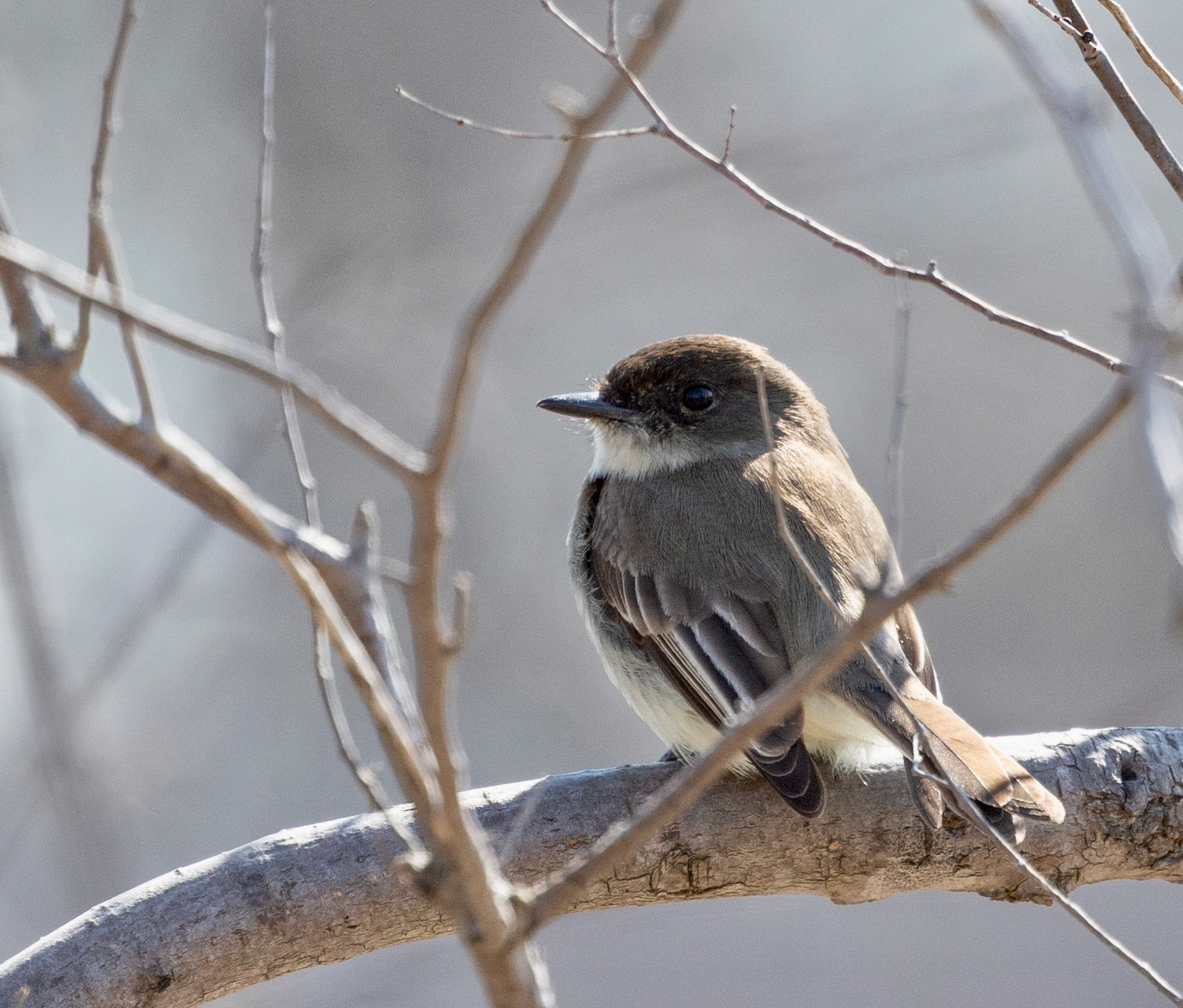
    This Eastern Phoebe was a little closer, but backlit by the sun.

    A small flock of Dark-eyed Juncos (Slate-colored) landed briefly. The Ruby-crowned Kinglet was in constant motion…

    Harris Park – April 10, 2026

    The sun was shining and the day was warmer on April 10th. It was time to look for signs of spring in the neighbourhood!

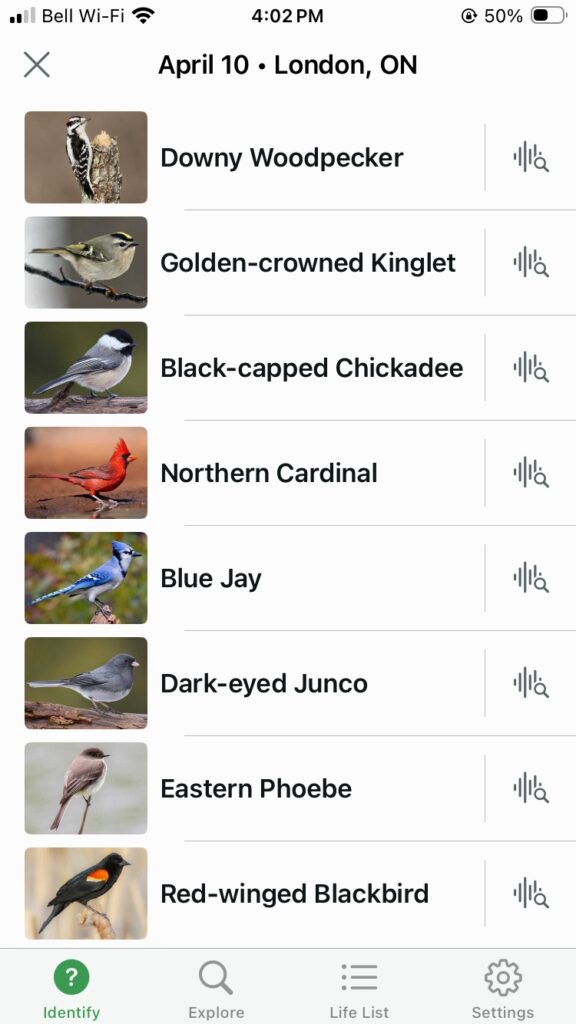
    So many birds were singing during our brief walk along the wooded trail beside the Thames River:

    Screenshot

    We didn’t see them all, but we did see these:

    House Finch (male – two photos), Common Grackle, American Goldfinch (male), American Robin, Mallard (male), Mourning Dove.

    One of the earliest plants to emerge, especially in wet places, is the Skunk Cabbage.

    The scourge of Scilla (aka Siberian Squill)

    Scilla blooms early and adds colour to the early spring landscape.

    Although it may look attractive, Ontario’s Invading Species Awareness Program warns that it can form dense colonies that displace native spring flowering plants in woodlands. The plant was introduced as an ornamental, but easily escapes cultivation. Removal of Scilla requires special handling because of its toxicity. Its  leaves, blooms, bulbs and seeds are all poisonous if consumed by humans, dogs or cats. It’s best to stick to native plants in our gardens.

    Wandering Bee Tulips

    The Music of Rachael Price

    What a voice! I created two playlists because I hit some YouTube restriction.

    https://www.youtube.com/watch?v=1xZxxVlu7BM&list=PLhsgho1ap5iqIcKmiYR0rRXUyh2HvTxf7

    and

    https://www.youtube.com/watch?v=wyRVeiuZeuY&list=PLhsgho1ap5ipHNo1Amo8kQ-LCEBMOEycX

  • Lake Margaret, April 29, 2026

    Lake Margaret, April 29, 2026

    The cycle of rain and snow continues, accompanied by shifts between freezing temperatures and balmy days in the mid-teens Celcius.

    Lake Margaret, March 29, 2026

    Lake Margaret is a privately-owned lake in St Thomas that is adjacent to Pinafore Park and the Lake Margaret Estates housing development. The lake was created when a former gravel pit was filled with water.

    On an overcast day with a brisk wind, we had time for a short walk along the paved trail that borders the lake.

    Despite the proximity to housing, there were at least one hundred Ring-necked Ducks and smaller numbers of several other species of waterfowl in the lake. Of course, most were too far away for decent photos.

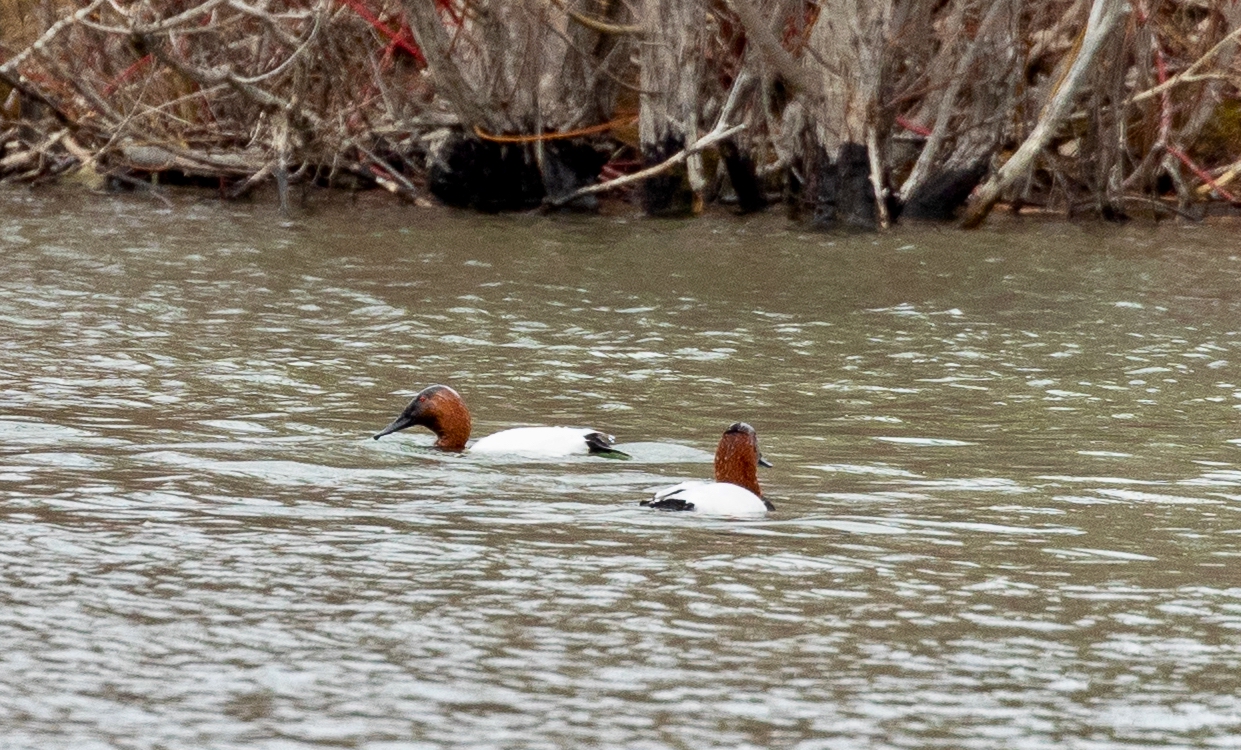
    Below are Canvasbacks, Buffleheads, a Pied-billed Grebe, Canada Goose, female Greater Scaup, and male Ring-necked Duck. In addition, there were Mallards, Hooded Mergansers, and a Horned Grebe.

    We were interested to see that the female Greater Scaup seemed to be paired with a male Ring-necked Duck.

    In the leftmost photo, there is a female Ring-necked Duck behind the male. A female Greater Scaup is in the foreground. In the photo to the right, the female Greater Scaup is trailing the male Ring-necked Duck.

    A few hardy songbirds were making their presence known.

    Common Grackles, Song Sparrow, Red-winged Blackbird (two photos), Northern Cardinal.

    The lake and the area surrounding it was full of life. A Muskrat swam across the lake. A bat house and an Opsprey platform had been erected beside the trail overlooking the lake. On a side trail, there were ponds where a few hardy Midland Painted Turtles perched on logs. A Canada Goose was nesting on a small island in the pond. As we watched, she produced an egg, then promptly settled down on it.

    You can just see the white egg in the photo on the left

    Vegetation is slowly coming to life. Some trees and shrubs are in bloom.

    Pussy Willow, with pinecone shaped galls created by the Willow Pinecone Gall Midge. Silver Maple blossoms.

    Grey or Speckled Alder is a hardy shrub that grows in sunny, wet areas along marshes, lakes, and streambanks. Male catkins and female cones are found on the same plant. Alders are used in habitat restoration in areas where they provide wildlife habitat and fix nitrogen in the soil to improve soil quality.

    Osprey Update

    We were wrong! Although the pair of Ospreys that arrived initially spent time together on the low platform and showed no interest in the high nest, they have since taken up residence in the park. The female often spends time on the nest and both male and female have amended the nest. The male often perches on the low platform or nearby stadium lights and has delivered fish, despite the murkiness of the water in the river.

    Screenshot

    Tulips!

    Ontario greenhouses grow tulips and other spring flowers that have become available now. The tulips in Wandering Bee’s hoop house will be ready this weekend.

    Last week’s flowers…

    …still going strong.

    Graham Nash

    After seeing Joni Mitchell on television recently, I recalled that “Big Yellow Taxi” refers to her breakup with Graham. I browsed YouTube and read his Wikipedia entry to learn that he wrote so many songs that I like. He talks about Joni before singing “Our House” in the first video on this playlist. I added some cover versions of Hollies songs because I think they are better than the originals. Since the Hollies chose the name to honour Buddy Holly, I was interested in Graham’s connection to Buddy Holly’s guitar.

  • Hamilton, Ontario –          March 19, 2026

    Hamilton, Ontario – March 19, 2026

    This week…

    … we’ve had some snow and quite a lot of rain.

    We’ve been keeping a close watch for the return of the Ospreys. For some time, we’ve seen only a pair of Red-tailed Hawks that perch from time to time on the old nest or one of the stadium lights. Yesterday, we were delighted to see two Osprey perched on the low platform. They sat for a while before taking off.

    Since they showed no interest in the high nest and haven’t returned this morning, we assume that this is not the pair that usually nests at the ballpark. An April Fool for us.

    Hamilton

    We took ourselves to Hamilton on March 18th for a change of scene and to look for migrating ducks in the bay.

    Hamilton is located on the westernmost tip of Lake Ontario. The Niagara Escarpment runs through Hamilton where it is known as “the Mountain. The escarpment continues north through the Bruce Peninsula to Tobermory. Hamilton Harbour, formerly Burlington Bay, is sheltered by a sand bar.

    The Parks

    We visited two parks on the bay, Bayfront Park and Princess Point Lookout. They are on the south shore of Hamilton Harbour, on opposite sides of the 403.

    Trails lead along the shore at Princess Point Lookout. There was still ice on the bay and the birds were far out on the open water.

    There were Mute Swans and a variety of ducks stopping off on their migration north.

    Redheads and Ring-necked Ducks (male and female). We also spotted pairs of Greater Scaup and Hooded Merganser in the flock.

    Bayfront Park is a groomed park with a small marina. There was a greater variety of birds, but most of them kept their distance.

    In addition to these Redheads, Red-breasted Merganser and Greater Scaup, we spotted a Horned Grebe, a number of Goldeneyes and a huge flock of American Coots.

    Of course, the typical park birds did not keep their distance!

    Americal Robin, Herring Gull, Ring-billed Gull (two photos), Canada Goose, bib duck. Bib ducks are usually crosses between a Mallard duck and a white domestic duck.

    The Royal Botanical Gardens (RBG)

    The RBG, located in Hamilton and nearby Burlington, include five garden areas and environmentally protected areas that host some of the most significant wildlife and native plants in Canada.

    On this visit, we took a short walk through the Rock Garden, the oldest of the gardens. It was built between 1929 and 1931 in a 5.5-acre abondoned gravel pit. About 10,000 tons of Niagara Escarpment limestone was used in the garden’s construction.

    Although the garden didn’t have its usual vibrant colour, there was still much of visual interest.

    There were also early spring blossoms making an appearance!

    Floral Showcase at the RBG Centre

    The RBG Centre is an indoor garden that is open year round. Our time in Hamilton coincided with this year’s floral showcase. More colour for these dreary days!

    Covers of Joni Mitchell Songs

  • Tundra Swans at AWMA – March 25, 2026

    Tundra Swans at AWMA – March 25, 2026

    Spring is very slowly unfolding. The daytime temperature generally remains in the single digits with below freezing temperatures at night. It snows from time to time, but the snow disappears quickly. No doubt, there will be more snow…

    Depite the weather, we are witnessing the arrival of more and more early spring migrants. These past two weeks have seen the return of Turkey Vultures, Red-winged Blackbirds, Kildeer, Common Grackles, European Starlings, and many American Robins. We are watching eagerly for the arrival of the Ospreys that nest at Labatt Park across the river from us. Any day now!

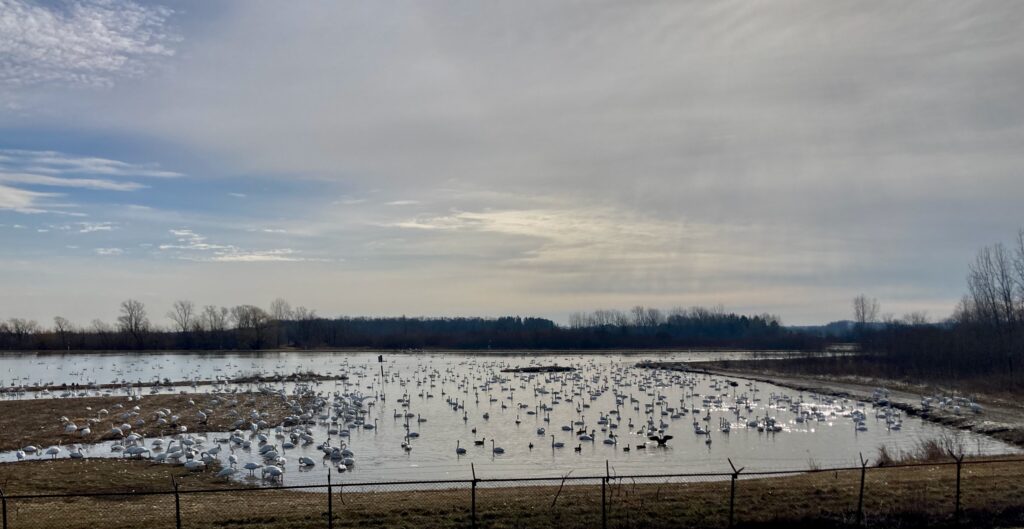
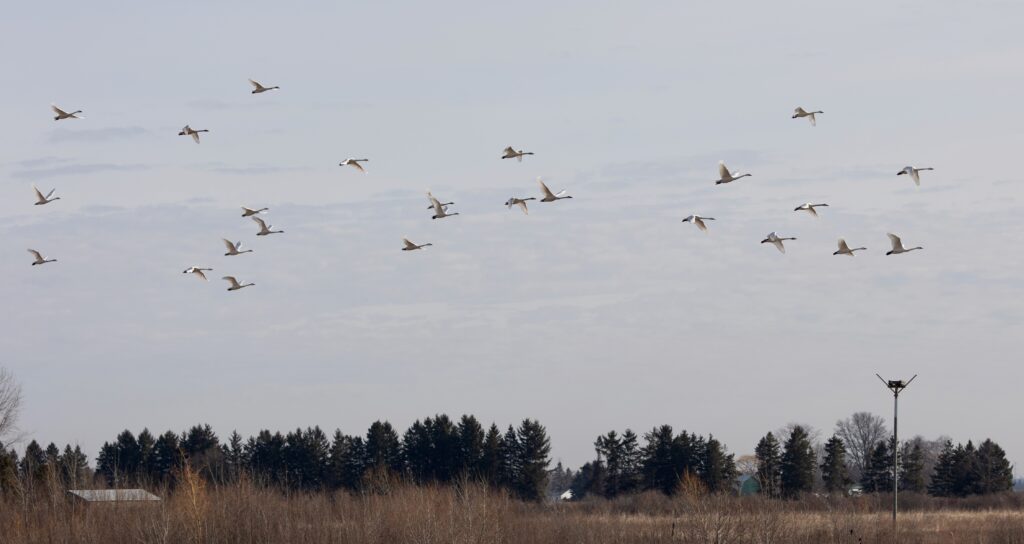
    The Tundra Swans have arrived in great numbers at the Aylmer Wildlife Management Area. The area attracts the migrating swans because of the large ponds and the banquet of corn that is regularly spread along the bank. There were over 1,000 swans in the pond when we visited on Wednesday, down from the over 2,000 birds that were there last week.

    As the tractor approaches to spread the corn, the swans move away.

    Once the tractor disappears, the swans slowly return to devour the spread.

    Resident songbirds and lingering Dark-eyed Juncos visited the feeders and attempted (unsuccessfullly) to sample the corn.

    Northern Cardinal (male), one of several Slate-colored Dark-eyed Junco foraging on the ground, a Black-capped Chickadee attempting to penetrate a kernal of corn, Americal Robin

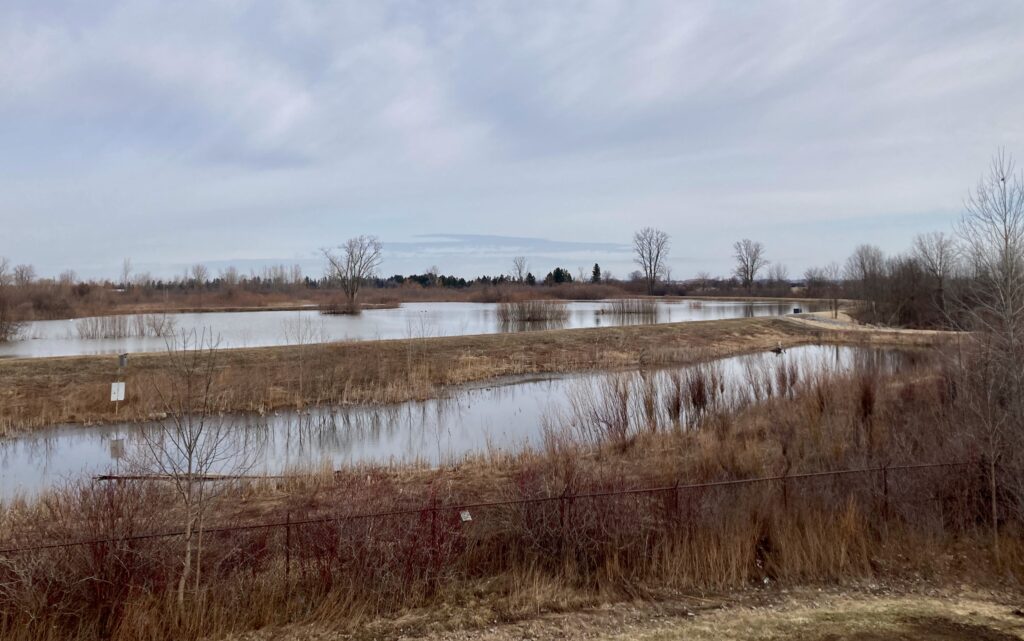
    We surveyed the back ponds at the wildlife management area.

    Several species of migrating ducks had been reported there. On Wednesday, there was only a small flock of American Widgeons and a few Ring-necked Ducks in addition to the Canada Geese and Mallards.

    Floral Preview!

    Last week when we didn’t send out a post, we took ourselves to Hamilton, Ontario. One of the things we did there was to take in the Floral Showcase at the Royal Botanical Gardens. It featured 25,000 blooms, including spring flowers and many orchids. Here are some of the photos. Some much-needed colour!

    Josh Turner Guitar

    I found dozens of his videos worth sharing. Here are the first few.

  • Long Point  – March 9, 2026

    Long Point – March 9, 2026

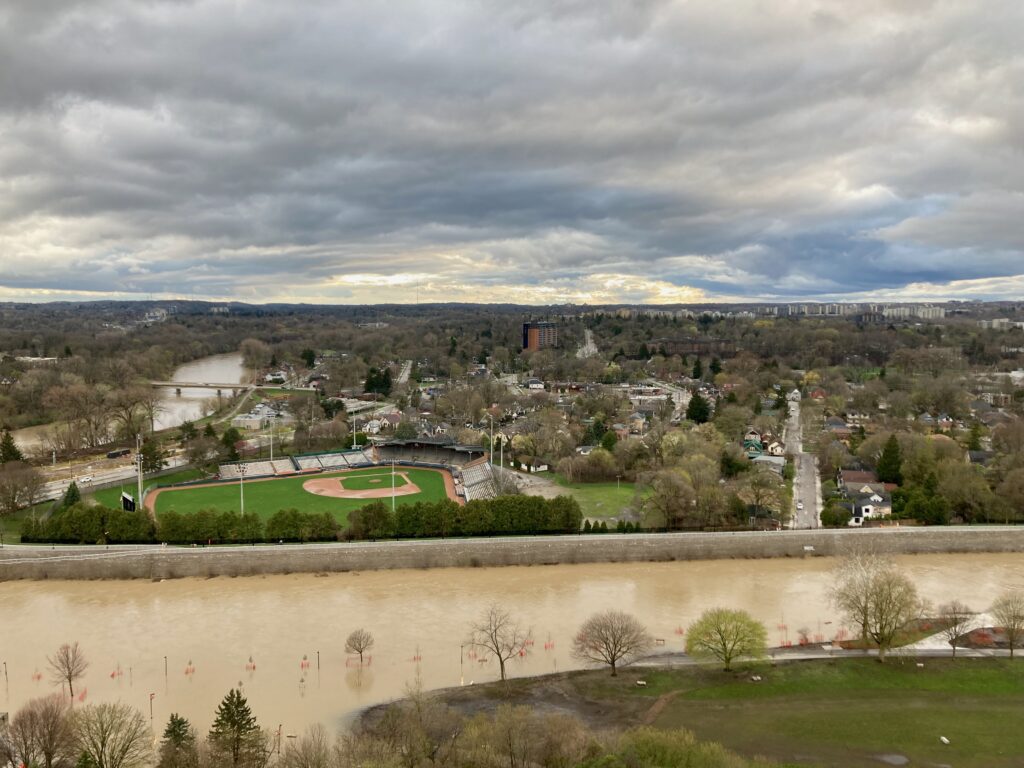
    In the past week, our temperatures have remained well above freezing, sometimes moving into double digits. Rain arrived, the snow melted, and the river overflowed its banks.

    Monday’s forecast was for sunny skies and a temperature reaching the mid teens by the afternoon. Our friends offered to take us on a grand tour of the Long Point area in search of migrating birds.

    Long Point is a sandy spit that extends into Lake Erie. According to Wikipedia, “Habitats on and surrounding Long Point include woodlands, sand dunes and bluffs, marshes, ponds, meadows, beaches and lakeshore. The complex is the largest biophysical formation of its kind in the Laurentian Great Lakes of North America.” The area is designated as a Biosphere Reserve that hosts a variety of flora and fauna and serves as a waterfowl staging area and a migration stopover area for land birds.

    At this time of year, early migrants are arriving from the south, stopping to refuel on their way farther north. At our first stops in marshy reserves, we found flocks of Common Grackles perched in the trees.

    Male Red-winged Blackbirds were in full cry while Killdeer quietly foraged on the ground. American Robins had arrived in considerable numbers.

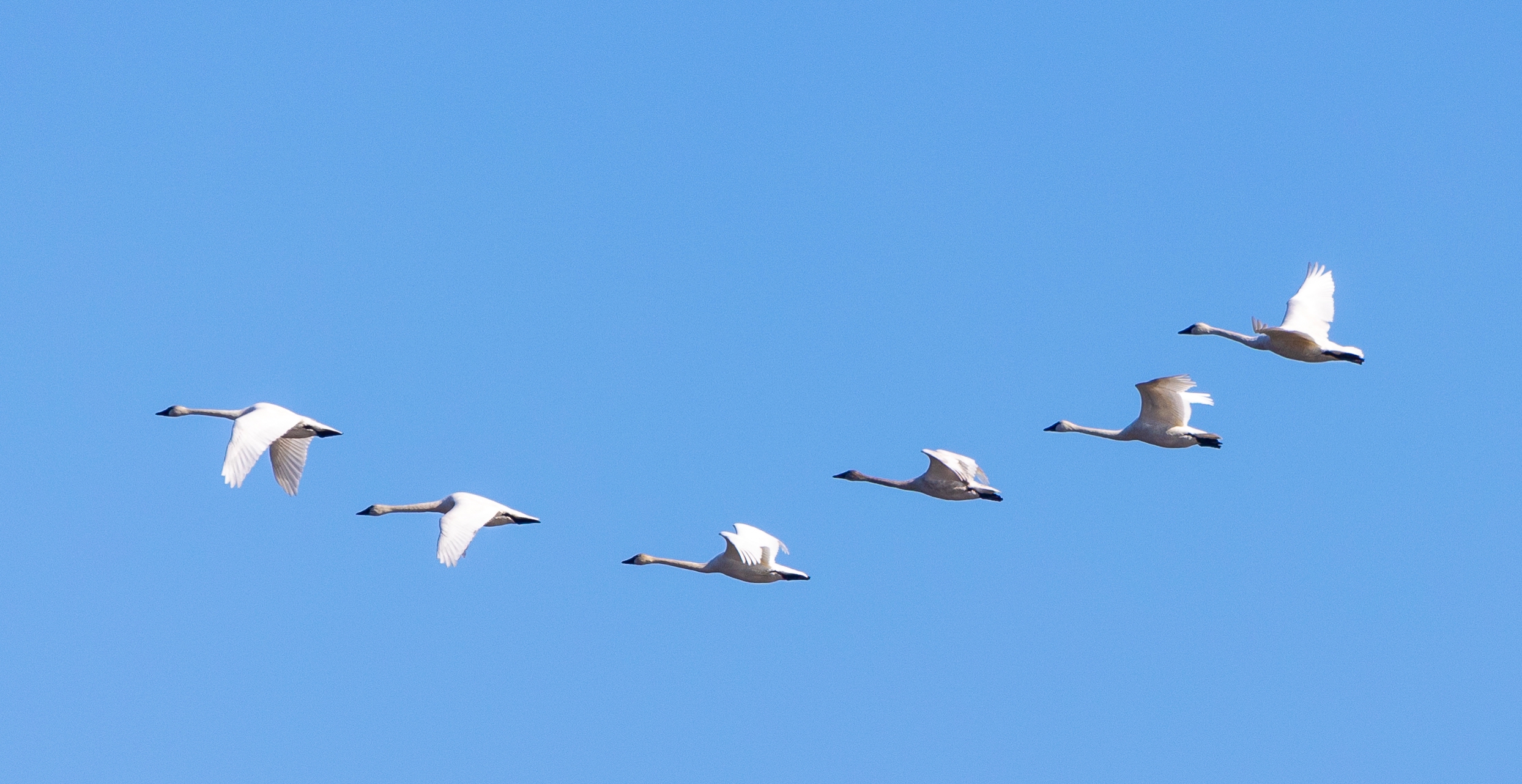
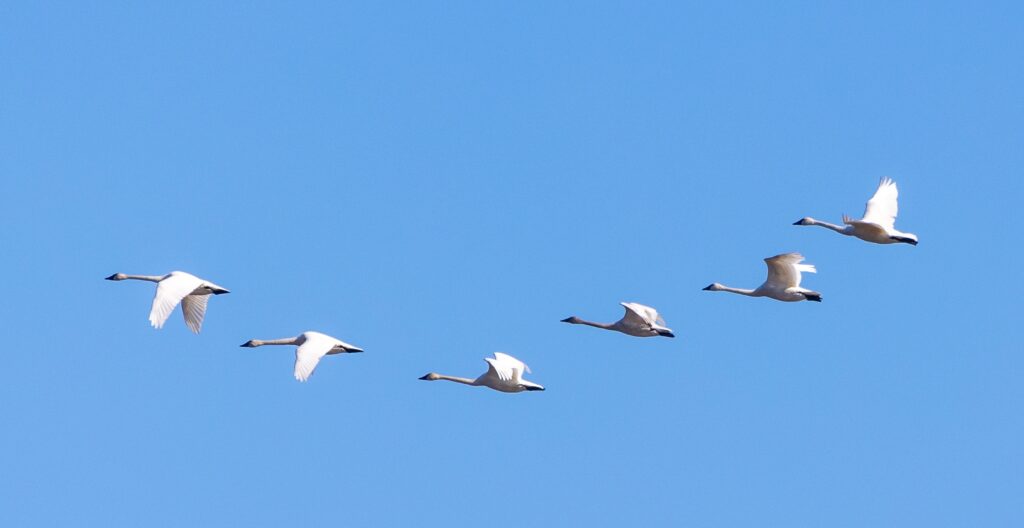
    A small flock of Tundra Swans flew overhead. We were in hope of seeing a few more.

    We also heard the distinctive, rattling cries of Sandhill Cranes overhead.

    https://www.allaboutbirds.org/guide/Sandhill_Crane/sounds

    On our way to the waterfront, we came across flocks of cranes grazing in the distance.

    At our first stop along the shore, we were happy to see that Tundra Swans had arrived in good numbers.

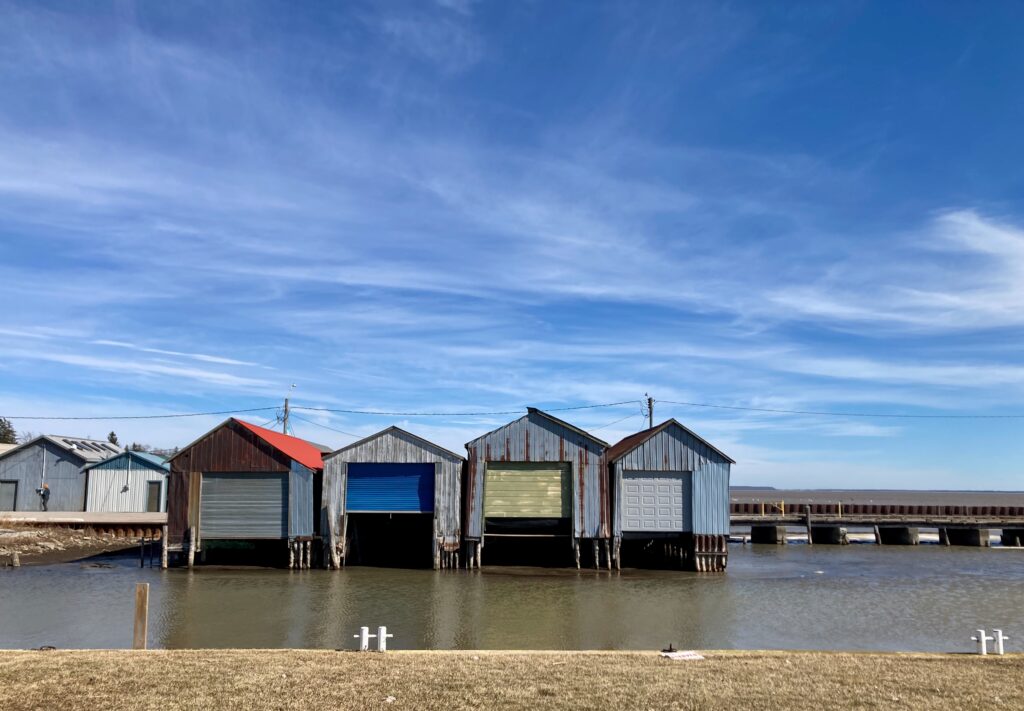
    We moved on to Port Rowan for another view of the lake.

    From the dock, we saw the full meaning of “waterfowl staging area”. Most of the birds were far offshore, diving and swaying in the waves. There was a stiff, cold wind that shook cameras and made our eyes water. Good photos were mostly out of the question, but these will give you an idea of the thousands of birds of so many kinds bobbing in the water.

    Counting the numbers of the different species was a challenge! Here are shots of some of the species we saw that included Mute Swans, Tundra Swans, Redheads, Canvasbacks, Ring-necked Ducks, Lesser Scaup, Gadwalls, American Wigeons, Buffleheads, Common Mergansers, Northern Shovelers, and more.

    We made another stop at the small pond at the Port Rowan Wetland.

    Here we had slightly better looks at Gadwalls, American Wigeons, and Buffleheads.

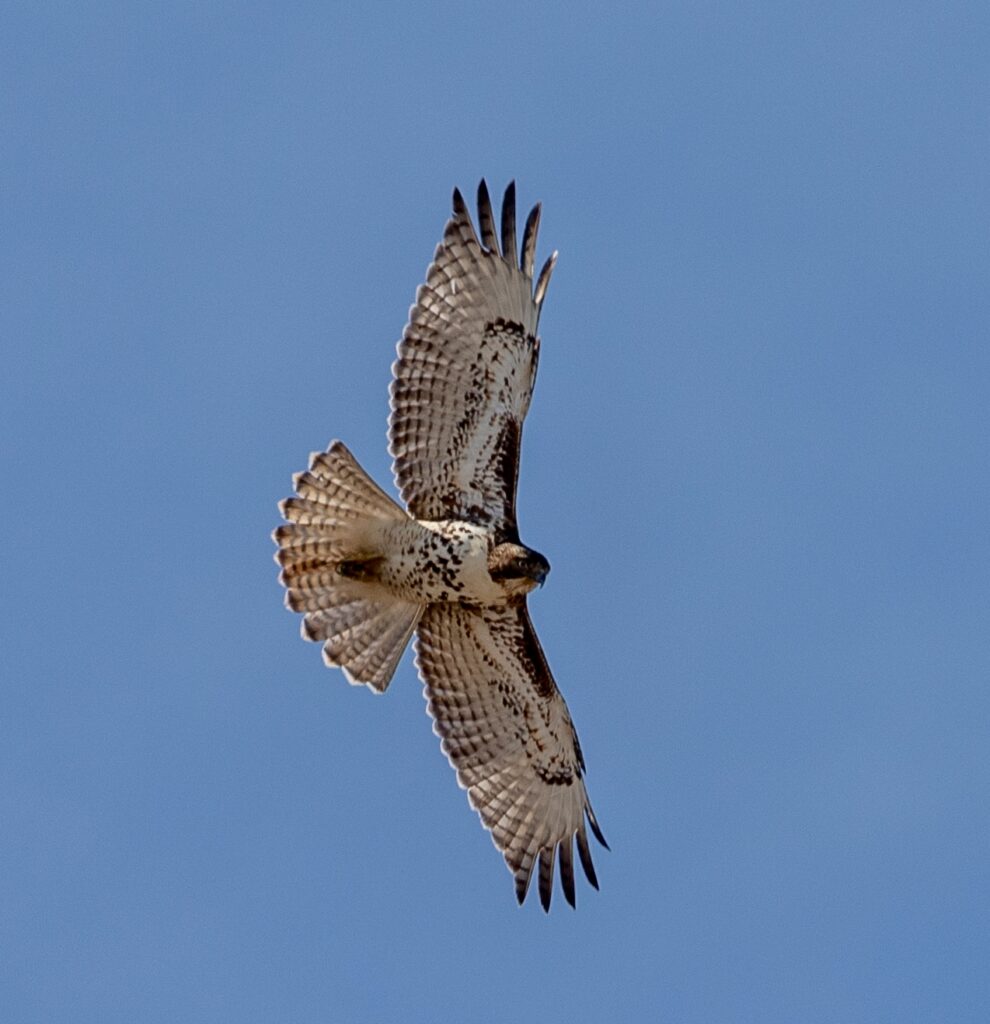
    As we left, we were treated to a flyover by a Red-tailed Hawk.

    We decided to make one more stop at Aylmer Wildlife Management Area on our way home. We wondered if Tundra Swans had arrived there yet, but the pond was largely empty.

    We found many Canada Geese, a few Mallards, two American Wigeons and four Common Mergansers. No doubt, the Tundra Swans will arrive soon.

    Seen on the streets of London…

    Come From Away

    This is a great story about kindness to strangers at a time when there is so much hostility. We saw the musical live in Toronto. Apple TV+ has a recording of the first performance once Broadway reopened after the pandemic had shut everything down. We have tickets to a touring company version coming to London, Ontario, this May.

    The songs are the ones I could find on YouTube.

    More Cat Humour

  • St Marys

    St Marys

    March has brought clear, cold nights and warmer daytime temperatures that melt the snow.

    Sunset on February 27th and the moon setting on March 2nd.

    It is an in-between time when the birds that have spent the winter depart and the early migrants may or may not have arrived. We had not seen diving ducks on the river below us for a few days. Because of the milder temperatures and open water, it was likely that they had moved north, getting closer to their breeding grounds.

    Of course, the geese are always present and noisier now that they are pairing up and protective of their mates. We sometimes find a resident White-breasted Nuthatch in our neighbourhood.

    We decided to check at Greenway Park for any lingering winter visitors. We found just a few dozing Common Mergansers and a female Goldeneye on the far side of the river.

    Among the dozers, we were surprized to find an early arrival – a lone Pied-billed Grebe. This grebe may stay in the area or go farther north to breed.

    There were few other birds active in the chilly wind that day apart from a Downy Woodpecker and small flock of Dark-eyed Juncos foraging.

    All was quiet along the path until we came across a juvenile Red-tailed Hawk staring intently at its feet, raising a foot cautiously and pouncing back down with both feet. It was intent on what it was doing and seemed undisturbed by the few people who passed by on the trail.

    It appeared that the bird had tried to capture some small prey that had escaped its grip. The young hawk looked bewildered and somewhat bereft. After further searching, it finally flew up to a nearby branch. We think that it must have been hungry and wondering where to look for its next meal.

    Recently, we’ve noticed Weeping Willow trees glowing bright yellow in the sun. The hanging branches are lined with buds. This non-native tree thrives in wet soils. Willows are among the first woody plants to bloom in spring. The flowers of willows, called catkins, appear before the leaves.

    Pussy Willows are North American native shrubs with catkins that are soft, fuzzy, silver-grey flower buds.

    St Marys

    On a day that promised to be sunny, we drove to St Marys, southwest of Stratford, Ontario, at the confluence of the north branch of the Thames River and Trout Creek. The town was settled in the 1840s and became a centre for milling, grain-trading and the manufacture of agricultural products. It is also note for a large limestone quarry that still supplies building materials.

    As is often the case lately, there was a dense fog in the morning until the sun broke through to reveal blue skies.

    The scenic town with trails across a former railway tressel and along the river was a perfect place for a walk.

    As expected, the birds were few and far between, except for the inevitable Rock Pidgeons and Canada Geese.

    Neil Sedaka 1939-2026

    I remember hearing these songs on the radio and seeing Neil on television. I knew that Oh Carol was dedicated to Carol King, but I did not know she wrote a song in reply.

  • Looking Back at June 2025

    Looking Back at June 2025

    February 2026

    As expected, snow arrived after rain and mild temperatures removed most of the snow covering the ground. There will be more cycles of rain and snow as we head into March.

    June 2025

    June is green, the sweltering heat a distant memory…

    June is a month of summer wildflowers, insects and other fauna.

    Birds are busy raising young.

    June is a month of glorious summer blossoms and bouquets.

    Some of my Favourite Elton John Songs

    So much to enjoy on this playlist.

    Incredible silliness

    Deep Purrpaw – Paws in the water | Live at Rock & Roar Festival 2026