Author: New Admin

  • Sifton Bog Environmentally Significant Area – July 7, 2026

    Sifton Bog Environmentally Significant Area – July 7, 2026

    Here is our long-delayed report on an outing in July to Sifton Bog.

    We didn’t make it to Sifton Bog in time for the June flight of the Bog Copper butterflies or the dragonflies we’d seen a year ago. On July 7, there were other things to see under an overcast, brooding sky.

    Sifton Bog is a floating acid peat bog that is surrounded by deciduous swamp and upland forest. The peat bog is associated with boreal vegetation that is vastly different from the southern Carolinian vegetation at its outer edges.

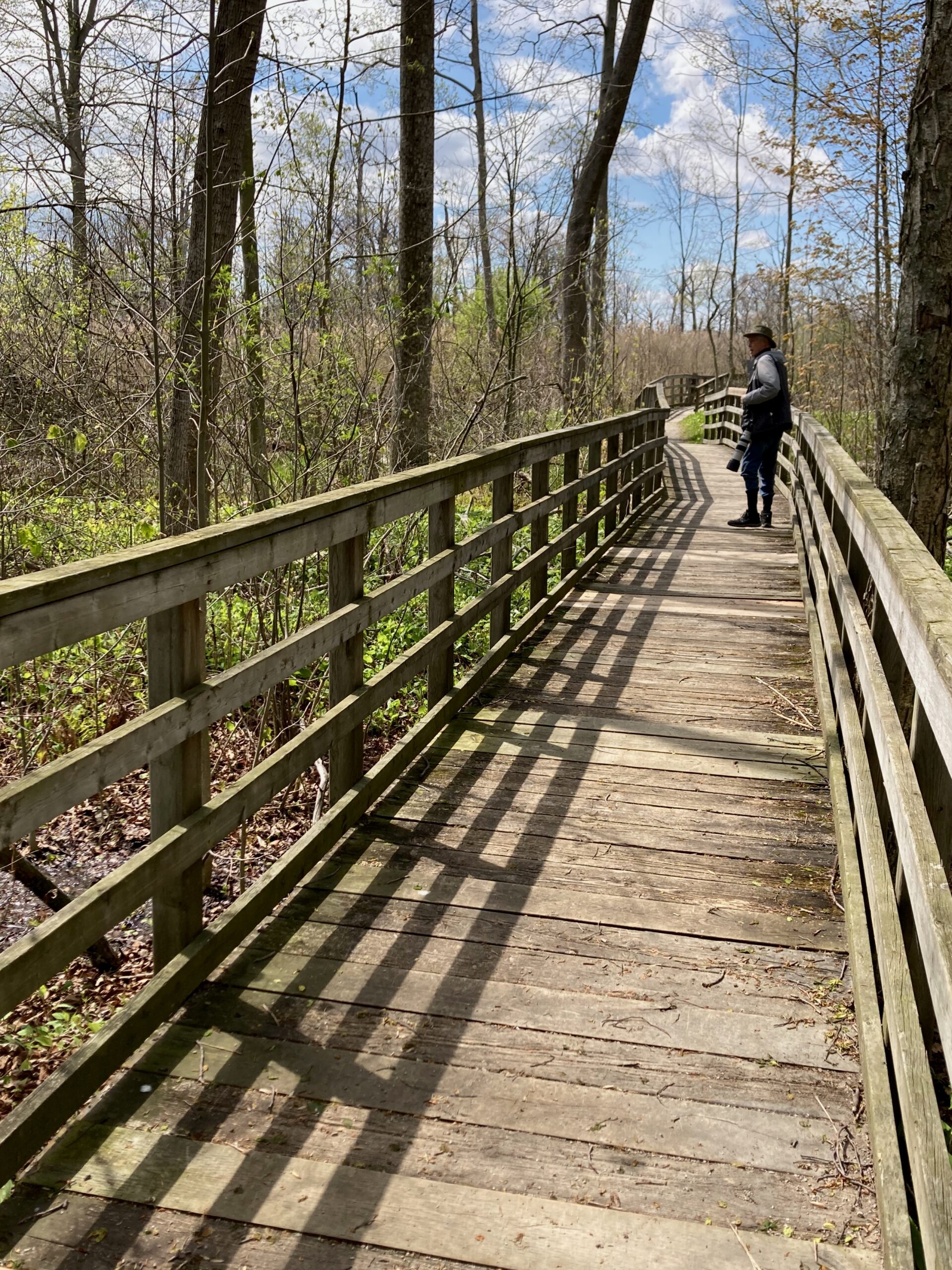
    From the entrance, above right, a boardwalk moves through the upland forest and deciduous swamp.

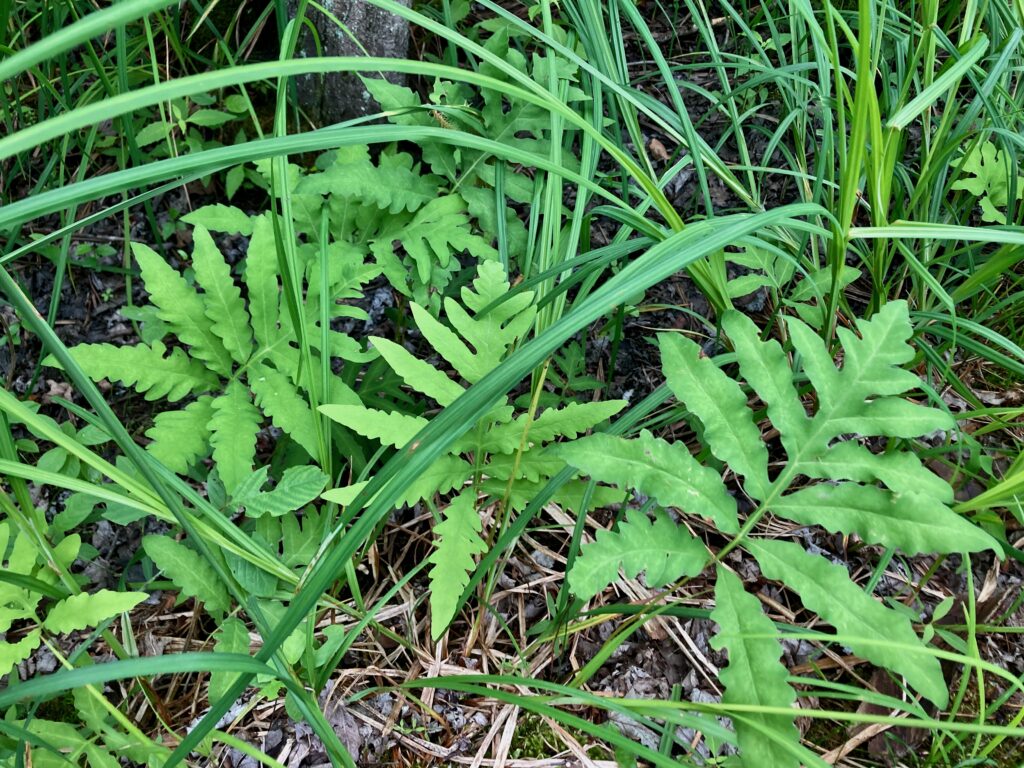
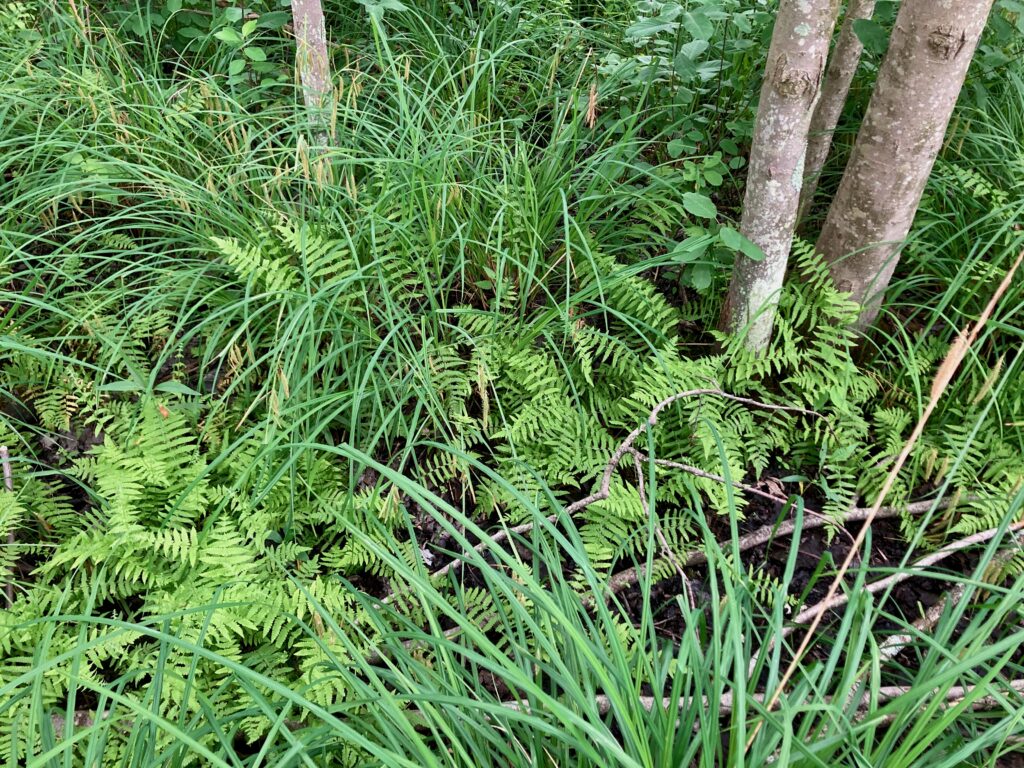
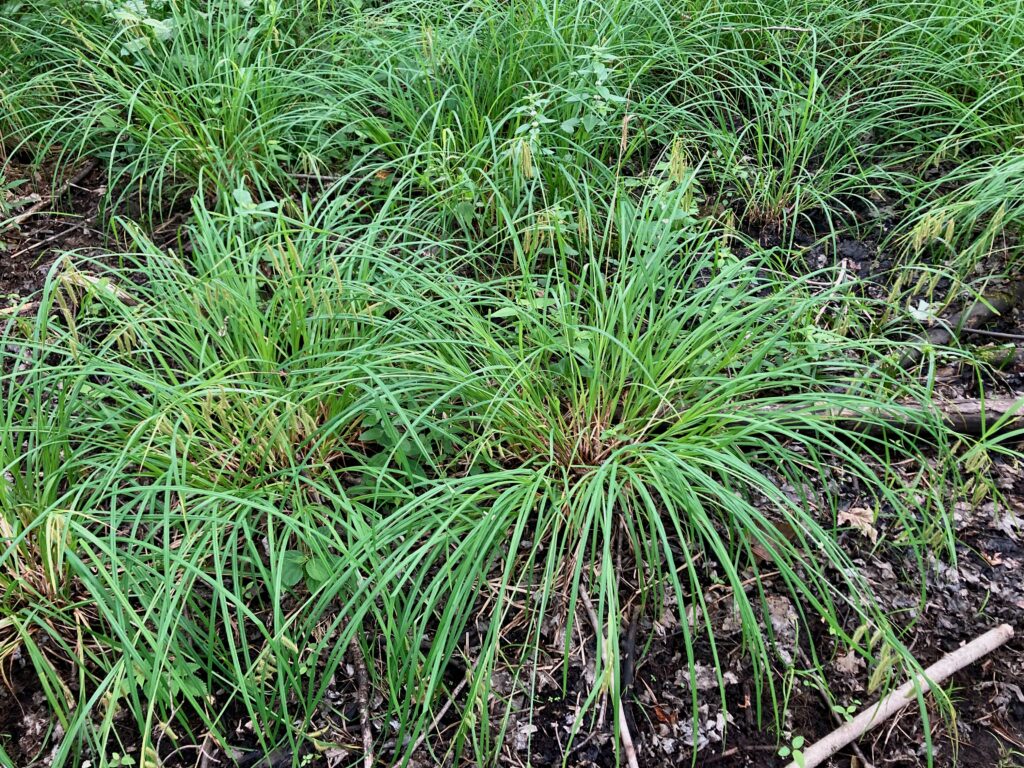
    Ferns and sedges grow in the damp soil of the wet woods.
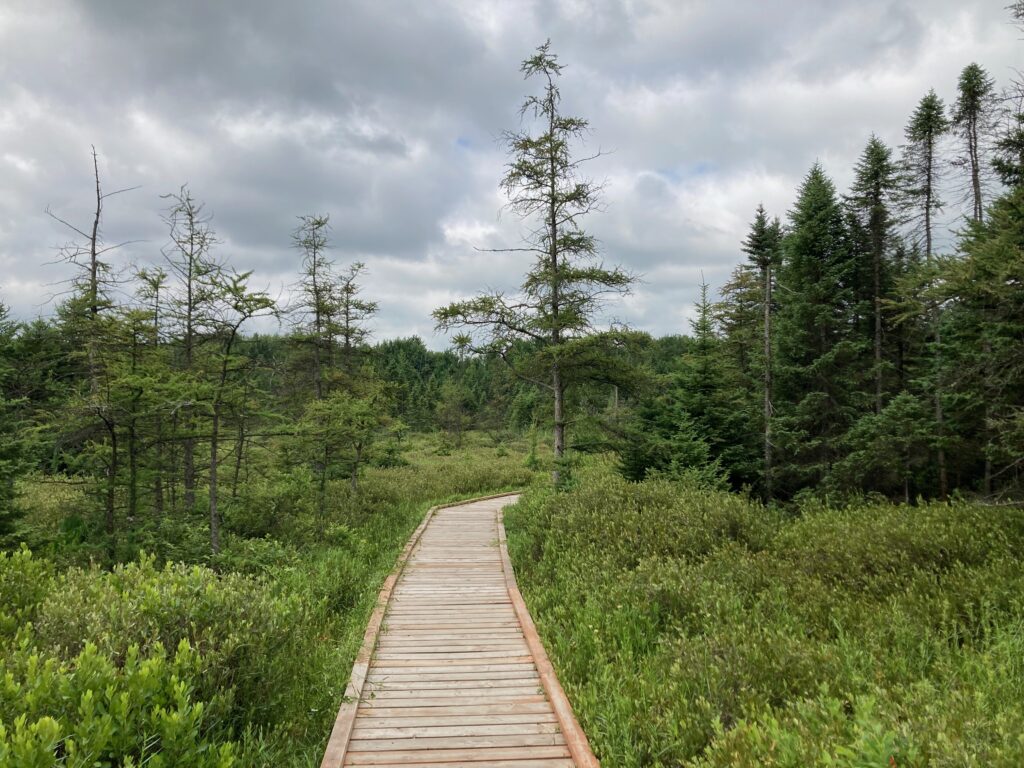
    As the boardwalk nears the bog, the transition to boreal vegetation is readily apparent.
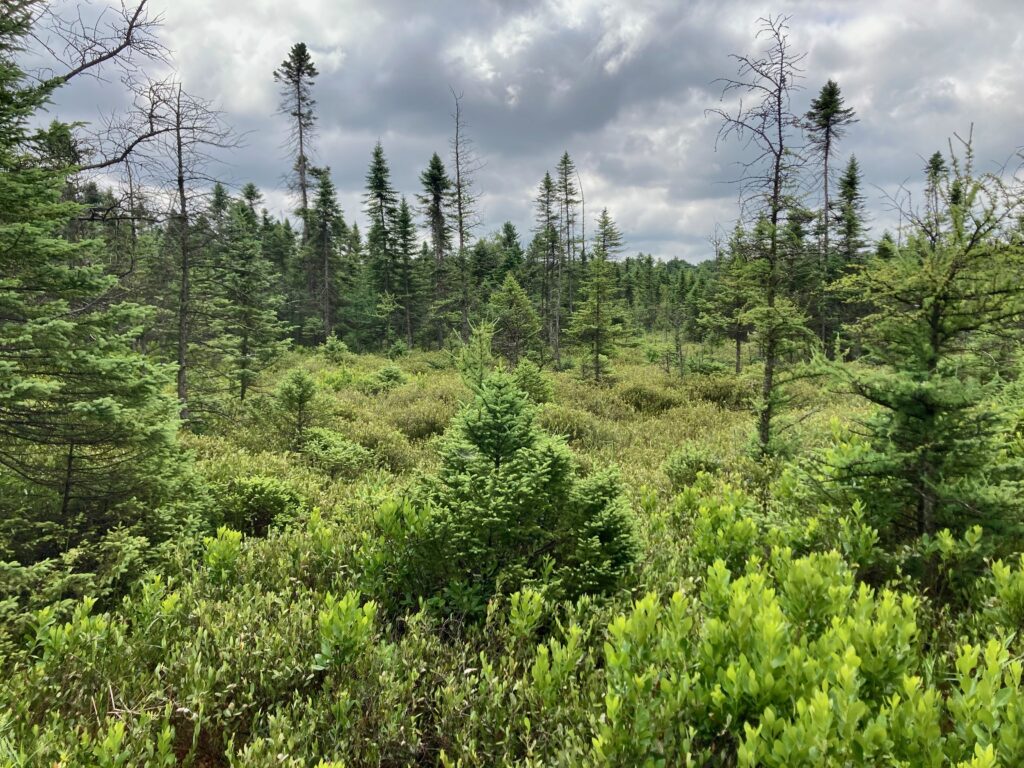
    Sphagnum moss, rushes and sedges grow near the pond.

    We were in time to see the Tuberous Grasspink orchids, but missed the Rose Pogonias. These tiny orchids are native to eastern North America.

    Horned Bladderwort was also blooming in abundance.

    The pond is becoming overgrown with plants including Watershield that was in bloom.

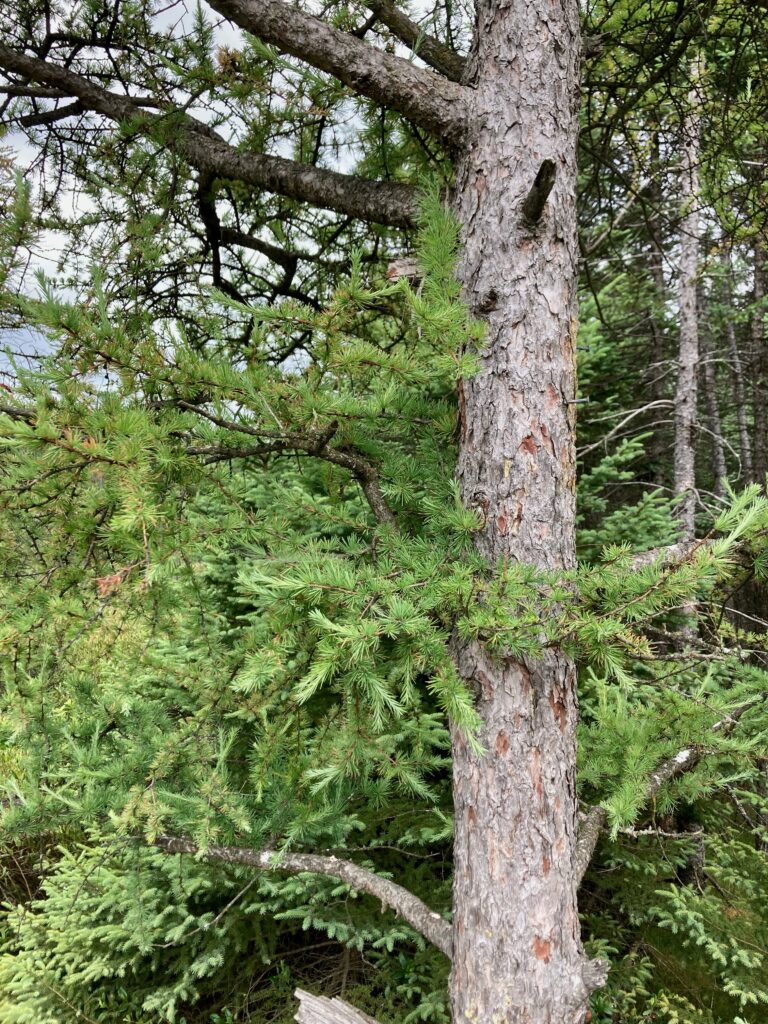
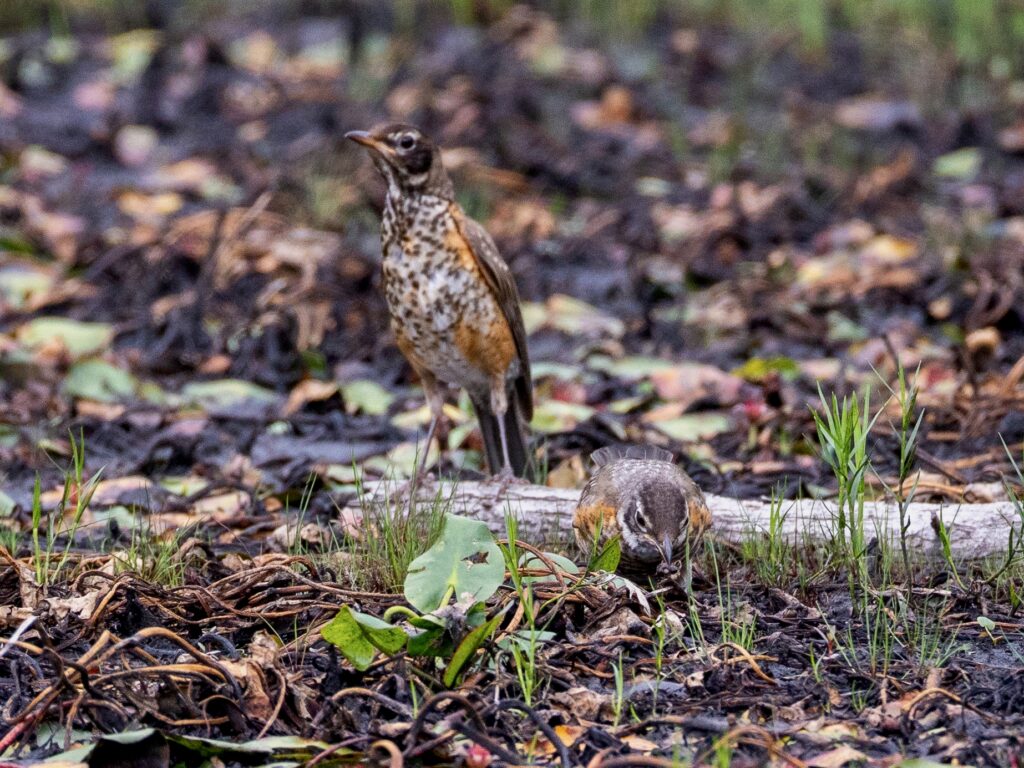
    We often see and hear a Song Sparrow near the pond. This one was perched in a Tamarack. There were immature Americal Robins foraging on the bog.

    Most of the birds we saw were perched in trees near the parking lot. Some were harvesting berries from a mulberry tree, or perched nearby. An Eastern Chipmunk was devouring the dropped fruit.

    In a nearby tree, immature Yellow-shafted Northern Flickers were begging and being fed by an adult female. Female flickers have no “moustache”. The young bird is a male.

    Also perched in the tree: Cedar Waxwings, Common Grackle, Northern Cardinal

    Various wildflowers were in bloom:

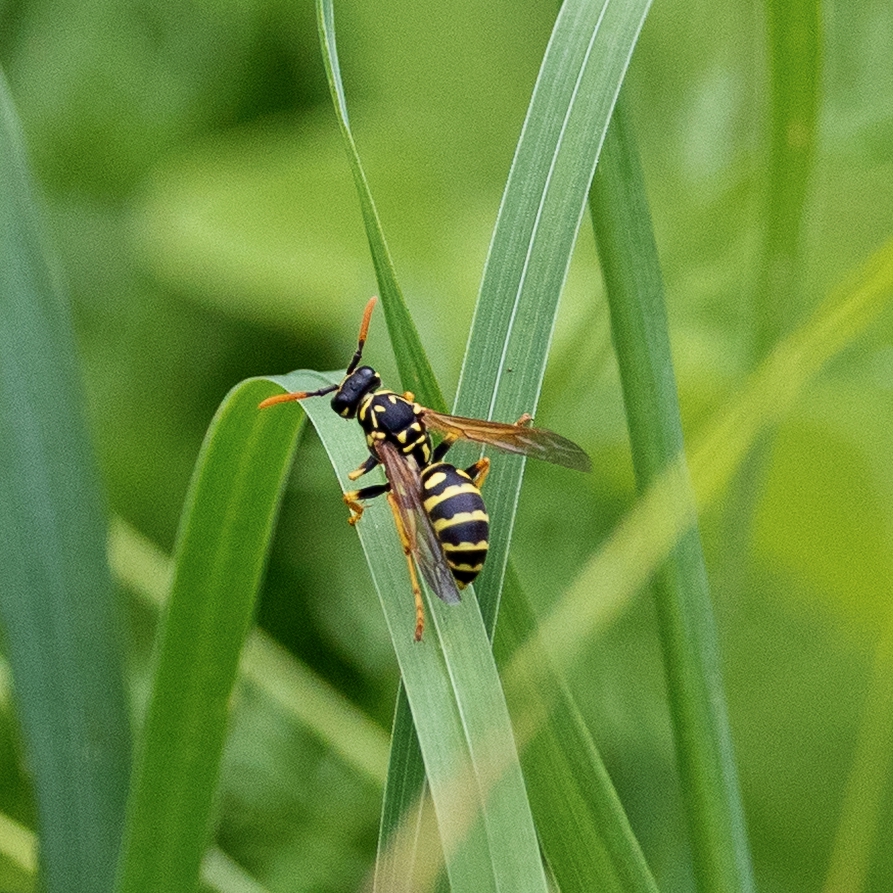
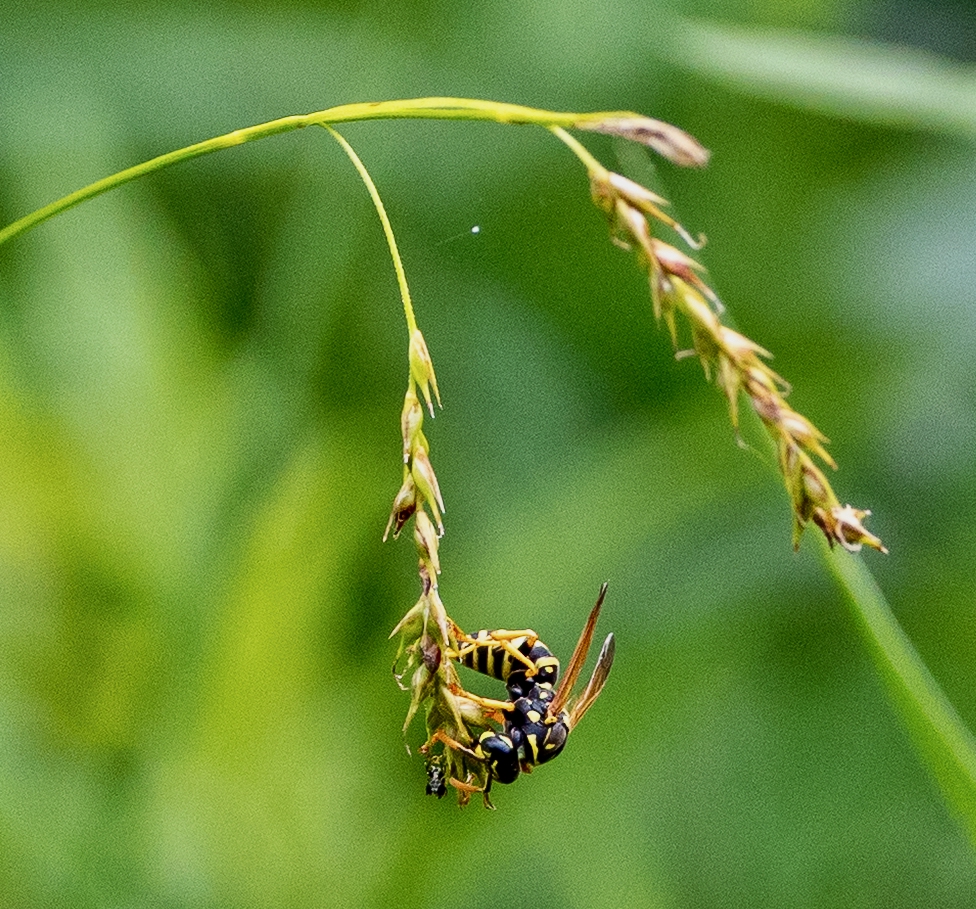
    There were just a few pollinators: Red Admiral butterfly, European Paper Wasp, Appalachian Brown butterfly, bumblebee, Bicoloured Striped Sweat Bee on Canada Thistle

    Osprey Update

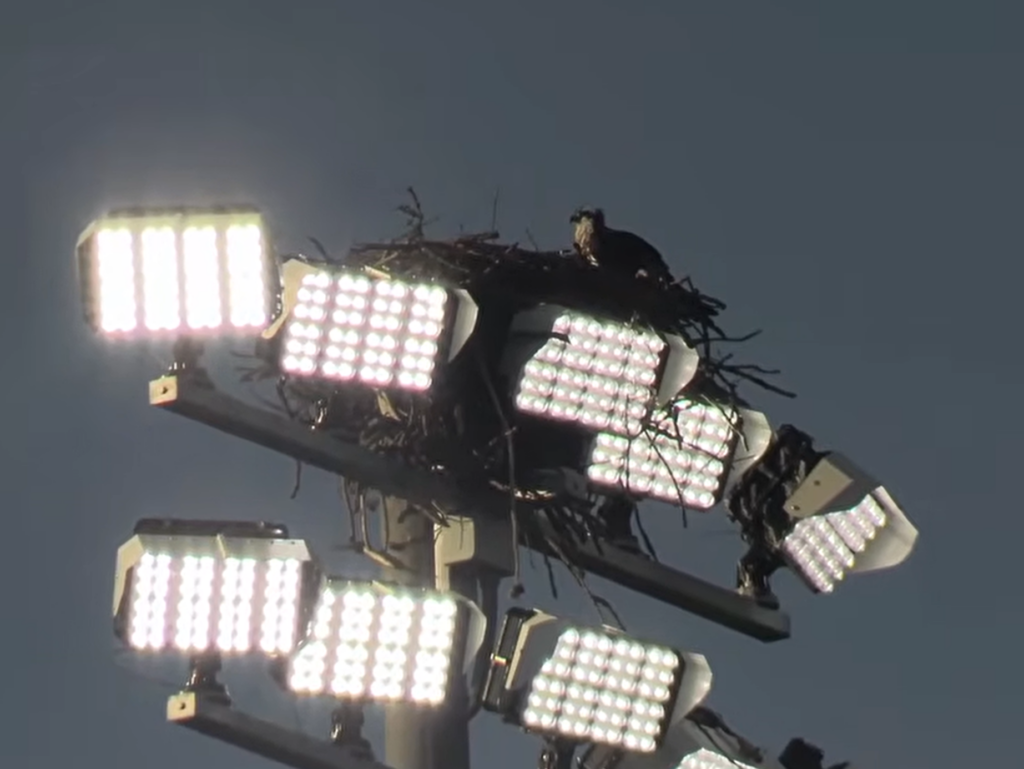
    We have not seen the adult female Osprey for more than a week. We assume that she is now on her way south. For a while, we rarely caught a glimpse of the male Osprey who usually did not linger after delivering fish to the young.

    Last week, Beta was often in the park, sometimes calling for food, occasionally joined by Alpha. It appears that Alpha is sometimes fishing successfully. Beta is taking longer to become more independent.
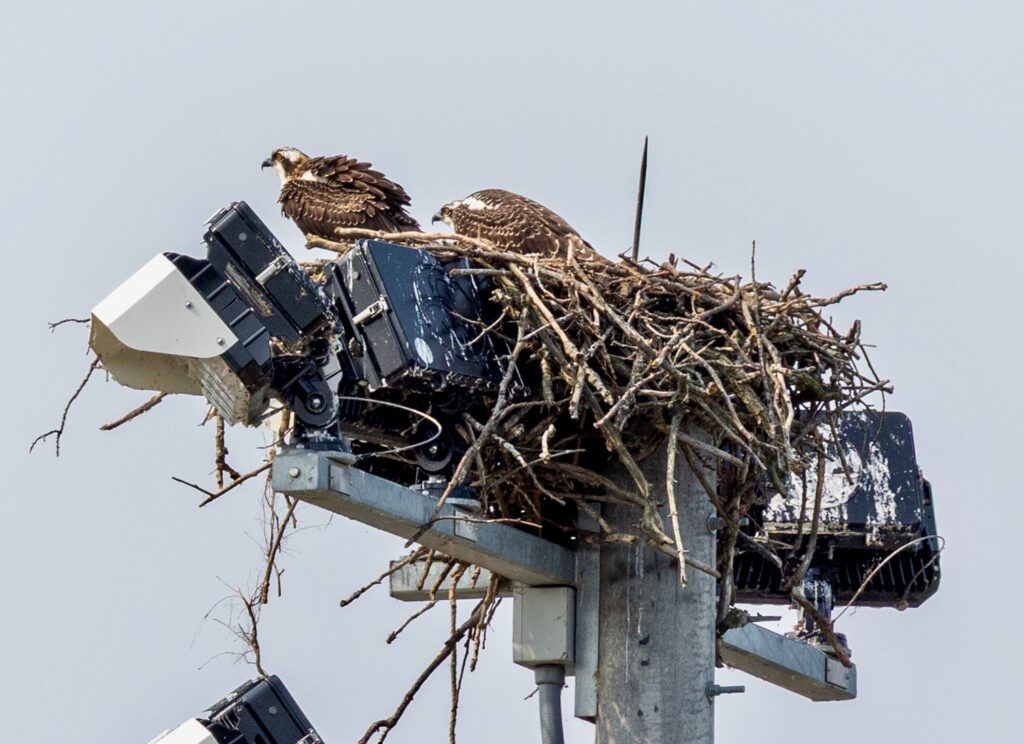
    Alpha and Beta on August 11, 2026

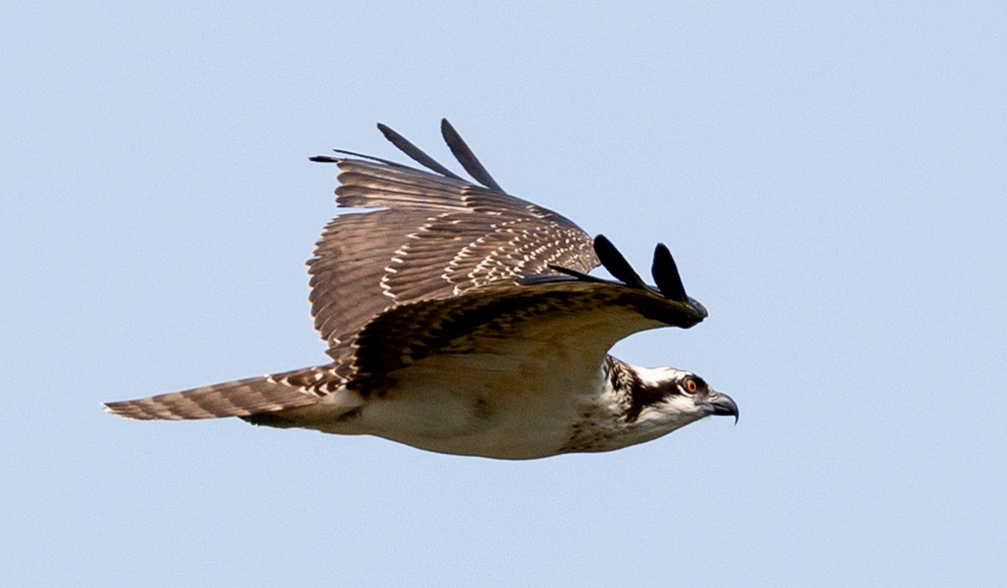
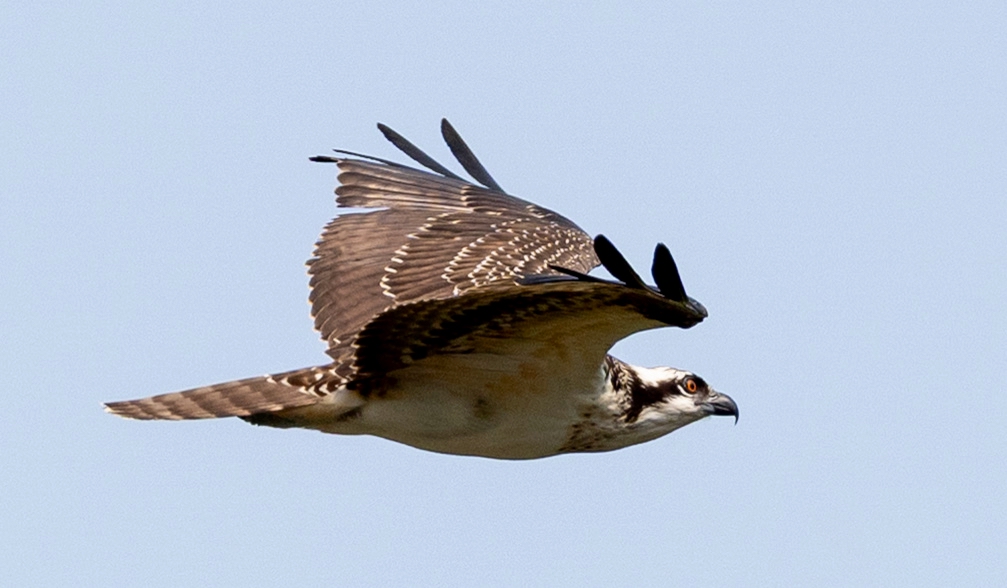
    On August 11, there were adults in the air, possibly passing through along the river. This prompted the youngsters to take flight. Note that the eye colour of adult Ospreys is yellow whereas immature Ospreys have red-orange eyes.
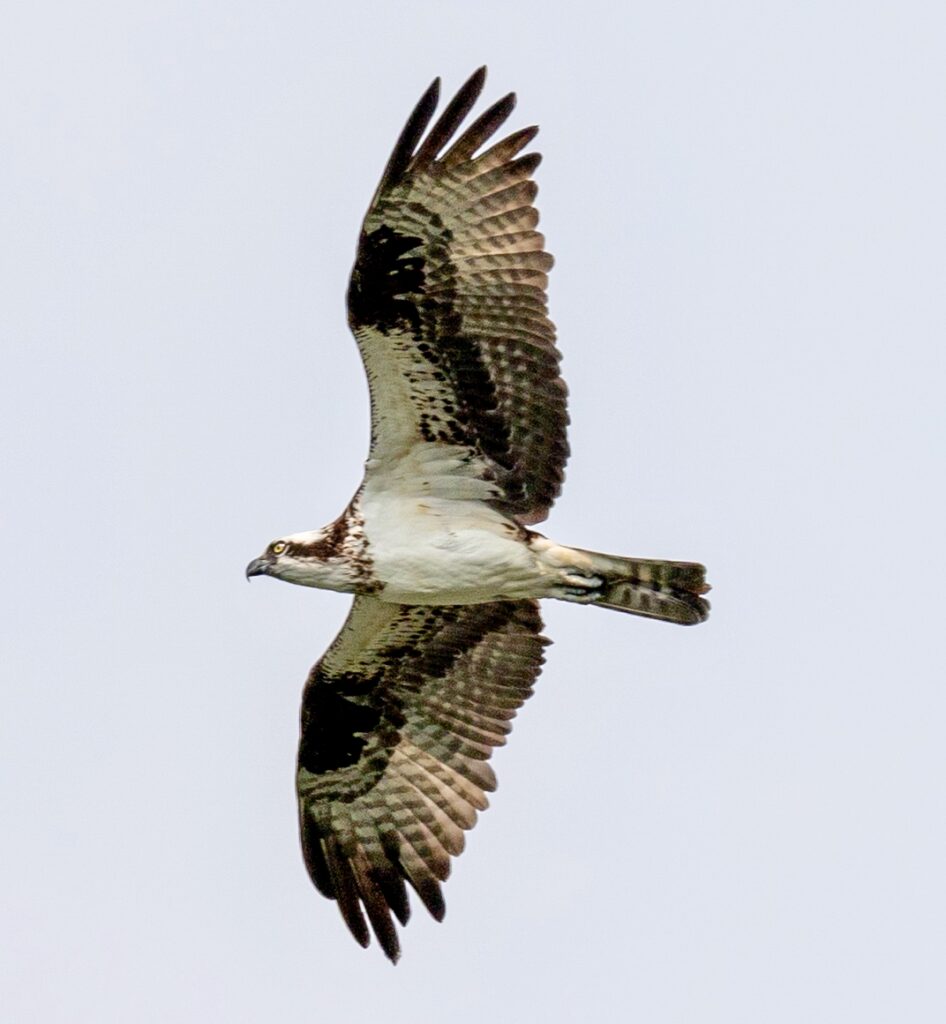
    Adult Osprey

    On August 13, Beta and the rest of the family were absent from the park all day. By August 14, we were concerned about Beta, knowing that the survival rate for first-year Osprey is 40% to 60% when the dangerous first migration is taken into account.

    Our concern was even greater when we saw the male Osprey land on the nest with a large fish that was still thrashing its tail. There was still no sign of Beta (or Alpha). Eventually, the male flew away with the fish. We were relieved when Beta (we assume) showed up and spent time preening on the low platform. At least it wasn’t calling for food. Perhaps it had had success fishing…

    Over the past week, a young Osprey that we assume is Beta has regularly perched in the park for much of the day. Over the same time, the male Osprey has also been present for long periods, often arriving with a live fish. What is puzzling to us is that on several occasions, the adult Osprey has proceeded to consume the fish while the young Osprey/Beta sometimes begs from its perch. Despite watching and recording, we have not seen the male deliver any of the fish to the youngster. Is this some kind of Osprey tough love?

    Sometimes the young Osprey leaves and comes back while the fish is being consumed. Once the youngster was eating a fish, but we have no idea whether he caught it or it was delivered.

    Some sources indicate that young Ospreys take one month to become independent. Other observes report that fledglings might take up to two months to learn to fish proficiently. Alpha fledged on July 23 and Beta on July 25. Perhaps the presence of the adult male indicates an acknowledgment of the youngsters continued dependence? We do wonder about the fate of Alpha. Was that young bird precocious in becoming independent? We have more questions than answers, I’m afraid.

    Sina Drums

    This remarkable young drummer made a name for herself by replacing the drum tracks of rock songs with her drumming. The last two videos have been viewed 44 and 76 million times.

  • Osprey Update – August 7, 2026

    Osprey Update – August 7, 2026

    At the end of July and in early August, we enjoyed a reprieve from sweltering heat. The haze of humidity was replaced by clear blue skies. After the humid weather returned followed by torrents of rain, we again had a few days of clear sky and low humidity. Of course, the cycle has continued.

    Overnight and this morning, the city was drenched with rain.

    Osprey Update

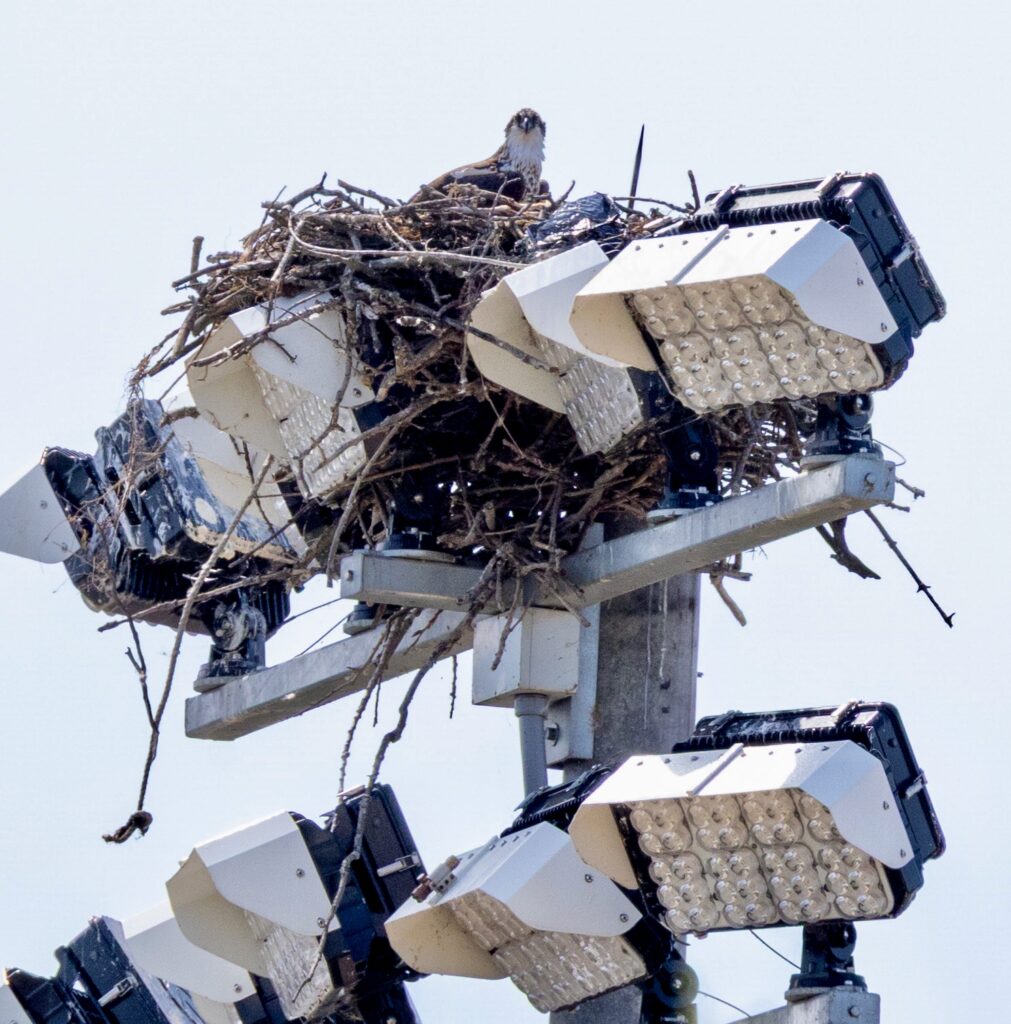
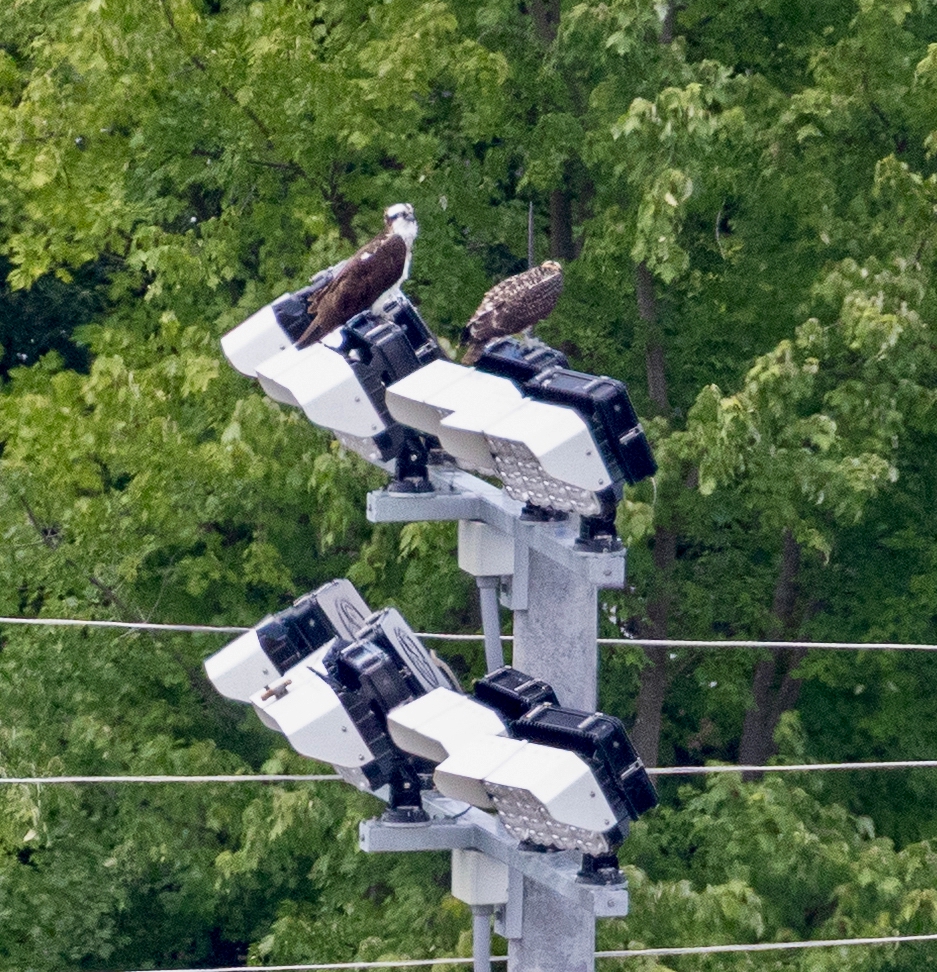
    Life on the nest has changed quickly. On July 25, the second young Osprey (Beta) fledged two days after its sibling (Alpha). Very soon, the two were hanging out on various perches around the stadium. We felt like we were playing a game of “Where’s Waldo?” as we located the two on the various stadium lights, the low platform, the nest, or the screen behind home plate.

    Sometimes, they took in a ball game.

    The two still depend on the male Osprey to feed them, and can be found together on the low platform waiting for fish to be delivered.

    Delivery of fish to the platform. Male landing and taking off.

    The adult female is still present, but more often leaves the two young birds, presumably to find fish for herself. We expect that she will start her migration south before long. After their extended period of incubation and tending young, female Ospreys leave their fledged offspring in the care of the male. The male will continue to feed the young until they have learned to catch fish reliably enough to fend for themselves.

    Female on nest on July 29

    By mid-week, we found that one or both of the young Osprey were sometimes absent from the baseball stadium. They were clearly flying farther afield from time to time.

    Young Osprey in flight

    Last week, when we were walking along the river across from the stadium, we saw first one, then the other young Osprey land feet-first in the river. After staying largely submerged in the water, they each took a bath for several minutes.

    We tend to think that the adolescent Ospreys have a slightly goofly look about them as the explore the world and new experiences.

    One took a couple of tries to lift out of the water. When it finally took flight, it scattered some Kildeers on the shore when as it flew low toward them before gaining altitude. The two are becoming stronger flyers and practicing the skills they need to catch fish and feed themselves.

    This week, however, the two young can still be found around the ballpark, sometimes calling for food. Alpha takes possession of the fish that are delivered and Beta waits or hovers nearby until Alpha is ready to relinquish what is left of the fish. So far, Beta often remains on the nest and doesn’t seem to be venturing as far afield as Alpha seems to be. We still see the adult female Osprey keeping watch…

    Wandering Bee Flowers

    In May, I purchased a Dahlia tuber from Dan and planted it in a large pot on the balcony. It has grown tall and I have now harvested our first blossoms! You can see why the variety is named Wine eyed Jill. The plant has grown taller and there are many more flower buds since this photo was taken.

    Celebrating Friends

    I enjoyed sampling songs to build this playlist.

  • In the Neighbourhood          June and July, 20216

    In the Neighbourhood June and July, 20216

    Last week, smoke from the far north wildfires decended on London and much of Southern Ontario. We spent time away from London, but not far enough to avoid the smoke. With the air quality in the extremely high risk range (10+), we stayed indoors in air conditioned comfort for the duration. After two heavy downpours earlier this week, the air is now clear.

    In the neighbourhood

    Here are a few photos from our neighbourhood walks in June and July.

    We saw this Northern Map Turtle just off the path in Harris Park. Its size suggested it was a female, possibly attempting to nest. In June through July, Map turtles dig nests 10 to 16 cm deep. About nine to 17 eggs are laid and hatch after 50 to 70 days, emerging in late summer, or sometimes remain in the nest through the winter.

    Map turtles are a species of special concern in Ontario and Canada. We were concerned about how vulnerable this turtle and a potential nest were in this location. We took photos and submitted a report to to the Upper Thames Talbot Conservation Authority. These reports go directly to the Southern Ontario At Risk Reptiles (SOARR) team who rescue the eggs, incubate them, and release the young back into their natural habitat.

    At this time of year, parks and city properties are overrun with grazing Canada Geese.

    Red-winged Blackbirds take advantage of the lamposts along the river path to broadcast their songs and calls.

    Female Red-winged Blackbirds, or possibly juvenile/immature birds

    Along the river, Mallards are still tending their broods.

    Kildeer breed along the river every year. Now that the young have fledged, there are small flocks foraging the shallows of the river and calling noisily.

    Shorebirds are early “fall” migrants, some leaving their northern breeding grounds in late June to early July. We saw our first Greater Yellowlegs on the river on July 12.

    Male Northern Cardinals are still singing.

    Although there are many Northern Cardinals in the neighbourhood, we have never seen their nests or fledglings. When we were away, we were fortunate to see two fledgling cardinals (with their parents nearby) through a window.

    Also through the glass, we spotted this Blue Jay drinking water from a toy dump truck at the end of the back garden.

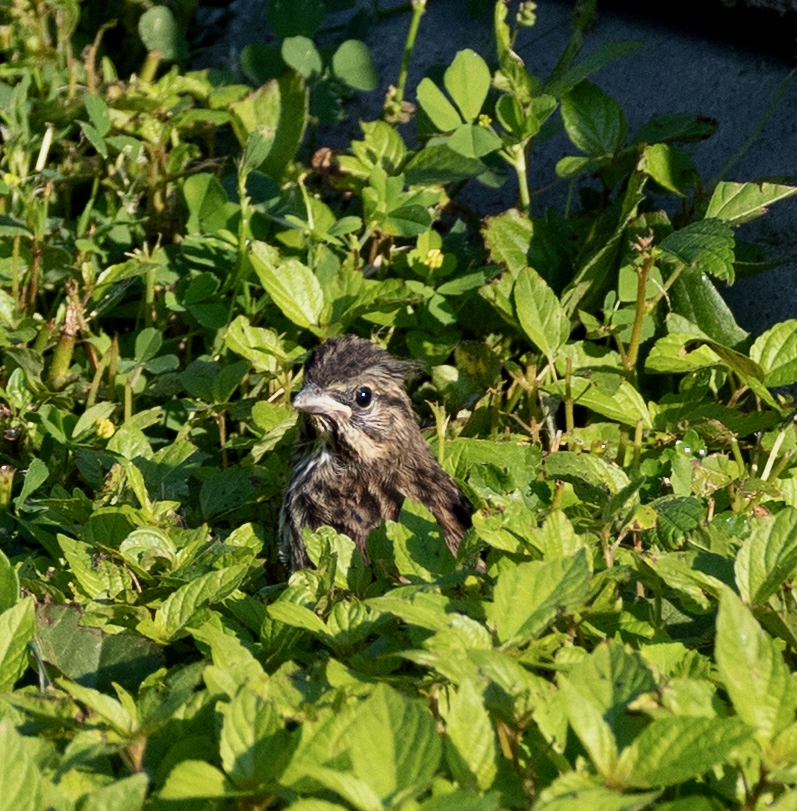
    On one neighbourhood walk, we noticed this fledgling sparrow in the grass beside the path. We had seen a Chipping Sparrow nearby and thought this might be its young. Then we saw a Song Sparrow carrying food and decided that this was more likely a young Song Sparrow.

    In a neighbourhood close to the river, we heard the distinctive chittering of Chimey Swifts overhead. We were happy to catch sight of a small flock flying low enough for a few recognizable photos. You can see why these birds are sometimes referred to as “flying cigars”.

    Depending on the weather, Chimney Swifts typically fly at 20 to 150 metres (65 to 500 feet) high as they forage for airborne insects throughout the day. As sunset approaches, the swifts descend to roost in chimneys overnight.

    Sometimes young birds seem unaware of danger. As we walked the road into Harris Park, a Gray Catbird landed in front of us and remained there peering at us for several seconds before hopping into the undergrowth.

    On our walks, we encounter a variety of native and introduced wildflowers and shrubs in the parks and neighborhood pollinator gardens.

    Crown Vetch (introduced; 2 photos), Common Motherwort (introduced), Common Milkweed, Ninebark, Butterfly Milkweed, Queen Anne’s Lace (introduced), Great Mullein (introduced).

    With blossoms come insects, often the pollinators that are vital to supporting food production, habitats and ecosystems.

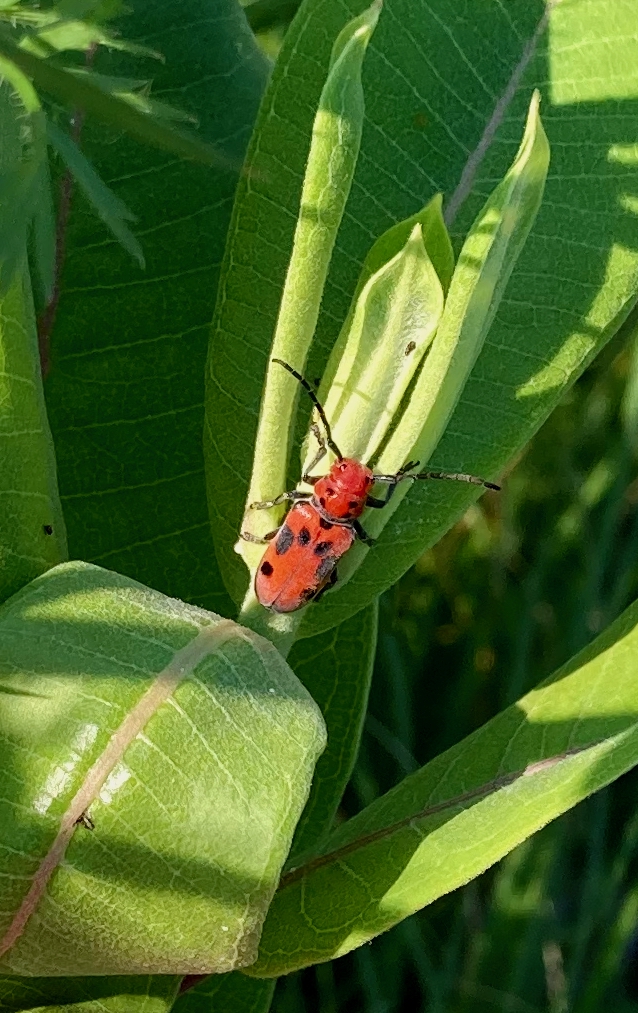
    Cellophane Bee, Red Milkweed Beetle, Bicolored Striped Sweat Bee

    Sometimes, we are amazed by the amount of pollen a bee can accumulate!

    We sometimes stop by Eldon House to see what’s in bloom. This time, it was Sweet Peas.

    Wandering Bee Sunflowers…

    …and the vestiges of an old bouquet.

    Exciting Osprey News!!!

    We have been closely watching family life on the nest. There has been much flapping by the older of the two offspring as it works to strengthen its flight muscles. At times, it has lifted above the nest for several seconds. Still, it was a surprize yesterday for us to find the youngster perched on the light tower beside the nest. Fledging happens so unexpectedly!

    For now, the young bird will remain close to the nest and dependent on the fish delivered more and more often by the diligent male Osprey. The younger sibling is flapping and may not be too far behind.

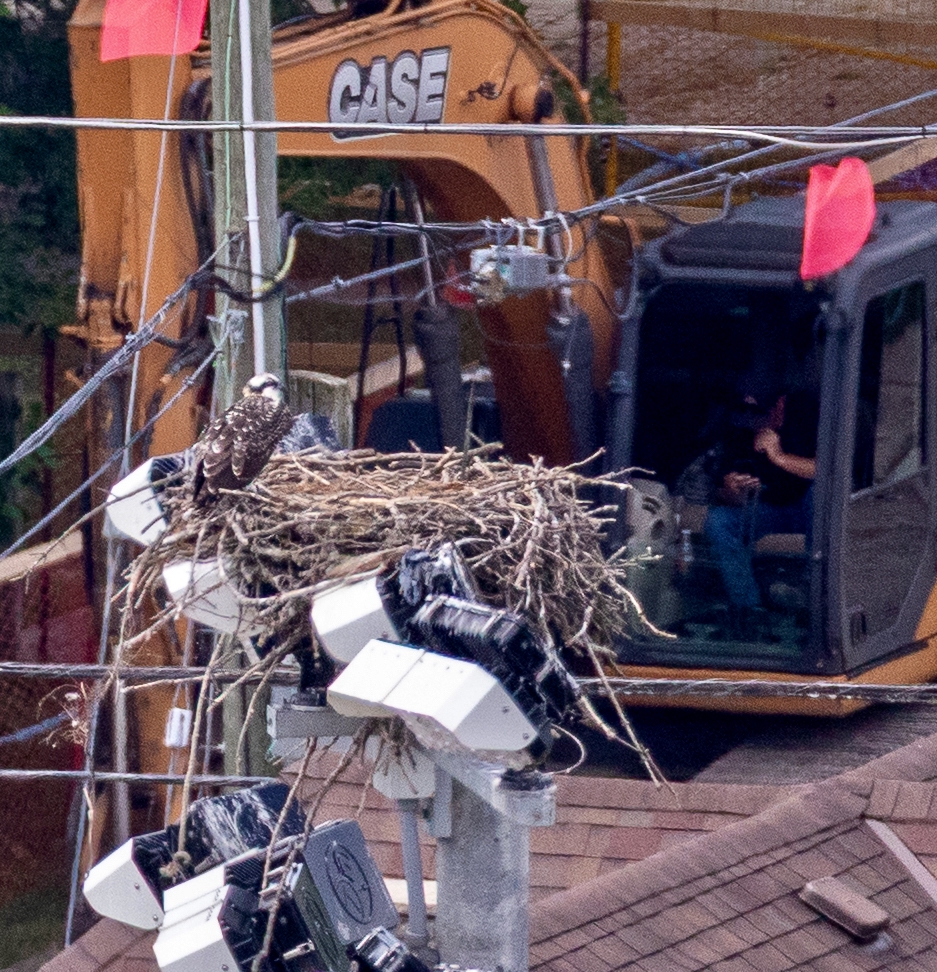
    Alpha and mom on stadium lights beside the nest. Beta still on the nest, perhaps taking in the neighbourhood construction project.

    There are two videos for us to process. You will see them before too long!

    On a beautiful sunny day, Jimmy Buffet

  • Komoka Provincial Park –      June 4, 2026

    Komoka Provincial Park – June 4, 2026

    We’ve had sun and rain, but now we are suffering through an extended heat wave. Our air conditioning is struggling to keep up…

    Komoka Provincial Park – June 4, 2026

    At the beginning of the month, when the weather was decidedly cooler, we made it most of the way down the to river along a forested path at Komoka Provinal Park.

    The path from the parking lot moves through a grassy meadow and pine plantation until it meets a wooded path overlooking the Thames River below.

    The meadow was alive with butterflies that rarely landed long enough for a photo:

    Hobomok Skipper (they’re called skippers for a reason…)

    A member of the Crescents butterflies; Common Ringlet

    Ahead on the path, we spotted a White-tailed Deer that quickly spotted us and disappeared.

    As we moved along the path, we heard a male Indigo Bunting. We found it singing high in an Eastern White Pine.

    From the high bank of the river, the wooded path leads gradually downhill.

    Along the way, we found a variety of woodland ferns and wildflowers.

    Red Columbine, Roundleaf Ragwort, Mayapple, Aniseroot, Wild Gernanium, Herb Robert, Christmas Fern, Spinulose Wood Fern

    Some other wildflowers grew in the sunnier places: Philadelphia Fleabane, Yellow Salsify (introduced)

    In the shade of the woods:

    Common Angle moth, Little Wood Satyr butterfly

    There were several Eastern Chipmunks on the forest floor. One was, perhaps, lining its nest.

    Osprey Update

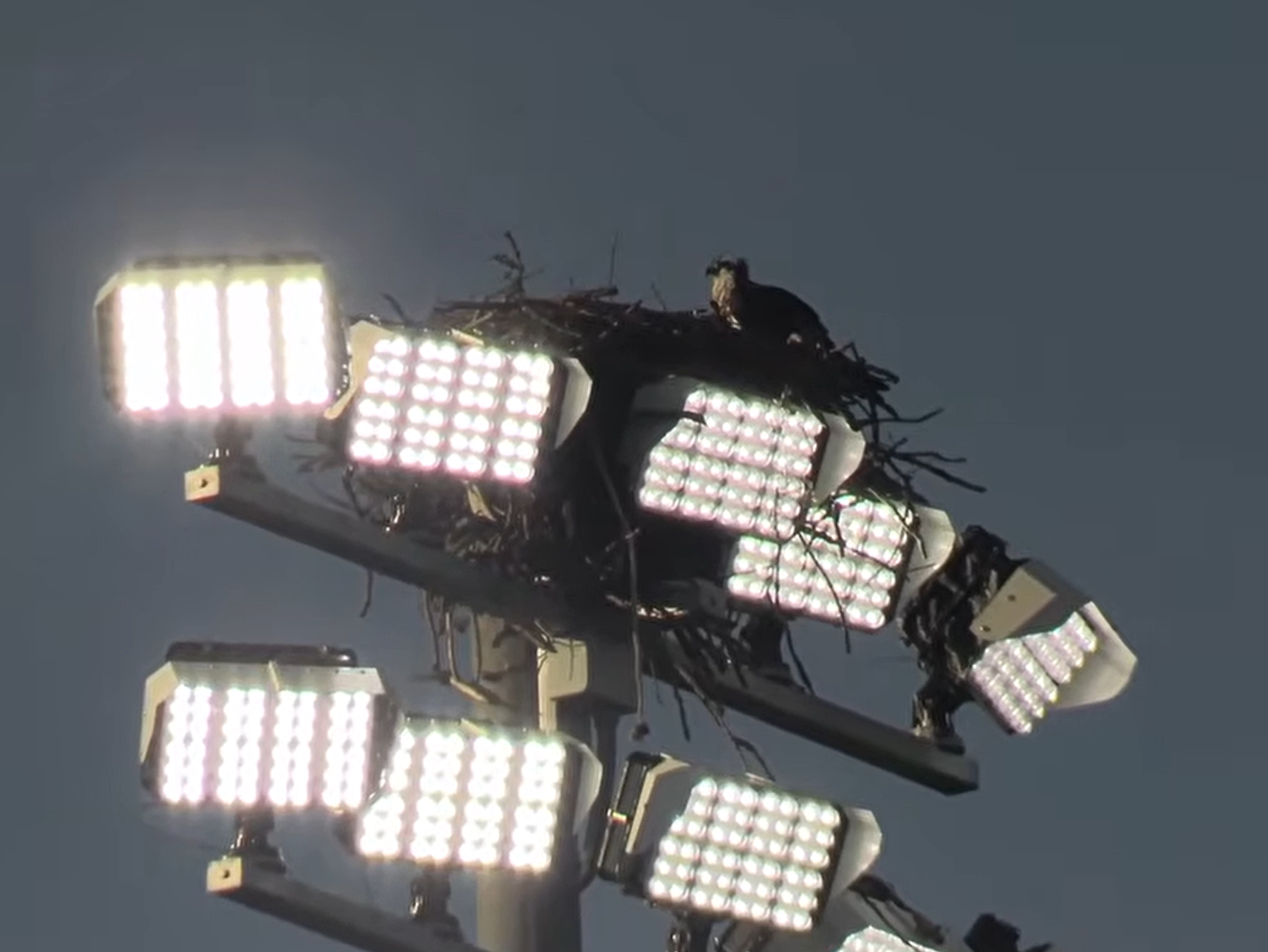
    Our Osprey nest was featured during a broadcast of a local baseball game. This image was shown with no commentary from the announcers…We are always impressed that the Ospreys choose to nest where they must tolerate the noise of the games, the crowds, the announcers and the July 1st fireworks nearby.

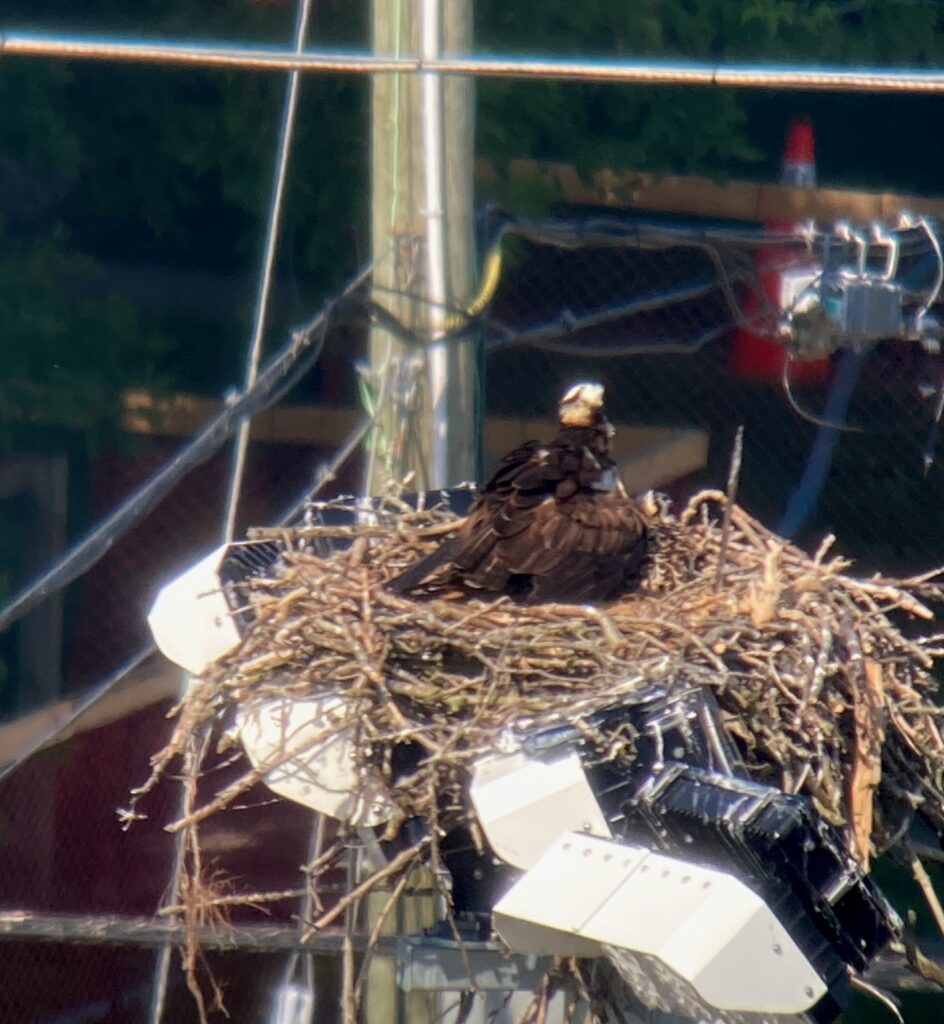
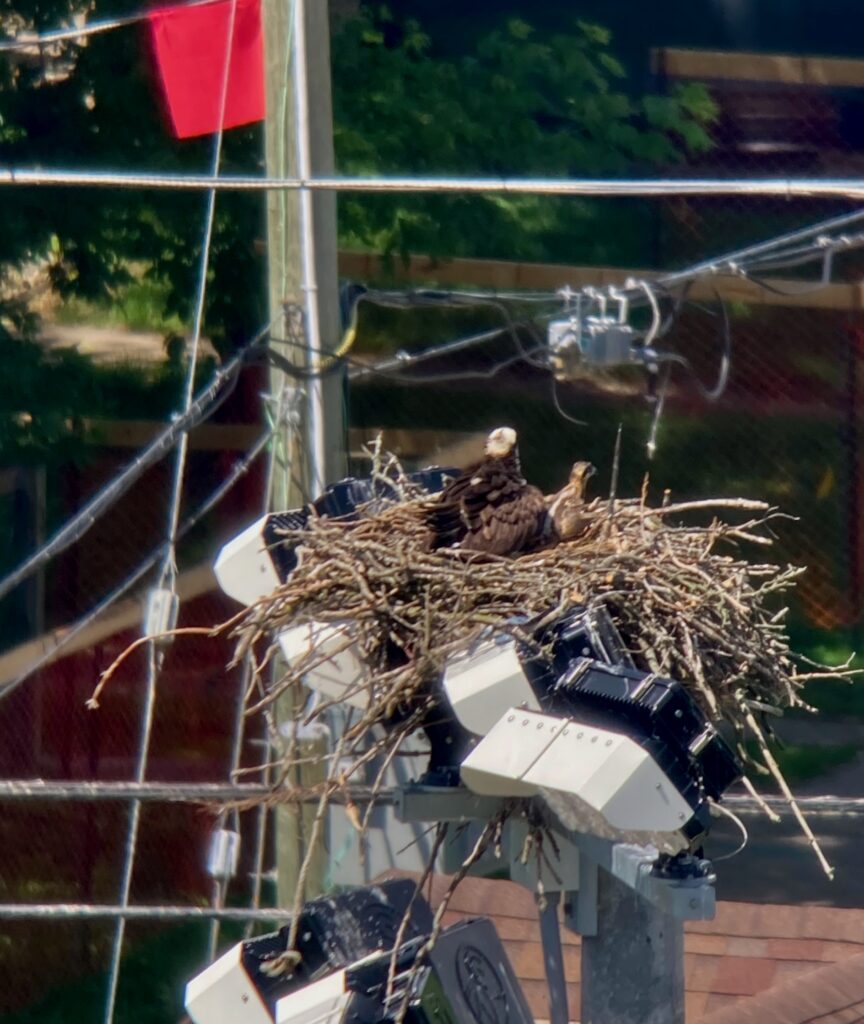
    The young Ospreys continue to grow, but we are concerned about how they will fare in this week’s prolonged heat. The fish they are fed should provide sufficient hydration and the female will shield them from the sun as much as possible.

    Wandering Bee Flowers

    My favourite Canadian Band

    Of course, the Guess Who.

    For fans of Murdoch Mysteries:

  • Here and There – May and June 2026

    Here and There – May and June 2026

    A Neighbourhood Walk – May 24, 2026

    During our time at Rondeau, Glenn developed lens envy. Once a new lens was acquired , we had to test it out on the neighbourhood flora and fauna. So far, we are pleased with the results!

    Northern Cardinal, American Robin, Red-winged Blackbird

    Kildeer, Canada Geese with goslings

    Great Blue Heron

    Black Locust, Willow, American Sycamore

    Introduced/invasives:

    Common Star-of-Bethlehem and Dame’s Rocket

    Solitude Nature Reserve – May 28, 2026

    We visited Solitude Nature Reserve briefly one afternoon. It is a very different place once the trees are in leaf.

    The White Trilliums were fading fast.

    Many species of ferns grow in the damp woods.

    Several tree and shrub species grow in the the woodland.

    Eastern Cottonwood, Black Cherry, Shagbark Hickory, Red Osier Dogwood, and Yellow Birch

    Although the woodlot is a haven for native plants, some non-native species have invaded.

    Yellow Iris and Ajuga/Carpet Bugle/Bugleweed

    Stratford – June 15, 2026

    On a recent trip to Stratford, we had time to visit the Stratford Festival Theatre Garden, the Arthur Meighen Garden. The garden was created in the late 1990s as part of a renewal of the Festival Theatre. There is a series of 32 limestone terrace beds populated with perennials designed to be in bloom from May, when the theatre season opens, until November, when it closes.

    In mid-June, there was much in bloom.

    Peonies and poppies

    Iris and clematis

    Thyme and Painted Ferns

    Lilies

    Osprey Update

    The Osprey chicks are growing and changing. They are more active and more visible on the nest as they move around and stretch their absurdly long wings. The Osprey parents are attentive caregivers.

    Music Featured in Dirty Dancing

    We re-watch this movie every few years, partly for the music. The singers in the final number really deliver.

  • Hawk Cliff Woods – May 28, 2026

    Hawk Cliff Woods – May 28, 2026

    We’ve had sun and rain. Although there have been some very hot days, we are now enjoying cool temperatures in the low 20s Celcius.

    On clear nights, we have been following the conjunction of Venus and Jupiter in the western sky. Jupiter passed by Venus, moving from above to below its sister planet through early June. Venus is said to be 7.5 times brighter than Jupiter. In the photo on the left below, the moon, Jupiter and Venus are visible. The photo on the right was taken with a telescope and shows two of the moons of Jupiter.

    Hawk Cliff Woods

    Hawk Cliff Woods is a nature reserve stewarded by Thames Talbot Land Trust. The 300-acre property overlooks Lake Erie and encompasses a maple-beech forest and several meadows.

    The cliffs along the lake are home to nesting Bank Swallows. The swallows were constantly overhead, flying acrobatically to harvest insects to feed their young.

    Bald Eagles also nest in the area and we usually see one overhead. This time, it was a third-year bird, still a year or two away from adult plumage.

    As always, we heard more birds than we could see. Some birds were busy singing, others were quietly feeding young.

    Northern Cardinal (m), Northern Yellow Warbler (m), Gray Catbird, Red-winged Blackbird (f), Eastern Kingbird, Red-eyed Vireo.

    We encounted a pair of Indigo Buntings busily foraging on the ground and in the trees.

    Native Plants

    Wild Geranium

    Philadelphia Fleabane, Eastern/Virgina Waterleaf, Wild Strawberry

    Mayapple in bloom. The “apples” develop once the blossoms are fertilized by bumblebees and other long-tongued native bees.

    Solomon’s Plume and Star-flowered Lily-of-the-Valley (aka Star-flowered False Solomon’s Seal)

    Sweet Cicely, Jack-in-the-Pulpit – leaves and berries develping from the base of the missing pulpit.

    Beautiful, but introduced and potentially invasive:

    Common Star-of-Bethlehem and Dame’s Rocket

    Pollinators (awaiting identification) and Chipmunk

    Osprey Update

    The chicks are growing under the care and feeding and watchful eyes of their parents. On Wednesday, the alarm chirps of the adults alerted us to two Osprey intruders. The male took flight to chase them far beyond the baseball stadium. He later added a new stick to the nest, something that is a fairly regular occurance.

    Friday, June 19, 7 a.m., the air was clear and there was little wind to shake the telescope. The young have figured out that they can feed themselves but still take whatever the mom offers. In the second half of the video, the older offspring helps mom to repostion the fish away from the younger.

    Wandering Bee Flowers

    We Love Sleep

    All of these videos made me smile. Louis Armstrong charmed audiences around the world. “Sleepy Time Down South” often opened his shows.

    There are two versions of “The Lion Sleeps Tonight”, the first is joyous while the second is calming.

  • South Point West and Spicebush Trails – May 11, 2026

    South Point West and Spicebush Trails – May 11, 2026

    Summer heat and humidity have descended on us. We needed the rain that arrived on Wednesday night and last night’s thunderstorm.

    We’re happy to revisit the cooler weather of May and our last few hours at Rondeau.

    South Point West Trail

    There were Bloodroot leaves as big as hands, but the blossoms were over.

    Round-lobed Hepatica was barely visible, nestled in the leaf litter.

    Smooth Yellow Violets and Long-spurred Violets

    You have to look closely for the blossoms on Early Meadow-Rue

    Illinois Carrionflower/Greenbrier

    Spicebush Trail

    The trail has a variety of habitats and plantlife.

    Large-flowered Bellwort with bumble bee pollinator

    Wildflowers in bloom: White Trillium, Wild Geranium, Goldenseal, Wood Anemone, Wild Black Currant, Glaucous Honeysuckle (2 photos)

    Spicebush Trail is known for the variety of ferns that grow there. A few were emerging in May. These are Northern Lady Fern (possibly) and Sensitive Fern.

    Last year, we were puzzled by the emerging red fronds of the Northern Maidenhair Fern. This year we recognized what they were. Some maidenhairs were farther advanced.

    Warblers don’t often frequent Spicebush Trail, but there are a variety of other birds to find.

    Common Grackle, Northern House Wren (two photos), Red-winged Blackbird, Northern Yellow Warbler (two photos), Wilson’s Warbler (female), Gray Catbird, Blue Jay, White-crowned Sparrow.

    Osprey Update

    The Osprey chicks are growing. They are now quite visible on the nest during feeding time. At other times, they are lying low in the nest. One of the chicks appears to be larger, and likely older, than the other. Ospreys lay their eggs one to three days apart, so the young are typically somewhat different in size to begin with.

    Here is one chick before the second makes an appearance.

    Here is our latest video of feeding time.

    Flowers from Wandering Bee

    Ranunculus, purple and white poppies, Bachelor’s Buttons…

    Songs about Dreams

    Sometimes a song gets into my head and I want to hear it again. This time, it was the seed for this playlist.

    Before I started thinking about dreams, I looked for some songs about togetherness. On the way I encountered Melissa Bell and like three of her songs.

  • Rondeau Provincial Park –    May 8 & 11, 2026

    Rondeau Provincial Park – May 8 & 11, 2026

    We have been graced with a period of stable weather – sunny days in the low 20s Centigrade and cool nights. Just as spring should be.

    The canopy has deepened to emerald green, losing most of its spring green.

    Our Rondeau reports continue…

    On the days we went to Blenheim Sewage Lagoons, we also spent a short time at Rondeau, checking to see if some warblers had shown up yet.

    Warbler Way – May 8th

    Despite it’s name, this trail did not yield any warblers, and very few other birds, in the short time we were there.

    Still, it was rewarding to see this handsome Rose-breasted Grosbeak.

    Also sighted: a Warbling Vireo and a Ruby-crowned Kinglet

    A lovely surprize was a Swamp Sparrow foraging in the water of the wet woods along the path. These birds can be present in our area year-round, nesting in marshes and bogs. This one was likely migrating farther north.

    Spring flowers were not as abundant as expected because of the cool spring.

    Early Buttercup, Wood Anemone, Mayapple, Violets

    An American Lady butterfly found blossoms for nectar. This butterfly cannot survive our cold winters. It migrates to Canada in May.

    Other creatures along the way…

    …Narrow-headed Marsh Fly, Eastern Chipmunk

    Birds sometimes use the park buildings to perch or shelter their nests.

    Benett Trail – May 11th

    By May 11th, warblers had started to arrive. We found a flurry of them along Benett Trail.

    Most of the warblers were moving rapidly high in the canopy. A few came low enough for photos.

    Black-throated Green

    Black-throated Blue

    Northern Yellow Warbler, Yellow-rumped Warbler

    Blackburnian and Northern Parula

    A Red-breasted Nuthatches tend to reside year round in Ontario, but some are short-distance migrants that move farther south in the winter.

    Veerys are a type of forest thrush that forage in the forest understory for insects and friut. They winter in central and southern Brazil.

    Osprey Update

    The Osprey family is thriving! The male Osprey makes regular deliveries of fish to the nest where the female feeds herself and the two growing chicks. The male remains perched on the nest during feeding, keeping watch while the female is preoccupied with tending to the young.

    Here are three short videos from June 1, spliced together.

    Ranunculus from Wandering Bee

    Such rich colours…

    Linda Ronstadt’s Self-titled Album

    Recorded and released in her early 20’s, these songs take me back to the early 1970’s.

  • Erieau Marsh Trail, McGeachy Pond Conservation Area Trail & Rondeau – May 10, 2026

    Erieau Marsh Trail, McGeachy Pond Conservation Area Trail & Rondeau – May 10, 2026

    It continues to be a cool spring here with occasional storms and spikes in temperature. The canopy is filling out. Some trees are not yet in full leaf.

    Erieau Marsh Trail

    The Erieau Marsh Trail runs along the trackbed of a former railway. It provides a variety of habitats for birds with marshland on one side and woody vegetation on the other.

    We often see several turtle species in the pond, but that day we saw only Midland Painted Turtles and a Common Snapping Turtle lurking under the water.

    Mute Swans were nesting, but there were no mudflats this year for migrating shorebirds.

    Tree Swallows and Barn Swallows soared over the marsh, scooping insects. A Great Blue Heron flew over and landed on a distant snag overlooking the lake. Barn Swallows sometimes landed closer to hand. Kildeer called and foraged on the edge of the deep ditches between the farm fields on the far side of the path.

    We looked for Northern Waterthrush along the edge of the pond. We caught glimpses of a bird with a striped breast and thought we had found one. Glenn managed to capture a few photos of it as moved through the vegetation. It turned to to be an Ovenbird!

    We were hoping to find that some warblers had arrived and were rewarded with a few. Of course they were high in the trees and moving nonstop!

    Chestnut-sided Warbler

    Blackburnian Warbler and Black-and-white Wabler

    Other birds:

    Gray Catbird and baby American Robins in a nest

    Ruby-crowned Kinglet and Warbling Vireo

    We tallied 33 species of birds in total.

    McGeachy Pond Conservation Area

    The McGeachy trail overlooks the pond on one side and Lake Erie on the other.

    Here, we found Yellow Warblers and Red-winged Blackbirds in abundance, Barn and Tree Swallows soaring overhead, and few ducks and geese far out in the lake. A White-crowned and a Song Sparrow were foraging along the path.

    A Common Tern and a Ring-billed Gull flew along the lakeshore.

    Rondeau Provincial Park – Tulip Tree Trail

    Once we knew that warblers had begun to arrive, we were eager to head back to Rondeau. We took a short trail, grateful for the long hours of daylight in May. In one hour, we logged 22 species of birds.

    Glenn was happy to get better photos of a Blackburnian Warbler and good photos of two Yellow-rumped Warblers.

    In lower light, photos can be grainy.

    Baltimore Oriole, Veery and Common Grackle

    The prize of the day was finally finding the Eastern Towhee that had been singing “drink-your-tea” for days in the undergrowth!

    https://www.allaboutbirds.org/guide/Eastern_Towhee/sounds

    As the light faded, we agreed to be back at Rondeau the next day.

    Osprey News!!!

    We are delighted to tell you that last Sunday, May 24th, we saw that the Ospreys were feeding young!

    On Sunday when the male brought a headless fish, the female stood, but did not fly off with it. After she pulled large chunks from the fish for herself, she pulled smaller shreds and moved them down into the nest. It looked like she was delivering food to two different places. Here is the first video:

    This 10-minute video recorded a few days later provides a view of Osprey domestic life. The male remains on the nest, grooming and helping with the housekeeping while the female feeds herself and two young. At about the 7-minute mark, two wobbly heads, about the size of pingpong balls, can be seen.

    Spring flowers from Wandering Bee…

    First blooms on the balcony!

    Songs about Birds

    This playlist has a few songs I like.

  • Blenheim Sewage Lagoons – May 8 & 9, 2026

    Blenheim Sewage Lagoons – May 8 & 9, 2026

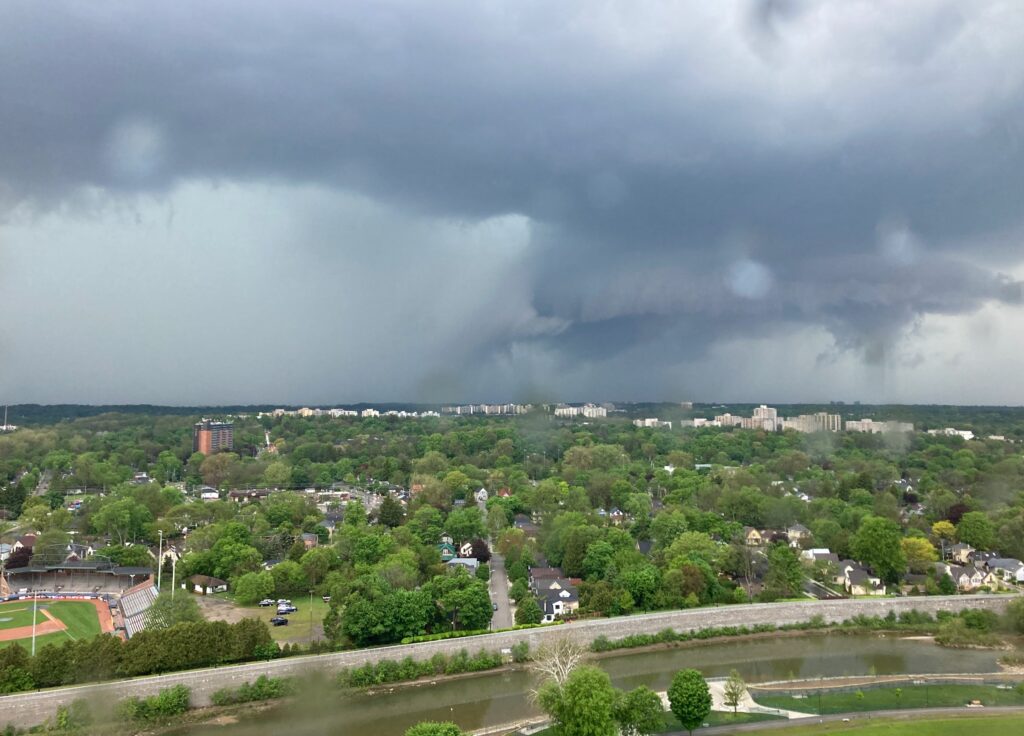
    We have experienced wide fluctuations in weather over the past week. Heat and humidity warnings have been followed by plunges in temperature into the low teens and below. High winds and rapidly falling temperatures brought heavy rain and tornado warnings.

    Hazy skies

    Storm clouds gathering, tornado warning in effect…

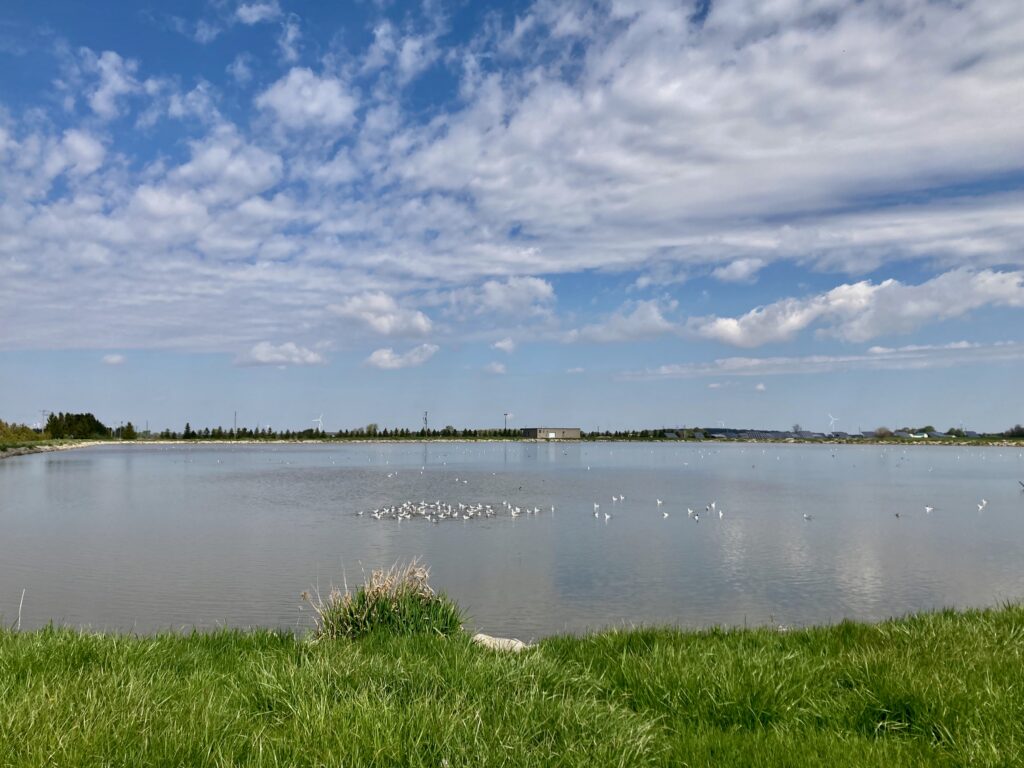
    Blenheim Sewage Lagoons

    Sewage lagoons are birding hotspots that attract migrating gulls, waterfowl, and shorebirds. The high levels of organic waste in the settlement ponds promote the growth of aquatic invertebrates, a calorie-rich food for birds. Ponds with mudflats or shallow water provide foraging habitat for wading birds and sandpipers. There is year-round open water for birds because the treatment process keeps water in the lagoons warmer all year. Sewage lagoons are typically fenced off and located away from human development, providing a safe haven for migrating birds. We had to apply for a permit to enter the locked gate at the Blenheim lagoons.

    When we arrived, there was a flock of Bonaparte’s Gulls on one of the ponds. They were in mid-migration, on their way to breed in the marshy areas of the boreal forest.

    Photos from right to left: Gulls on the water; a Ring-billed Gull flying over two Bonaparte’s Gulls; adult Bonaparte in breeding plumage; adult Bonaparte , perhaps transitioning to breeding plumage.

    As we watched, the gulls coalesced and began to circle. Online sources indicate that this is a cooperative foraging strategy. Continuous circling helps to bring prey such as small fish and insects to the surface and makes them more easily accessible.

    As we watched the gulls, a flock of circling and weaving shorebirds appeared overhead, sometimes moving together, sometimes breaking apart. What were they???

    A flock of Dunlin!

    These birds are long-distance migrants, on their way from the coastal regions of the United States to their nesting grounds in the subarctic and high arctic.

    They forage for invertebrates in water that is less than 2 inches (5 cm) deep.

    We found them foraging in the shallow ponds of the sewage treatment facility. We kept our distance to avoid flushing the birds. The distance and haze from the water made for misty photos.

    A bonus was finding Lesser Yellowlegs and Wilson’s Phalaropes in the shallow ponds with the Dunlin.

    In a kind of role reversal, female Wilson’s Phalaropes are more colourful than the males. Once they’ve laid their eggs, the female leaves the male to raise the young by himself while she looks for other males to mate with.

    Below: Female Wilson’s Phalarope in the background on the left, male Wilson’s Phalarope on the right.

    Yellowlegs forage in slightly deeper water and tolerate people somewhat closer to them.

    We returned the next day to explore a far pond we hadn’t made it to on our first visit. There, we expected to find a few more migrating waterfowl in addition to the Lesser Scaup, Bufflehead, Ring-billed and Ruddy Ducks we had seen. We also wanted to look for the Pectoral Sandpiper we hadn’t noticed on our first visit.

    Unfortunately, the skies opened up just as we arrived. Fortunately, we were with our friend who is an accomplished birder and photographer. She managed to take a few distant shots of the Pectoral Sandpiper, (that was accompanied by a Lesser Yellowlegs, on the left) before heavier rain set in.

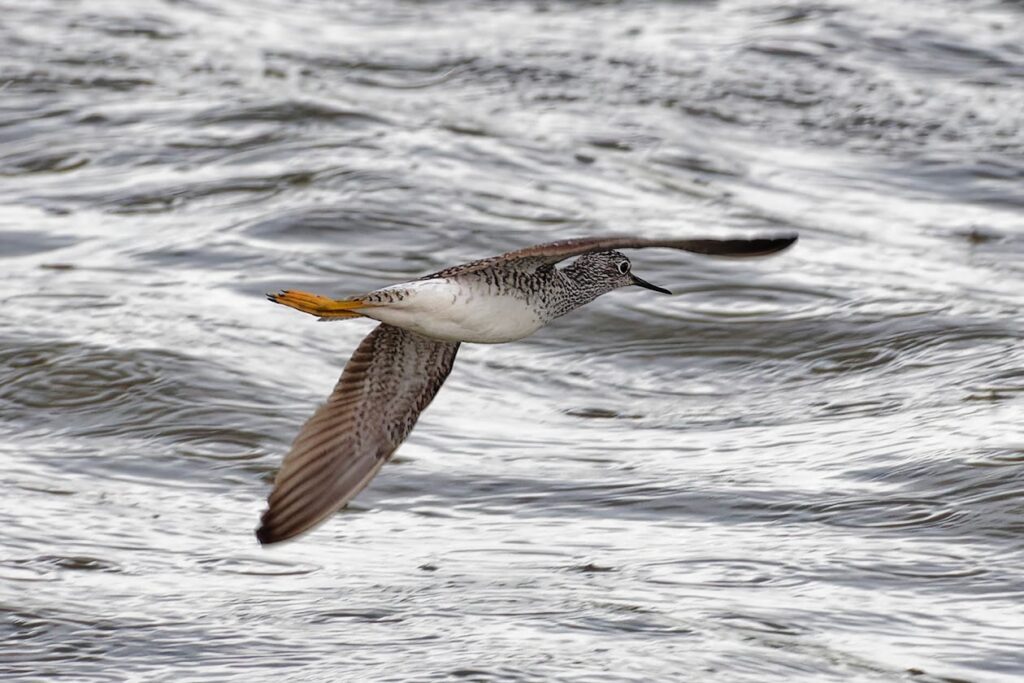
    Here, for your viewing pleasure, is our friend’s superb Lesser Yellowlegs photo.

    The lagoons also attract several species of swallows that sweep above the surface of the pond harvesting insects. The swallows perch on the overhead wires along the road.

    Left: Bank Swallow, Cliff Swallow & Tree Swallow

    Top right: Barn Swallow, Bank Swallow, Cliff Swallow & Bank Swallow

    Bottom right: Bank Swallows

    Sometimes, the Tree Swallows gathered in the willow tree across the road. They investigated the hole in the tree trunk, but it proved to be too shallow for a nest.

    In the grassy field and along the the ponds, we had other happy sightings of birds that are likely to nest in the area – Brown-headed Cowbirds, a pair of Bobolinks, and a Savannah Sparrow that sang lustily.

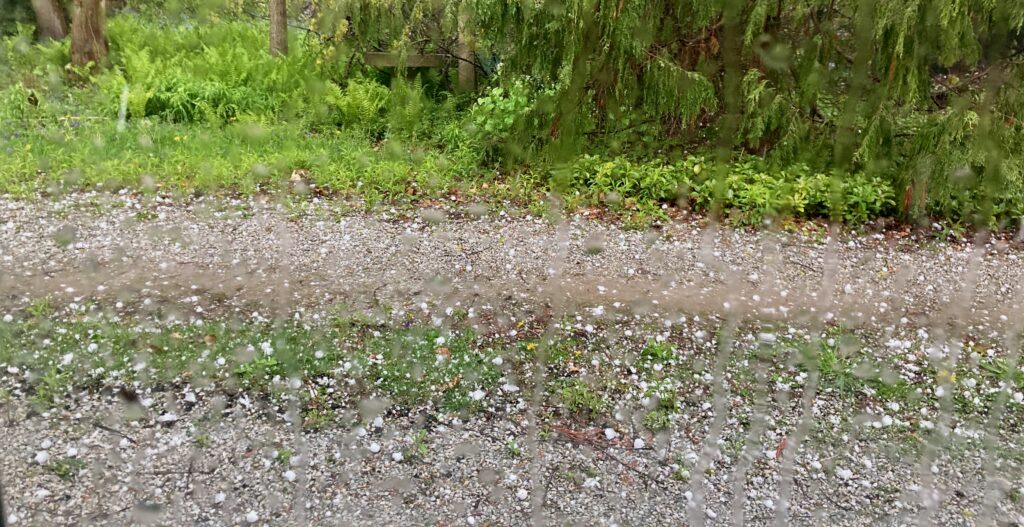
    When we were safely back in our lodgings, rain poured down followed by several minutes of large, mothball-sized hail that left a few dimples in our vehicle. The sun returned the following day, so we were happy!

    Osprey Update

    We are watching expectantly as we are now in the 35- to 43-day incubation period for Osprey eggs. We have seen no evidence of feeding young in the nest. The only change we have noticed so far is that the male has started to perch on the nest beside the female from time to time, as if staying close by her.

    We continue to see the male deliver fish to the nest. We sometimes see that he arrives with a whole fish. The female remains settled in the nest and shows no interest in the fish. After a few seconds, the male flies off to behead the fish before bringing it back to the female on the nest.

    I felt like some Mamas and Papas

    Sadly, the only videos of the original artists featured lip-syncing or poor audio. Luckily, some of my favourite performers do great cover versions.