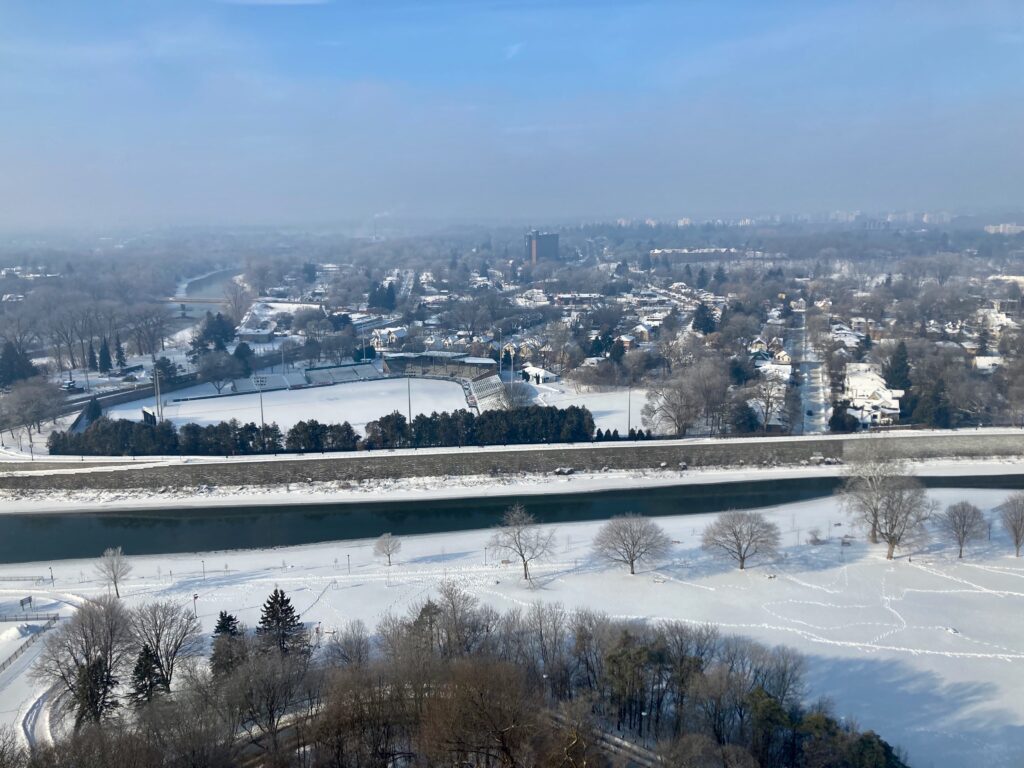
As expected, snow arrived after rain and mild temperatures removed most of the snow covering the ground. There will be more cycles of rain and snow as we head into March.
June 2025
June is green, the sweltering heat a distant memory…
June is a month of summer wildflowers, insects and other fauna.
Birds are busy raising young.
June is a month of glorious summer blossoms and bouquets.
Milder weather has continued. Daytime temperatures are above freezing, and there is rain in the forecast instead of snow. The mild temperatures make it feel like spring, but of course, there will be snow again before spring actually arrives!
The cold nights and warmer days have produced mist and fog. The fog often obscures our view until noon when the sun finally appears.
We’ve heard Northern Cardinals and House Finches singing. Longer days trigger hormonal changes that increase the production of sex hormones in male cardinals and House Finches. Song centres in the brain also enlarge. Singing serves to establish a territory and either attract a mate or strengthen the pair bond in preparation for breeding and raising young.
Canada Geese are looking for places to nest, sometimes high on buildings with flat roofs, like this eight-storey apartment building in our neighbourhood. Mallards are also pairing up.
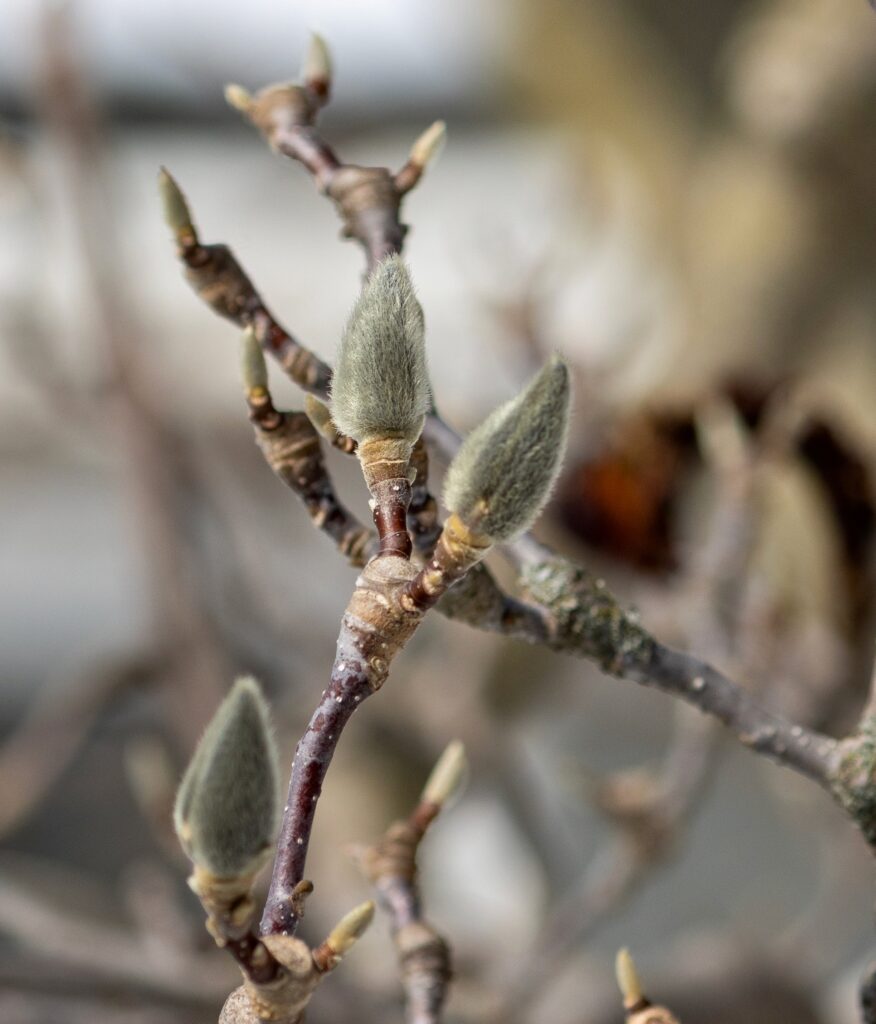
Magnolia buds are expanding.
Harris Park
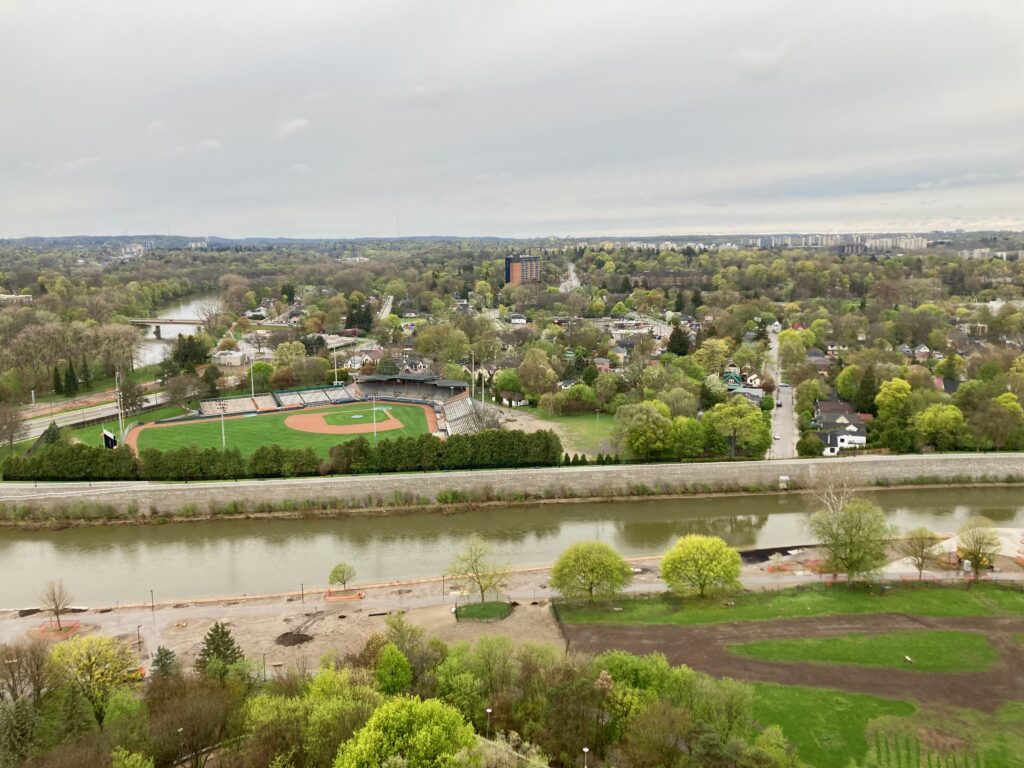
On sunny afternoons, Harris Park beckons for even a short walk. Canada Geese are ever present.
We usually encounter wintering ducks diving in the river. A Redhead was a particularly happy sighting.
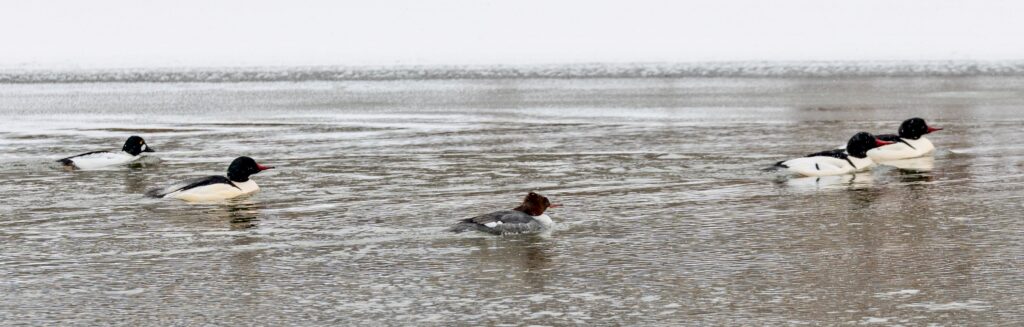
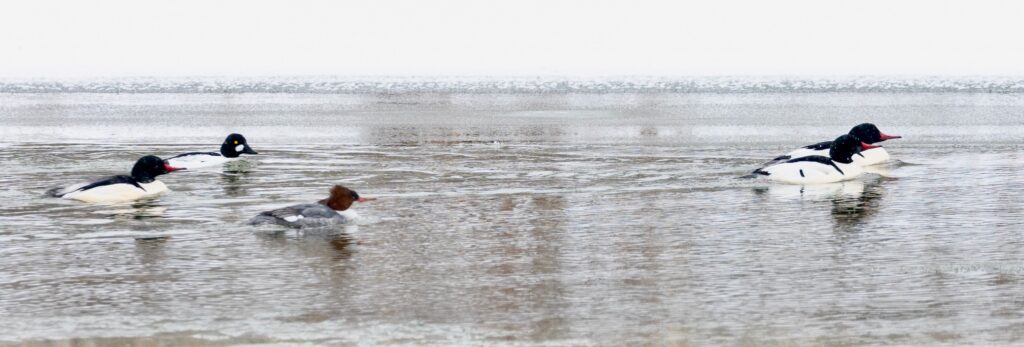
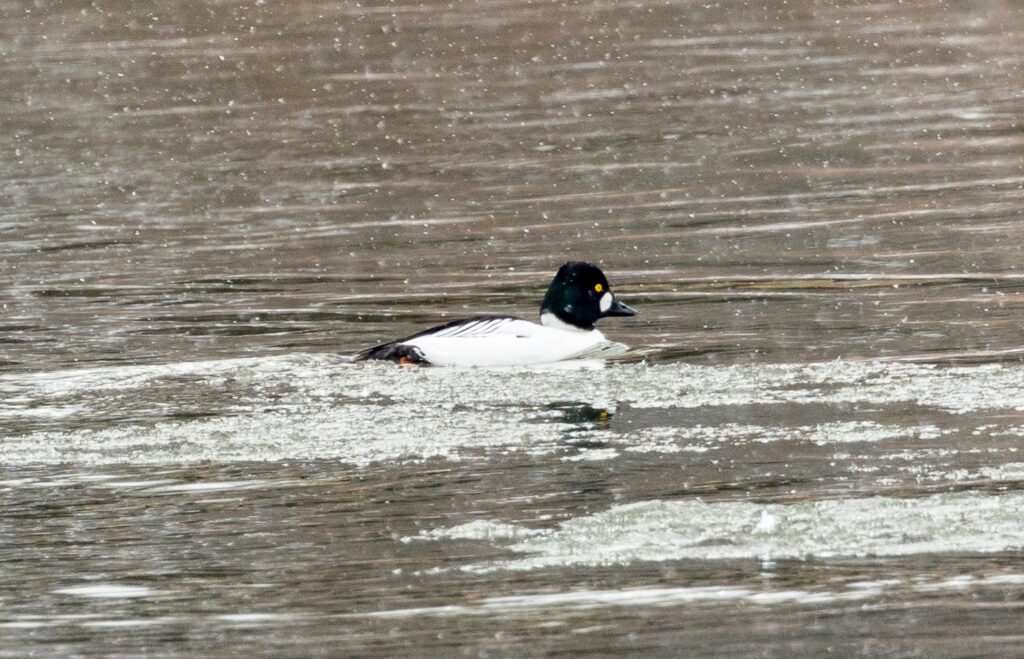
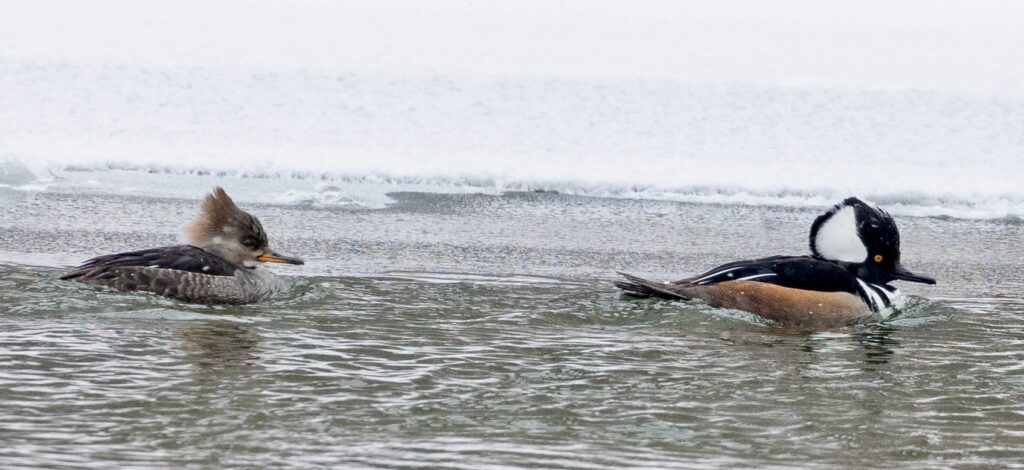
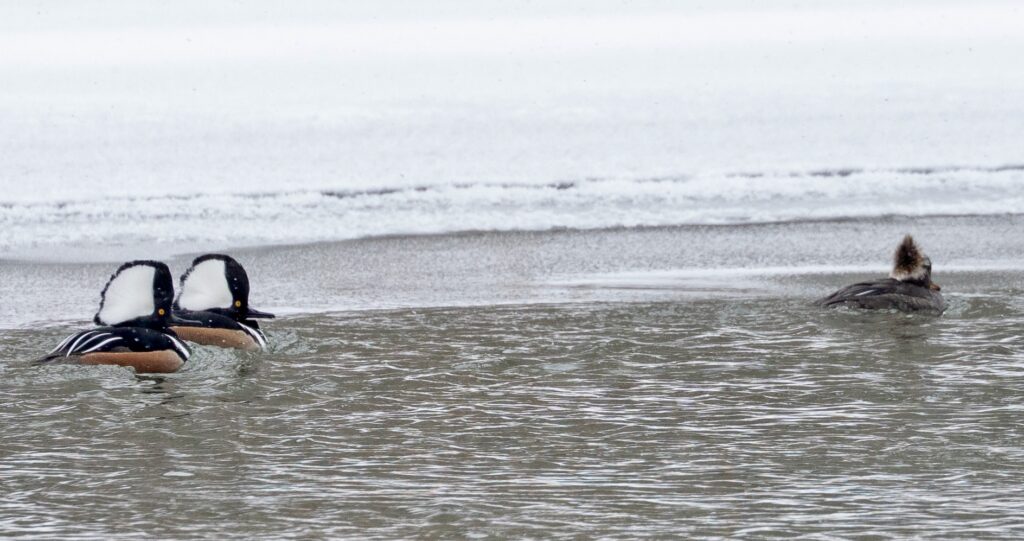
Below: Common Merganser (male), Redhead, Common Goldeneye (female), Common Goldeneye (male, two photos), Common Goldeneye (female) with Common Merganser (female), Hooded Merganser pair.
A Herring Gull, larger than the Ring-billed Gulls we usually see. Mourning Doves perch nearby, then visit the feeders on the apartment building. The male House Finch was singing from it’s perch on the feeder with the female below.
Cambridge Butterfly Conservatory
The conservatory hosts a variety tropical insects as well as butterflies. During our visit, we encountered this one scurrying across the floor. It is probably a Giant Cave Cockroach, not yet full grown.
Darkling Beetles were on display. These beetles are active at night, mainly in deserts and forests where they feed on decaying leaves, rotting wood, and fresh plant matter. There are many species of darkling beetles. The larval stage of the beetles is the mealworm. The mealworms of some species of darkling beetles are used as a high-protein food for birds, other domestic animals, and even humans.
Birds!
We were surprized and delighted to find a variety of tropical birds flying free in the conservatory. While there are concerns and challenges in keeping tropical birds in captivity, the space, care, and continuity provided by the conservatory appear to address many of them.
Green-cheeked Conure (Parakeet)
Chinese Painted Quail
A variety of tropical sparrows, finches and canaries landed in the trees and vines and visited the feeders.
Java Sparrow
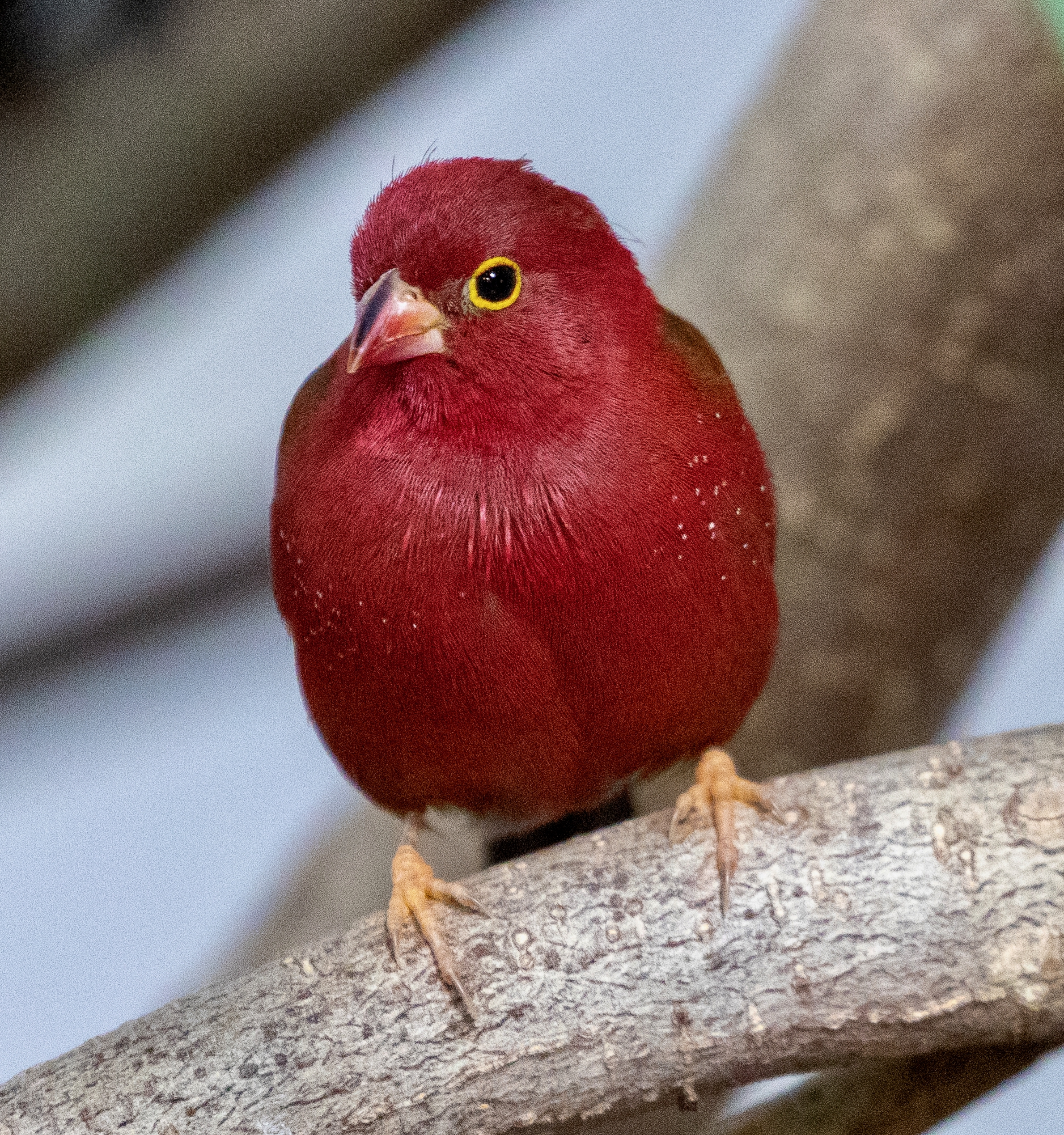
Senegal Firefinch, Domestic Canary and Blue-capped Cordon Bleu
Society Finches
Orange-breasted Waxbill
Zebra Finch
Speaking of tropical plants…
…our orchids are still going strong.
Beautiful and Gentle Songs from Foxes and Fossiles
I enjoyed sampling other songs by F&F when compiling this playlist.
The frigid temperatures have persisted, often accompanied by high winds and blowing snow. Strong winds created waves in the fields and the freezing temperatures created a frost forest on our windows. This week, we are expecting some relief with temperatures rising to one or two degrees above zero Centigrade.
Cambridge Butterfly Conservatory
We went on a tropical getaway, without getting on a plane.
The Cambridge Butterfly Conservatory is a tourist attraction that is committed to conservation, education and research. https://www.cambridgebutterfly.com/
It includes a 10,800 square foot indoor tropical garden that hosts thousands of free-flying butterflies and a variety of tropical plants, birds, and animals. We welcomed the warmth of the humid tropical landscape, blossoms, and water features.
Some butterflies fed on suspended trays of fruit, others sampled nectar from blossoms, others stopped to rest wherever they landed.
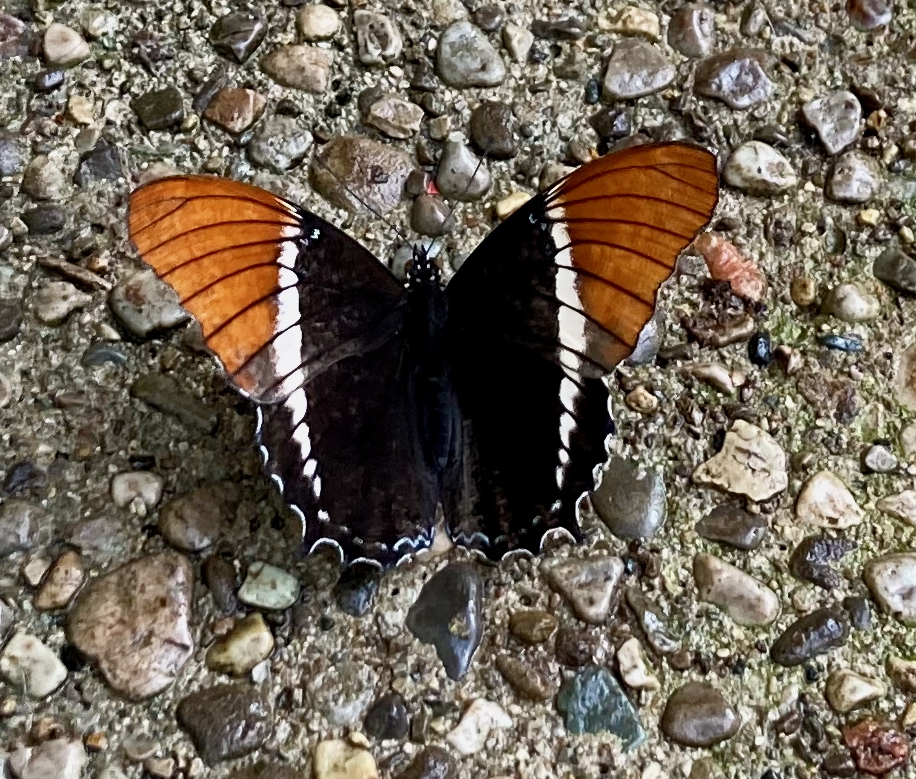
Ricepaper butterflies are found in Malaysia, Taiwan and the Philippines. They are a common species found in lowland rainforests and coastal mangrove forests.
Blue Morpho butterflies transform when they open their wings.
Wings closed.
Wings open.
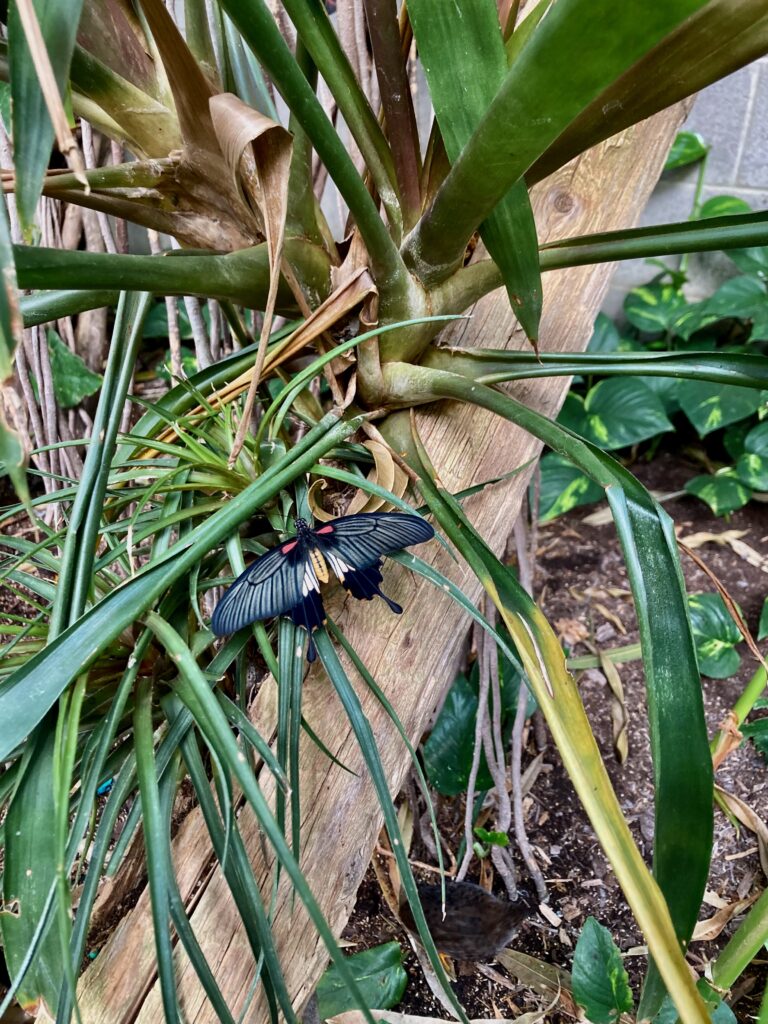
Asian Swallowtail, female
And so many more…
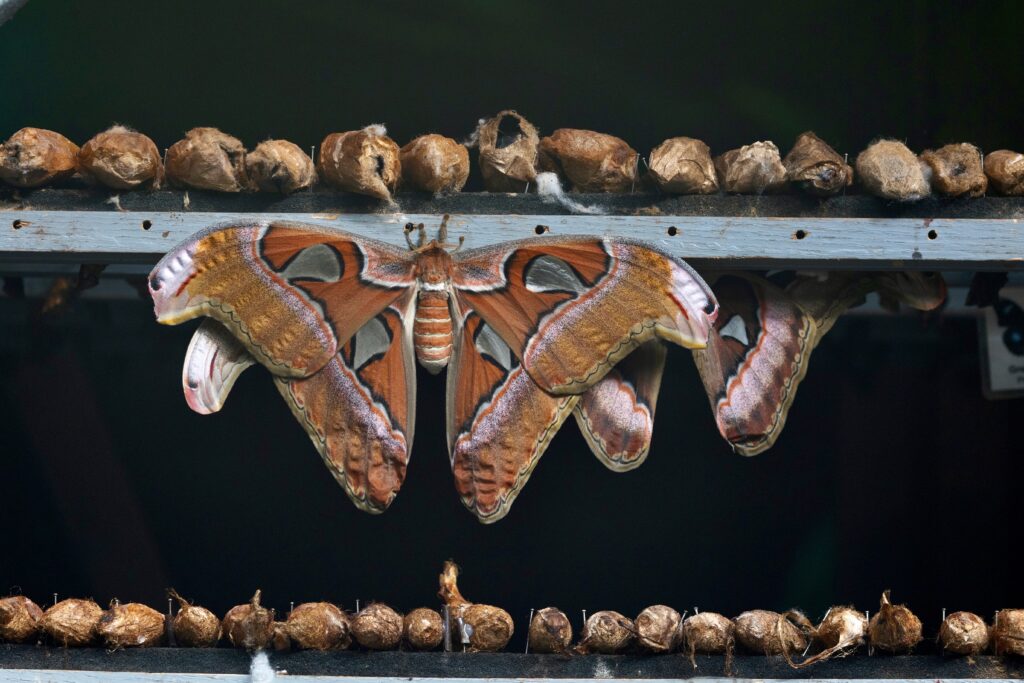
Butterflies and moths were emerging from the pupae in the Emergence Window. The conservatory receives pupae from butterfly farms in Costa Rica and the Philippines. According to the conservatory’s blog, sustainable butterfly farming started decades ago as a way to conserve tropical rainforest habitat. Local families earn a living and have a vested interest in protecting tropical environments. The butterflies and other living organisms benefit from habitat protection.
The names of the butterflies can all be found on the conservatory’s website.
Atlas Moth, newly emerged.
Although the conservatory doesn’t usually breed butterflies, there was an Owl Butterfly caterpillar on display. What a wonderfully well camouflaged organism!
There was so much more to see and learn about. Stay tuned for Cambridge Butterfly Conservatory – Part 2!
Duane Allman
One of many great stories about Duane Allman (from Wikipedia):
Duane began to learn to play slide guitar on his birthday in 1968. He was recovering from an injury to his left elbow, suffered in a fall from a horse. Gregg brought him a birthday present, the debut album by Taj Mahal, and a bottle of Coricidin pills. He left them on the front porch and rang the bell, as Duane was angry with him about the injury. “About two hours after I left, my phone rang,” Gregg recalled. “‘Baby brother, baby brother, get over here now!’” Duane had poured the pills out of the Coricidin bottle, washed off the label and was using it as a slide to play along with the album track “Statesboro Blues” (on the recording, the slide guitar is played by Jesse Ed Davis). “Duane had never played slide before,” Gregg later said, but “he just picked it up and started burnin’. He was a natural.” The song became a part of the Allman Brothers Band’s repertoire, and Duane’s slide guitar became crucial to their sound. Because of his use of the early-1970s-era Coricidin medicine bottle, which is no longer manufactured, replica Coricidin bottles are now popular with slide guitar players who like its glassy feel and sound.[14]
…and another:
After a concert in Miami, in August, watched by Eric Clapton and the other members of Derek and the Dominos, the two bands went back to Criteria Studios in Miami, where the Dominoes were recording Layla and Other Assorted Love Songs. Members of both bands jammed, after which Allman and Clapton stayed up all night trading and showing one another favorite licks, discovering they had a deep and instinctive rapport.[23] Allman participated in the recording of most of the album’s tracks, contributing some of his best-known work.
I first heard about Duane Allman as the second lead guitarist on Derek and the Dominos, but I did not realize until years later that he died soon after recording with Eric Clapton. The expressive coda on Layla features Duane playing a different newer guitar from most of the album.
We continue to have frigid temperatures, wind chill effects and frequent snow flurries. After watching from the warmth of our apartment, it was time for us to get closer to the wintering ducks diving in the river – despite the cold.
February 2, 2026
We bundled up against the wind and snow and headed out earlier this week to search for ducks on the river. It doesn’t seem as cold when there are birds to see and photograph!
Canada Geese are present along the Thames in winter. These geese no longer migrate as they did in the past.
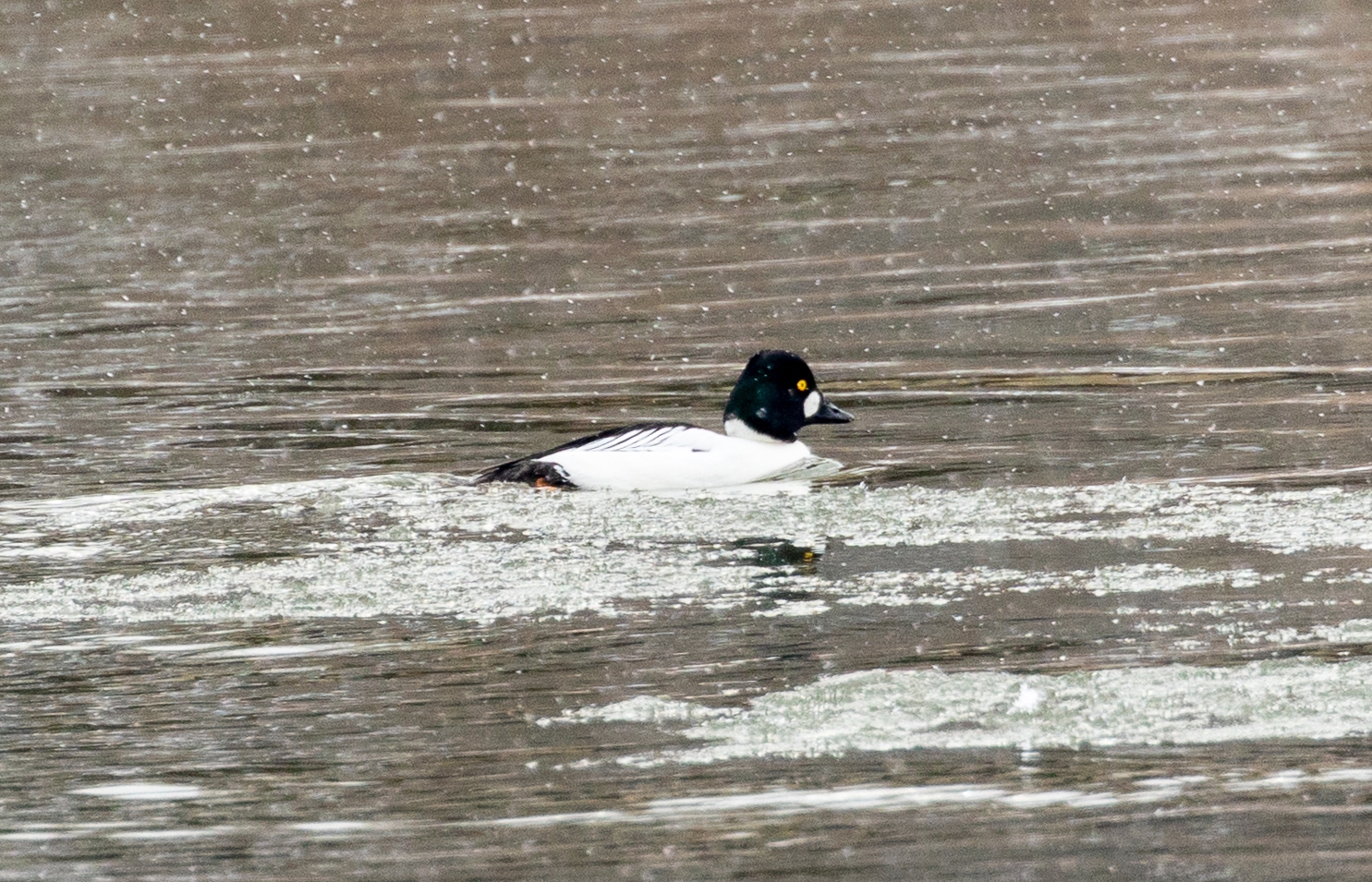
Tagging along in a flotilla of Common Mergansers was a male Golden Eye. The male mergansers are striking in their contrasting plumage and bright red bills. In bright light, the males’ black feathers are revealed to be dark, iridescent green. Female and non-breeding male Common Mergansers have completely different plumage from adult males – grey bodies, reddish-brown heads and white chin patches and breasts.
Male Goldeneye
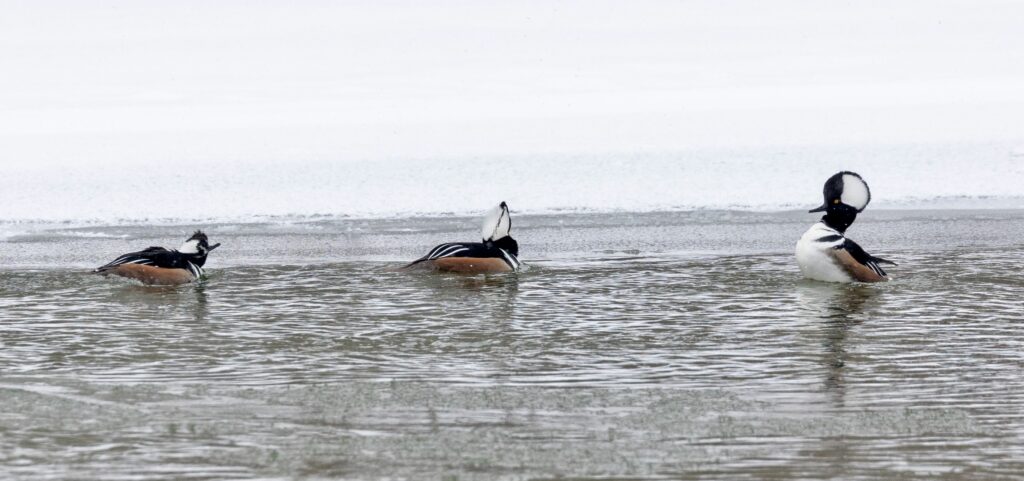
We were delighted to find a small flock of Hooded Mergansers farther up the river. According to allaboutbirds.org, they court in groups of one or more females and several males. In the courting display, males raise their crests to expand the white patch, sometimes jerking their heads back while emitting a croak. We didn’t hear any croaking. Perhaps these were practice runs…
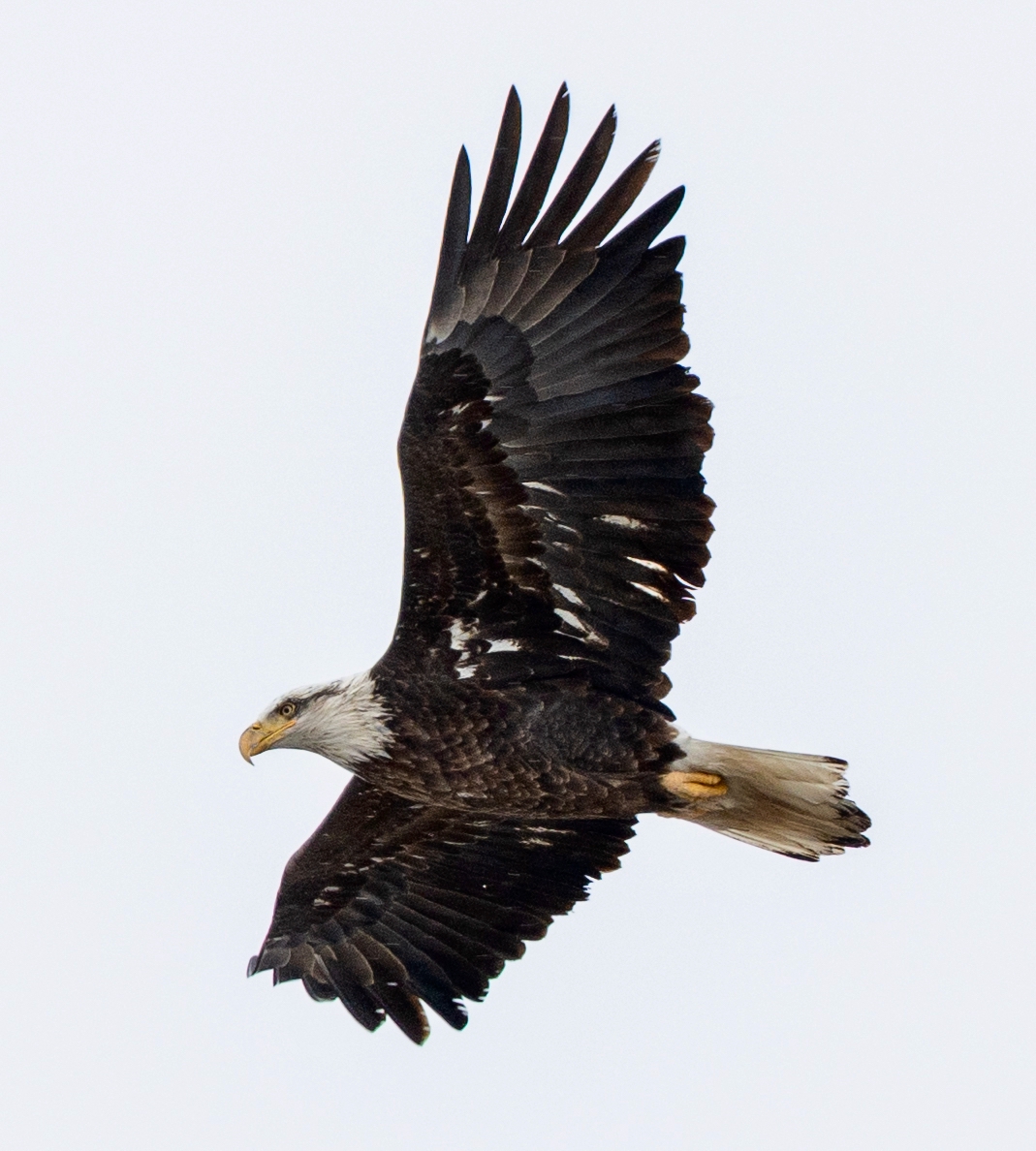
We caught sight of a Bald Eagle as it flew through the falling snow. On our way out of the river valley, we listened for small birds in the trees. All was quiet, even in the bushes that usually shelter flocks of House Sparrows. Very few birds flew into the feeder mounted on a neighbourhood building. It is likely that most were tucked away out of the wind and cold.
Wandering Bee Flowers
For some colour, here are the June flower bouquets from Wandering Bee flower farm.
Music – A feast of rock big bands
For a few years in the early 1970s, there were three successful bands with large horn sections, Lighthouse, Chicago, and BS&T (Blood, Sweat & Tears with David Clayton-Thomas). While there are some decent live recordings, we can do better with studio and cover versions of their songs. Leonid & Friends have specialized in covering (and sharing on YouTube) the songs of Chicago.
We continue to be in the grip of brutally cold weather with no relief in sight. It’s too cold to spend a lot of time outside, so we will continue to revisit 2025.
On the bird front, we have seen Bald Eagles soaring high above the river and Hooded and Common Mergansers diving below the river surface. On our way through downtown London one day, a flock of pigeons flew in front the car, chased by an adult Cooper’s Hawk. The hawk duely perched in a sidewalk tree, perhaps planning its next attack.
Weather Forecasts
The view from here features frost-covered windows:
May brings so many changes that we are dedicating this whole post to it.
May 1st to 15th
The canopy begins to turn spring green.
May 3, 2025
In early May, we headed to Rondeau Provincial Park.
The migrating warblers were plentiful and rarely stopped moving. Other migrants were filling up for their northerly flights. Birds that remain in the area were claiming territory and building nests.
A highlight was an extended encounter with the resident Prothonotary Warbler.
Spring wildflowers at every turn…
Other creatures emerging
May 15th to May 30th
Closer to home, spring was also unfolding, the canopy becoming greener each day.
Birds in their finest plumage were pairing up and settling in for the breeding season.
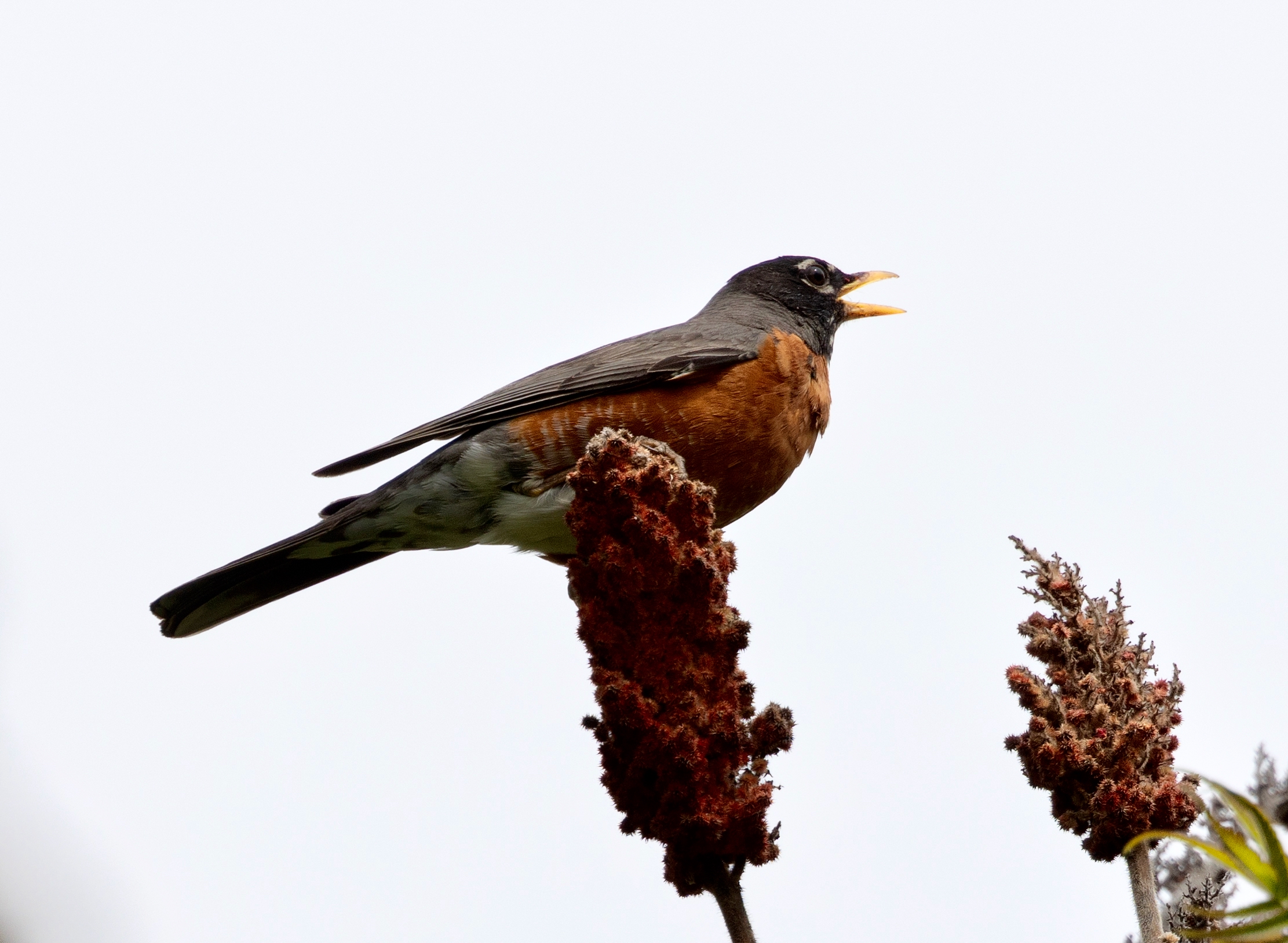
American Robins were already well into the breeding cycle.
So many spring blossoms made an appearance…
Happily, Wandering Bee flower farm returned to the Saturday market with beautiful bouquets from their fields and hoop house.
Three Dog Night
Three Dog Night is an American rock band. They formed in 1967 with a lineup consisting of vocalists Danny Hutton, Cory Wells, and Chuck Negron. This lineup was soon augmented by Jimmy Greenspoon (keyboards), Joe Schermie (bass), Michael Allsup (guitar), and Floyd Sneed (drums). The band registered 21 Billboard Top 40 hits (with three hitting number one) between 1969 and 1975. Because Three Dog Night recorded many songs written by outside songwriters, they helped introduce mainstream audiences to writers such as Paul Williams (“An Old Fashioned Love Song”) and Hoyt Axton (“Joy to the World”).
I had not heard any of these songs, except for “Joy to the World” in a long time. I saw the band at Ontario Place in the late 80s and thought they were terriffic.
We have had extremely cold, windy weather since the start of the new year. Temperatures with wind chill have generally stayed well below freezing. The sun has put in only rare and fleeting appearances.
What better time to mine our archives and look back on 2025? It is encouraging to see how quickly the seasons change in only four months!
January
A frosty month
February
Ice and winter visitors
March
Early migrants and arrivals
April
A month of change
More birdsong, migrants, and early arrivals
Spring buds and blooms
Going Down Memory Lane for Music
Whenever the sun makes a rare brief appearance, guess which song starts playing in my mind. This playlist features some gentle songs for a winter’s day.
We decided to revisit Kirk-Cousins Management Area in September with our friends since our last visit there was a very brief one on a sweltering summer day.
The ponds attracted Mallards, Canada Geese and an immature Great Blue Heron.
Flocks of Red-winged Blackbirds and European Starlings were gathering before they headed south.
The starlings sometimes filled the sky or lined the nearby communications tower and guy wires.
The Red-winged Blackbirds were much fewer in number and were mostly females.
American Goldfinch were transitioning to theirnonbreeding plumage. Some immature Cedar Waxwings were also perched on high branches.
In September, there is a steady stream of Blue Jays heading south. They are hard to get into focus!
A Cooper’s Hawk and a Red-tailed Hawk were surveying the scene, perhaps on the lookout for prey.
We made it farther along the trail in the conservation area, finding shade and wet woods.
The woods were relatively devoid of bird life. There was more to see in the open areas of scrub and meadow.
Buckthorn and Autumn Olive bushes were laden with fruit. Although they provide food for birds and animals, both are invasive and their fruit less nutritous than native fruiting bushes.
Asters, knapweed, and goldenrod were still in bloom.
High in an Eastern White Pine, we saw what we thought was a bird’s nest. On closer inspection, we found it was a nest of European Paper Wasps. Queens and reproductive males are likely to find shelter in the trunk of a hollow tree or under a large rock for the winter.
Dragonflies were still in flight. These are meadowhawks, not further identified.
White-faced (r)and Autumn (l)Meadowhawks
This Northern Crescent was somewhat worse for wear, but still flying.
January Weather
A January thaw last week was accompanied by rain that melted the snow and flooded the river.
A cold front has now arrived, bringing days and nights of gusty winds and snow and poor visibility.
The frost on the windows this year looks like plants growing from the seabed.
Brrr…
This playlist has some songs that I associate with winter (and sometimes Canada).
London continued to have wintry weather through December – low temperatures with frequent snow and icy conditions.
On December 26 and 27, the city was coated in freezing rain. Some trees and branches collapsed under the weight of the ice that accumlated.
Despite the destruction and treacherous travel conditions, there was beauty in the effect of the ice.
Rain and rising temperatures melted the ice and caused the river to overflow its banks.
Since the new year, there has been a January thaw with above-freezing temperatures and rain. Before the snow cover melted, there were days of thick fog as the warmer air met the frozen ground and snow. Today, we look out on green grass and a sea of mud.
New Year’s Day Walk
We signed up for the annual New Year’s Day walk led by one of Nature London’s most proficient birders and attended by other accomplished birders.
It was an auspicious start to the year to have the sun shining, at least for the first half of the walk.
The route through Greenway Park provides opportunities to find resident and wintering waterfowl.
The birds were far away on the opposite side of the river, diving for fish and acquatic invertebrates such as crustaceans and mollusks.
Hooded Mergansers (male), Common Mergansers (males and one female), Common Goldeneyes (females, one male and one female), Bufflehead (male)
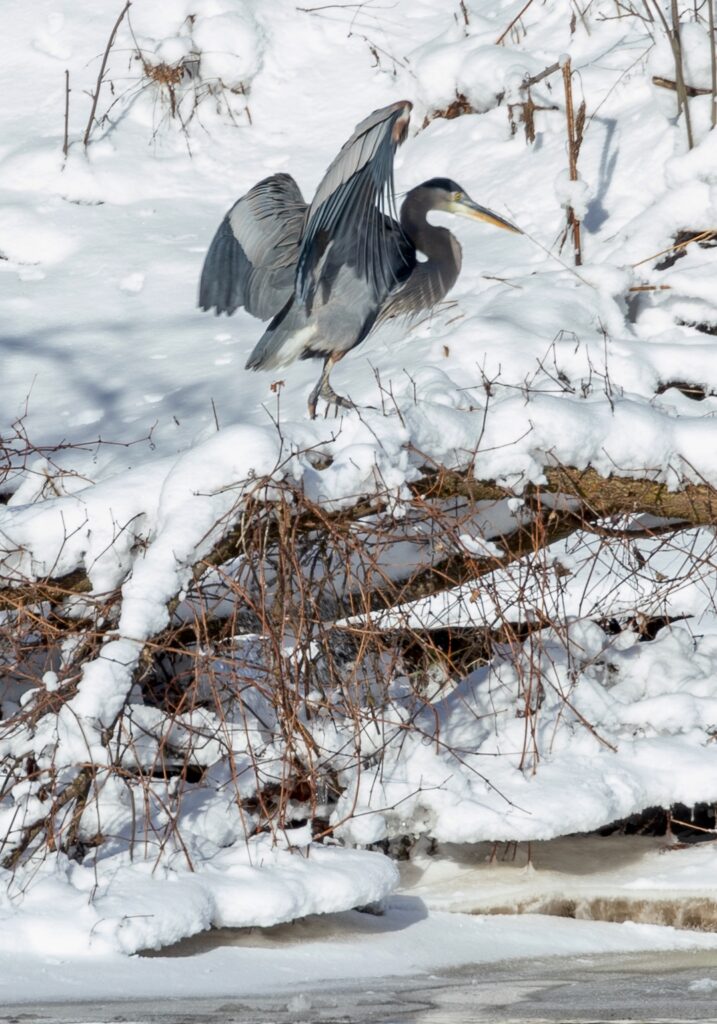
On the far side of the river, a Great Blue Heron was probably wondering why it had stayed in London for the winter.
Canada Geese and Mallards congregate in the shallow water where the river widens. There, they are joined by a variety of escaped domestic ducks, including a pair of Cayuga ducks (large, dark blackish green birds). There are now several odd looking hybrid ducks among the flock.
A Mallard pair and an American Black Duck in the top right photo. Other “odd ducks” in the rest.
There were a few birds high in the trees, a challenge to spot and photograph!
There were several sightings of Bald Eagles as they flew along the river. Near the end of the walk, one circled overhead for a better look.
It was a satisfying way to start the new year!
Winter Flowers
This waxed Amaryllis promises double pleasure.
Our trusty orchid is again gracing us with winter blossoms.
Christmas Songs
“Why now?” you ask. I prepared this playlist for use in a post closer to Christmas that never happened. I like these songs enough to share them with you.
The first and last songs are from Love Actually, one of our Christmas traditions.
Only after preparing this list, I watched several versions of “Fairytale of New York”. I had not heard it before.
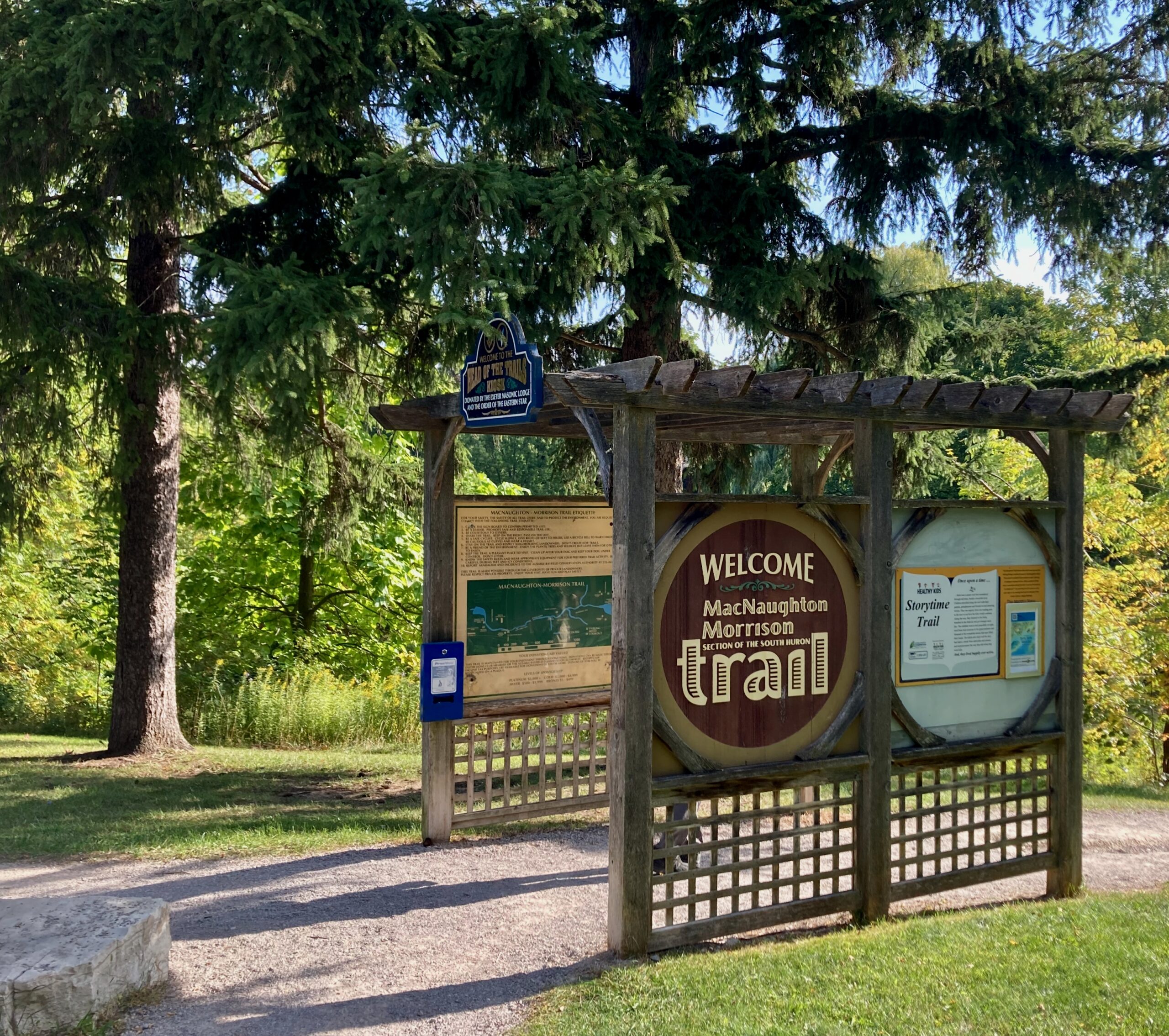
The MacNaughton Morrison Trail is one section of the South Huron Trail. The trailhead is in MacNaughton Park in the town of Exeter. The four-kilometer trail skirts the Ausable River which can be crossed on bridges at two points along the trail. The trail leads to the Morrison Dam Conservation Area that features a 30-acre lake.
Although the trail can be rich with birds during the spring and fall migrations, September 18 was not a prime time for sighting birds. But the day was sunny and perfect for a walk through the woods and trails.
Exeter is known as the location of an established population of white squirrels. Genetic mutations can cause the Eastern Grey Squirrel to have white fur instead of the usual grey, black or reddish fur. The white morph is a rare mutation, an inherited condition that results in white fur not related to a lack of pigmentation.
We were disappointed that we did not see a white morph squirrel on our walk. We have since learned that white squirrels are more abundant in Exeter’s residential areas, especially in the historic core area where they have been documented since 1912. Next time!
Plants were still in bloom or setting seeds.
Spotted Joe-Pye Weed, Cutleaf Coneflower, Prickly Sowthistle, White Baneberry (aka Doll’s-Eyes), Devil’s Beggarticks, Common Jewelweed, possibly Calico Aster.
The November snow has melted and we are enjoying mild, for November, temperatures as high as 8 °C (46.4 °F).
Just a few days ago, snow remained, and there were still a few leaves on the trees.
This week, the trees are mostly bare and the canopy mostly grey.
Colour now comes from the sunsets…
Our Sunday walk took us through Harris Park where Canada Geese congregated and Mallards dabbled in the river. A pair of Northern Cardinals made their way through the high tree tops.
A few asters bravely continued to bloom, but most had gone to seed.
After we crossed the river, we spotted a Great Blue Heron standing in a sheltered spot on the riverbank near the bridge. If it can find enough to eat, this bird may stay all winter. The sun lit its face with the rest of the bird in shade.
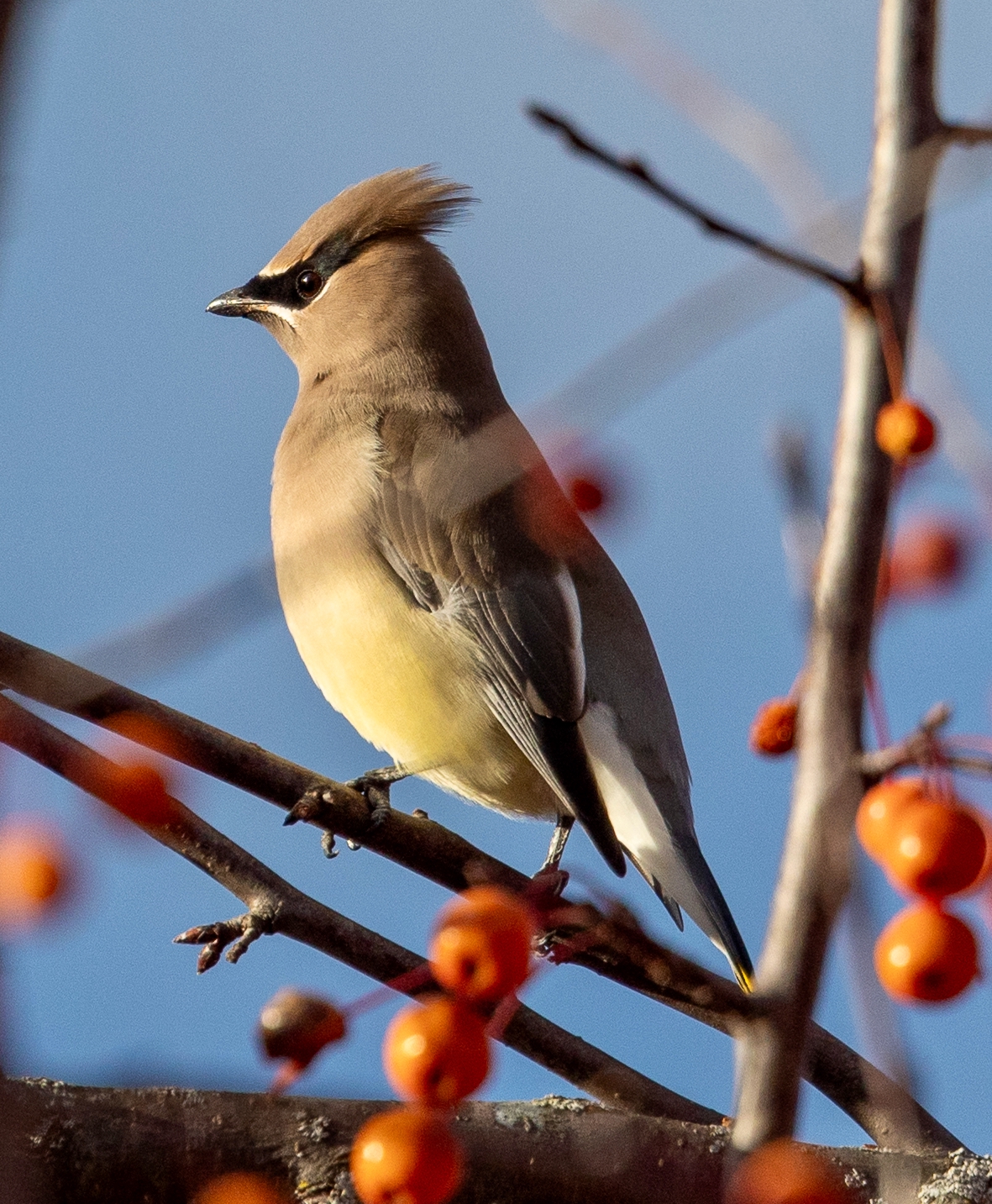
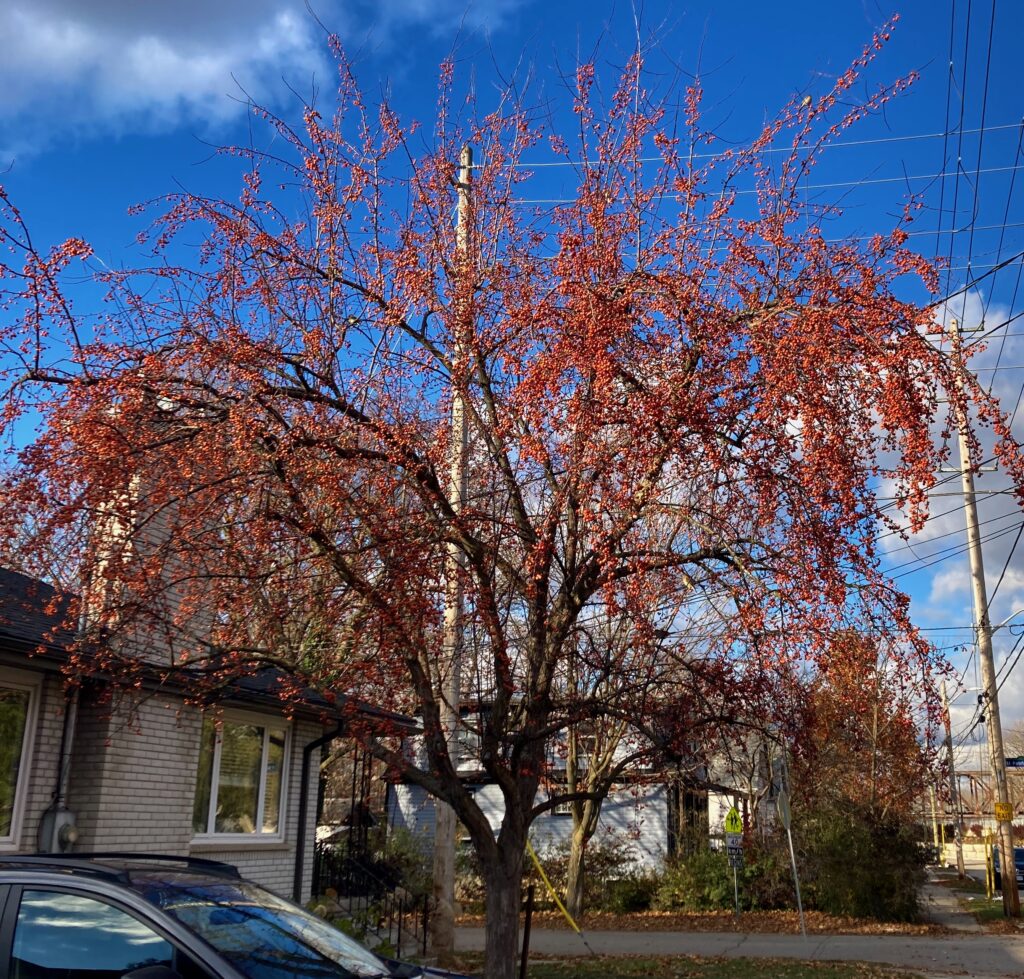
As we walked through the Blackfriars neighbourhood, we came across a crab apple tree laden with fruit. At first, we saw a few American Robins feasting in the tree and on the ground below the tree. As he took photos with his telephoto lens, Glenn noticed two Cedar Waxwings in the branches. Soon the waxwings were joined by several others.
Cedar Waxwings are short- to long-distance migrants. Some breed across Canada, north of the Great Lakes before heading south. Some winter as far south as Central America. Some Cedar Waxwings are present year round across southern Canada and the northern U.S.
Except during breeding season, waxwings feed mainly on different fruits that become available throughout the year. These might include serviceberry, mulberry, dogwood, cedar and juniper berries, mountain ash, honeysuckle, crabapple, hawthorn and Russian olive fruits. In winter, waxwings roam in flocks looking for fruit.
Many of the waxwings in this small flock were first-year birds. Some still showed light streaking on theirbreasts, and light grey backs. They did not yet have the red wingtips of most adult birds.
As we continued to watch, other birds joined the banquet. The word was out!
In the end, the Cedar Waxwings were joined by House Sparrows, American Robins, European Starlings, American Goldfinches, and House Finches. A Mourning Dove perched nearby.
On our way home, we spotted two Red-tailed Hawks circling overhead. One was an adult with a signature red tail. The second was a juvenile with a banded tail. We later watched as one of the hawks descended and landed just within the reach of Glenn’s long lens.
These are likely the local Red-tails that we have seen patroling the downtown area through the summer. They may remain all winter, rather than migrating farther south. Much like us…
Neil Young at 80
Choir Choir Choir’s concert at Massey Hall in honour of Neil’s 80th birthday. We have it on good authority that Neil can still bring it in concert…
Jimmy Cliff 1944 -2025
From Wikipedia, “He is considered one of Jamaica’s most celebrated musicians, and has been credited with helping to popularise reggae music internationally. “
This playlist includes three songs written and performed by Jimmy Cliff. The fourth is his version of a Johnny Nash song. Finally, another Jimmy Cliff song.