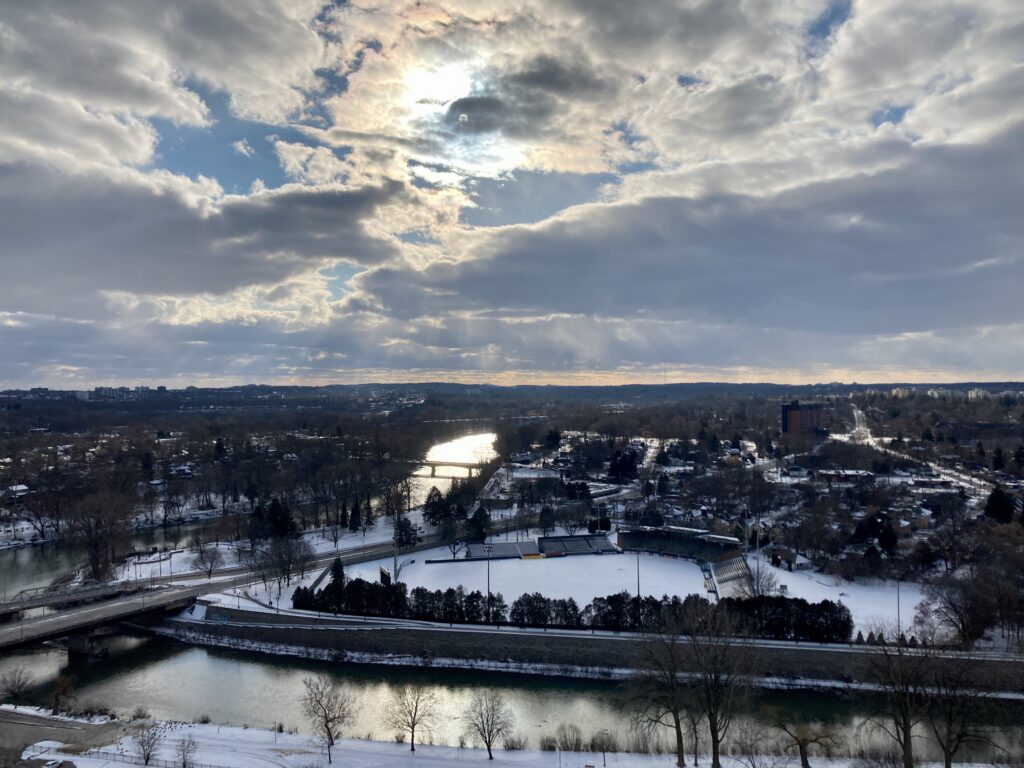
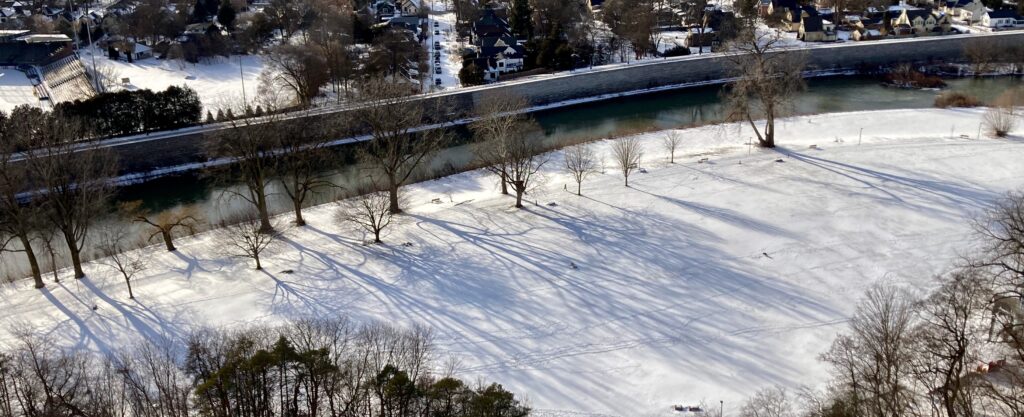
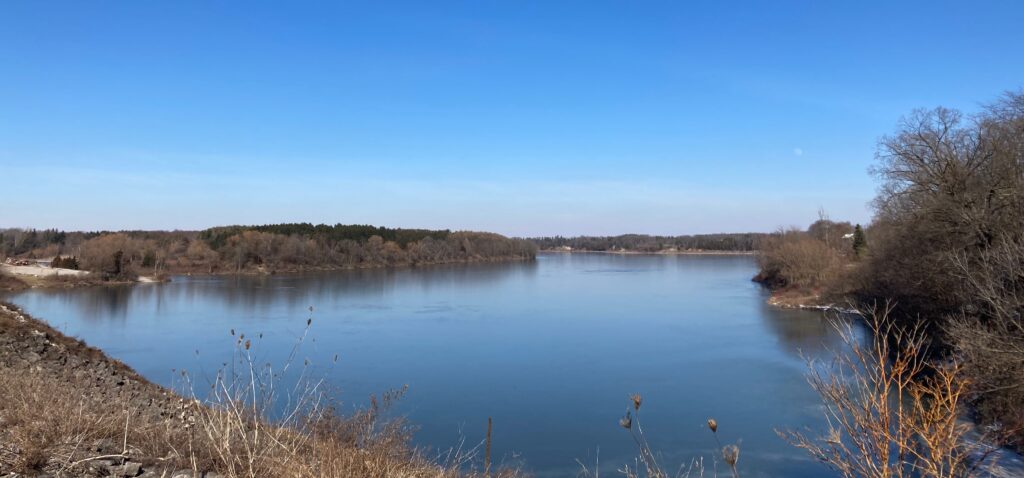
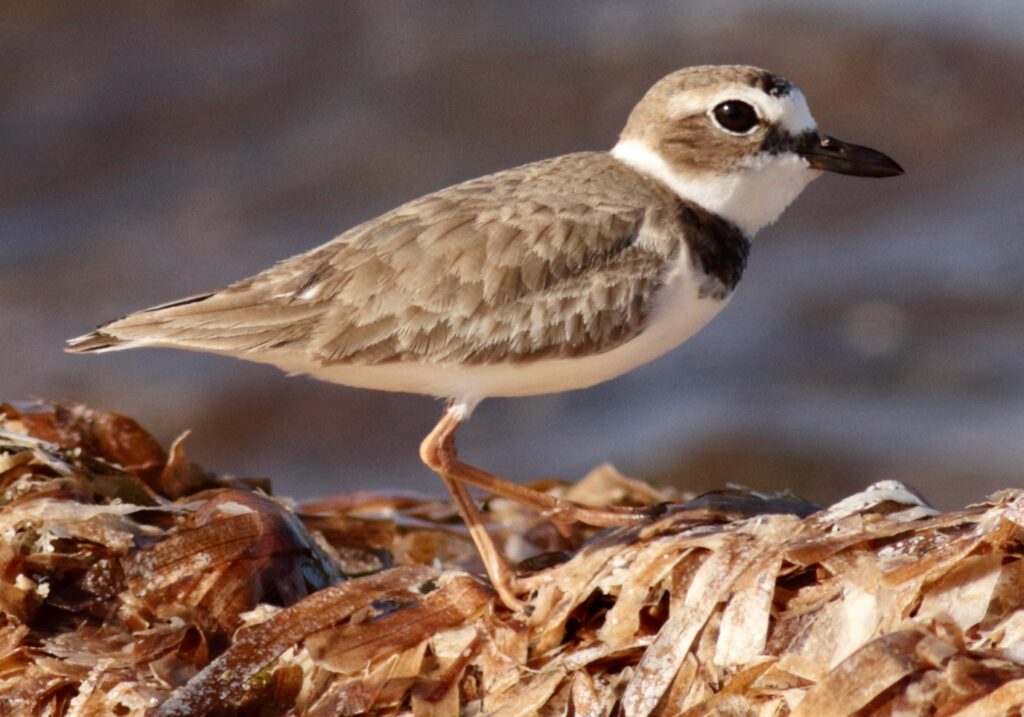
There are two small photos of spiders in a gallery that follows the Cedar Waxwing gallery.
On Wednesday, March 13th, it was 18C and sunny. Not at all typical mid-March weather. The forecast for the rest of the week is for overcast skies, rain and temperatures falling to within a more normal range (between 4C to -1C).
Looking back at photos from mid-March between 2021 to 2023, there was still snow, at least some of the time.
March 13, 2022The snow was gone by March 15, 2022March 15, 2023
This week, there were few Tundra Swans reported at the Aylmer Wildlife Management Area. We’re still hoping to see some this year, as we have for the past three years. Here are some we saw in 2022 and 2023.
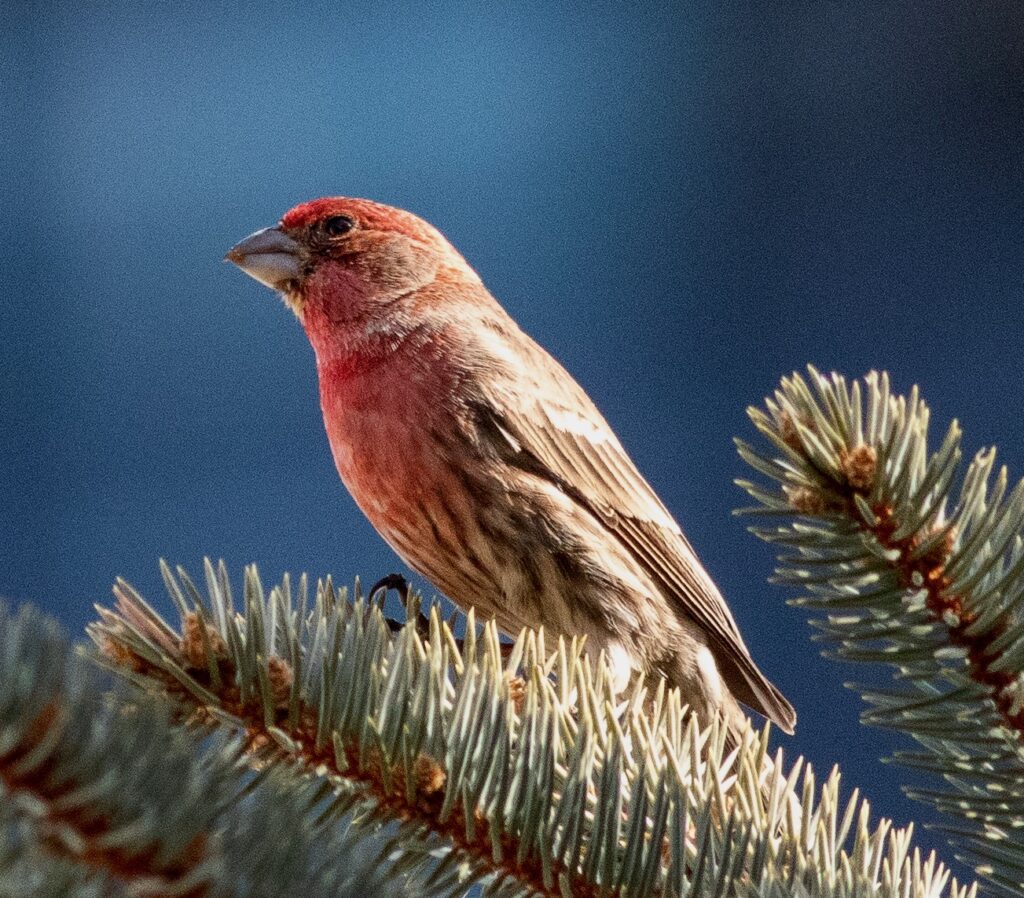
Other birds we’ve seen in mid-March: Downy Woodpecker (male), Cedar Waxwing, Bald Eagle, Redheads, House Finch, Common Grackle.
On Wednesday, we only had time for a brief neighbourhood walk. Since the entire winter has been warmer than usual, some birds are arriving earlier than expected. It seems that there will be insects to feed the young if the birds also breed early.
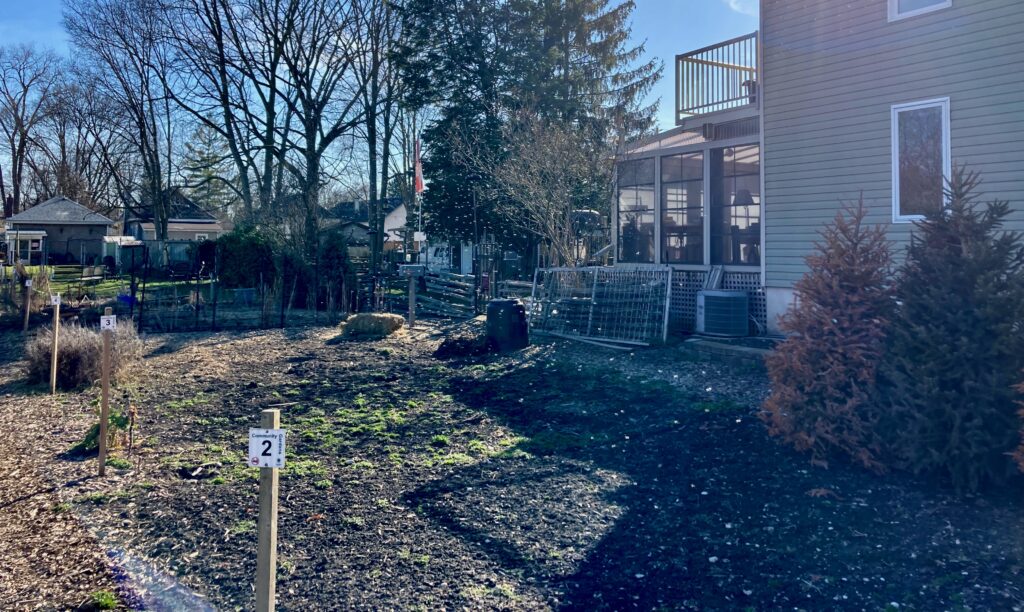
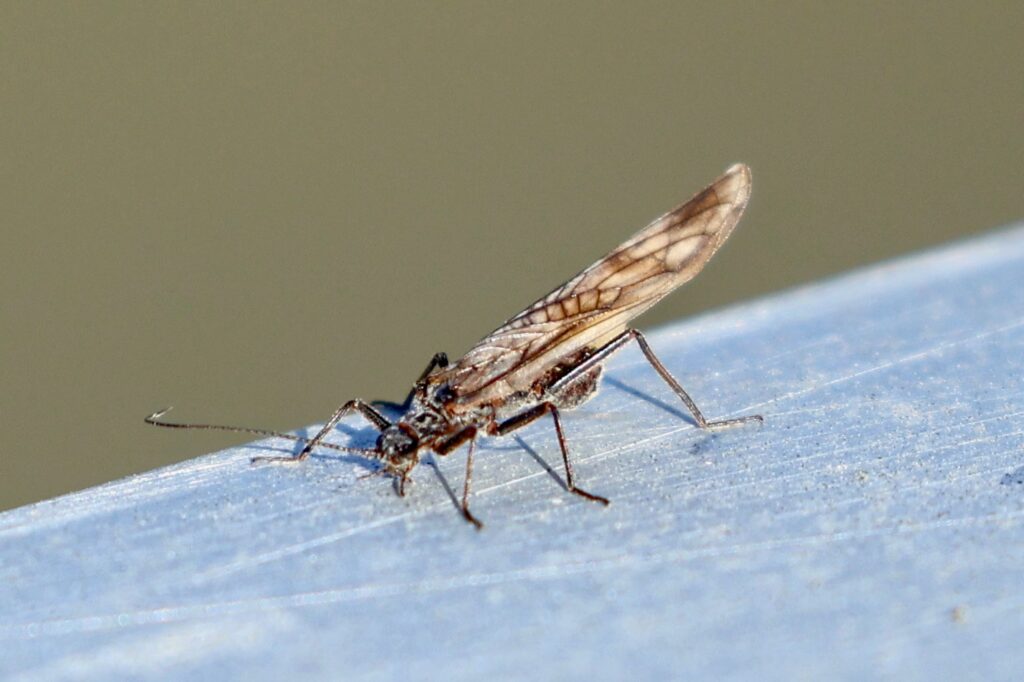
We ran into a cloud of midges in the community garden. Winter Stoneflies, an Asian Lady Beetle and tiny spiders of several species dotted the railing along the river wall.
The white specks are midges, not snow!Winter Stonefly
Asian Lady Beetle, Bold Jumping Spider (there was also a Zebra Jumping Spider), White-striped Running Crab Spider.
Birds were beginning to pair up and were becoming more vocal.
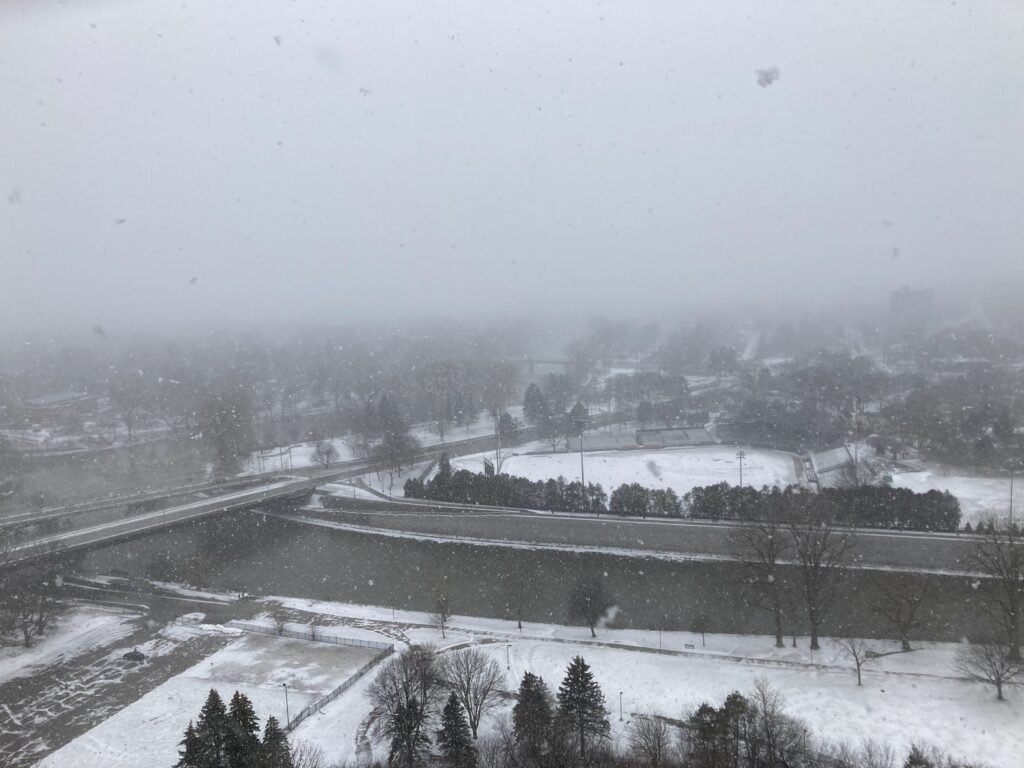
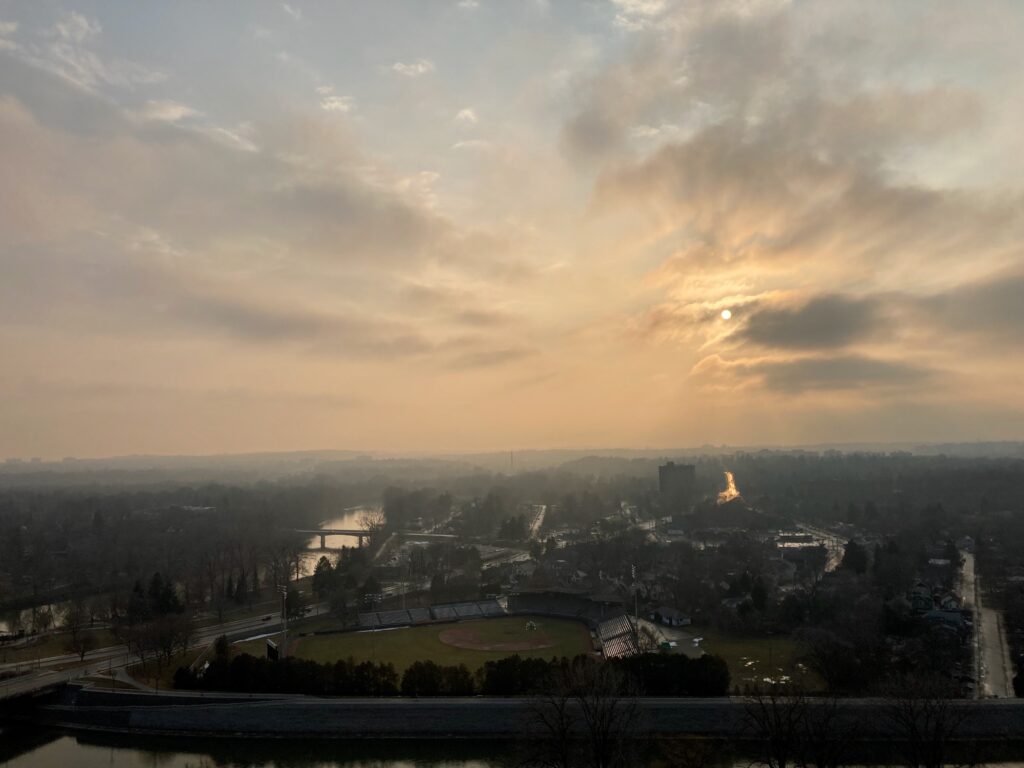
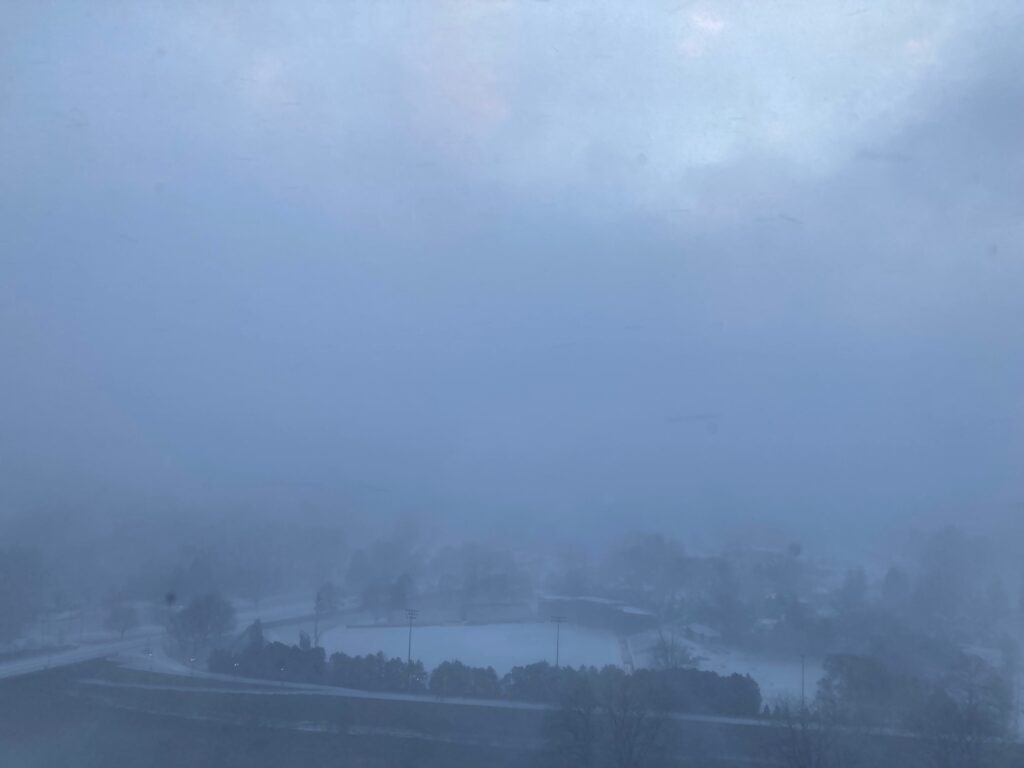
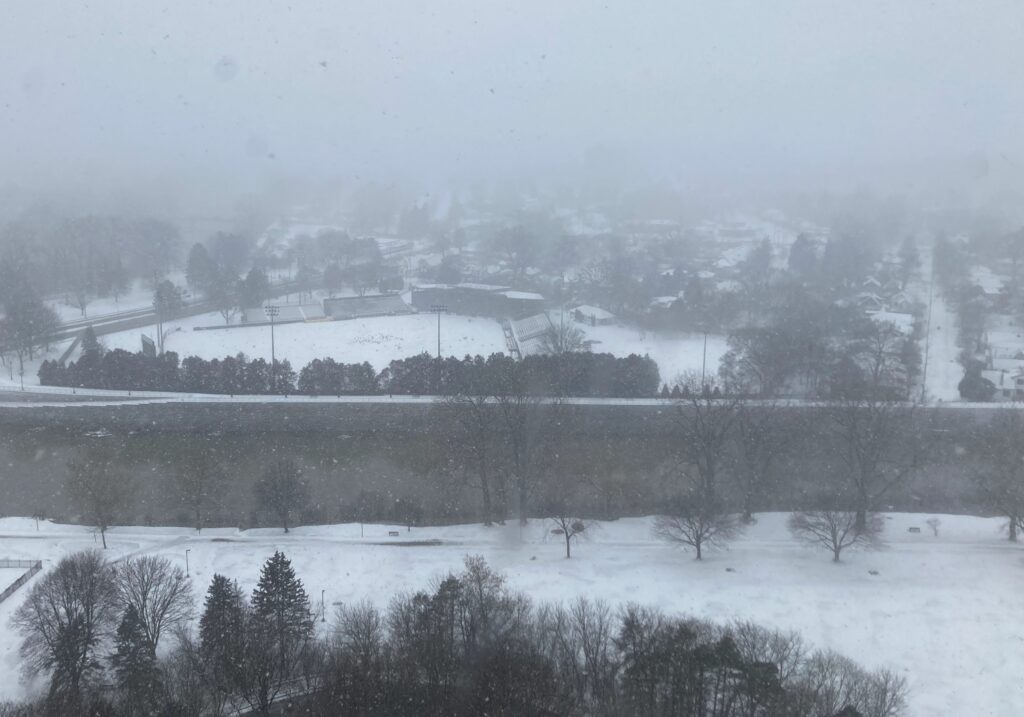
We have had a lot of foggy days and much higher than normal temperatures, but still it snowed on February 28th. The skies cleared on the 29th and the snow disappeared.
February 28, 2024February 29, 2024
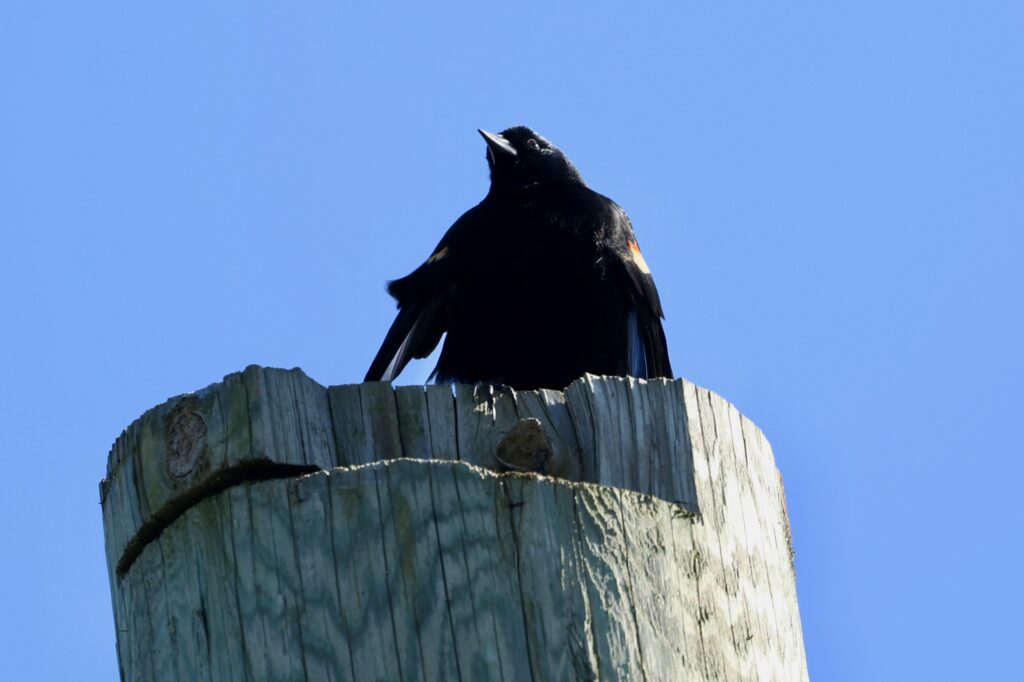
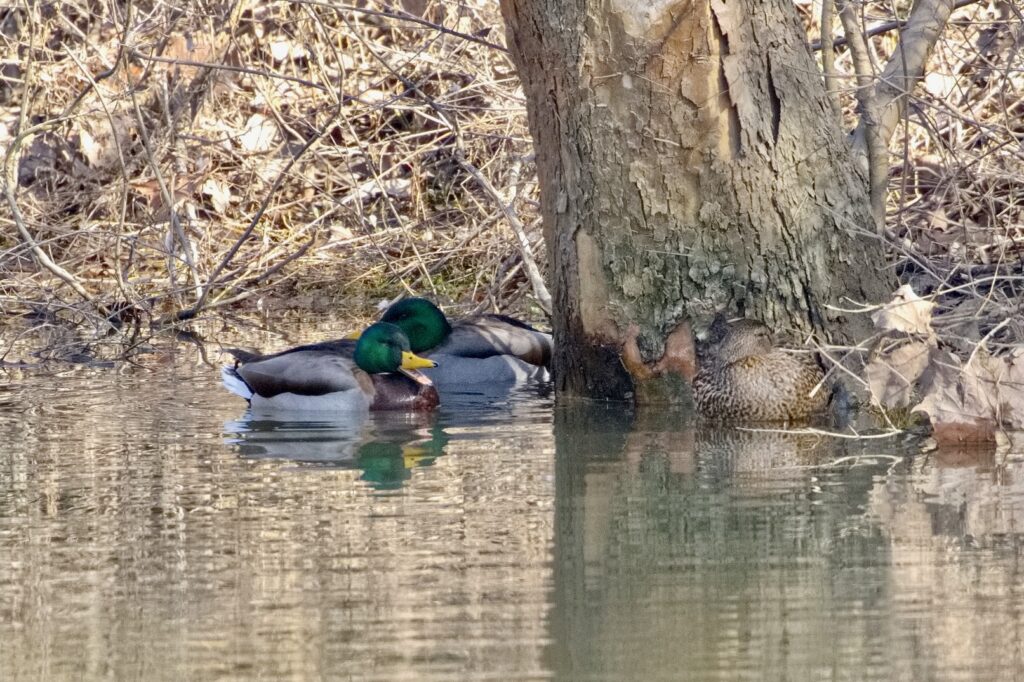
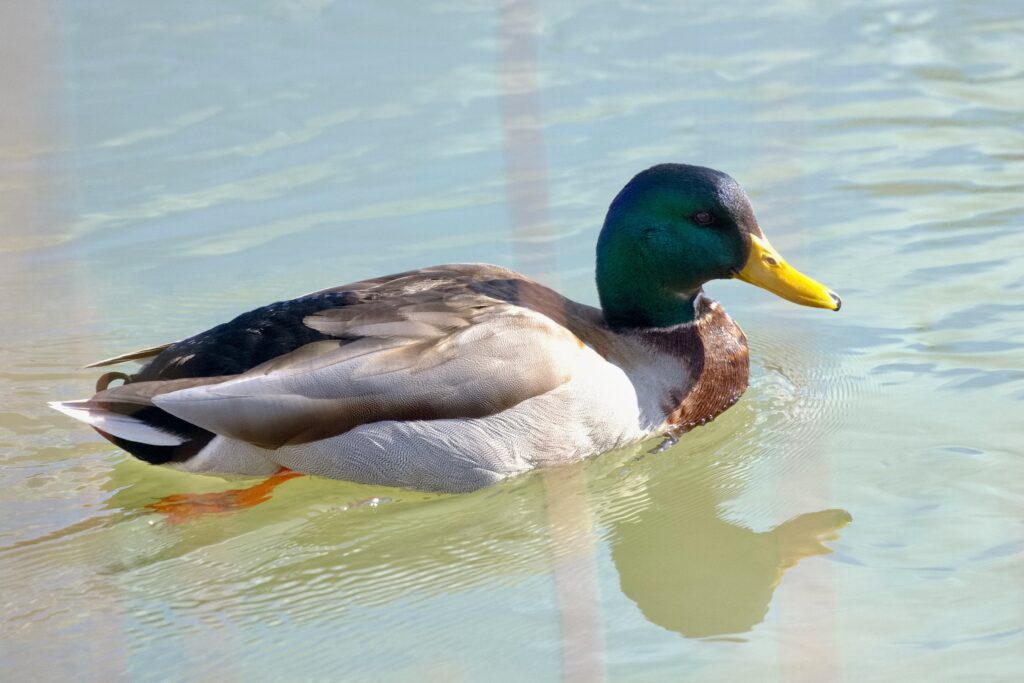
On March 1st, we headed to Gibbons Park. The warmer weather has brought the early arrival of some migrating birds. As we walked the path along the Thames, we heard Red-winged Blackbirds calling, but did not hear or see other birds aside from the ubiquitous Canada Geese and Mallards.
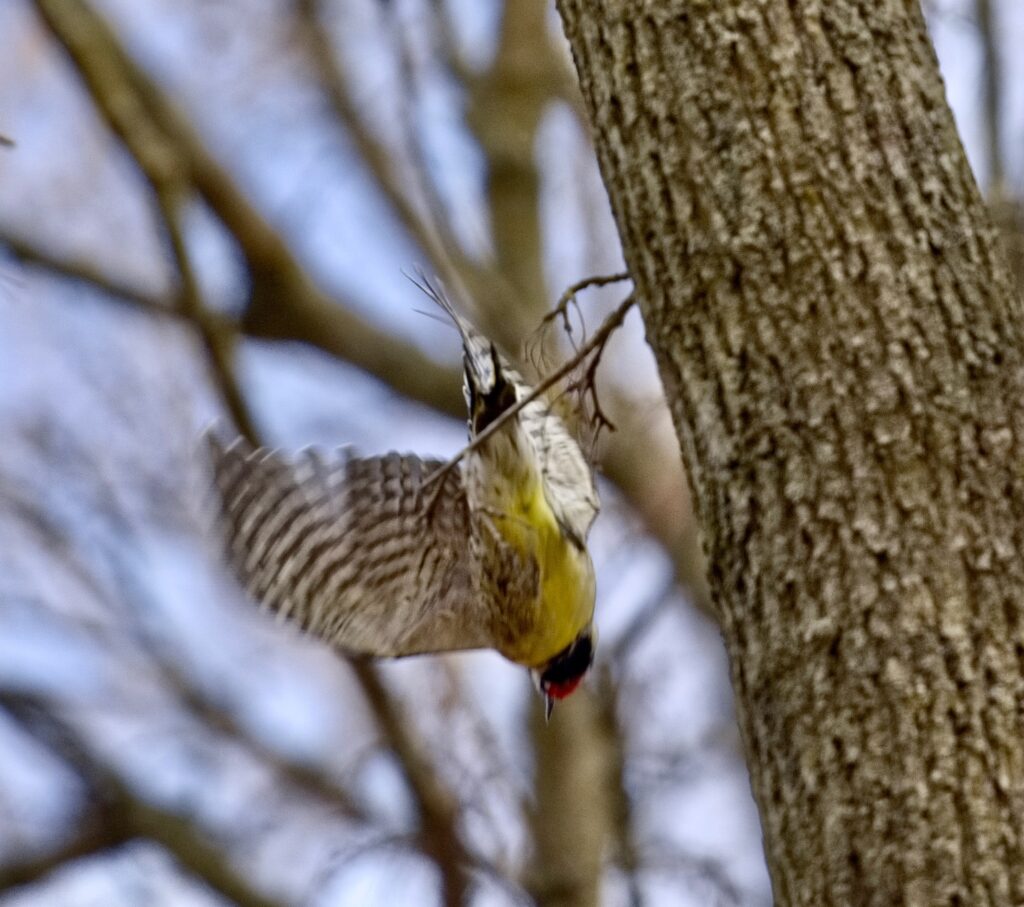
We decided to check on the Great Horned Owl that nests every year in the snag of one of the giant willows in the park. On our way through the park, we caught sight of a woodpecker that turned out to be Yellow-bellied Sapsucker – another early arrival. Here you can see how the bird came by its name.
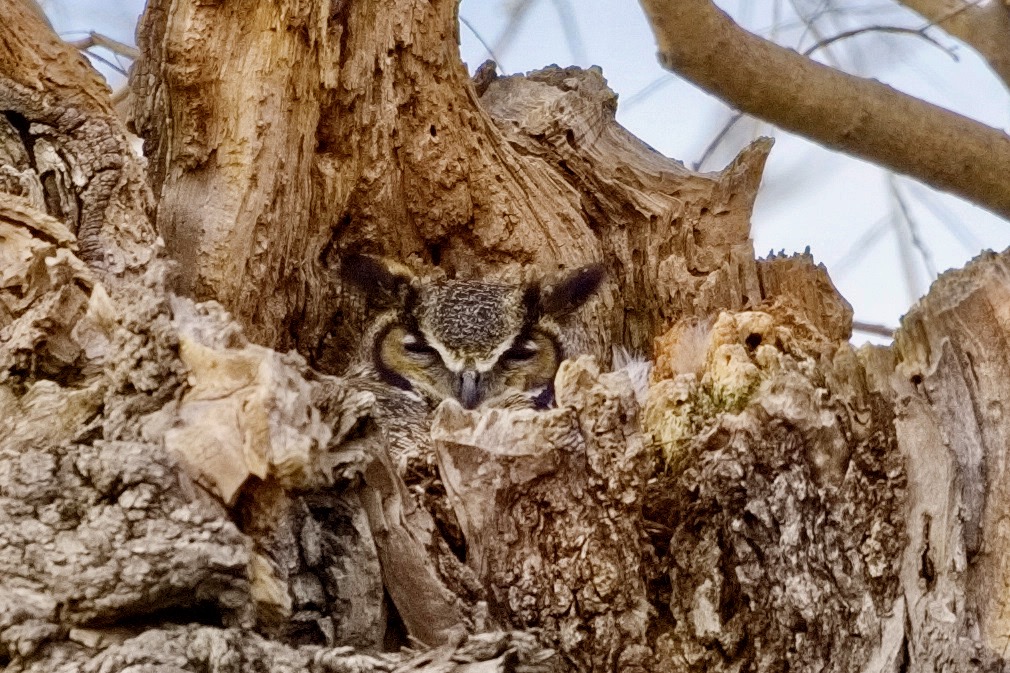
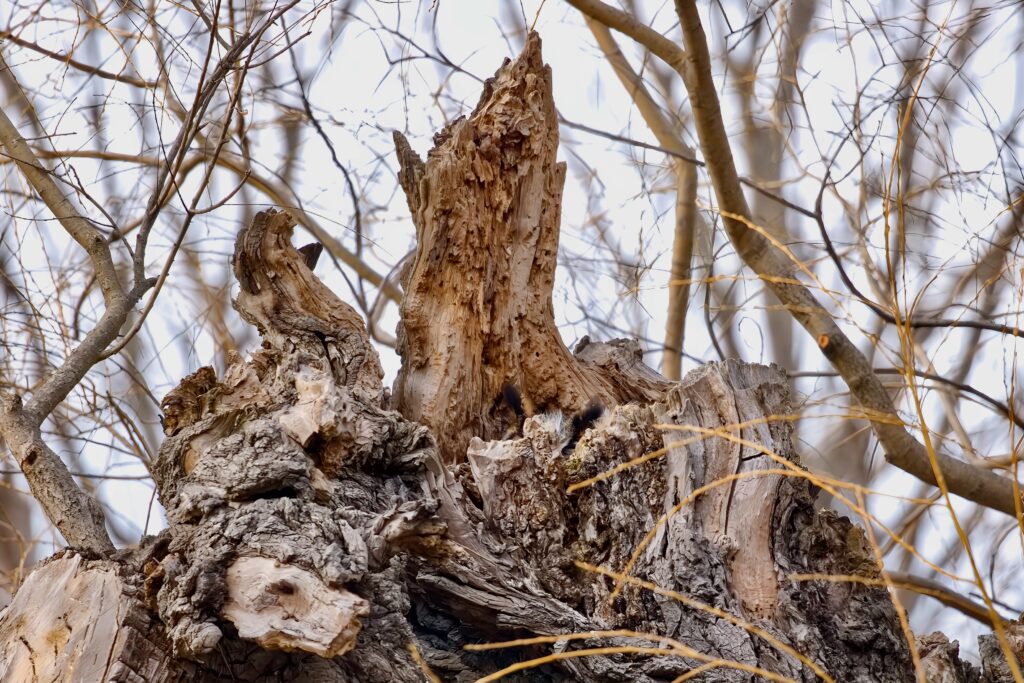
When we got to the owl’s nest, we could only detect the wisps of the owl’s ears. These technically are not ears! One theory is that the tufts on the owl’s head serve as camouflage because they have the appearance of broken vertical tree branches when the owl sits upright.
Owls’ ears are located at the sides of their heads, behind their eyes. Audubon.org advises that many owl species have asymmetrical ears, openings located at different heights on the owl’s head that are hidden by feathers. This ear placement allows them to pinpoint the location of sounds in multiple dimensions, especially useful when hunting.
Can you see the “ears”?
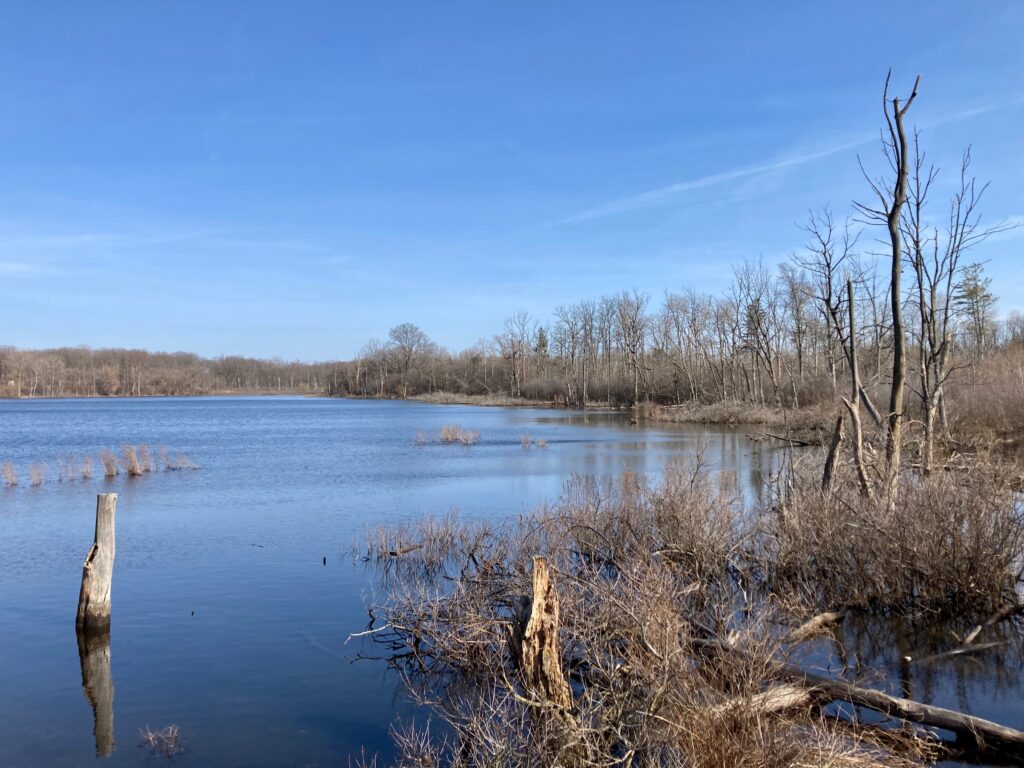
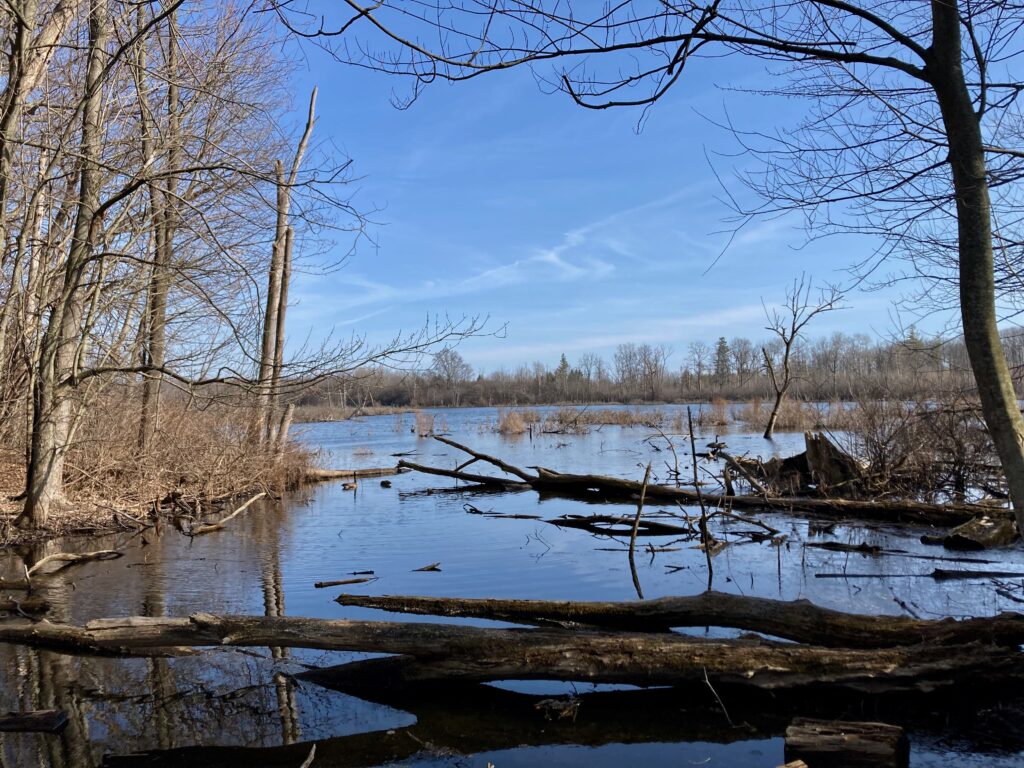
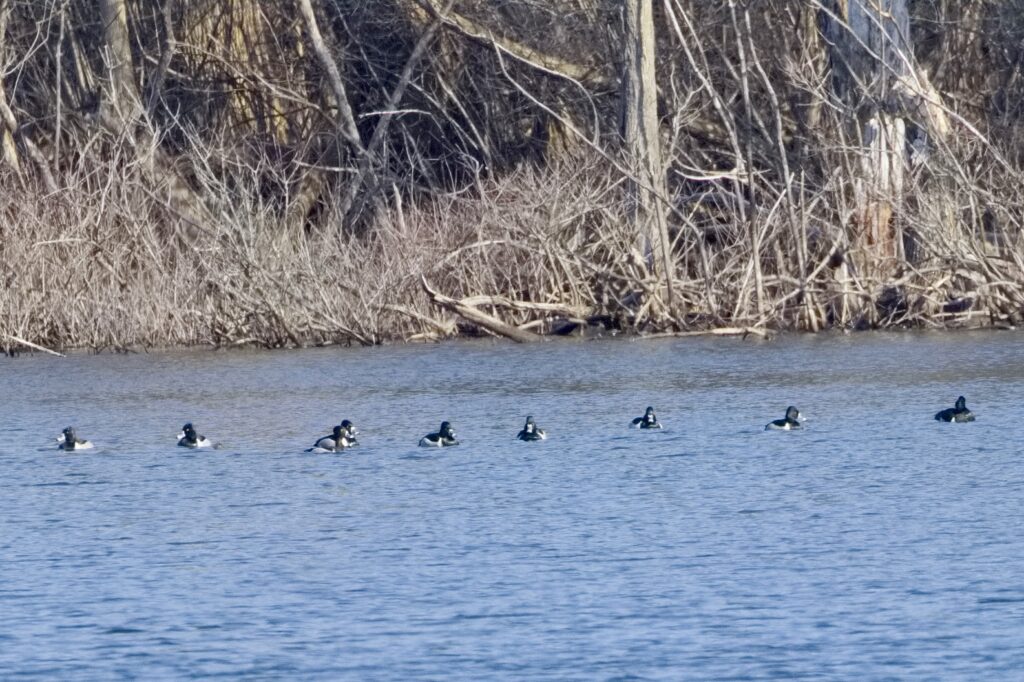
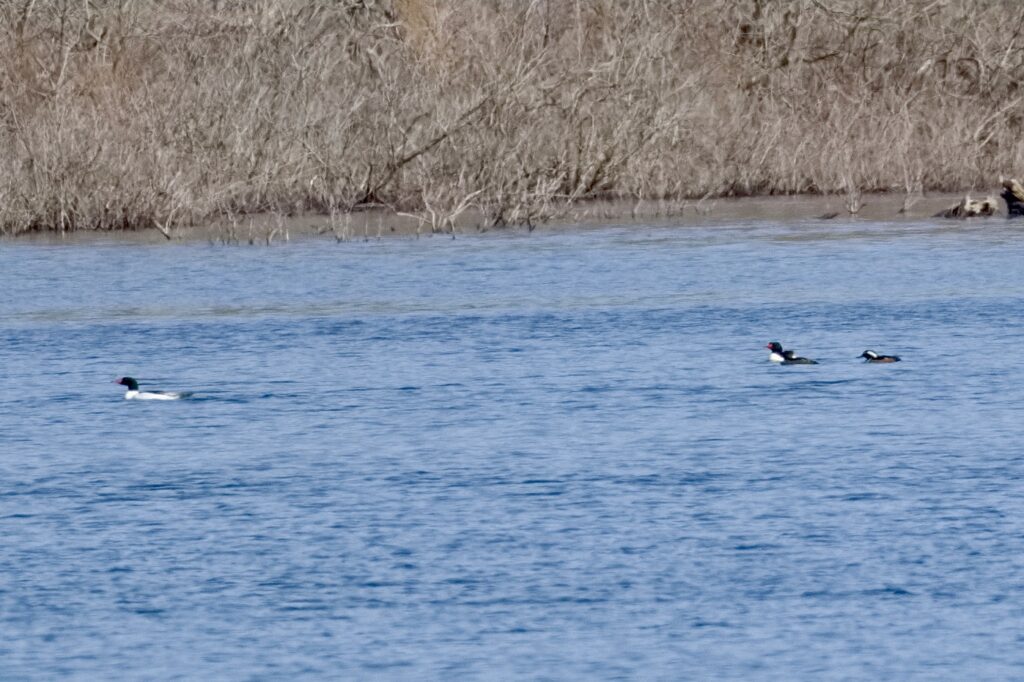
On March 4th, we went to Westminster Ponds where a Cackling Goose had been spotted. This would have been a “lifer” for us. Of course, there was no sign of a Cackling Goose when we were there. (A Cackling Goose looks like a Canada Goose, but is smaller and has a much shorter neck.) There was a variety of other waterfowl on the pond, but they were very far away. Of course.
We spent time along some of the paths around the pond, but abandoned our walks each time the muddy paths became deeper and wetter.
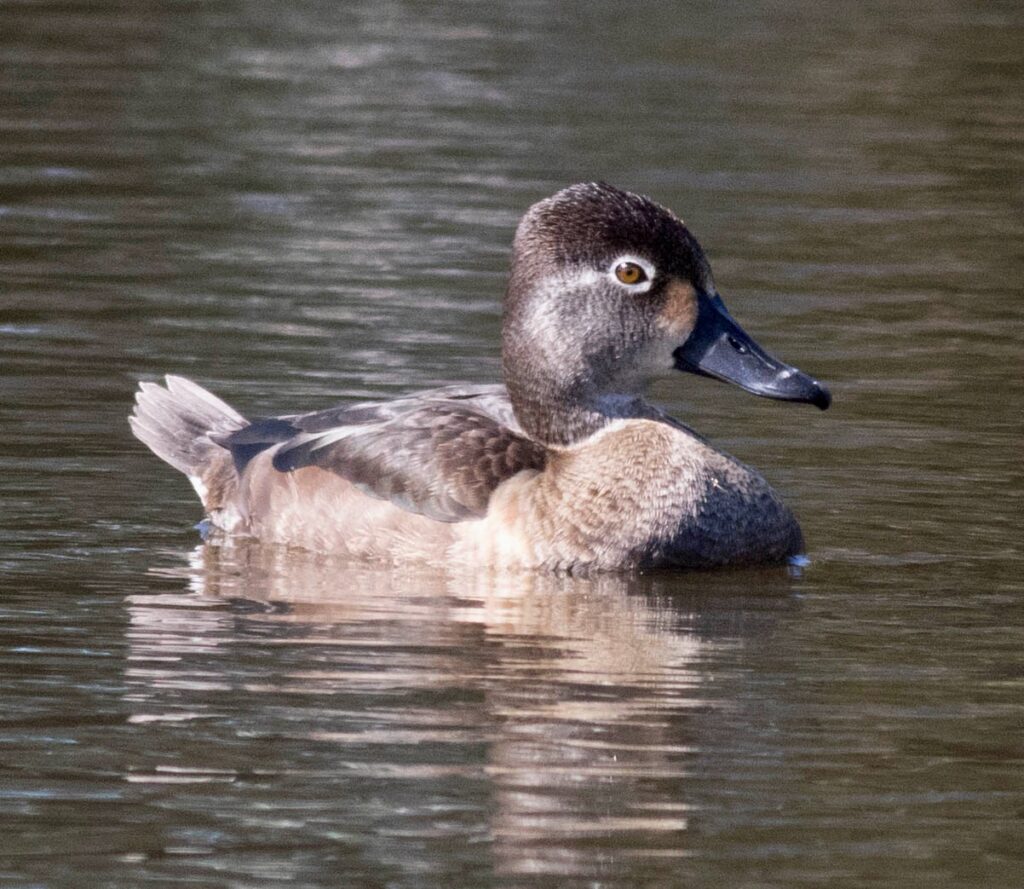
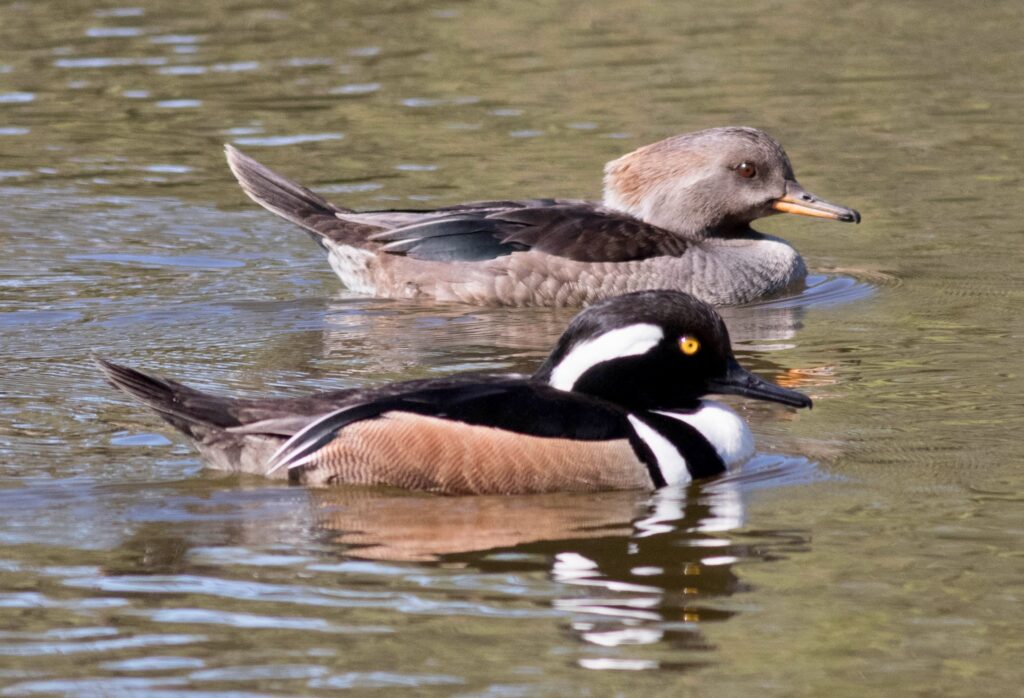
Ring-necked DucksCommon and Hooded Mergansers
On March 7th, the sun was shining and we went with friends to see Tundra Swans at the Aylmer Wildlife Management Area. The swans had been stopping over there for the past week or more, but there were none to be seen. In addition to Canada Geese and Mallards, there were a few other waterfowl on the water that turned out to be Gadwalls and Green Teals once we could decipher our blurry photos.
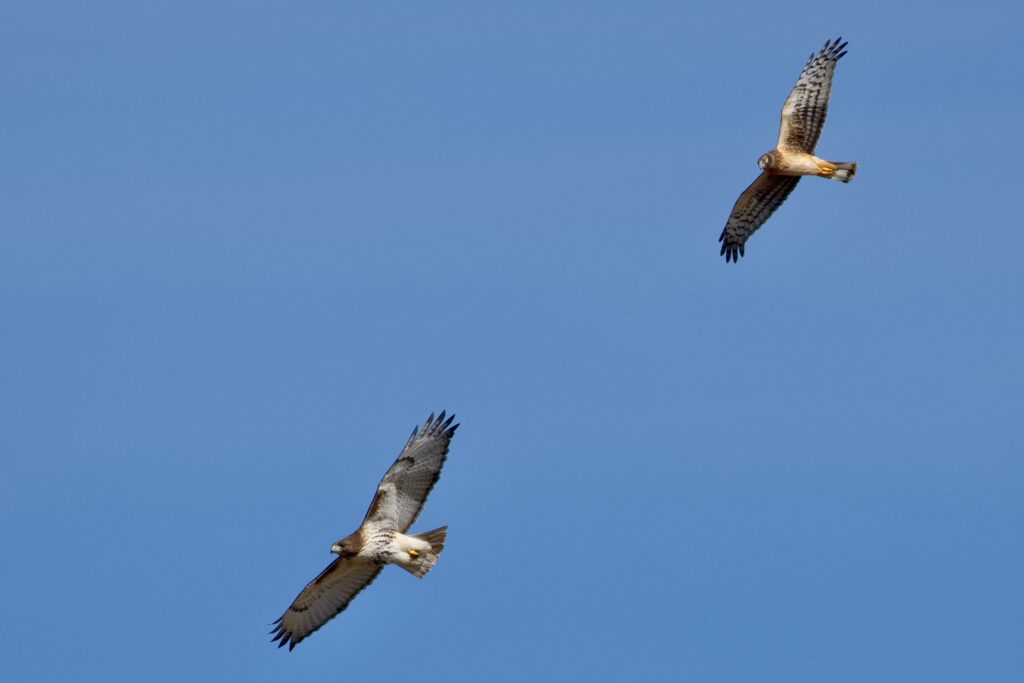
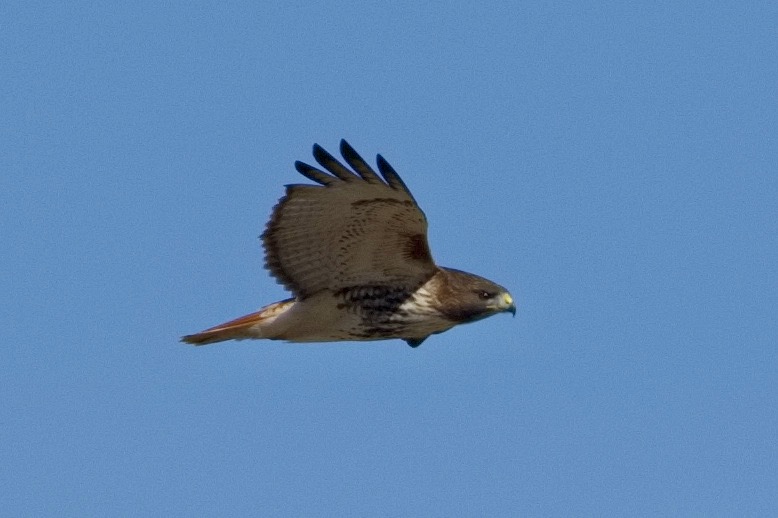
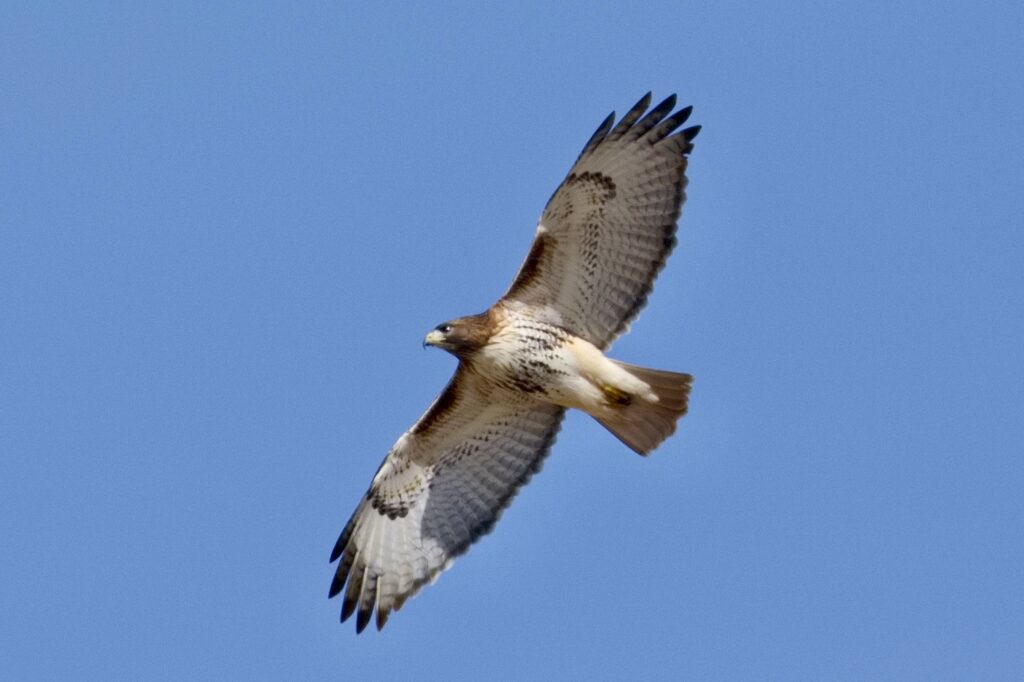
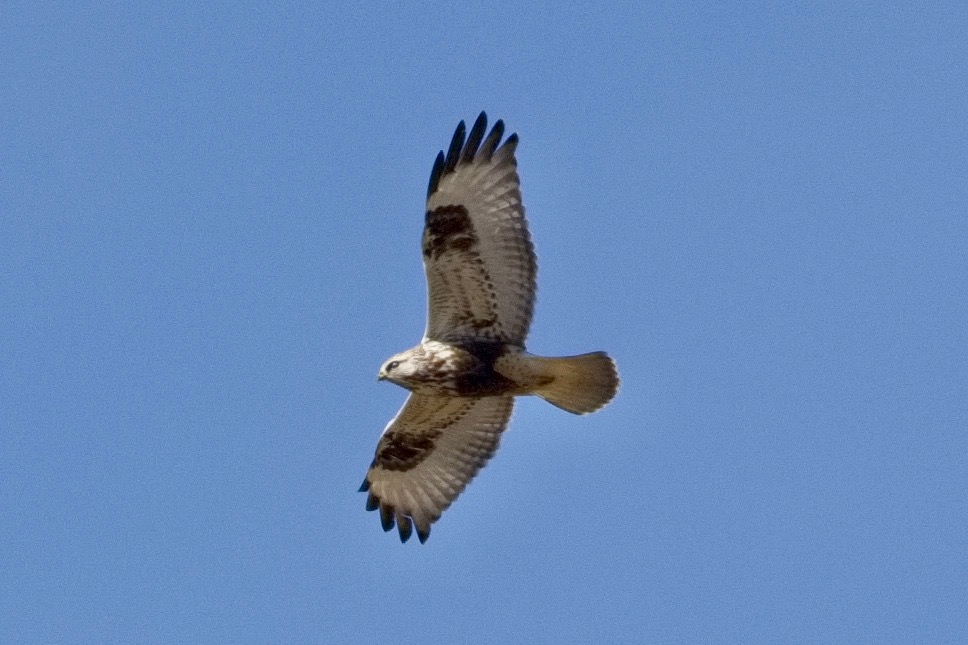
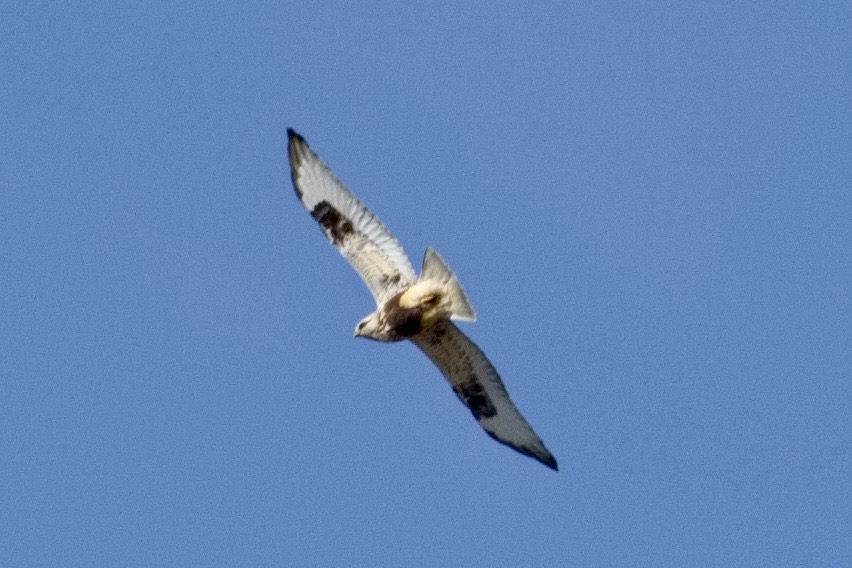
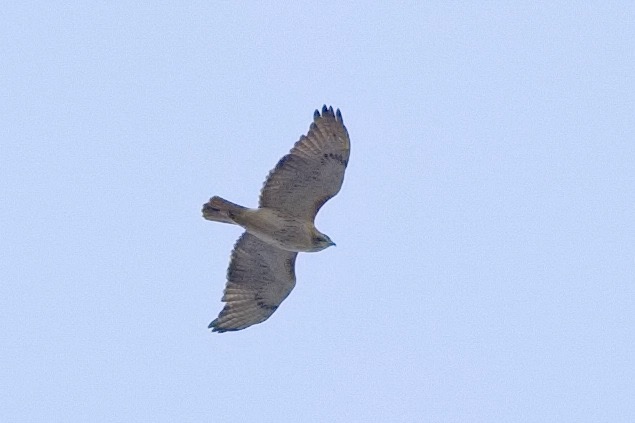
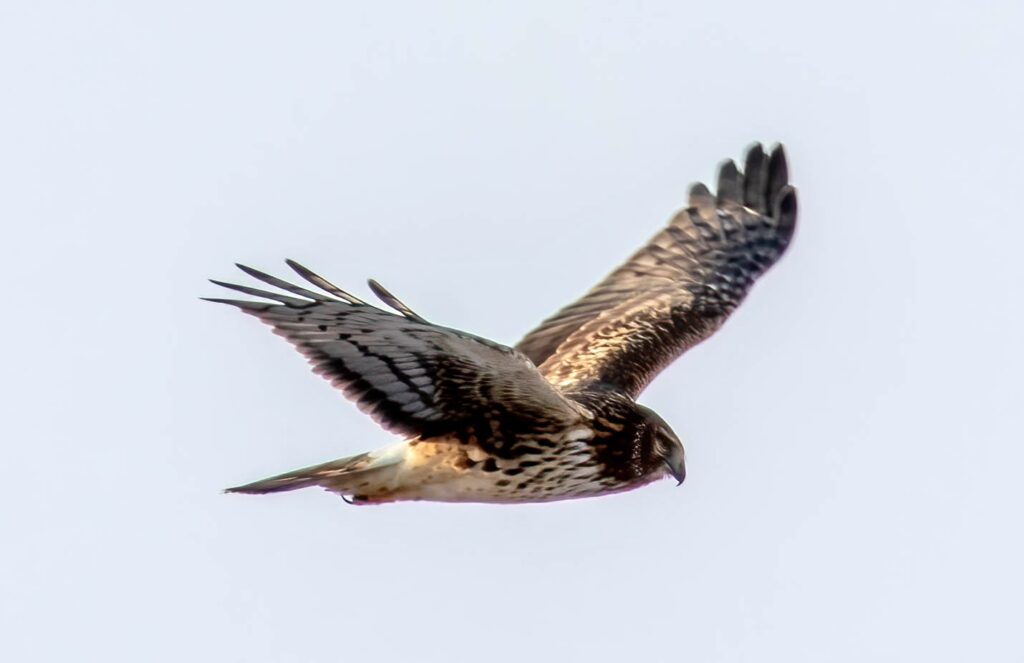
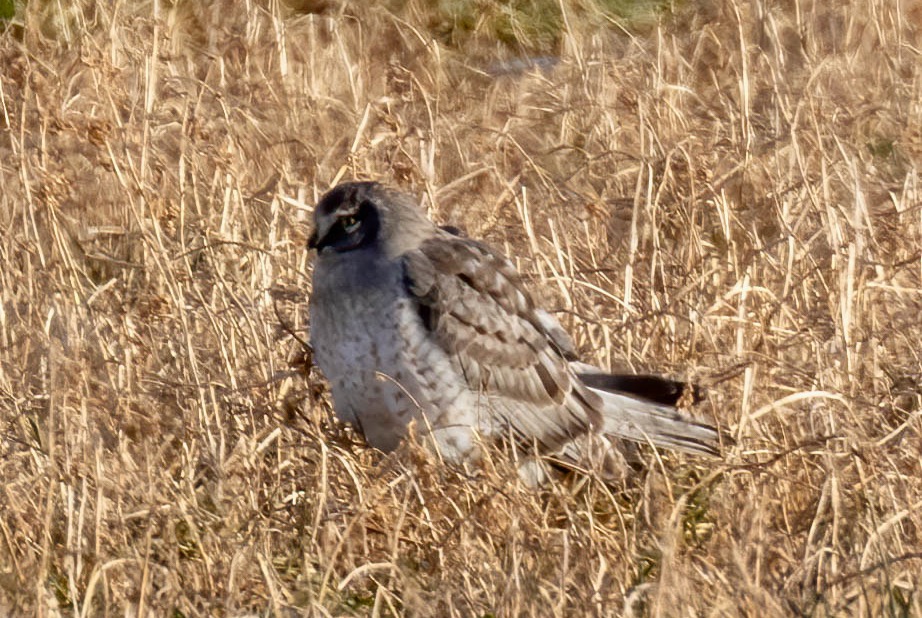
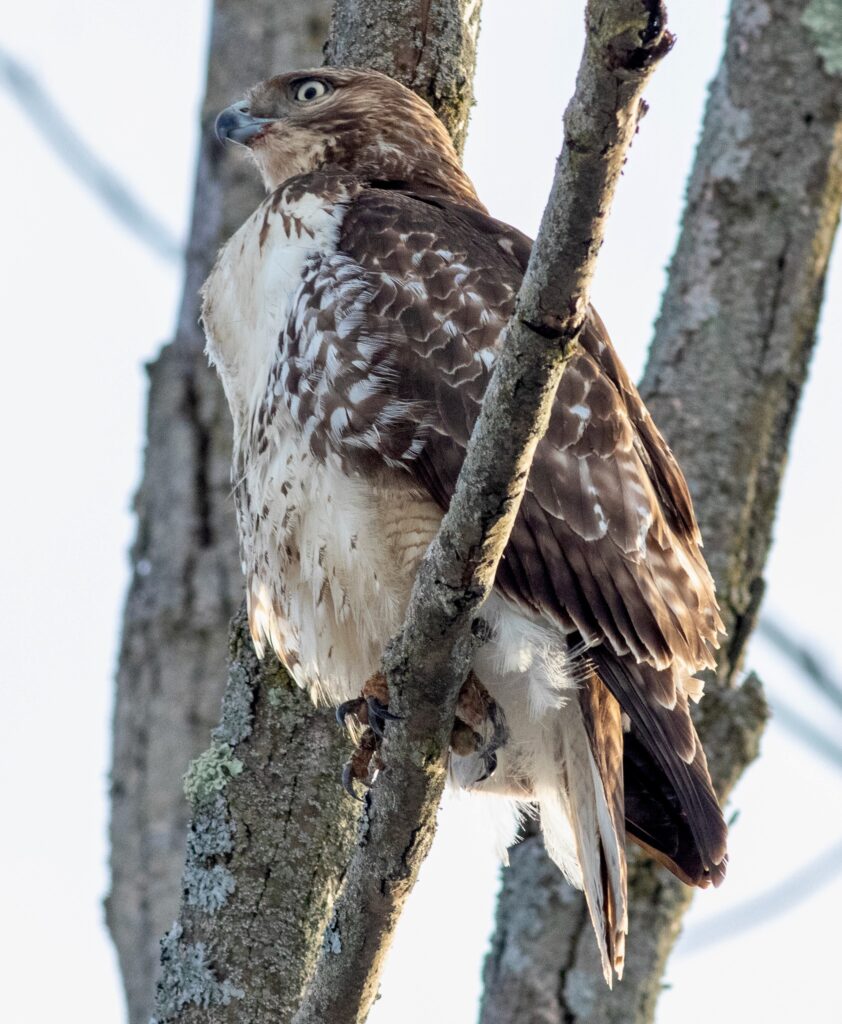
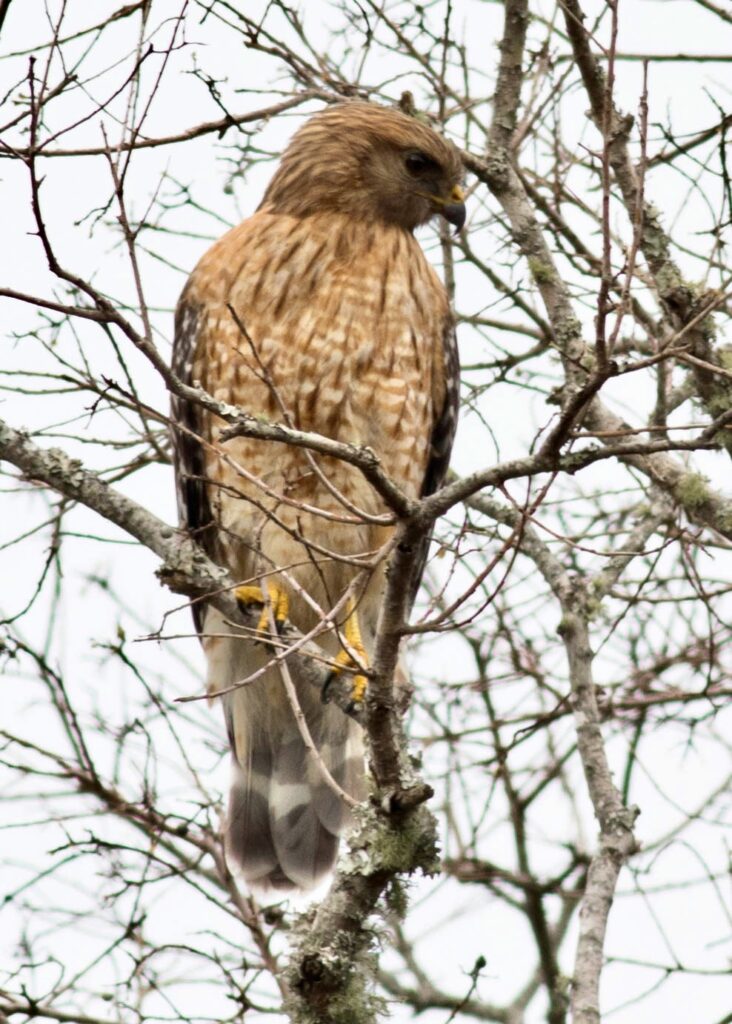
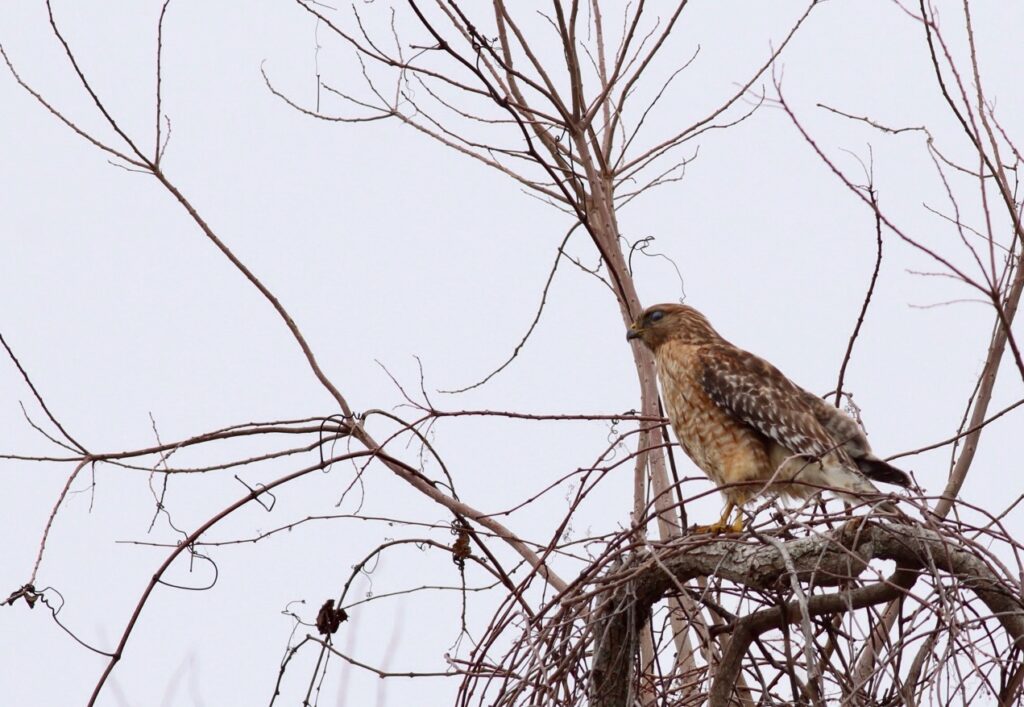
Although we were disappointed, we were soon treated to the sight of three different raptors soaring overhead. We recognized the Northern Harrier and the Red-tailed Hawk, but the third bird was less familiar. Its very distinct markings made it easy to identify once we had our bird guides in hand – a Rough-legged Hawk, probably a light morph juvenile. Rough-legged Hawks spend the summer on the Arctic tundra, but winter from south of Lake Superior into the southern U.S.
Red-tailed Hawk followed by Northern HarrierNorthern Harrier (above) and Red-tailed Hawk
Red-tailed Hawk
Rough-legged Hawk with distinctive “wrist patches”
We took to the paths, but found only a few other birds. Some of the wintering birds seemed to have already departed. A European Starling perched on the newly erected Purple Martin houses. A Downy Woodpecker drummed on a far-off snag. Blue Jays dominated the bird feeders.
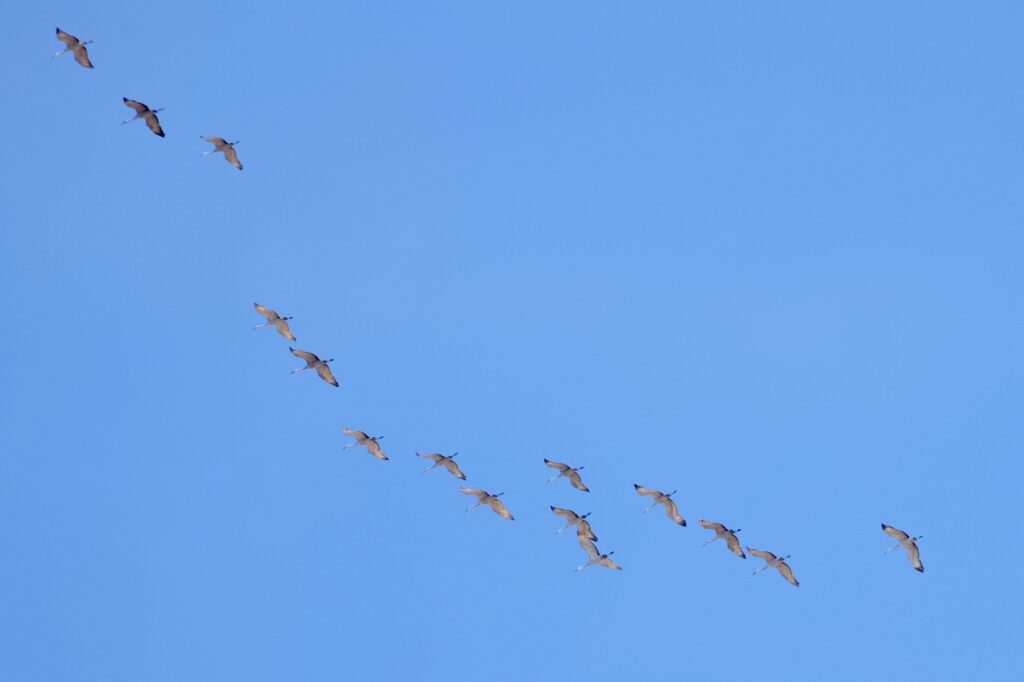
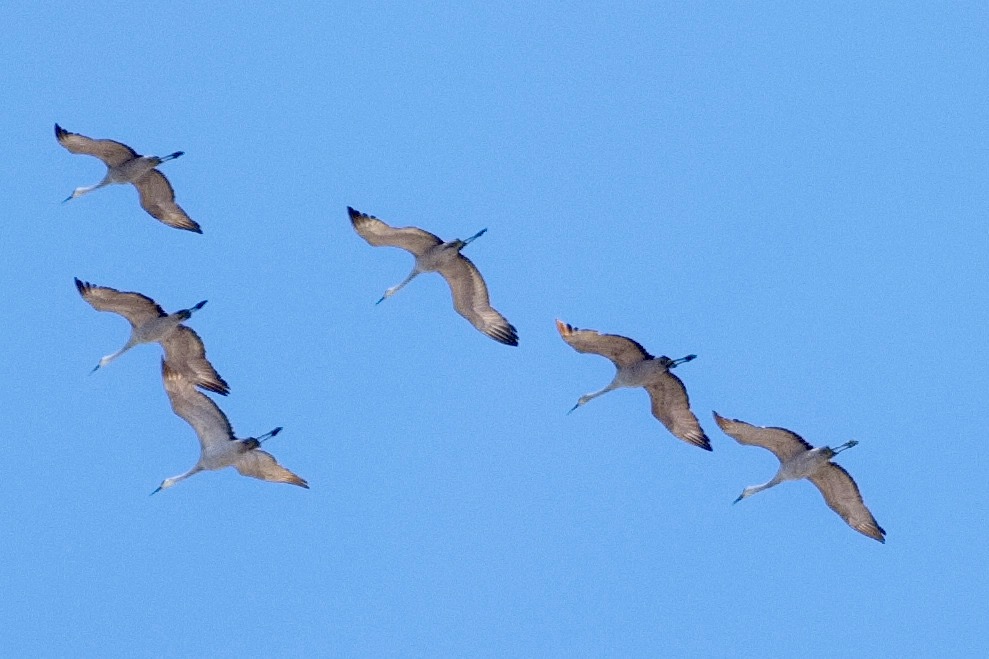
As we left the viewing shed, our sharp-eared friends detected the calls of Sandhill Cranes. We made it into the open in time to see a flock of the cranes steadily crossing the sky. Another wonderful sighting!
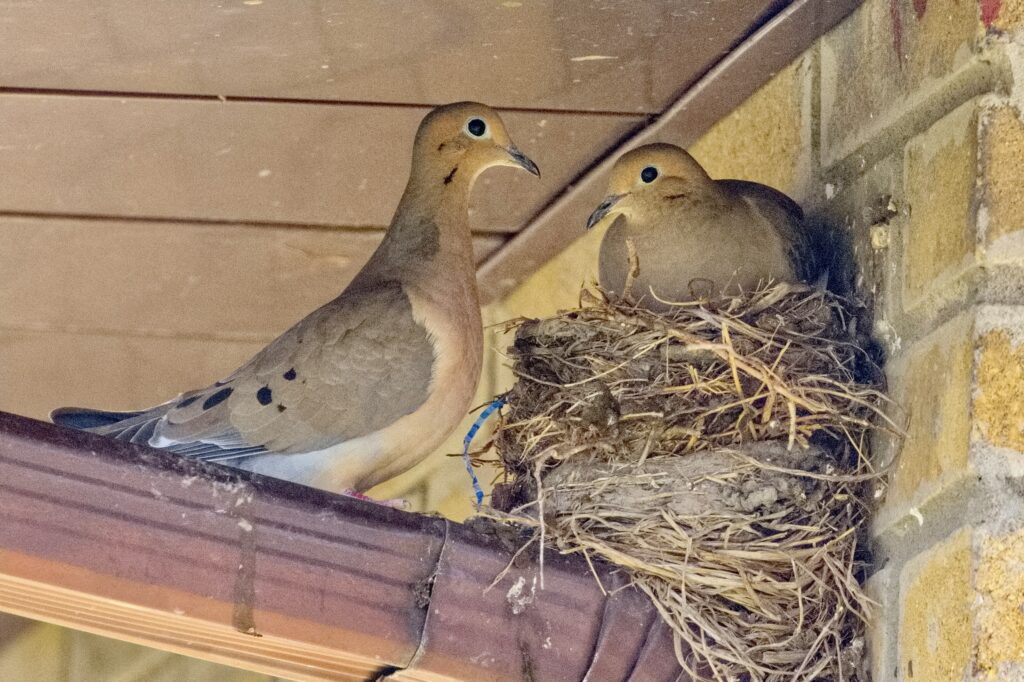
Our final sighting for the day was a pair of Mourning Doves, billing and cooing and sitting on a nest under the eaves of our friends’ neighbour’s house.
We will try again next week to see the Tundra Swans.
Songs About Sunshine
We “borrowed” the idea of providing a number of songs that are related only by their titles. For years, Randy Bachman hosted a CBC radio show called “Vinyl Tap”.
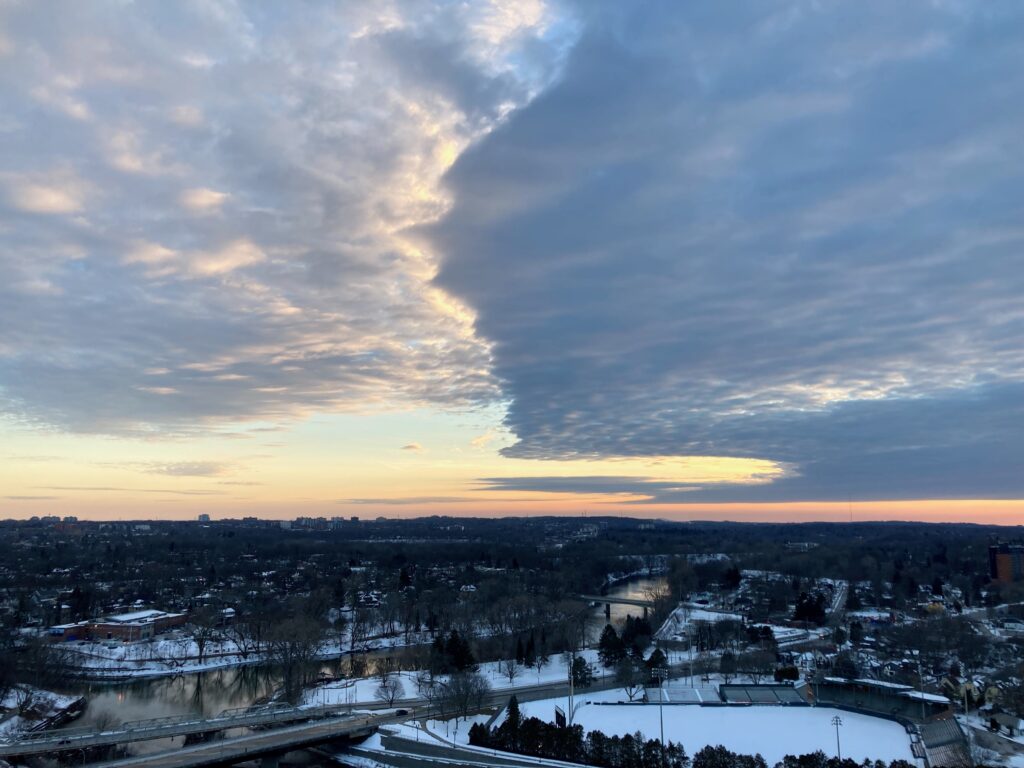
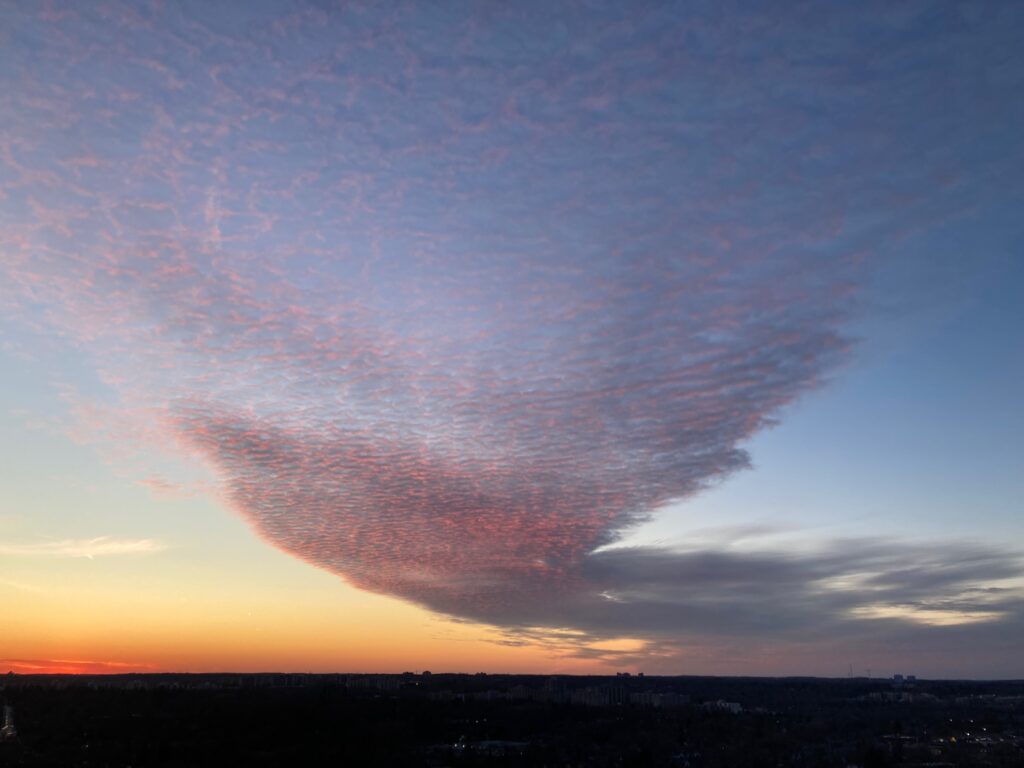
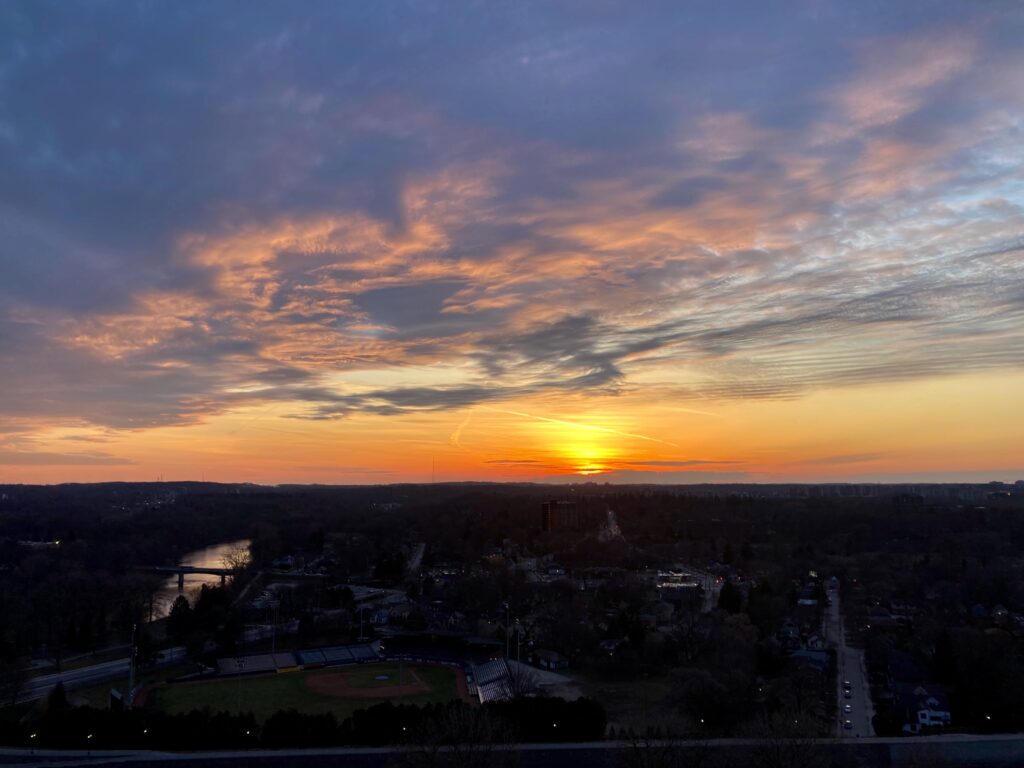
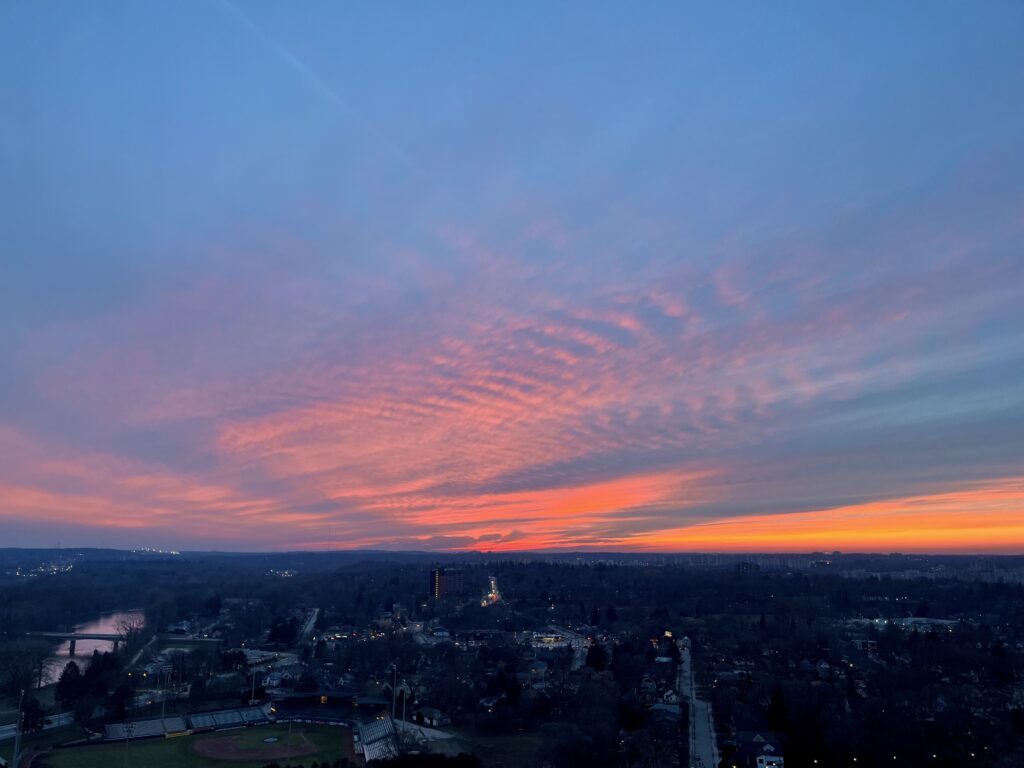
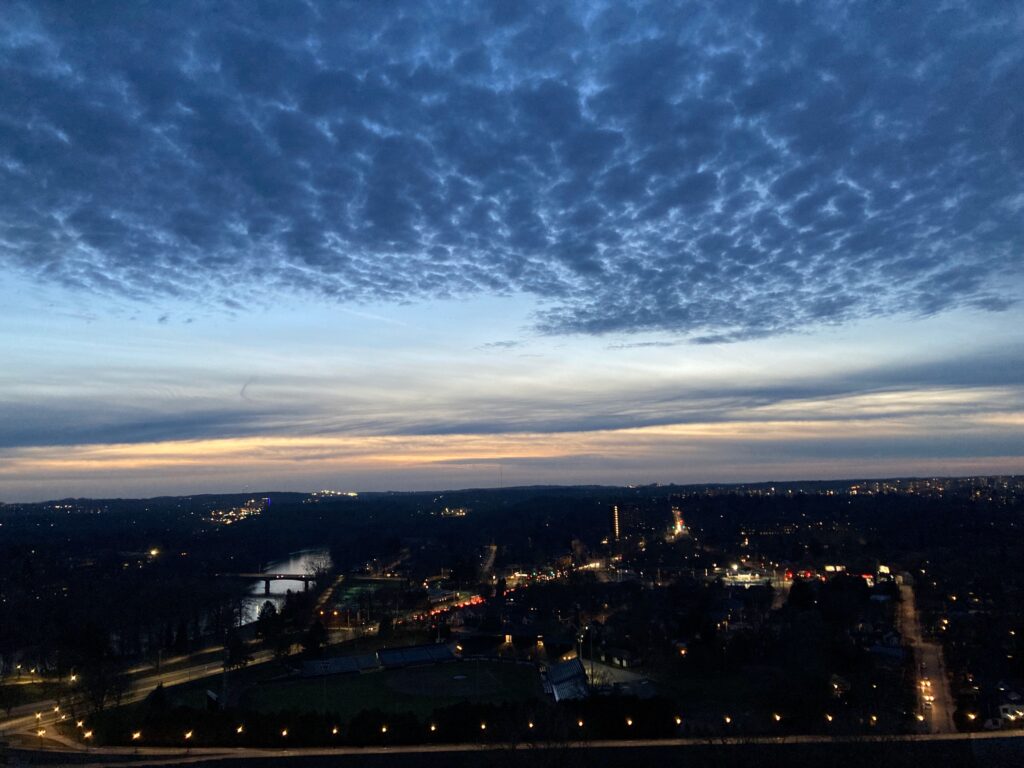
Despite our unseasonably warm weather, there are no new sightings to report, apart from some lovely sunsets. On Wednesday, we set out for a walk, but the wind soon blew us back inside. The incoming front dropped the temperature from 12C to below zero in a few short hours and then delivered snow.
We have become nostalgic, once again, for the balmy time we spent in Hilton Head, South Carolina in early 2020, just before the pandemic arrived.
We have a myriad of photos to downsize. Here are some of our better photos from our first week there.
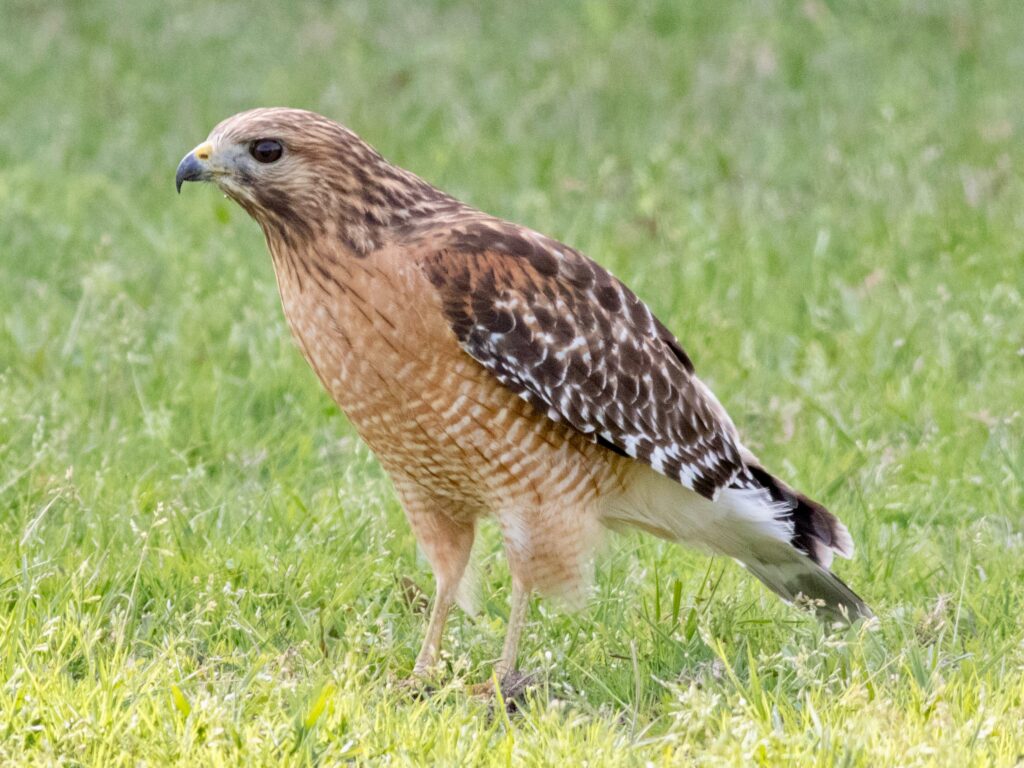
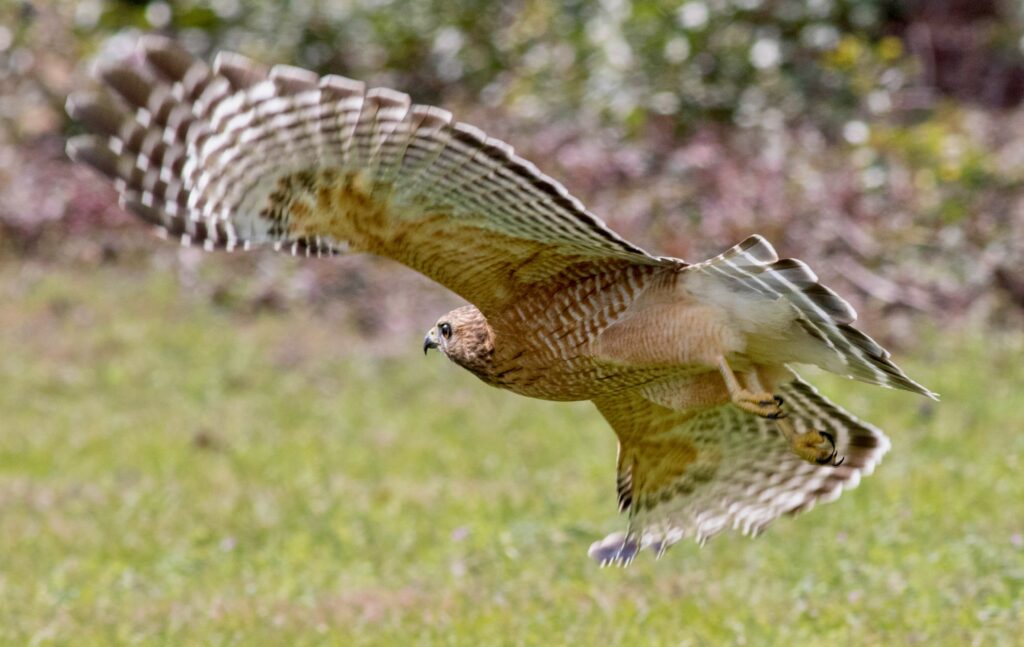
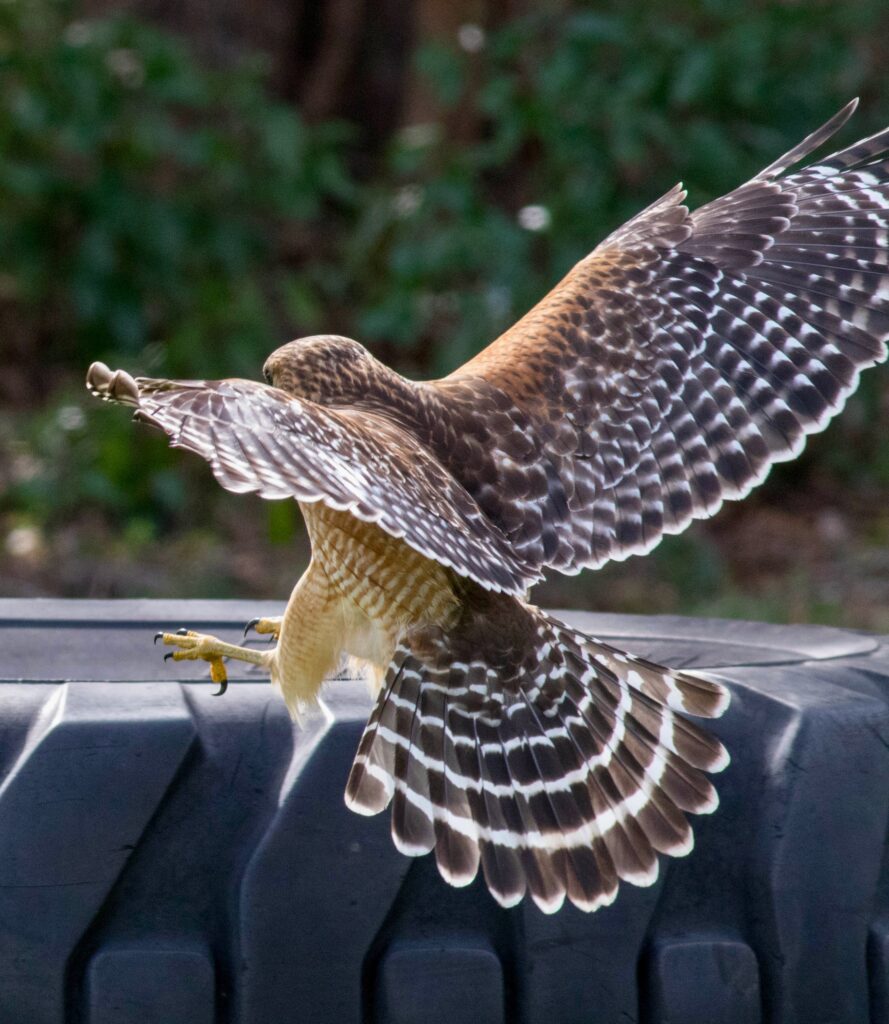
Red-shouldered Hawk
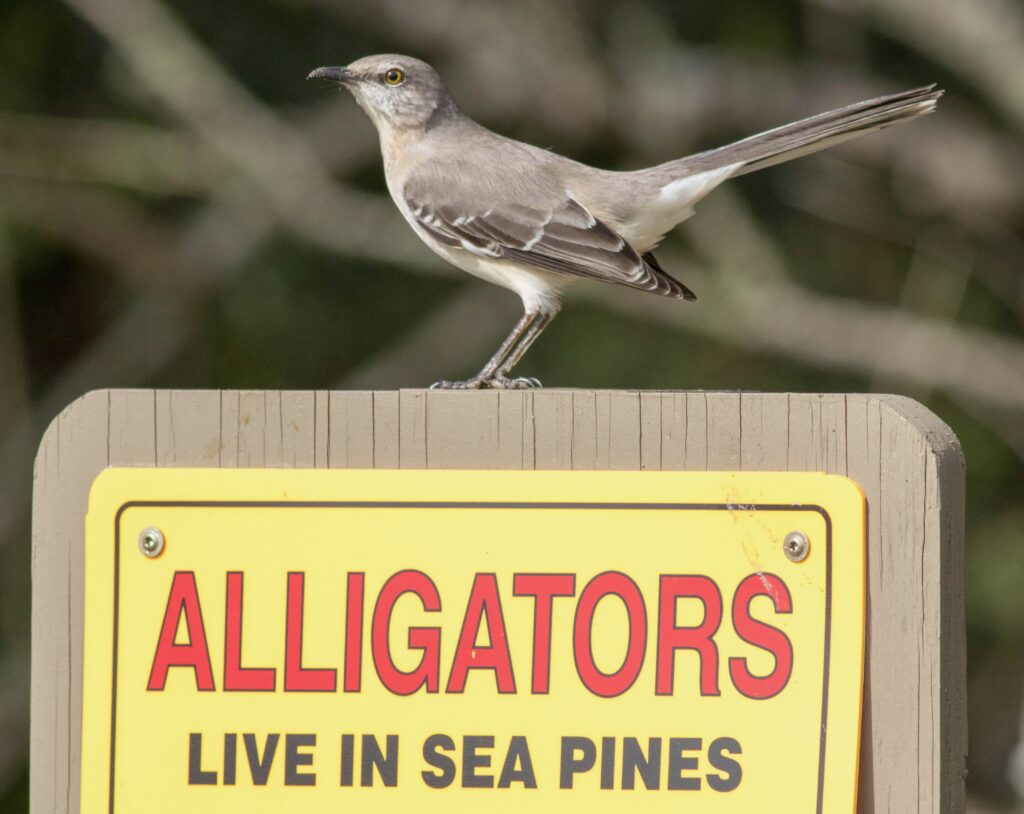
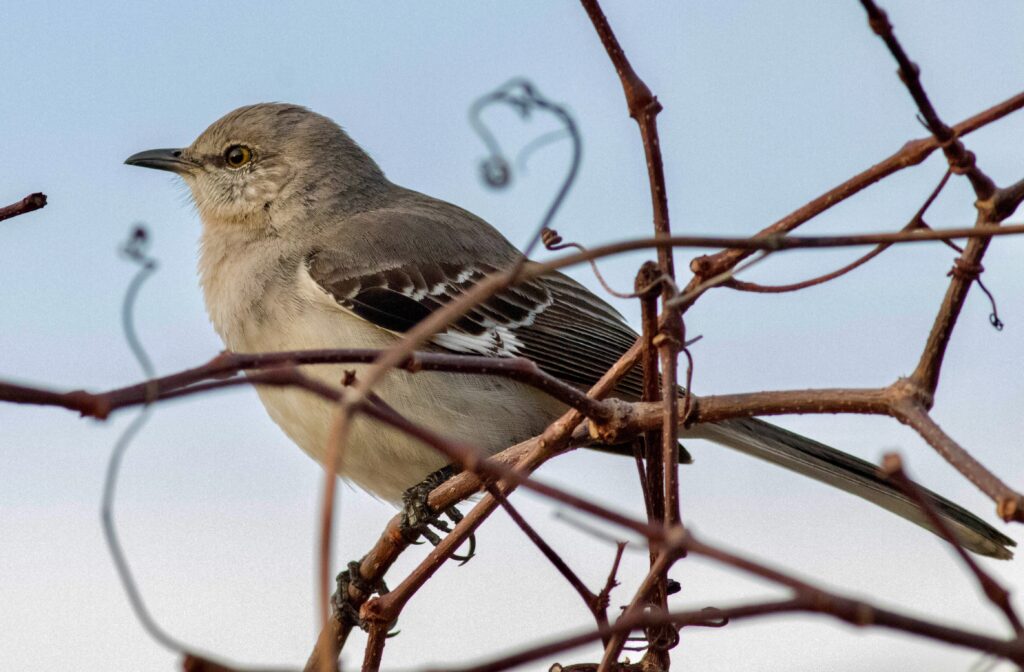
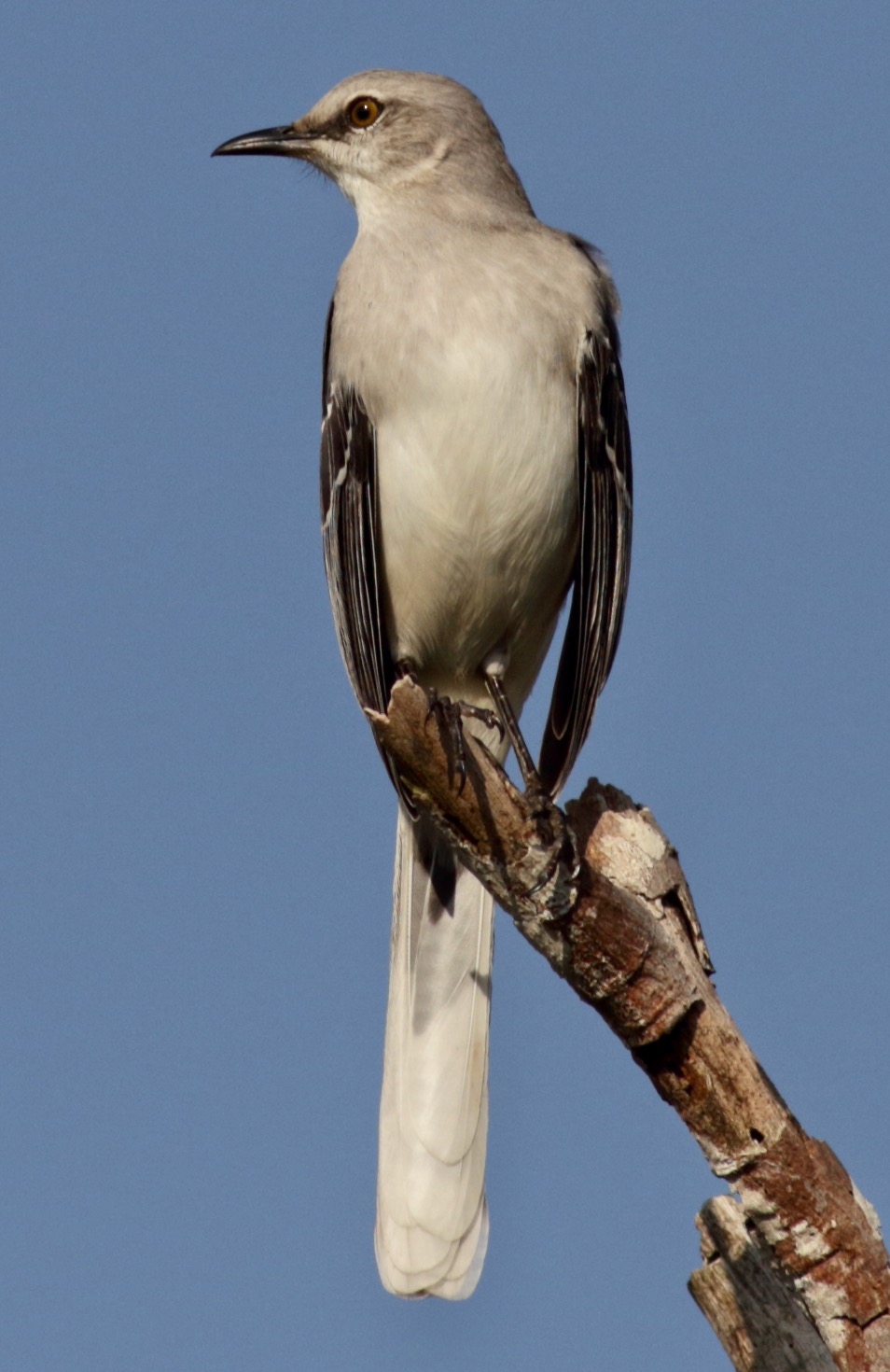
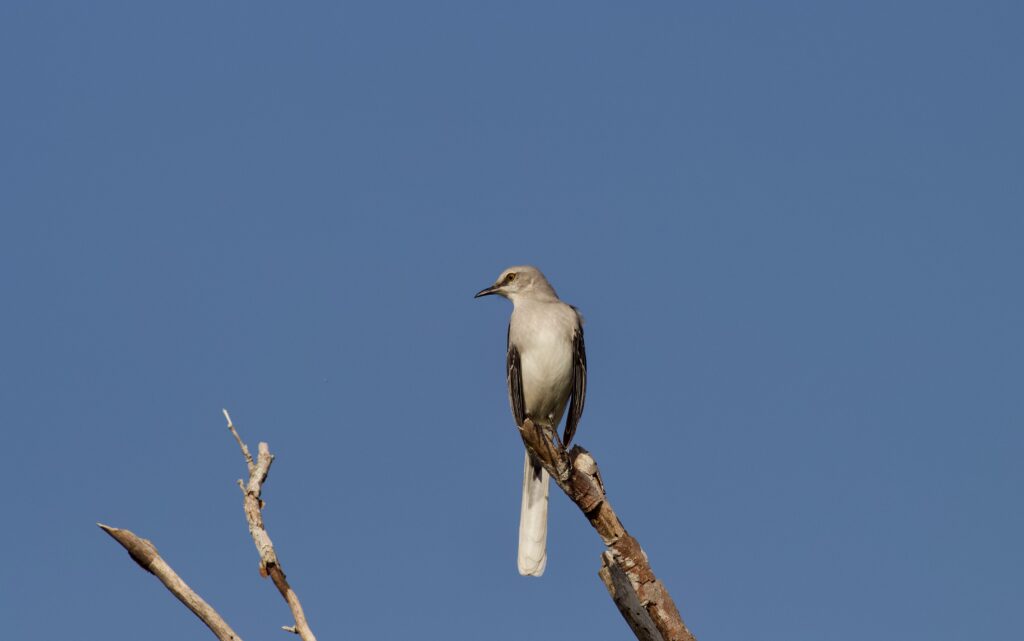
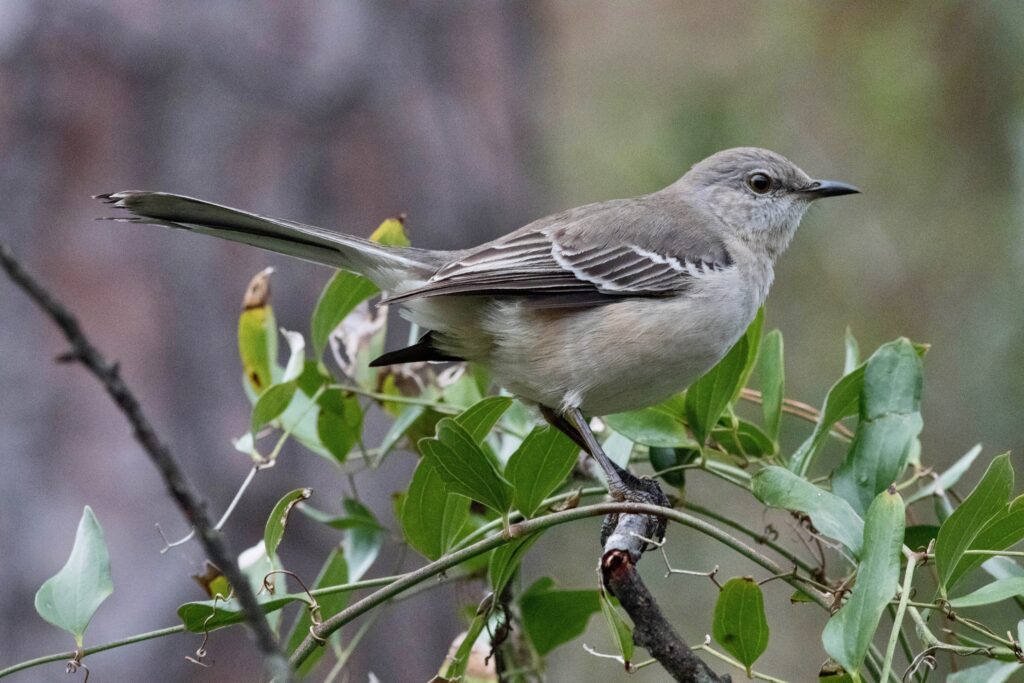
Northern Mockingbirds seemed to be everywhere.
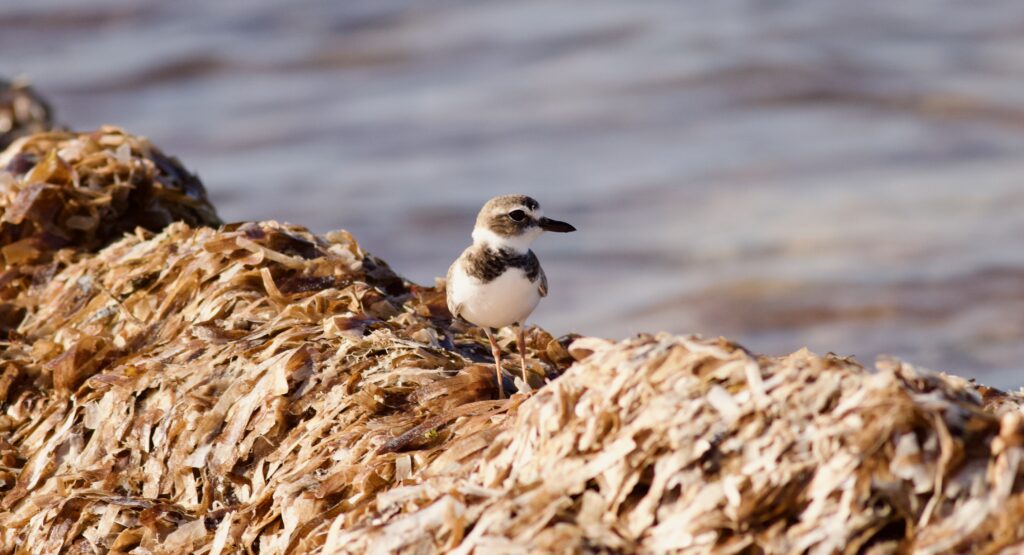
Shorebirds were present on the beaches, great in number and variety.
Below: Willet, with Ruddy Turnstones and Semipalmated Sandpiper
Willet and Marbled Godwit
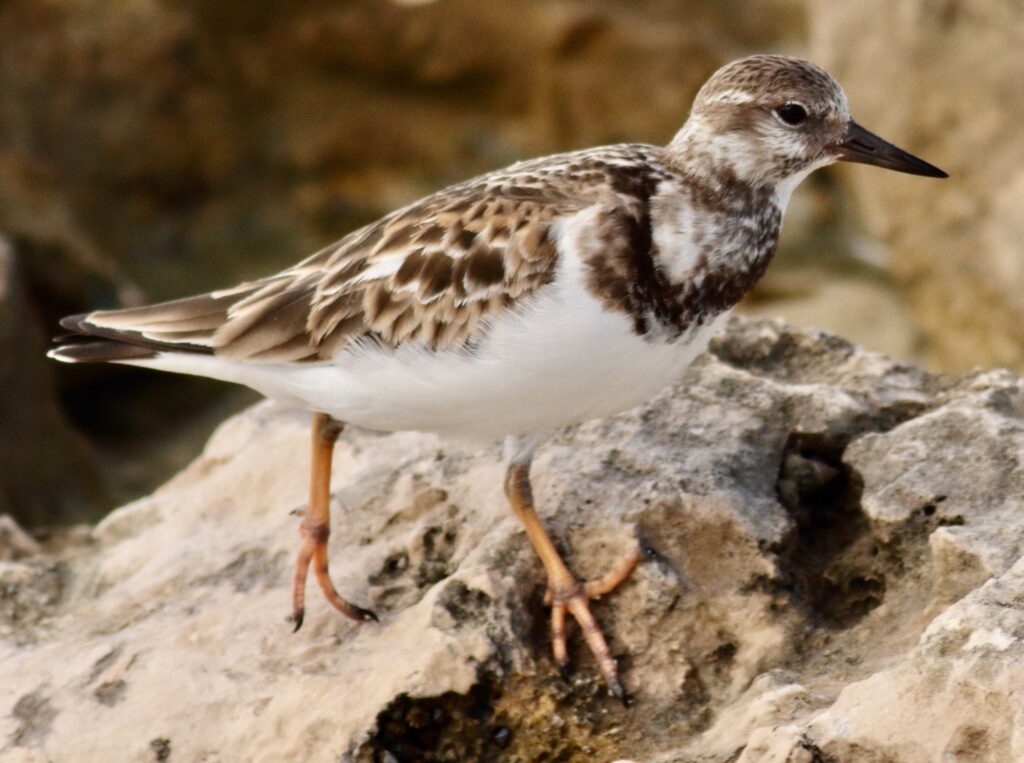
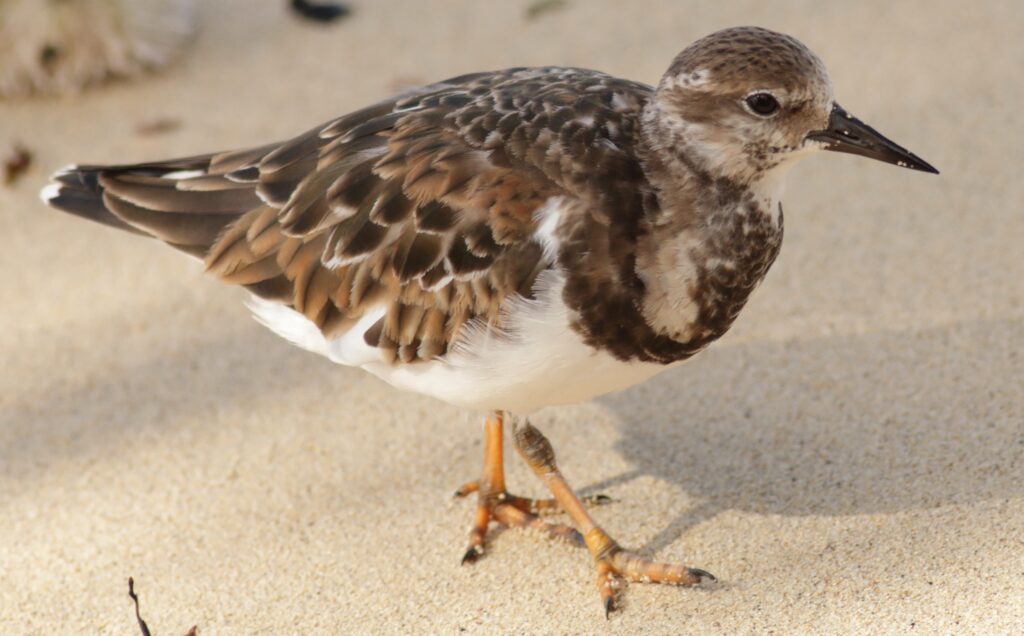
Ruddy Turnstone
The beaches also hosted Ring-billed Gulls and Laughing Gulls.
Inland ponds were oases for wading birds.
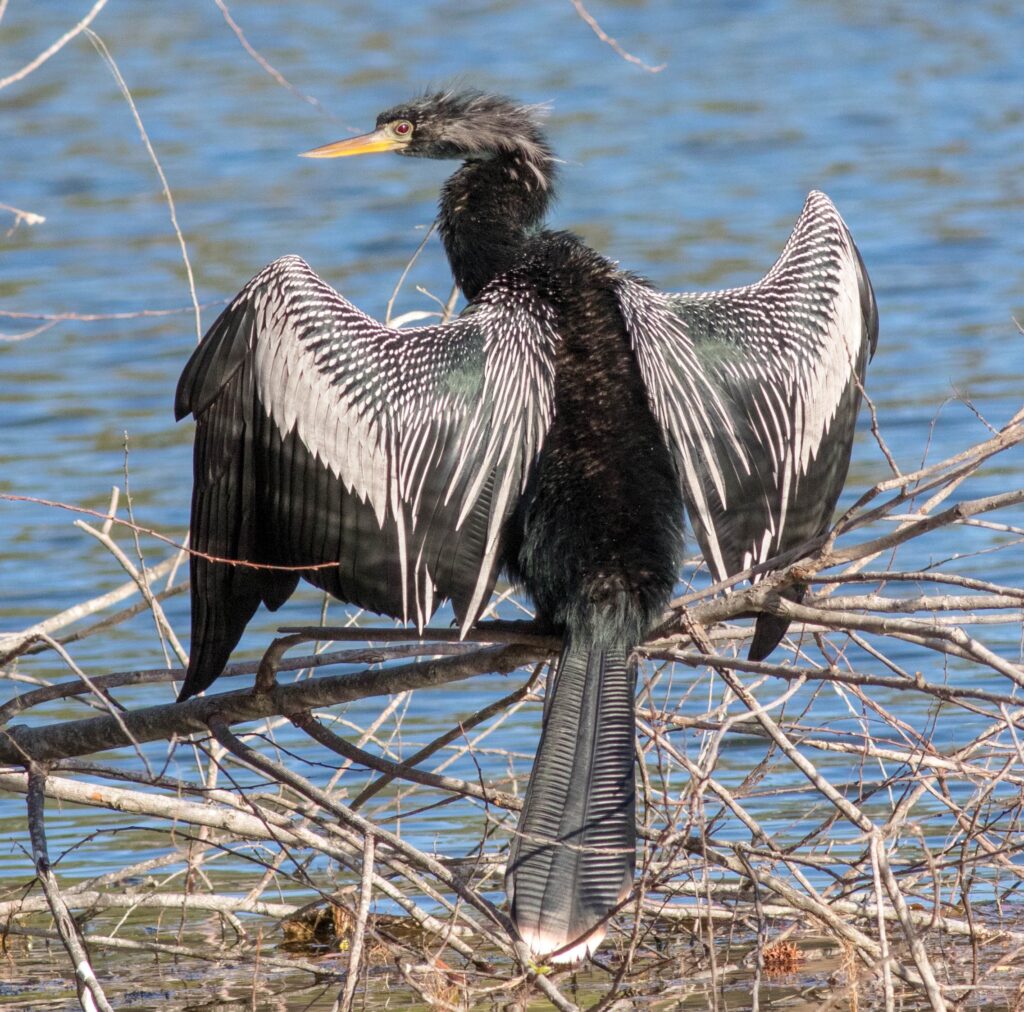
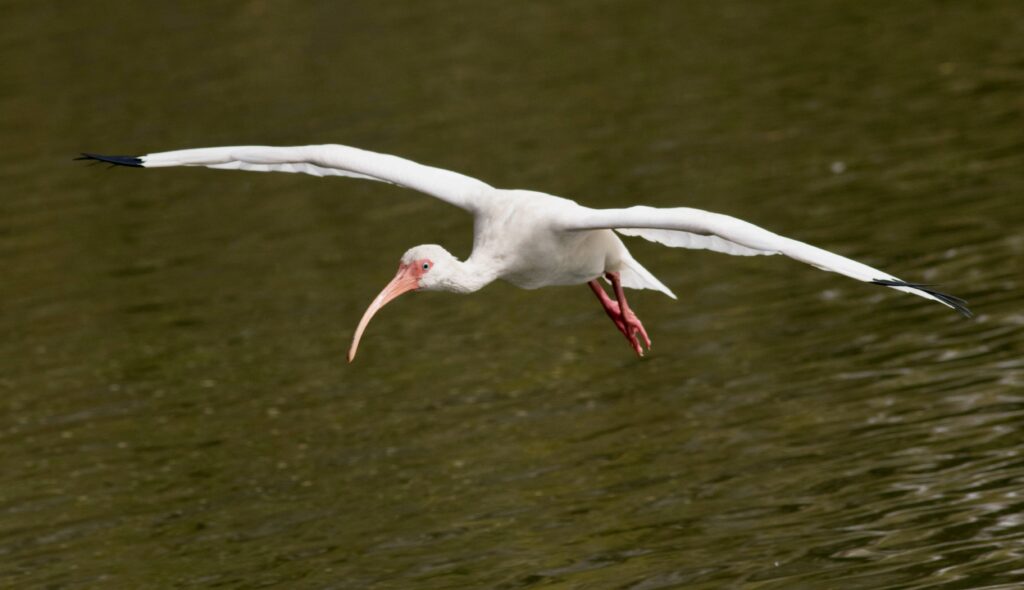
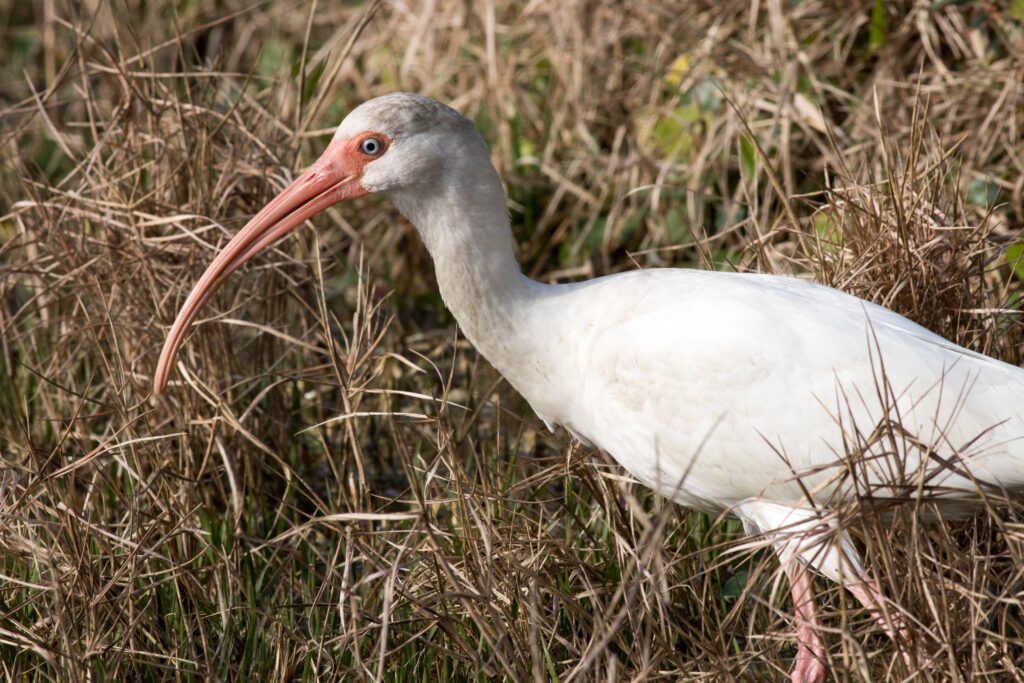
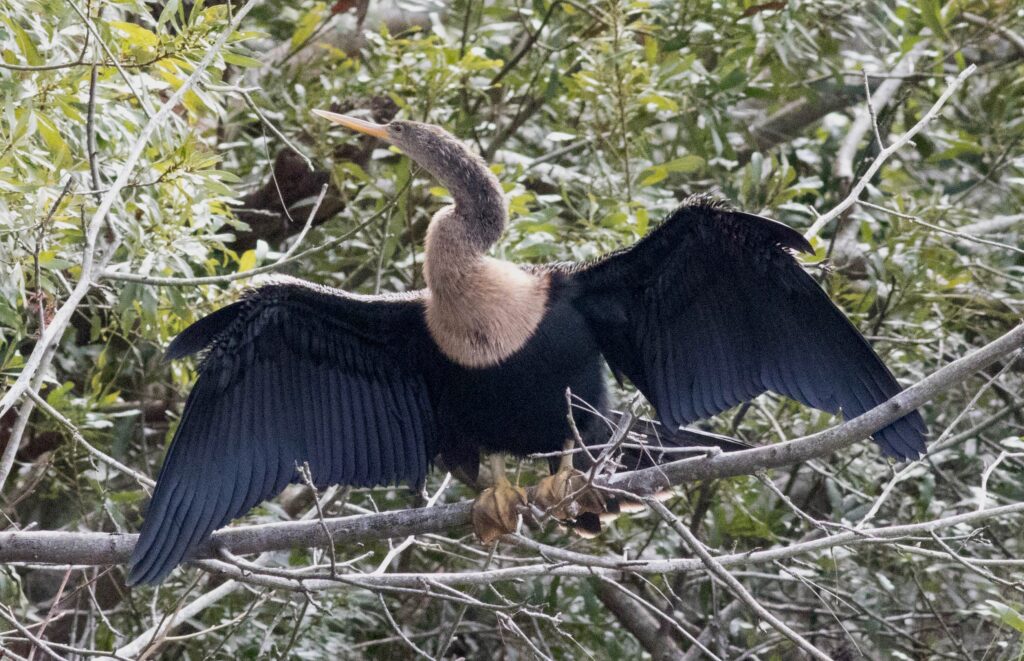
Below are: adult and juvenile Little Blue Herons, Anhinga, Snowy Egret, and White Ibis.
Juvenile Little Blue Herons are white with greenish legs, pale eyes, and two-tone bills. Snowy Egrets have yellow eyes, black and yellow legs and yellow feet. Tricolored Herons have a white belly and white stripe along its neck, yellow legs and a two-tone bill.
This handsome Great Blue Heron was ensconced in a drainage ditch close to a pedestrian path.
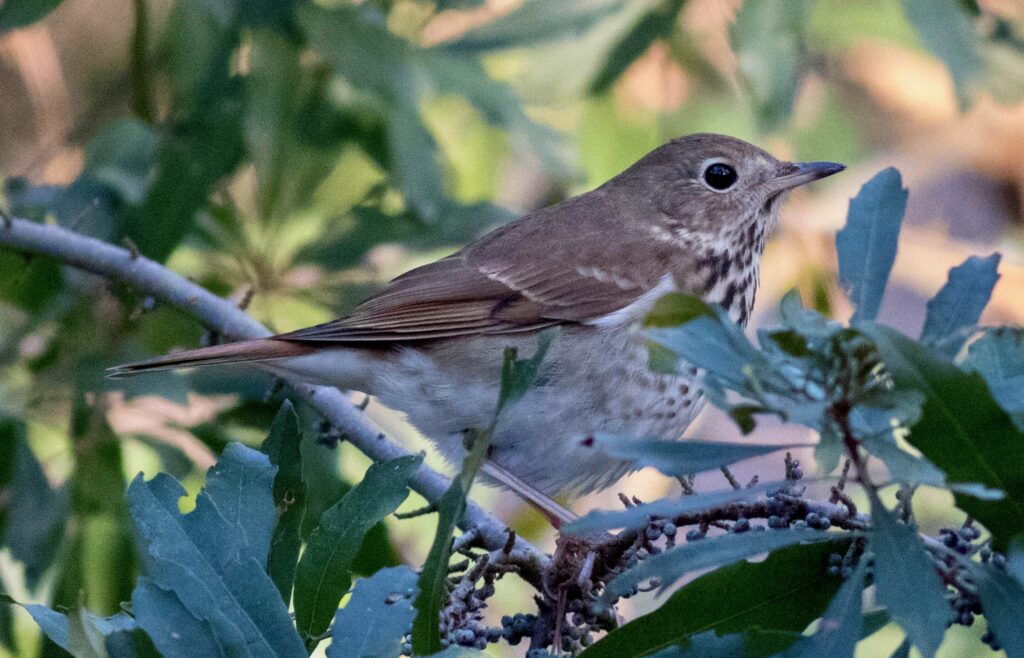
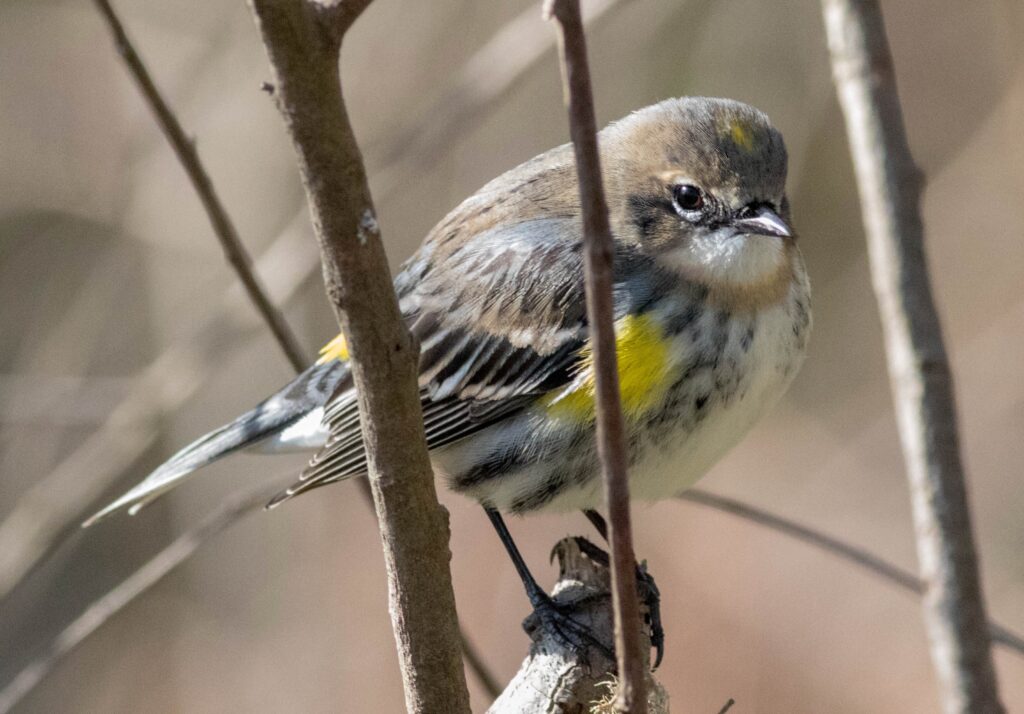
Here are a couple of chance sightings along the treed paths where we were staying.
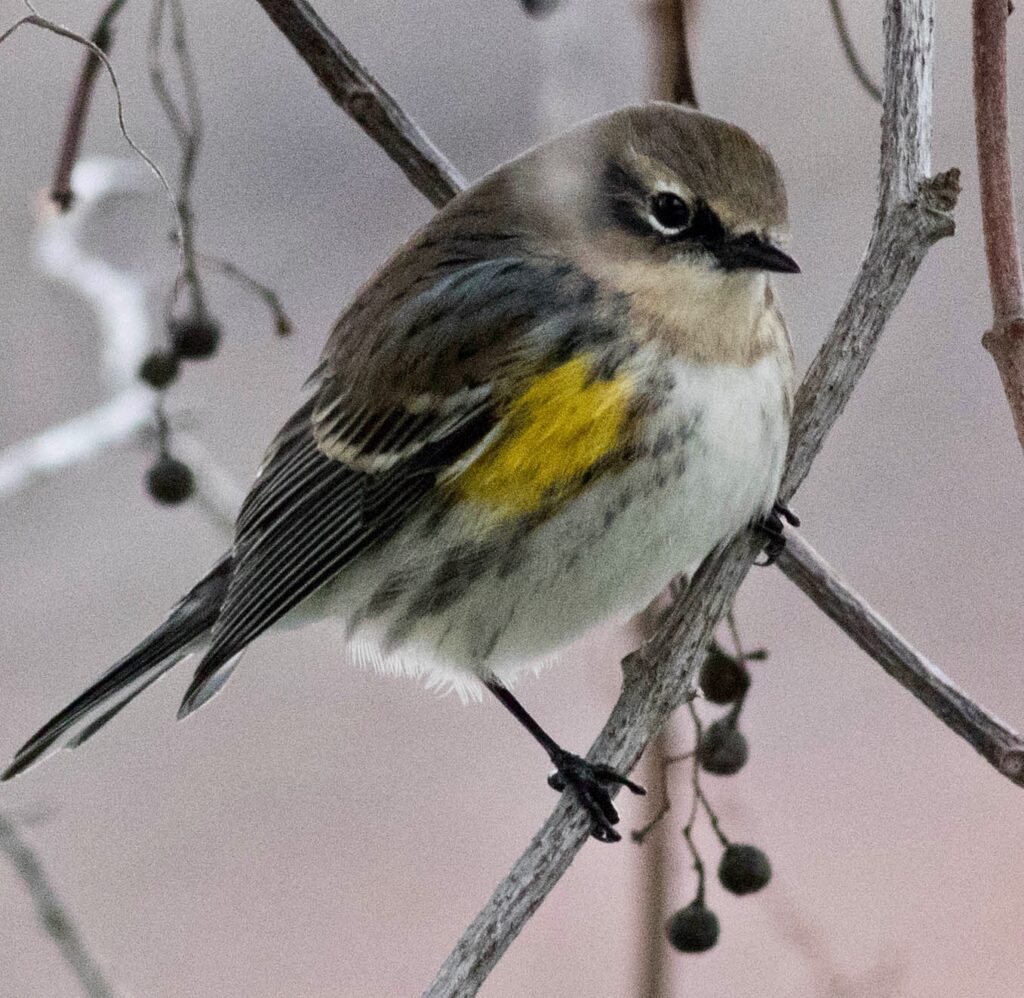
Hermit ThrushYellow-rumped Warbler
Great Backyard Bird Count Photos
Cornell has published a selection of photos submitted from across the globe for their Great Backyard Bird Count. You can browse photos from Africa, Asia, Australia and Oceana, Antarctica, Europe, South America and North America here: https://www.birdcount.org/bird-and-people-photos-gbbc-2024/
Aretha Franklin and More
The entire Kennedy Center Honors of 2015 is wonderful.
We initially accessed it to watch the tribute to Seiji Ozawa, a dynamic conductor who enlivened the Toronto music scene in the mid ’60s. Ozawa died recently at the age of 88.
The final tribute was for Carole King and featured Aretha Franklin singing “(You Make Me Feel Like) A Natural Woman”. I know we’ve featured this clip before, but it is well worth revisiting for Aretha’s captivating performance.
As great as Carole King’s version is, Aretha gave it wings.
The song appears as a continuing element in Murphy Brown.
The music of Aretha Franklin was the soundtrack to the original incarnation of the TV comedy, Murphy Brown, her voice lifting the series aloft at key moments in its history. Franklin served as a kind of patron saint to Brown, played by Candice Bergen, reminding the newswoman of who she wanted to be and what it sounded like to be a strong woman comfortable in her own skin. Franklin’s songs bookended the entire series.
In fact, creator Diane English has said the concept of Murphy Brown fell into her head perfectly formed one day while she was sitting in Los Angeles traffic, and Franklin’s “Respect” came on the radio. True to her initial bolt of inspiration, this song framed the very first moments of the pilot episode when Murphy Brown premiered in November 1988 on CBS.
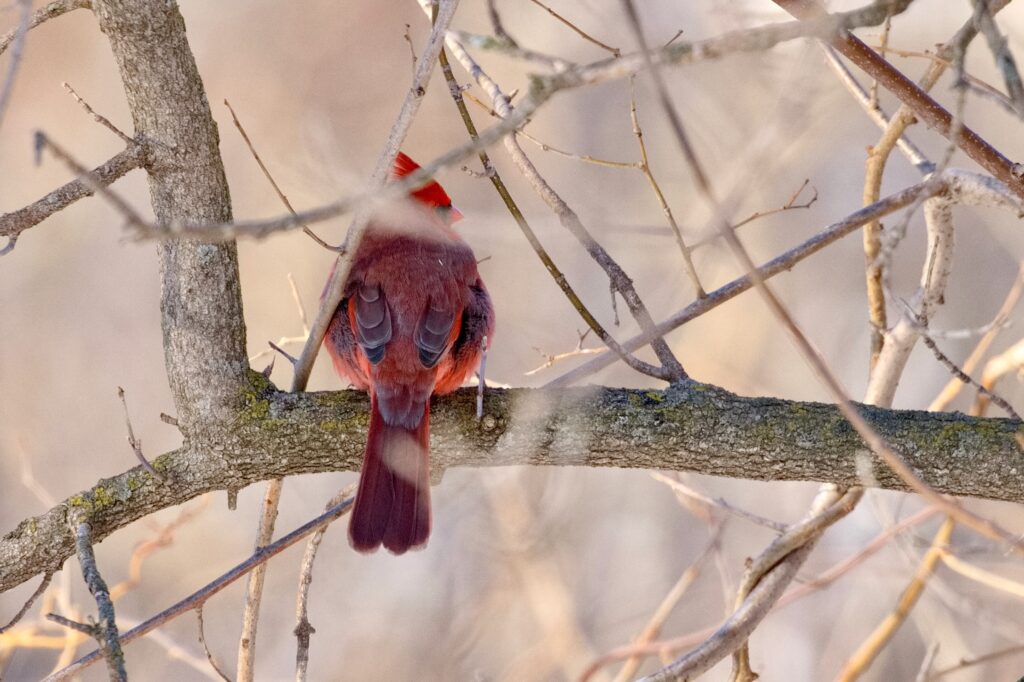
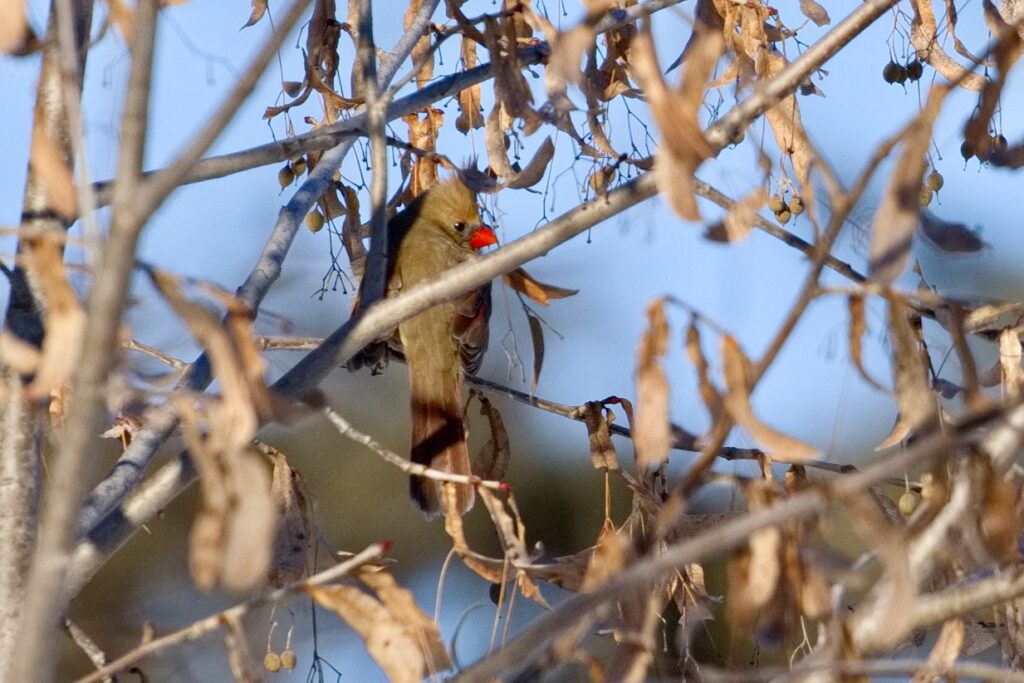
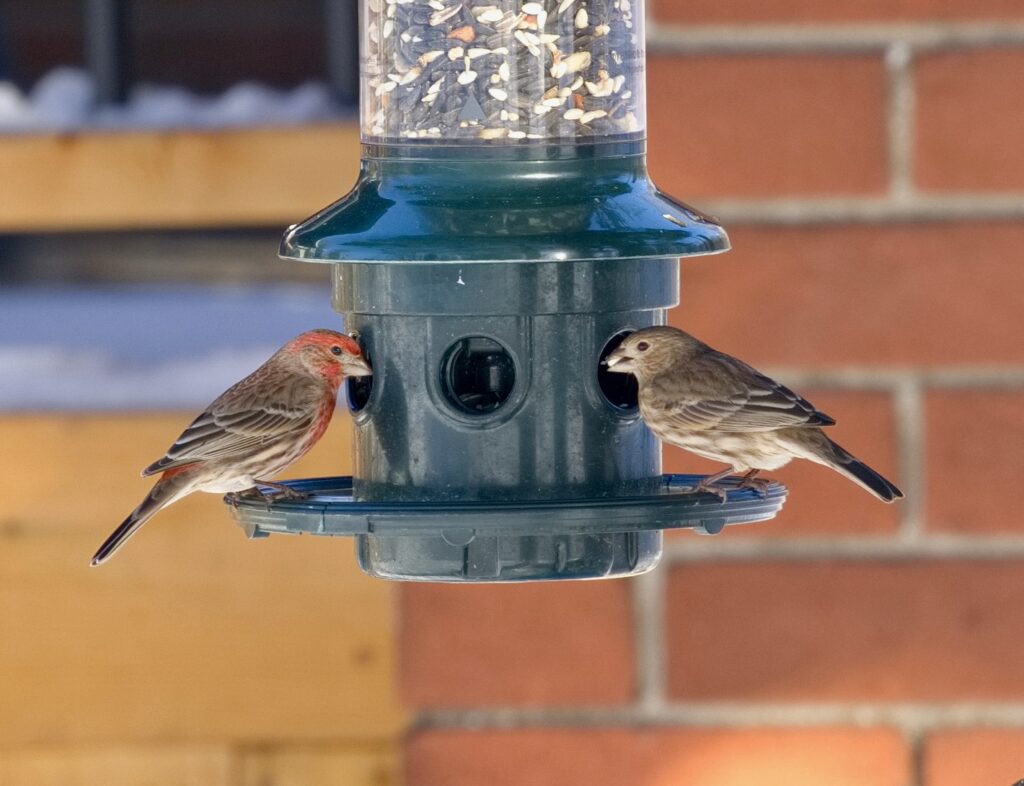
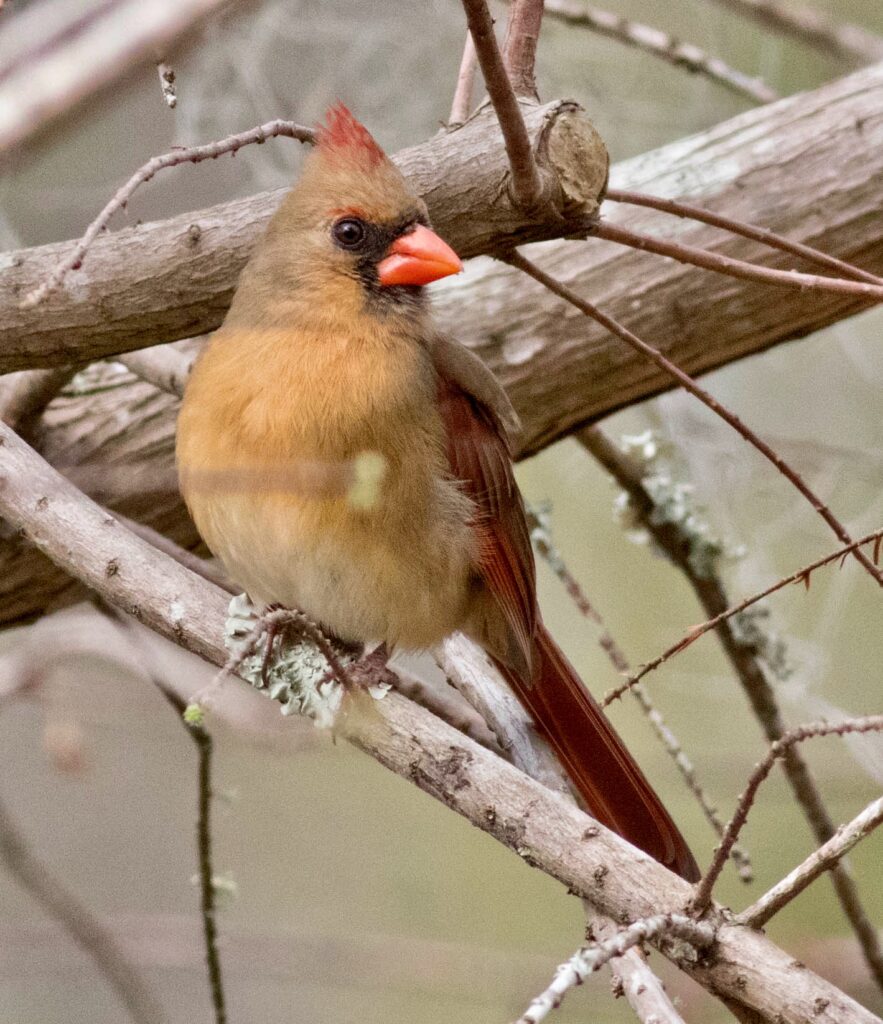
We’ve had another cycle of cold and snow followed by unseasonably mild weather. On Wednesday, it reached 9C. We heard House Finches and Northern Cardinals singing. The House Finches appeared to be building a nest on one of the downtown buildings.
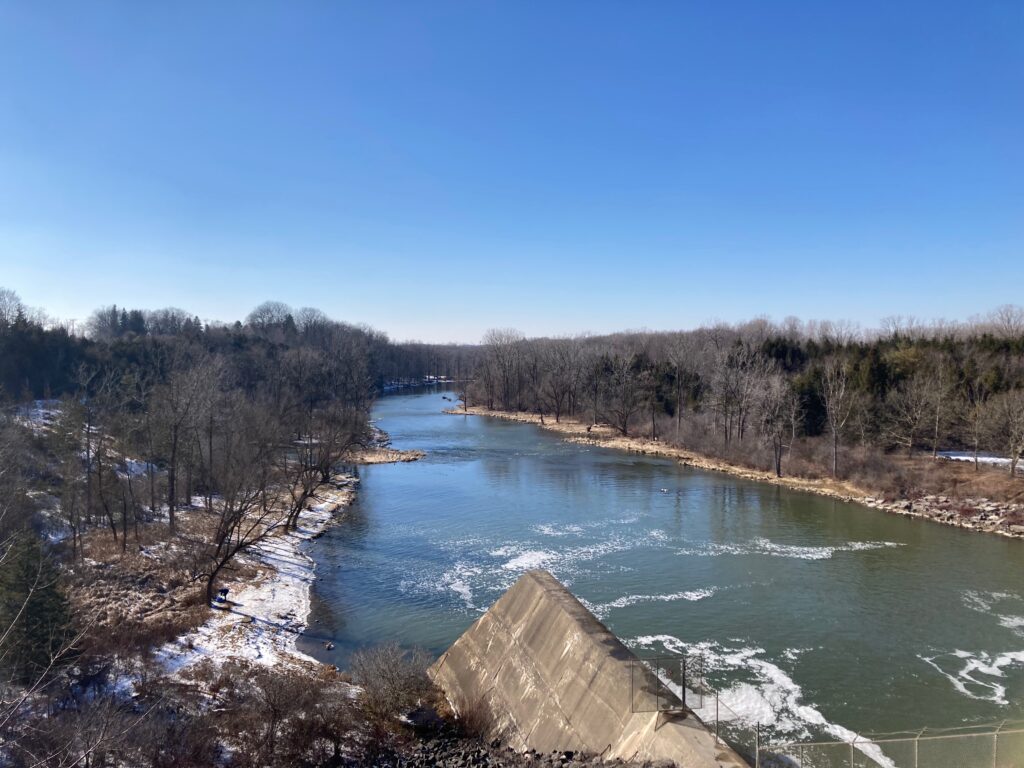
On Tuesday, the sky was clear and we were hopeful of seeing birds at Fanshawe Conservation Area. Fanshawe Lake, created by damming the Thames River was still frozen, but water flowed freely over the dam.
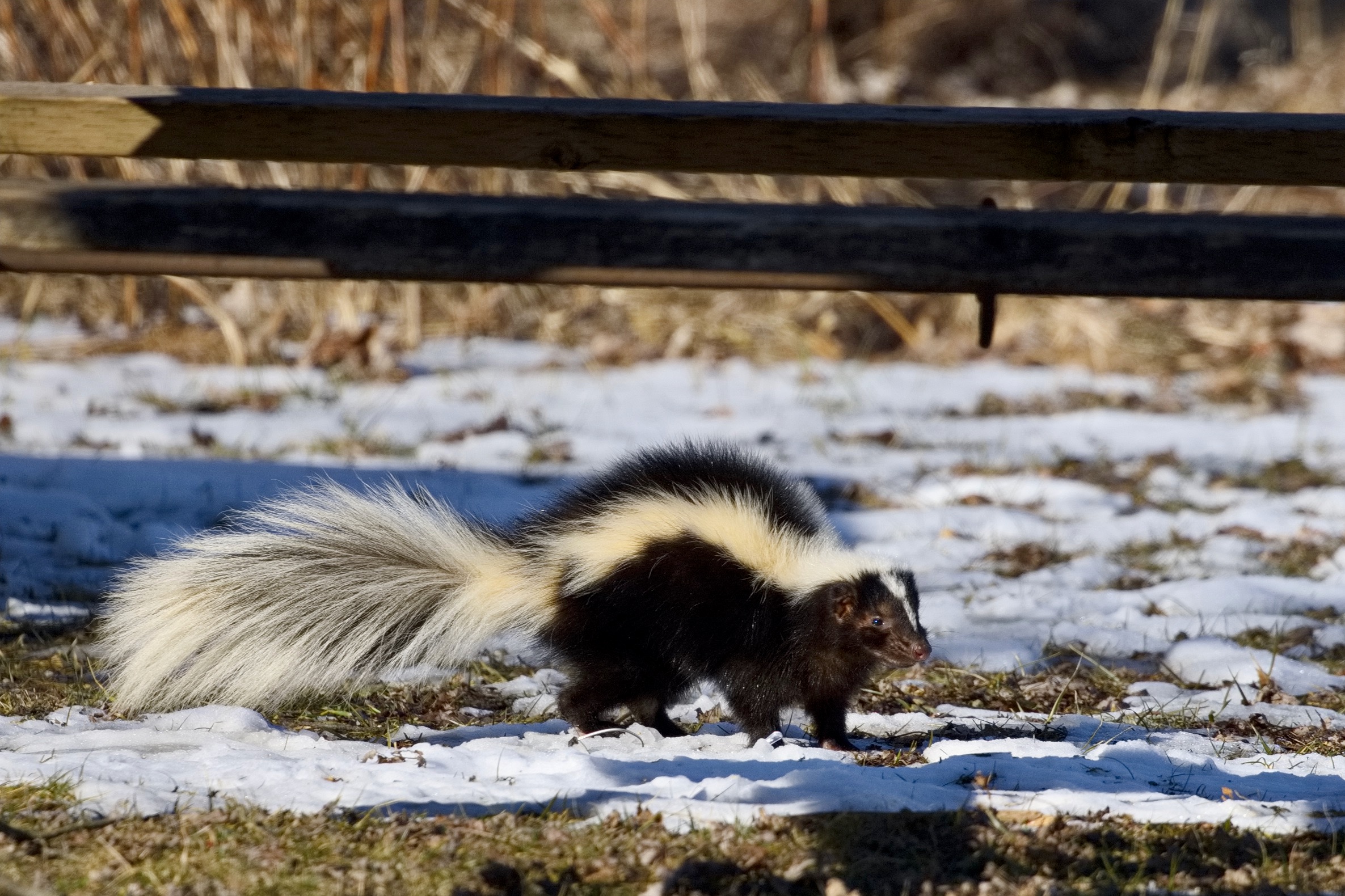
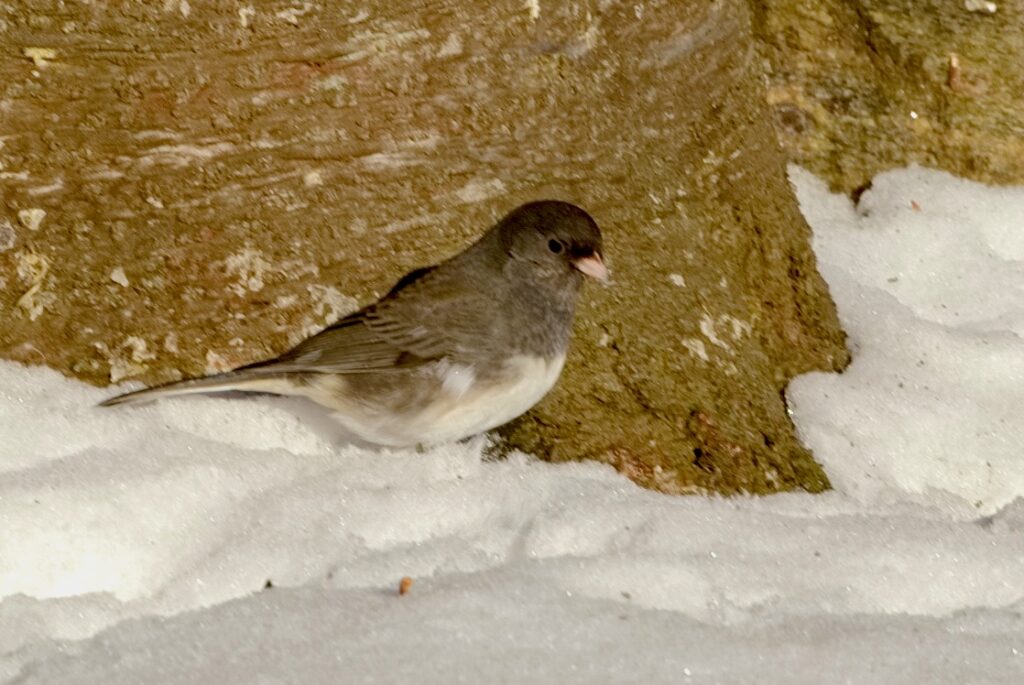
It was good to be out in the sun, but our walk produced few sightings. A skunk lurked under a picnic table at the trailhead. A few Dark-eyed Juncos foraged in the grass at the edge of the path. Three American Crows perched high in a tree, cawing raucously. Black-capped Chickadees bobbed in the bushes, but did not venture into the open, even for some sunflower seeds. A flock of pigeons dotted the concrete buttress of the dam.
At this point in the winter, we long for spring growth and colour. Valentine’s Day flowers from Wandering Bee and tulips for Family Day were welcome sights.
We can also visit our archives for a glimpse of warmth and colour. We recently searched for insect photos to add to one of Susan’s articles for the nature club. Here is a selection, just for fun!
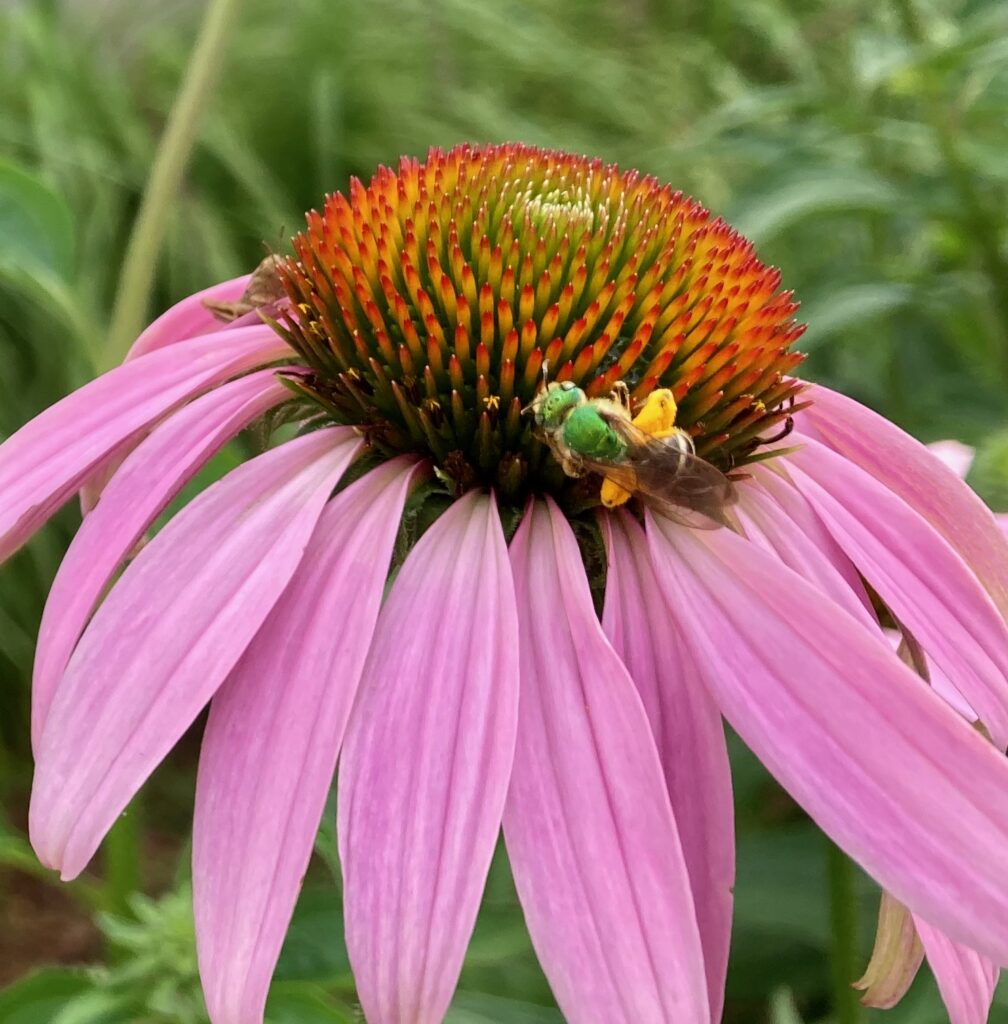
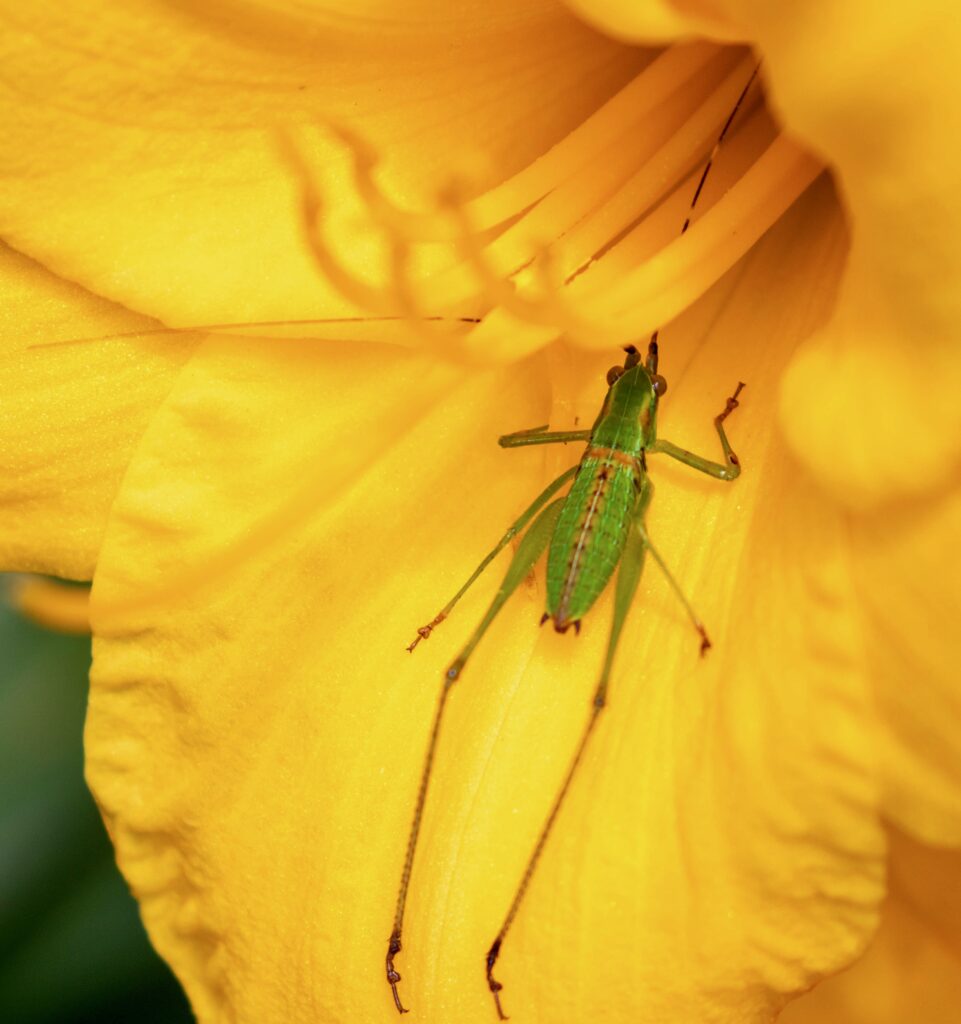
Their names are also fun: Black Swallowtail, Blue Dasher, Bicolored Striped Sweat Bee, Common Crane Fly, Differential Grasshopper, Eastern Carpenter Bee and Garden Webworm, Margined Calligrapher, Virginia Ctenucha Moth, Monarch butterfly, Scudder’s Bush Katydid, Seven-spotted Lady Beetle and Variable Field Ant.
Last week, we finally had some sun. The temperature remained above freezing during the day.
Frost on the ground in the morning, but no snowClearing skies promised sun the following day
On February 6, we headed to Pinafore Park in St. Thomas to a forested trail where we expected to see some birds. It was sunny when we left home, but had clouded over by the time we reached the park.
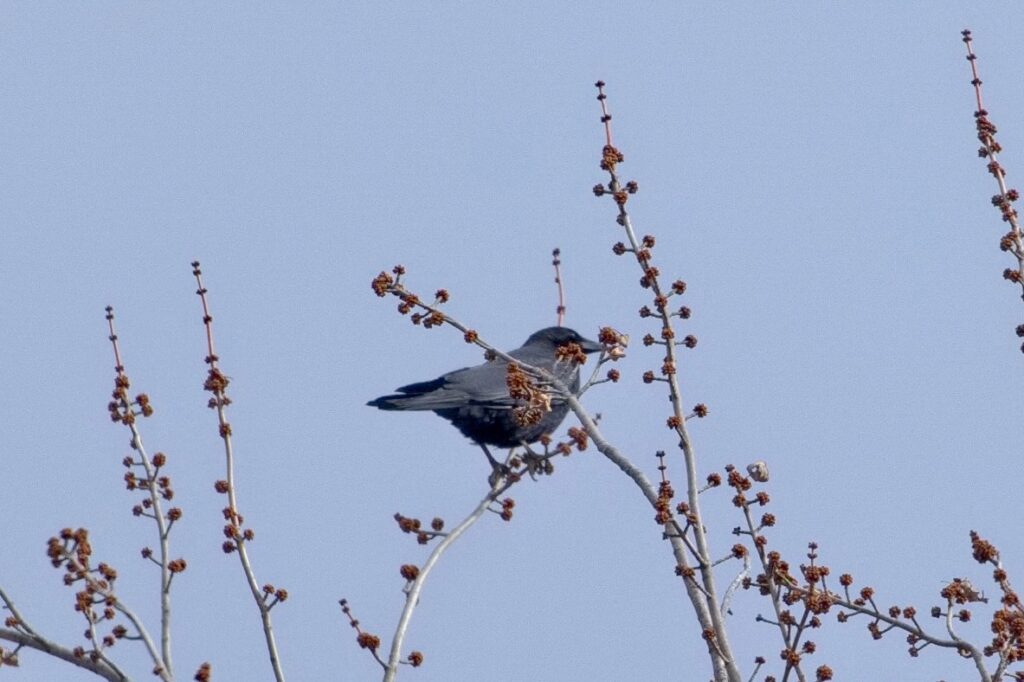
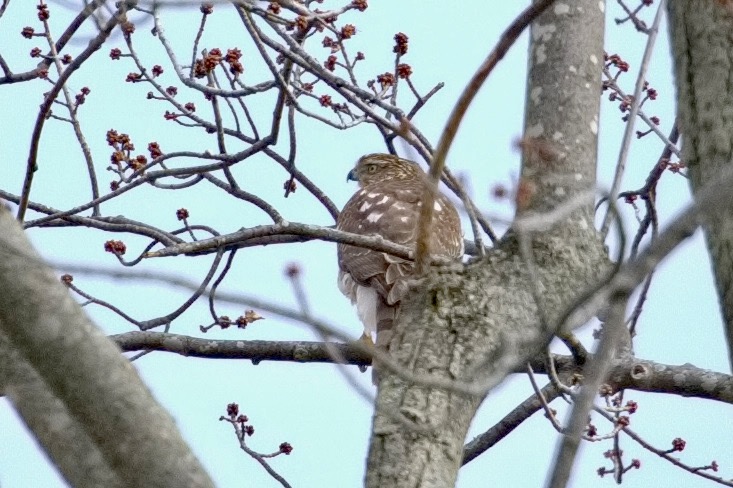
As we exited the car in the parking lot, we were greeted by the clamour of crows. They were trying to dislodge a small hawk perched near the top of a nearby tree – to no avail. The hawk remained where it was. At the same time, there were three Red-tailed Hawks circling higher up, but one came close enough to flush a small flock of European Starlings and the crows from the tree.
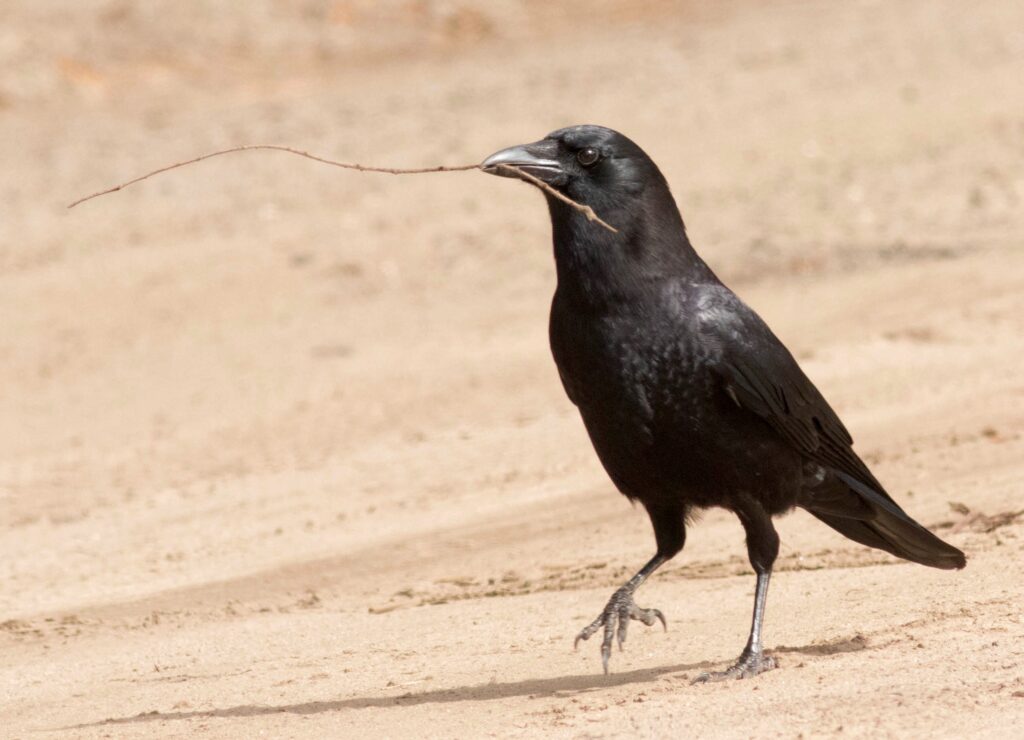
American CrowRed-tailed Hawk
Once we had a chance to examine the photos, we could confirm that the perching bird was an immature Cooper’s Hawk. Immature hawks look quite different from adults.
As we entered the woods, we flushed a bird that flew directly up the path and landed on a low branch.
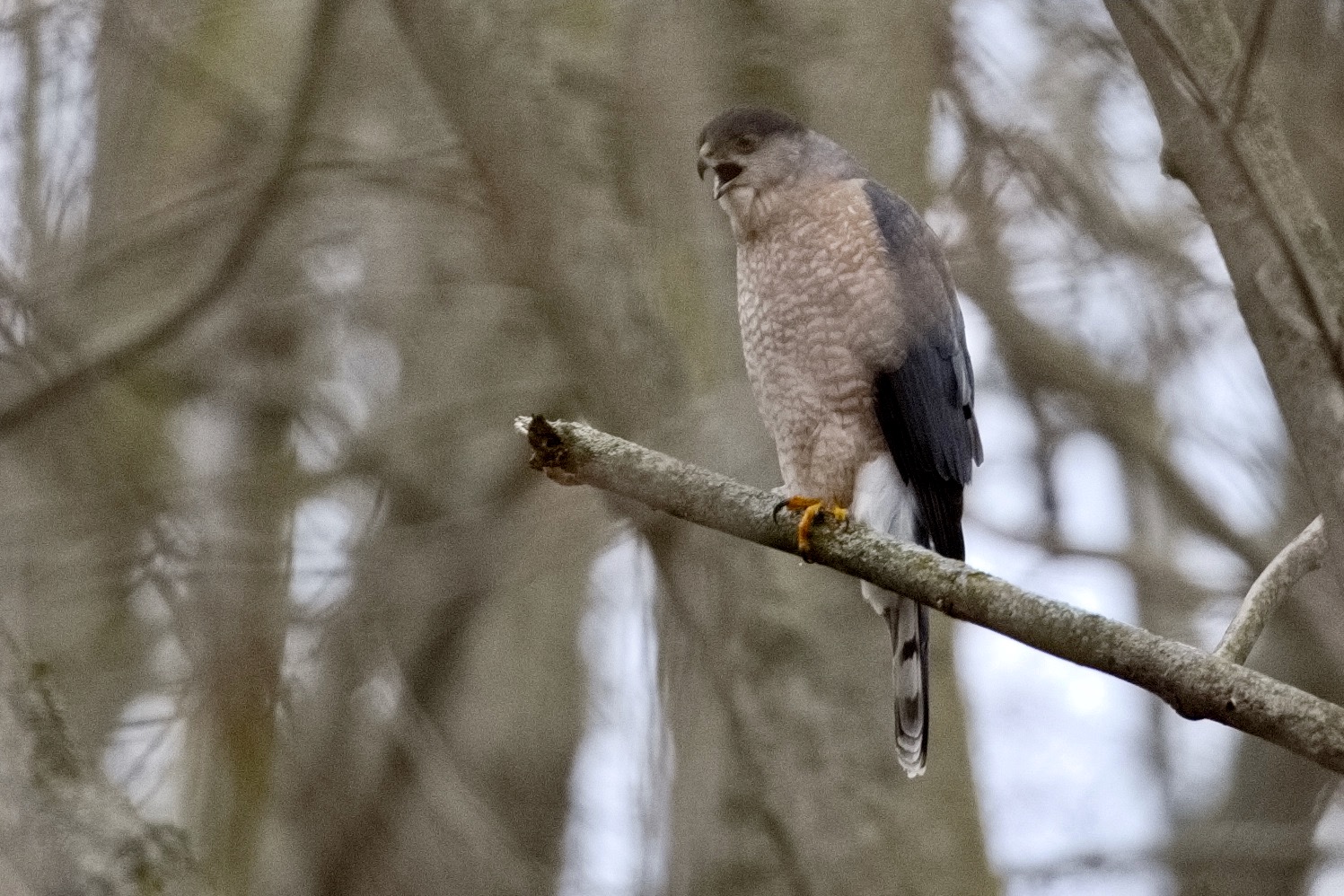
Here was an adult Cooper’s Hawk, apparently not pleased to have been disturbed.
Although the presence of the hawk may have limited the number of birds that we heard and saw in the woods (only Red-bellied Woodpecker, White-Breasted Nuthatch and Black-capped Chickadees), we were happy to have had such a good look at this handsome bird.
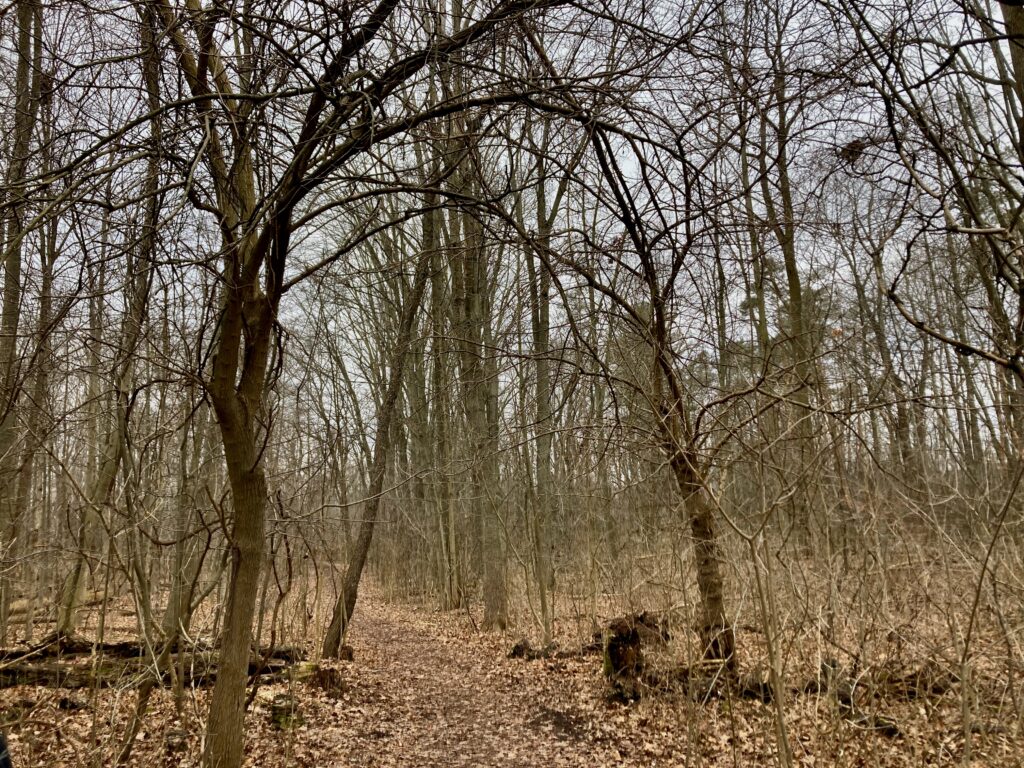
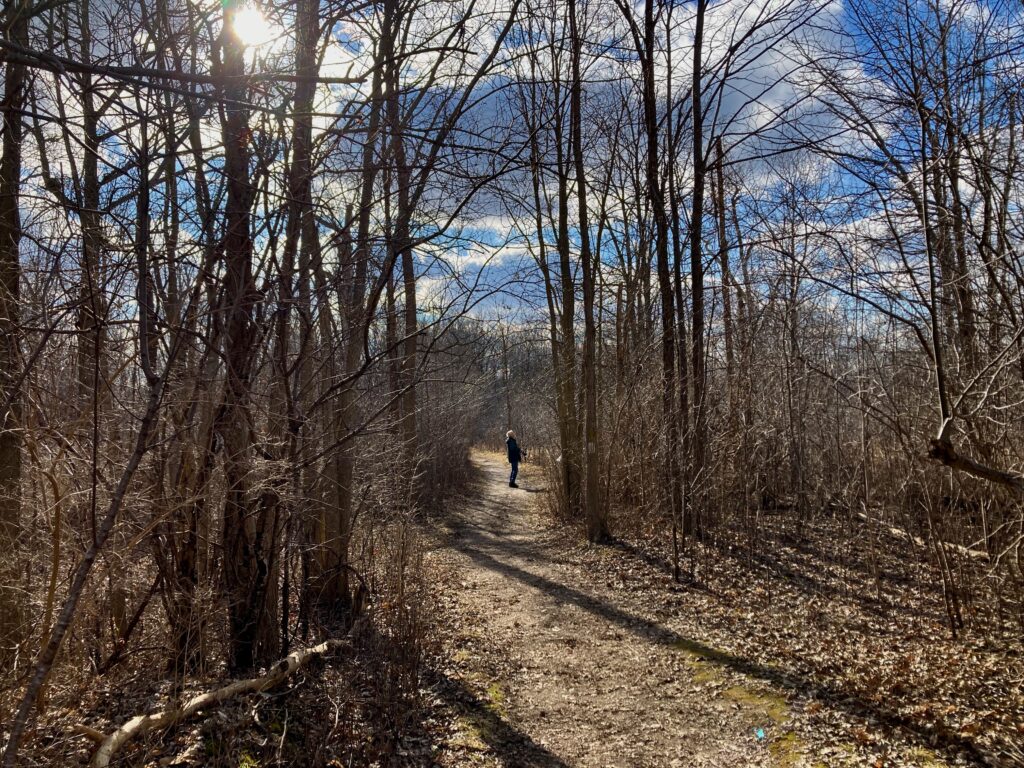
The morning temperature was crisp and there was ice on the path and on the standing water. The deadwood hosted a variety of fungi and moss.
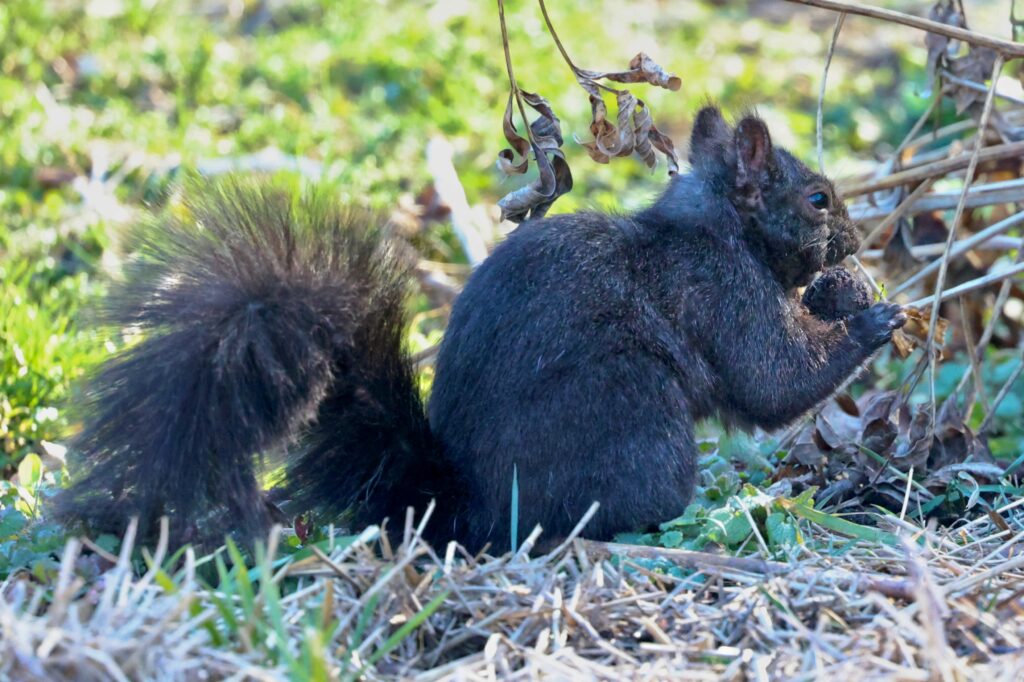
As we left the woods, a small raccoon watched from the side of the path. On the way back to the car, we passed this handsome Dawn Redwood tree in the park. Nearby, a pair of Gray Squirrels frolicked and a Blue Jay tossed fallen leaves, looking for insects.
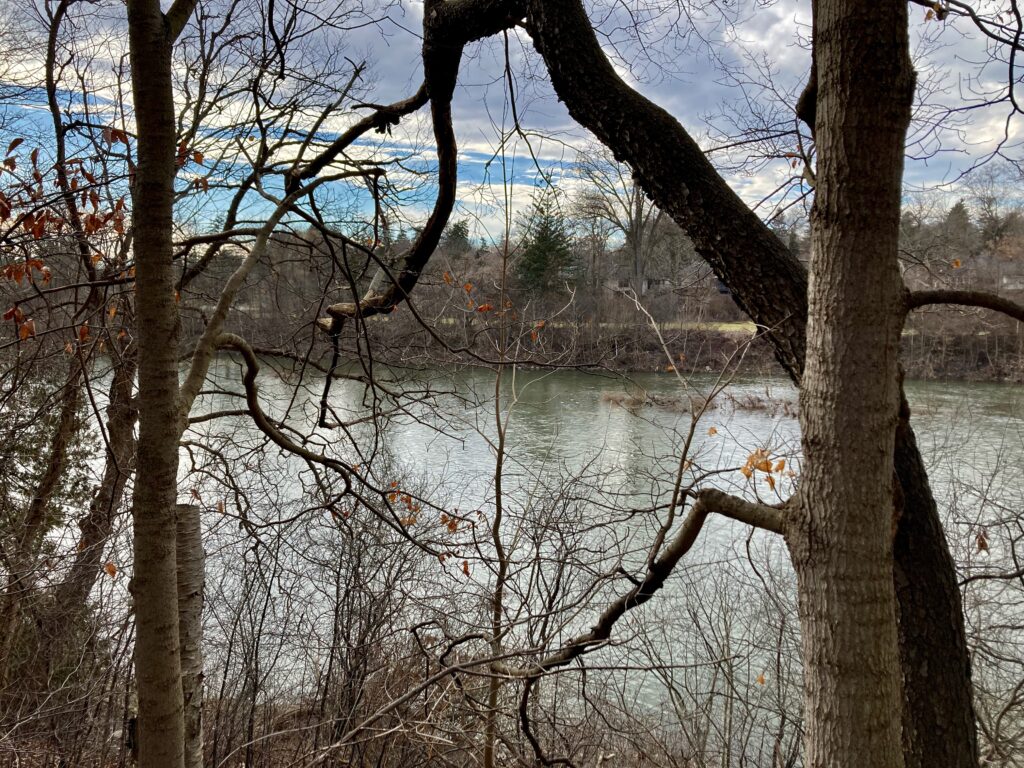
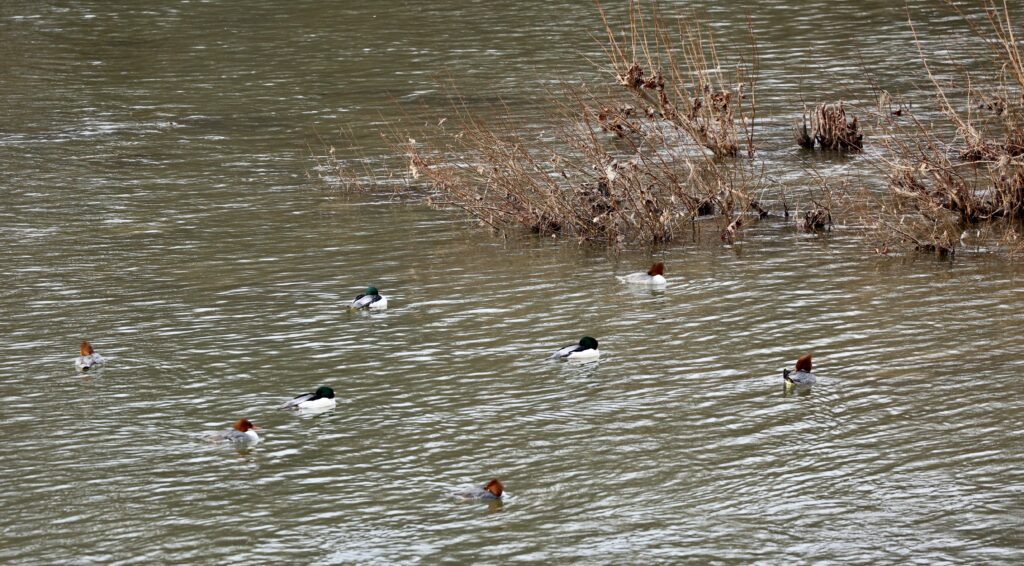
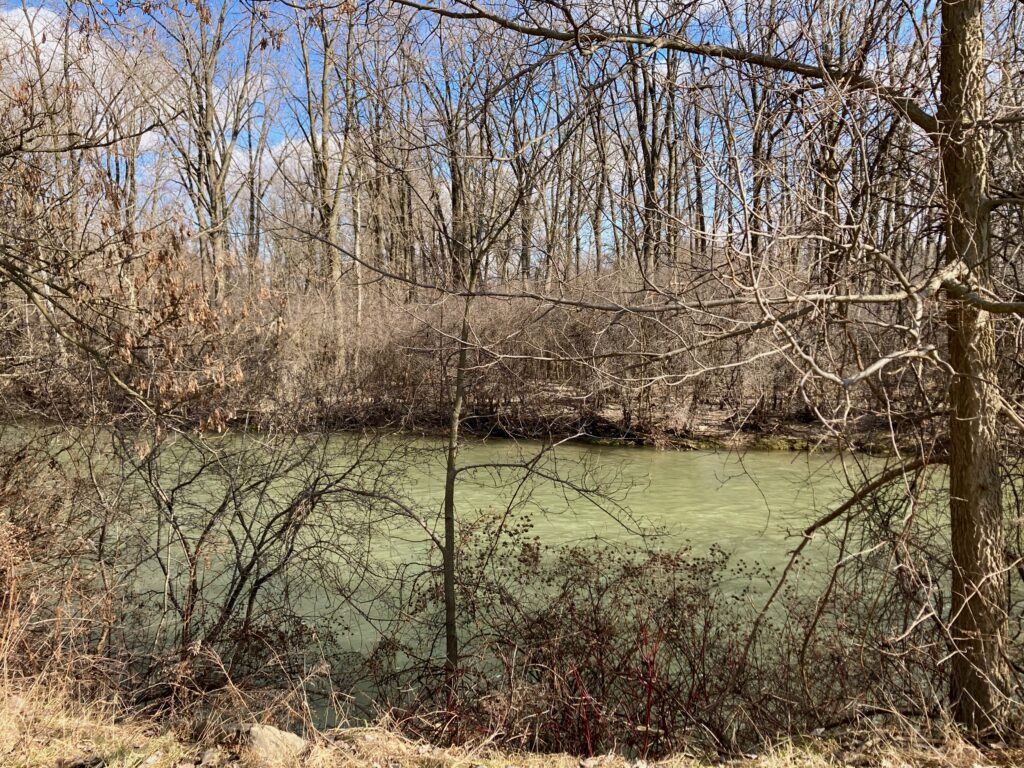
On February 8, we had a short walk along the Thames and through the wooded path at the Civic Garden Centre. On the river, there was a raft of Common Mergansers sheltering out of the main current of the river.
We didn’t see or hear other birds apart from Black-capped Chickadees that bounced and called from the trees and bushes. They likely would have welcomed seeds if we’d had any.
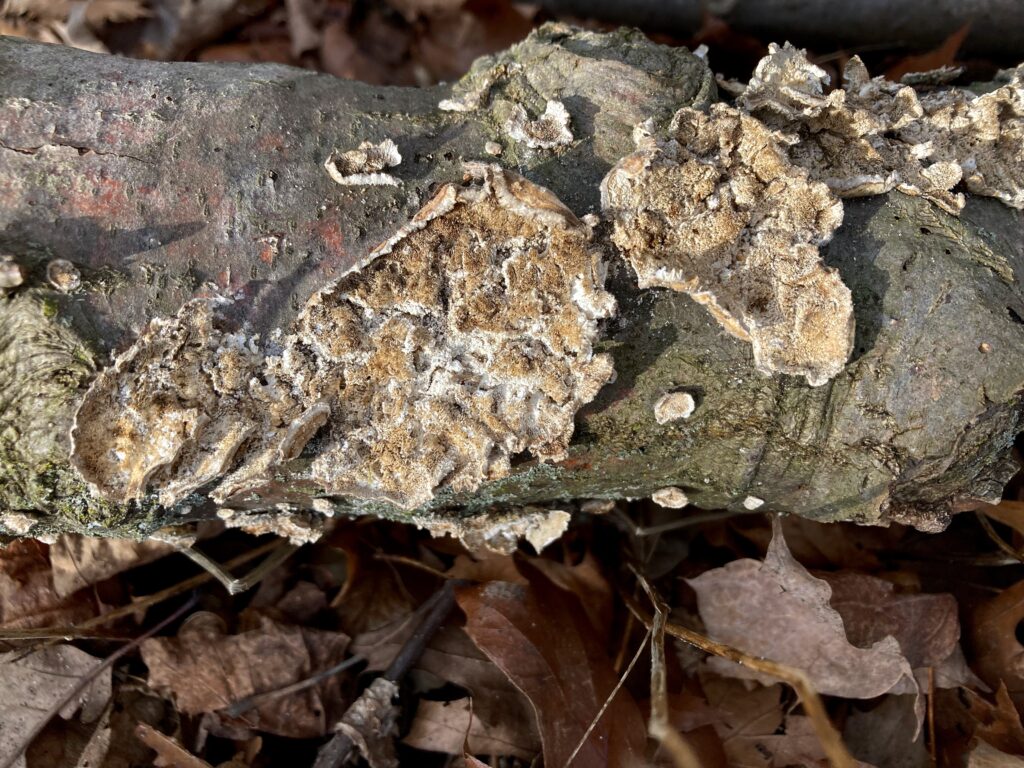
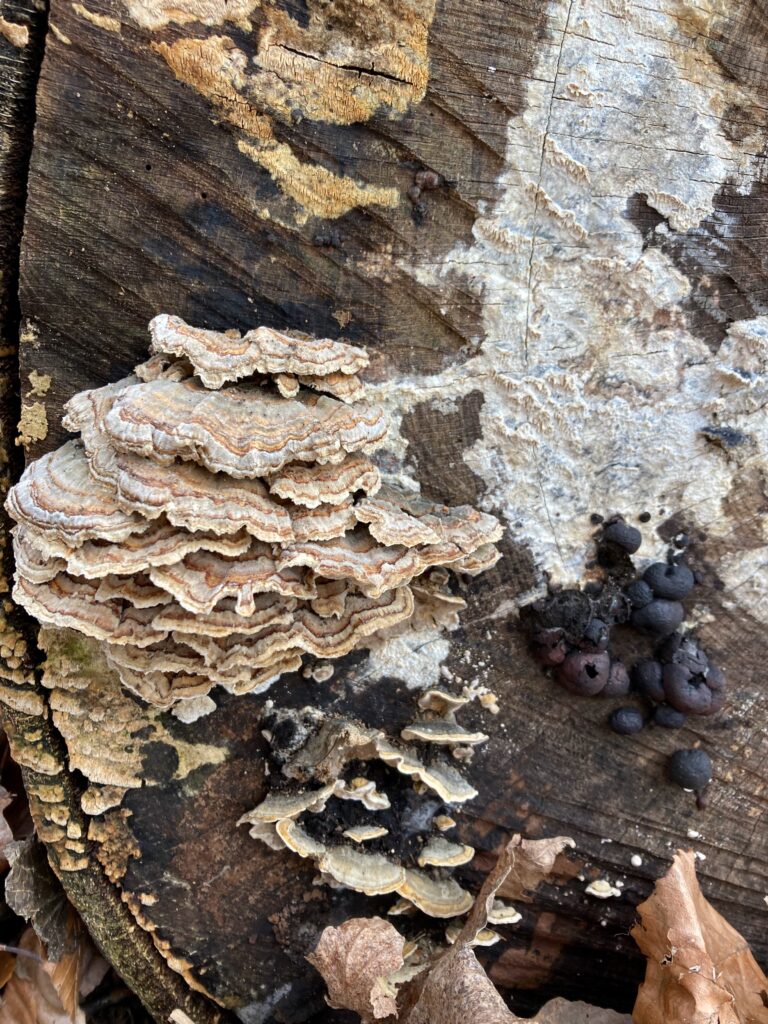
There were more fungi to see on this winter walk.
Milk-white Toothed PolyporeTurkey-Tail
Monday, February 12, was a sunny day, perfect for a long walk at Kilally Meadows Environmentally Significant Area. Despite the mild weather, we heard and saw few birds along the river and the wooded trails. Other birders we encountered remarked on how quiet the park was.
When we reached a small cove in the river, another birder was looking for a Greater Scaup that had been seen near the cove for several days. This is very unusual habitat for a Greater Scaup. They are diving ducks that breed in the Arctic and migrate in large flocks to spend the winter in the open water of the Great Lakes or the Atlantic and Pacific coasts.
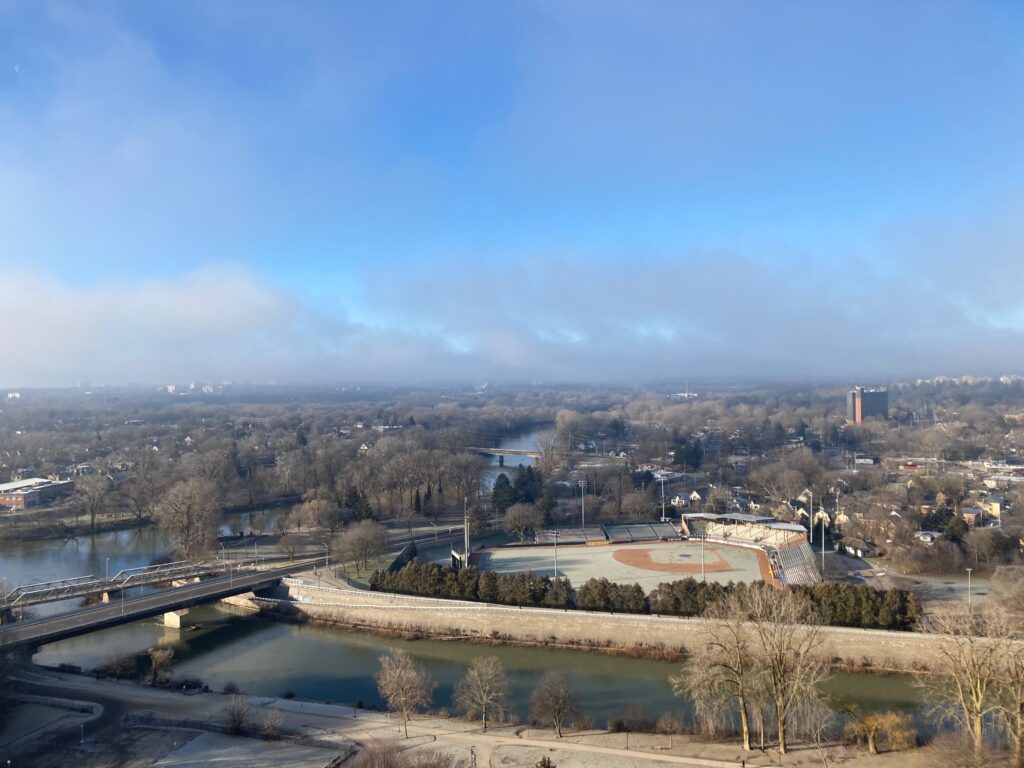
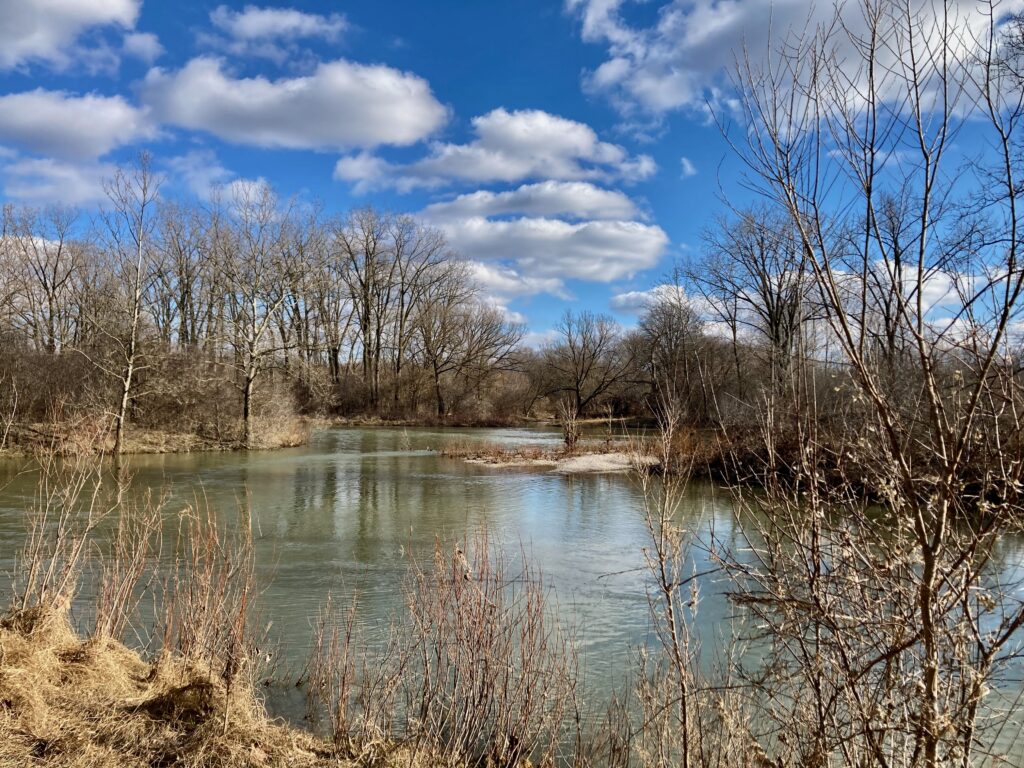
The cove with the main channel of the Thames beyond.
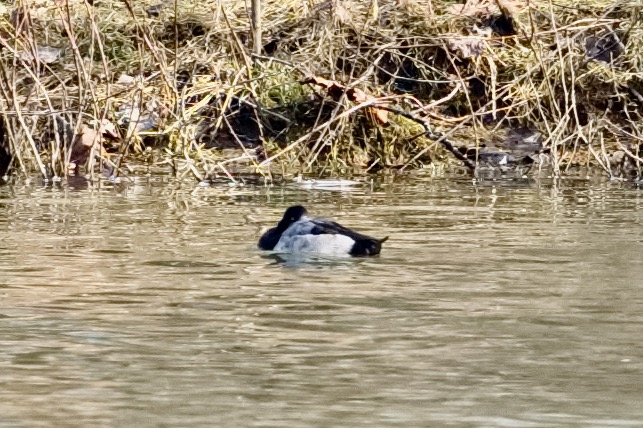
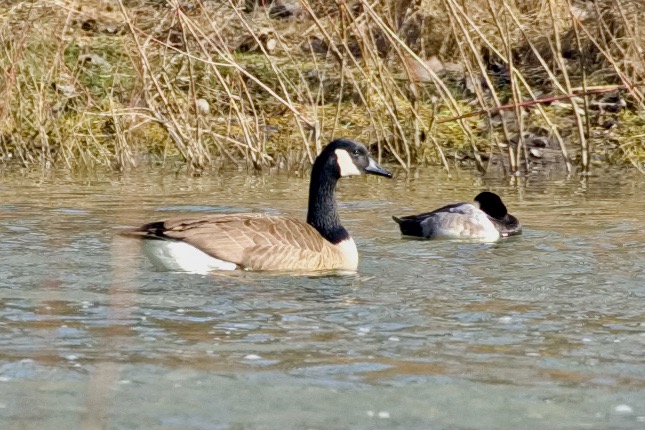
Despite the odds, we spotted the lone bird, head tucked under its wing along the far shore of the river in the company of some Mallards and a couple of Canada Geese. At home, with the help of our Sibley bird guide, we could see that the profile of the sleeping bird fits that of a Greater Scaup. It added to our confidence that the identity of the bird had already been verified by several expert birders.
He was a big star in the early ’60s, recording his own songs and songs by upcoming songwriters. Most of his early singles were covers. I heard his versions of Chuck Berry songs long before I heard about Chuck Berry. His early live albums were enhanced in the studio with clapping and “audience participation” sounds.
Rivers was one of the first to use go-go dancers in his live performances at The Whisky a Go Go – a historic nightclub on the Sunset Strip in West Hollywood, CA.
The above song became the theme song for the television show.
There are multiple versions of him performing a medley of these two hits.
I could not find a better version (by anyone on YouTube) of this song. And check out the quality of the band!
There have been a few mild, sunny days this week. We’ve been out and have seen a few birds, but our post isn’t ready yet. Here is another look back on recent years’ observations.
Since our January 2024 weather didn’t offer many opportunities to see and photograph birds, we decided to review the birds we’ve seen in London since we arrived in January 2021. Here is a selection of birds from January 2021 and January 2022.
Common Mergansers, Hooded Mergansers and the occasional Common Goldeneye cruise the open water of the Thames.
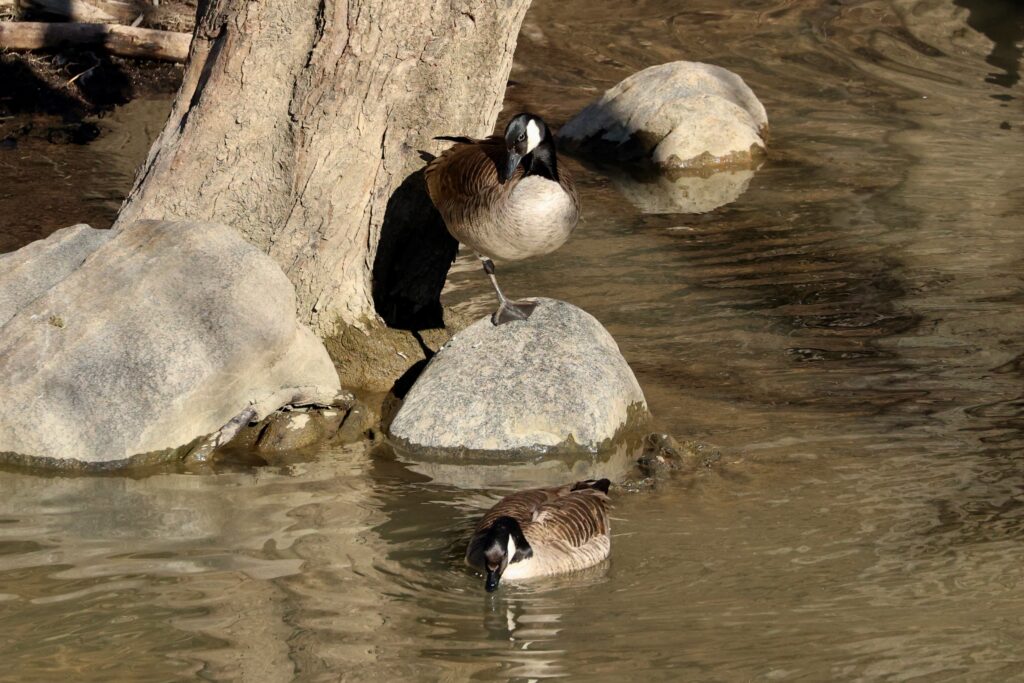
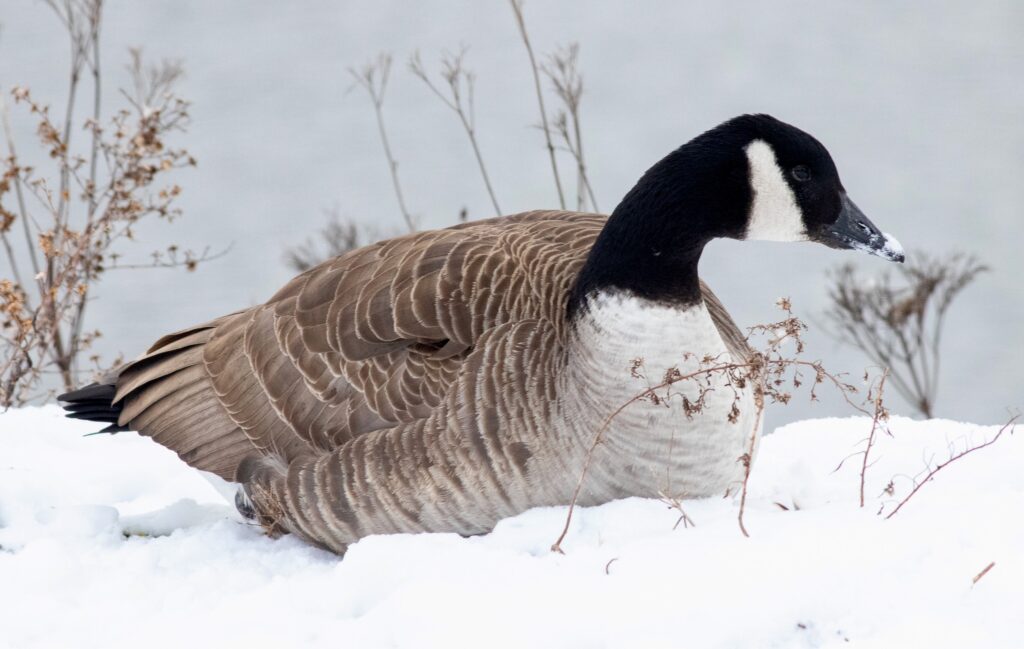
Canada Geese stay near the river year round.
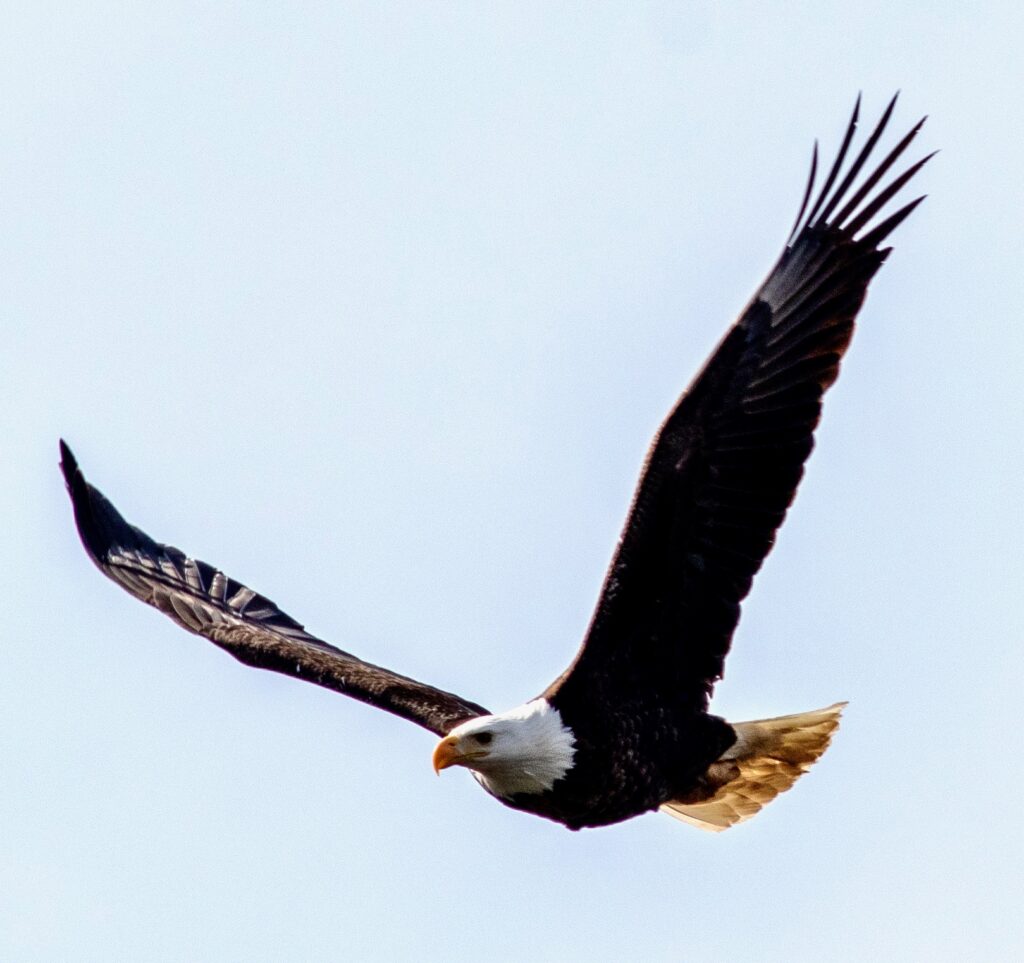
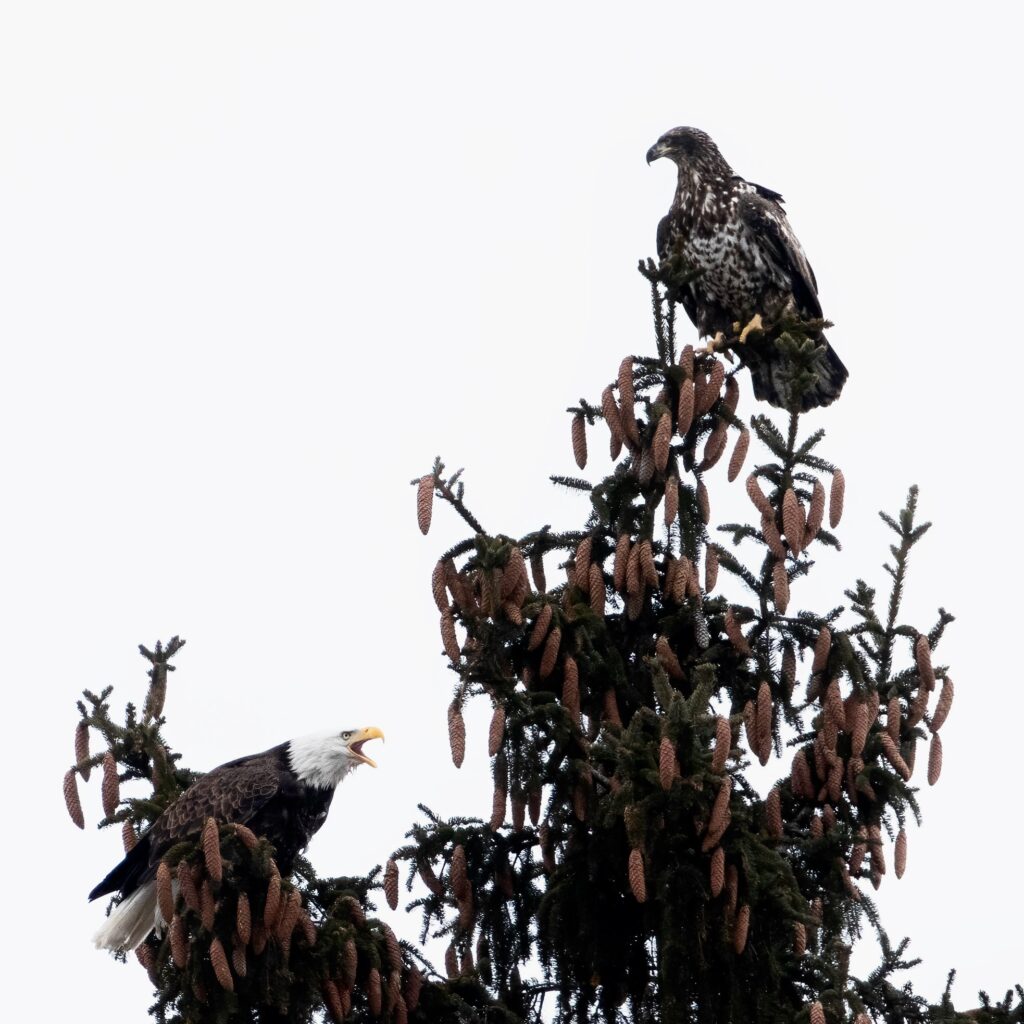
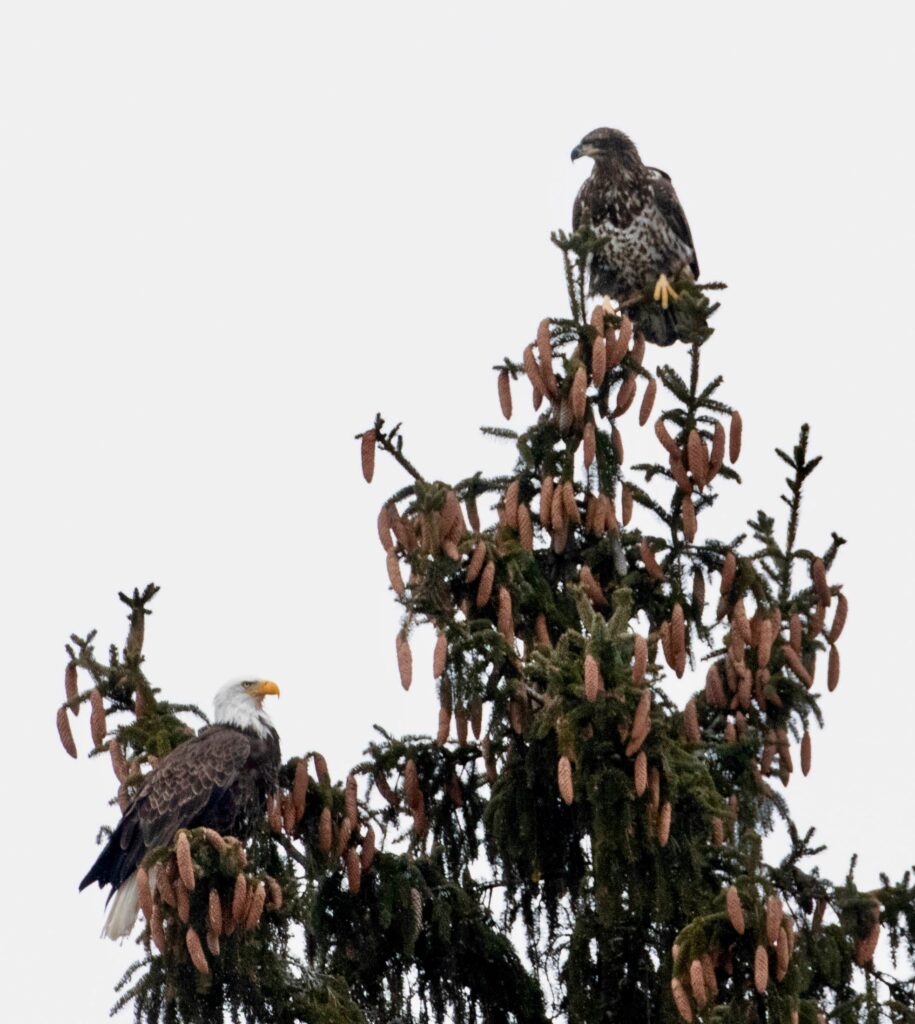
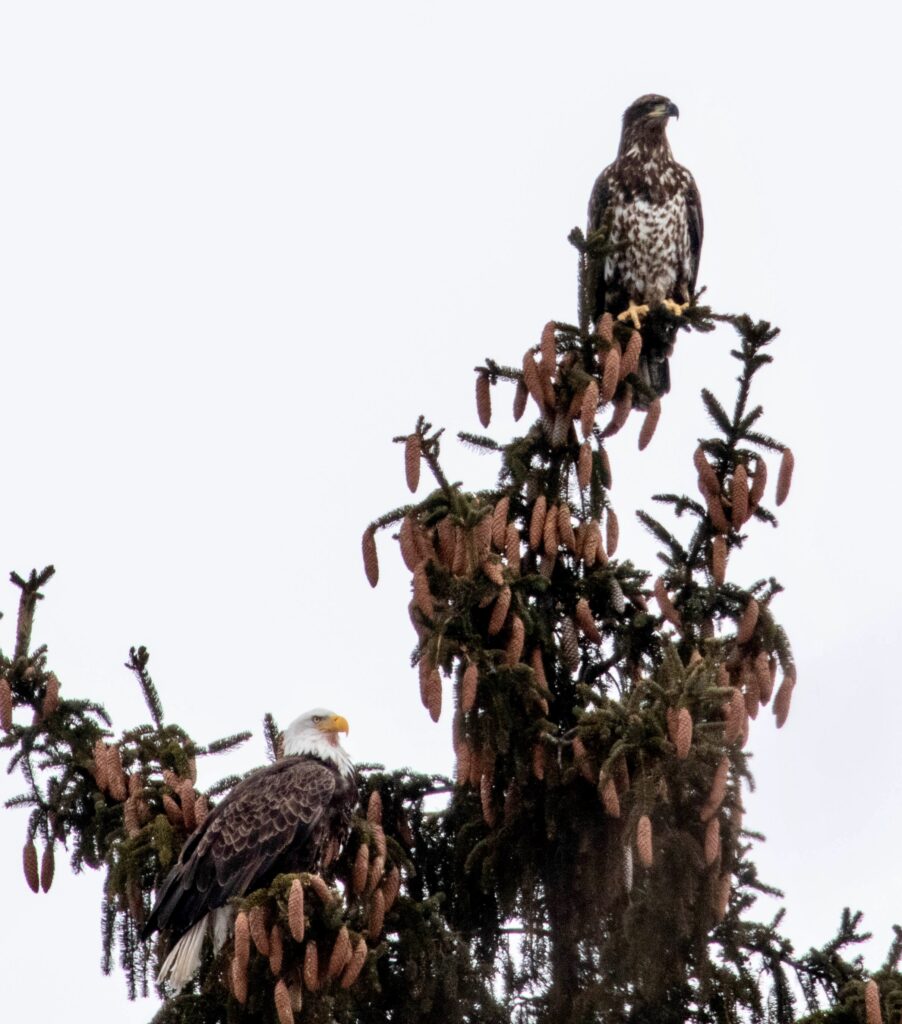
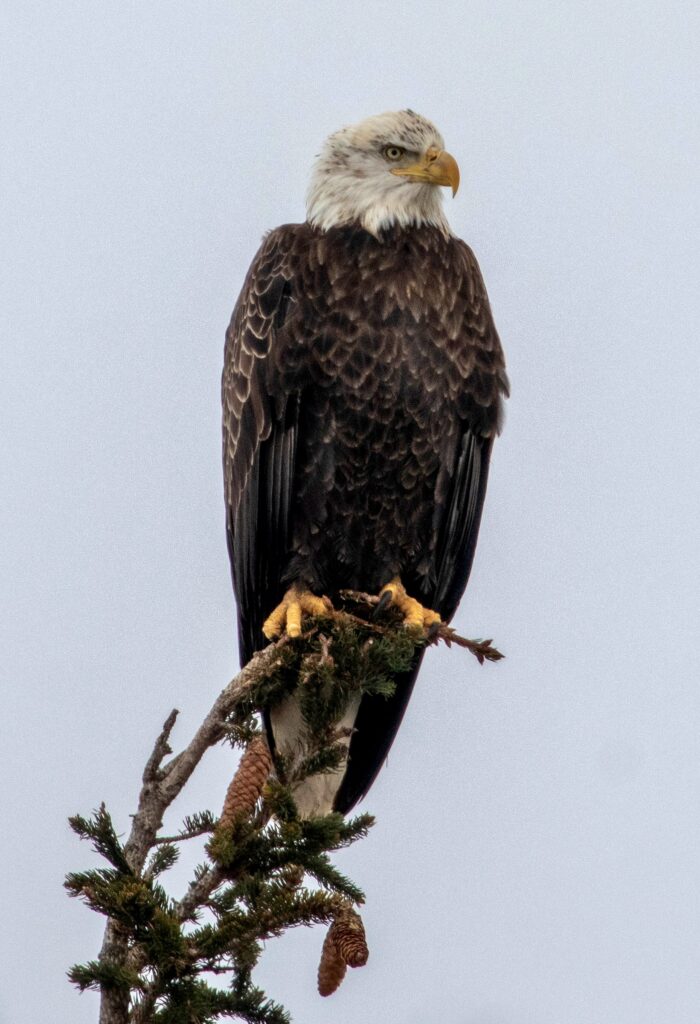
We often saw Bald Eagles flying along the river, hunting for prey. On one occasion, we saw an immature eagle land in a tree followed by an adult. The adult seemed to be scolding the younger bird who didn’t appear at all affected by the adult’s lecture or stern glare. Bald Eagles take four years to mature. The immature bird here appears to be in its second year.
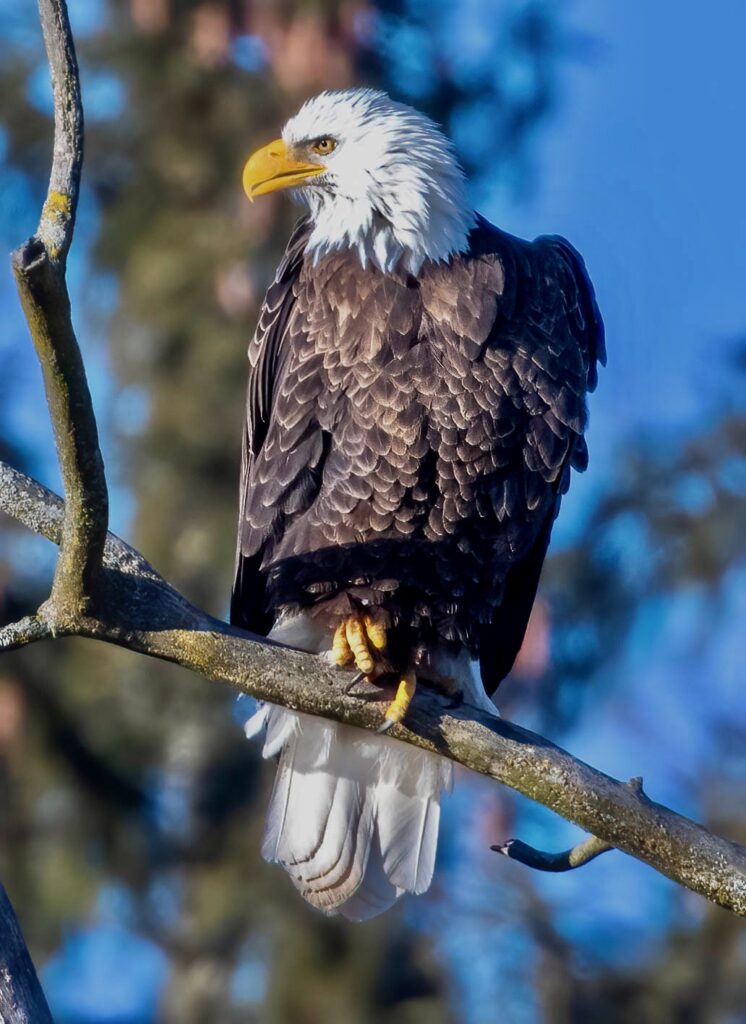
Bald Eagles perch along the river and near the landfill where there were many gulls and other birds foraging in the adjacent fields. Besides fish, Bald Eagles consume a wide variety of prey.
Other raptors also survey the ground for prey. Northern Harriers fly low over the ground, scanning for small rodents or birds. They consume their prey on the ground. Harriers, unlike other raptors, rely heavily on their sense of hearing to capture prey. Red-tailed Hawks hunt from a high perch, but also catch birds while flying or chase ground prey in low flight.
Northern HarrierNorthern HarrierRed-tailed Hawk
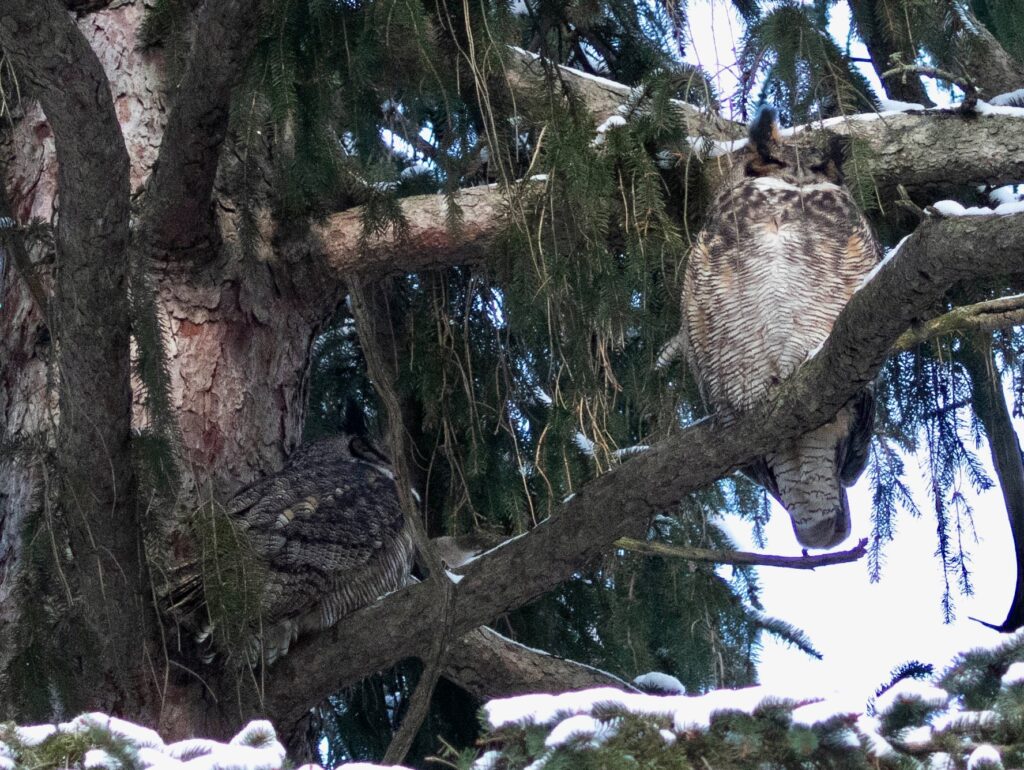
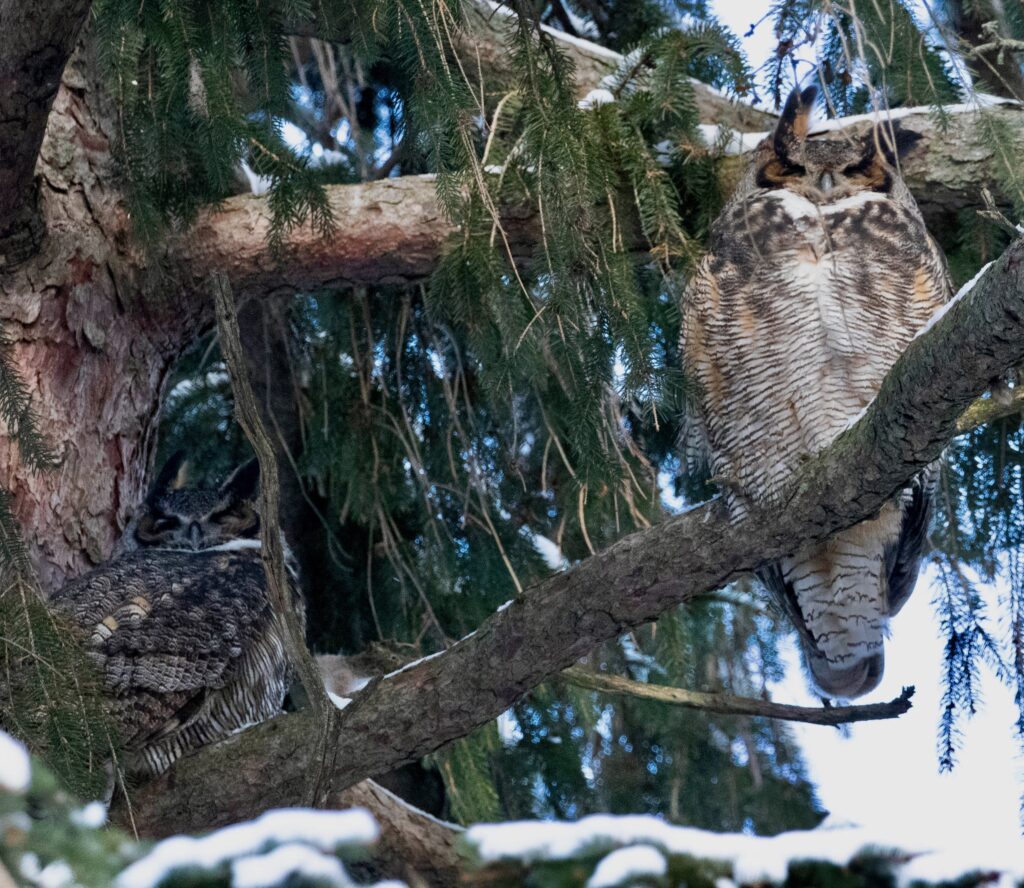
Great Horned Owls nest in several locations in London. They form monogamous pairs and mate in the winter months of January or February. They have a diverse diet of mammals and birds, usually hunting at night.
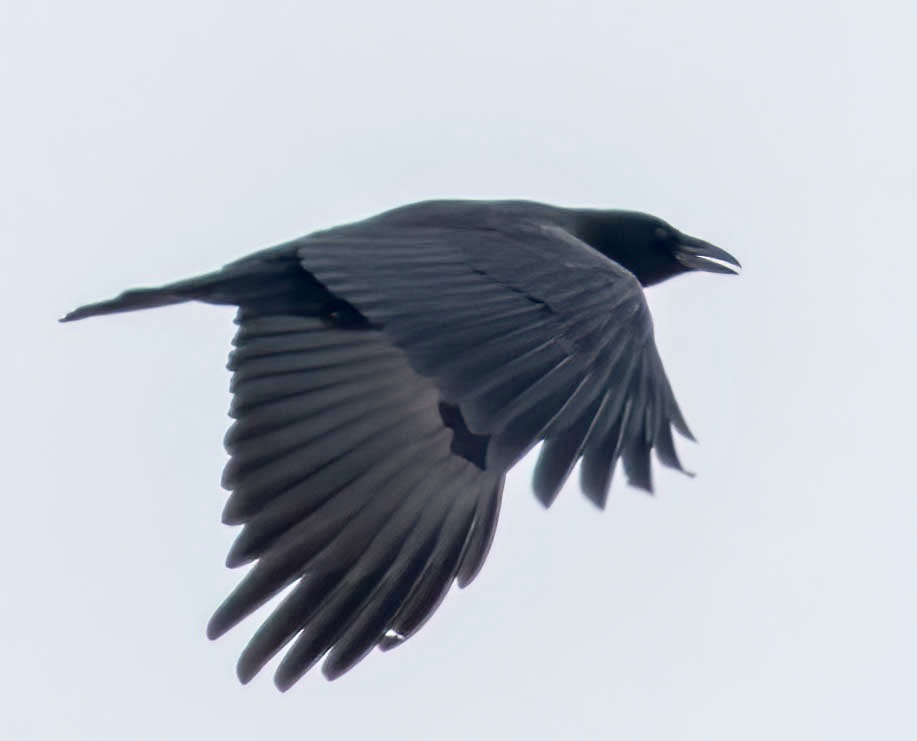
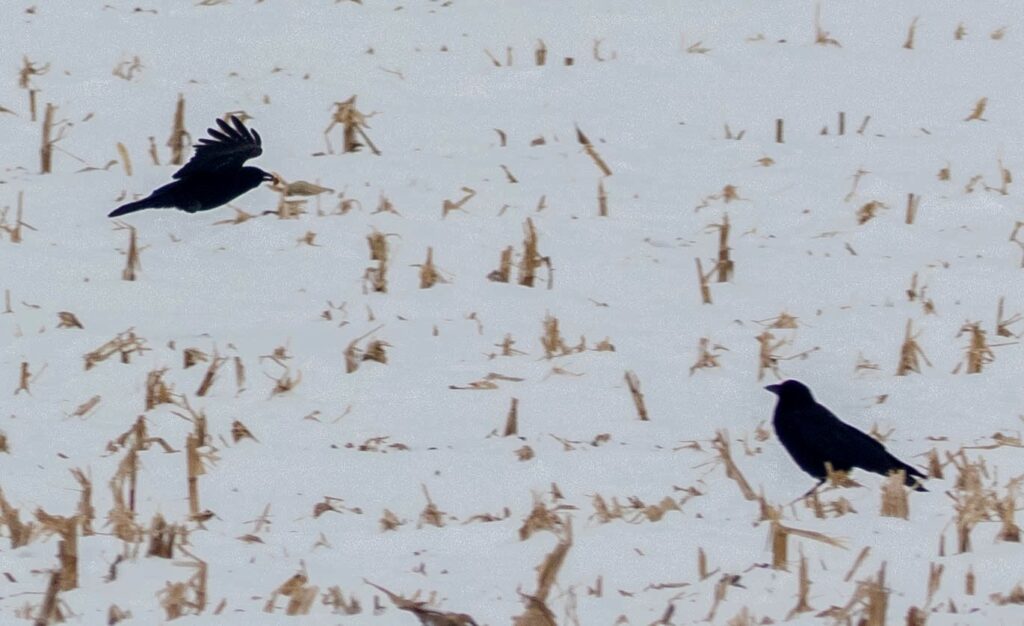
Great Horned Owls are often harassed by crows and other songbirds.
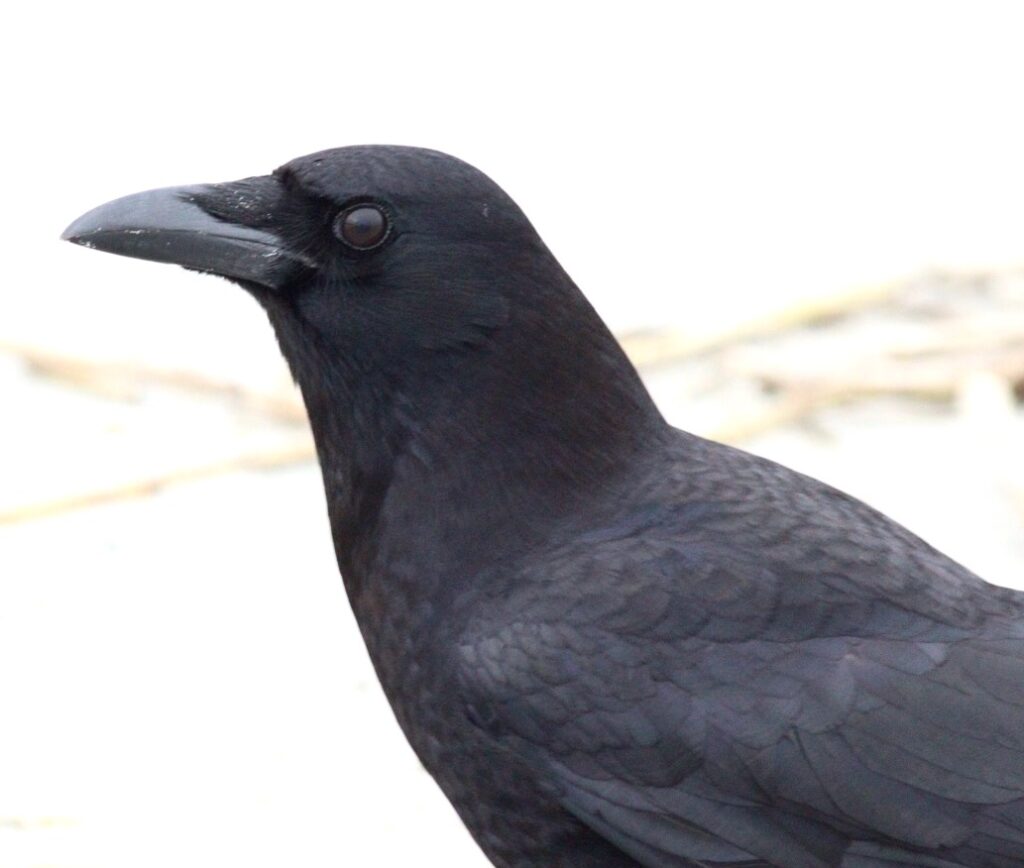
American CrowAmerican Crows
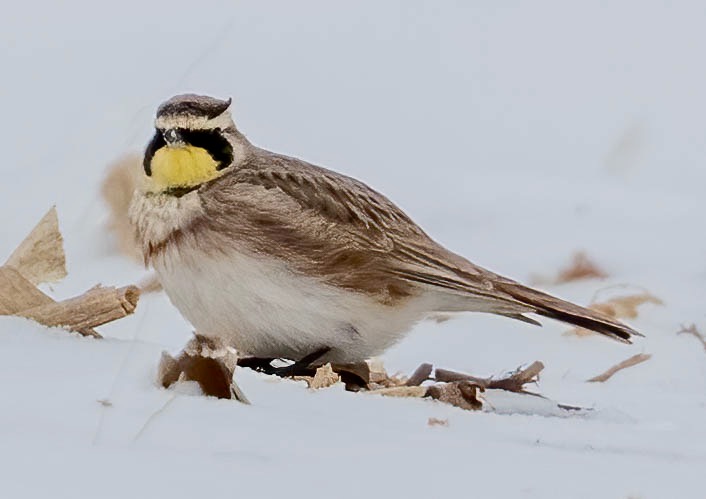
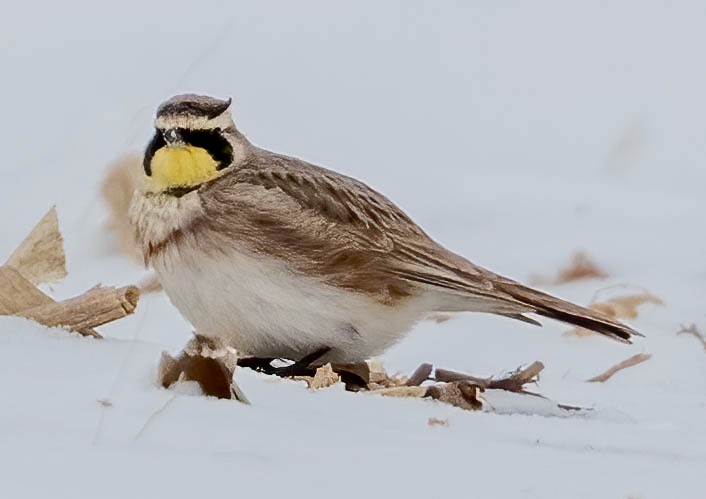
Some birds are short-distant migrants, arriving from farther north during the winter. American Tree Sparrows, Horned Larks and Snow Buntings arrive in the fields outside London to forage on the ground for seeds.
American Tree Sparrows
Snow Buntings (above) and Horned Lark
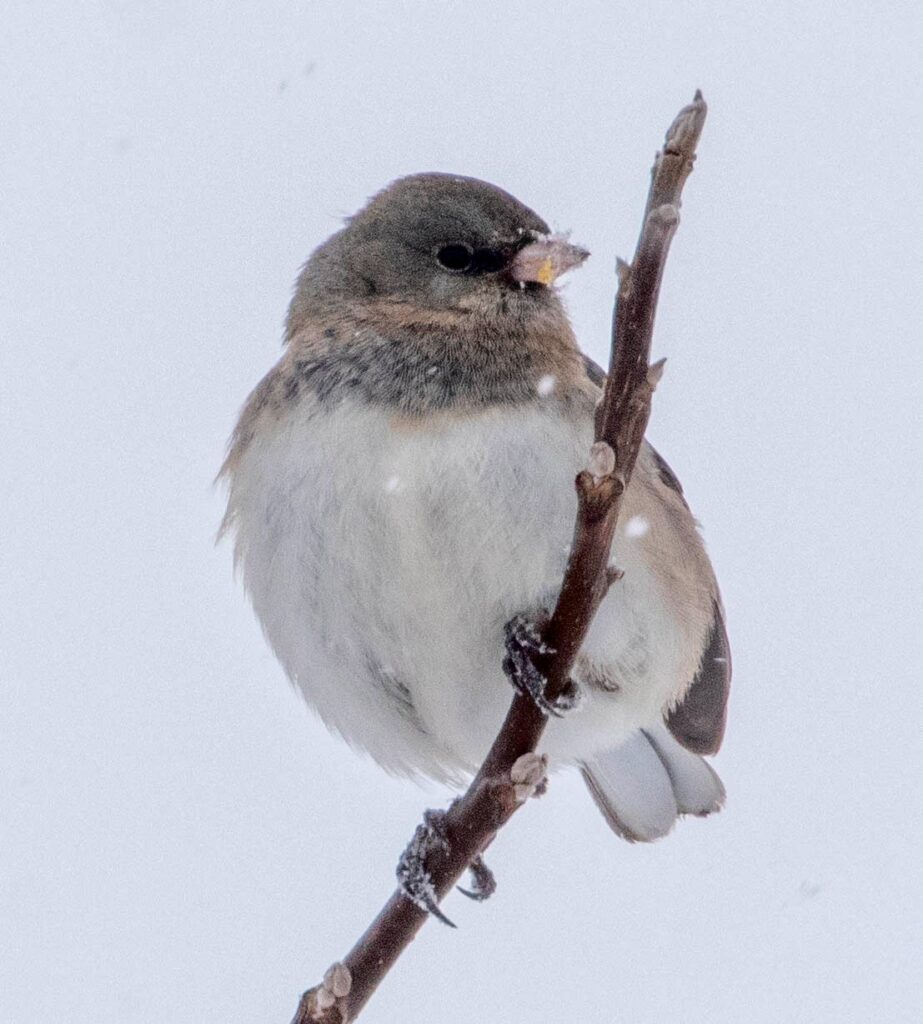
Dark-eyed Juncos are also short-distance migrants that spend the winter foraging for seeds. Juncos seem to be comfortable in city parks and at bird feeders as well as in the fields outside of town.
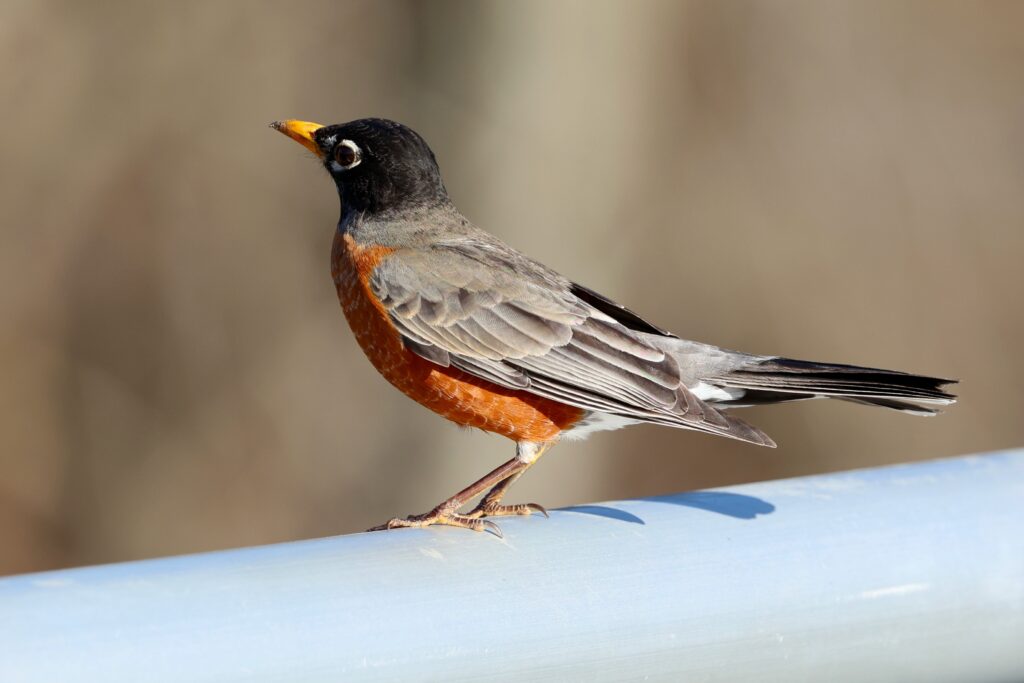
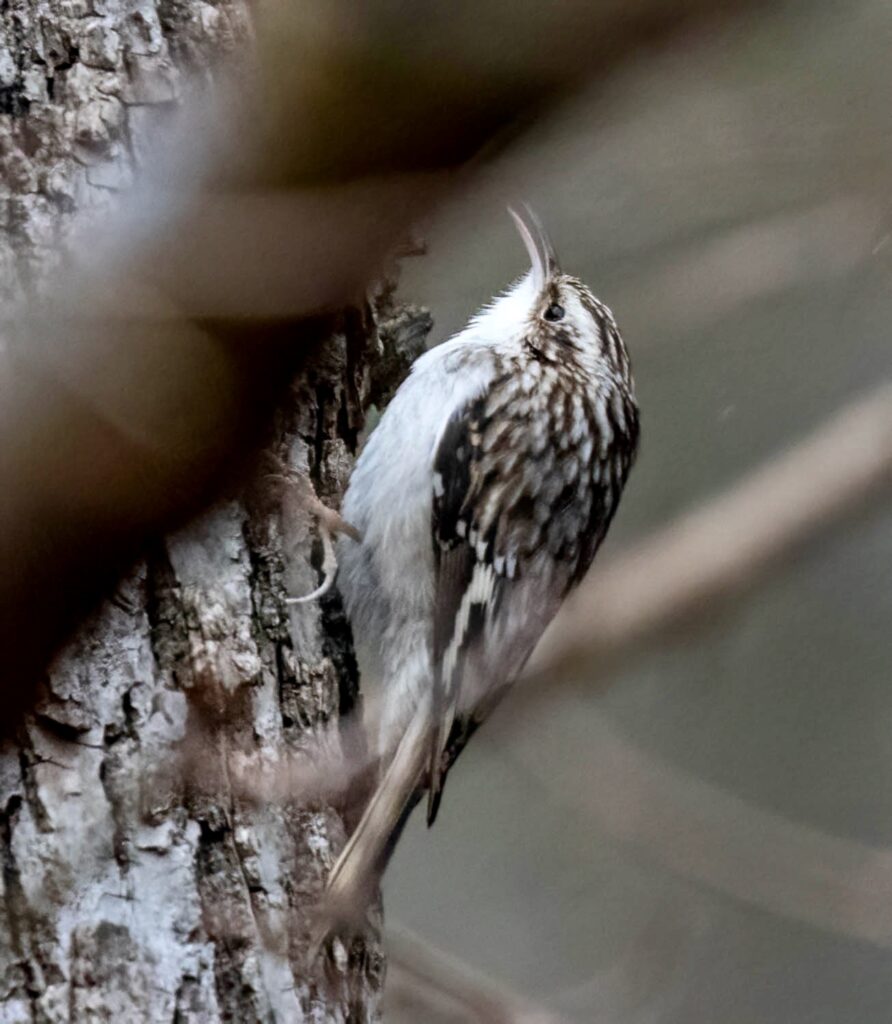
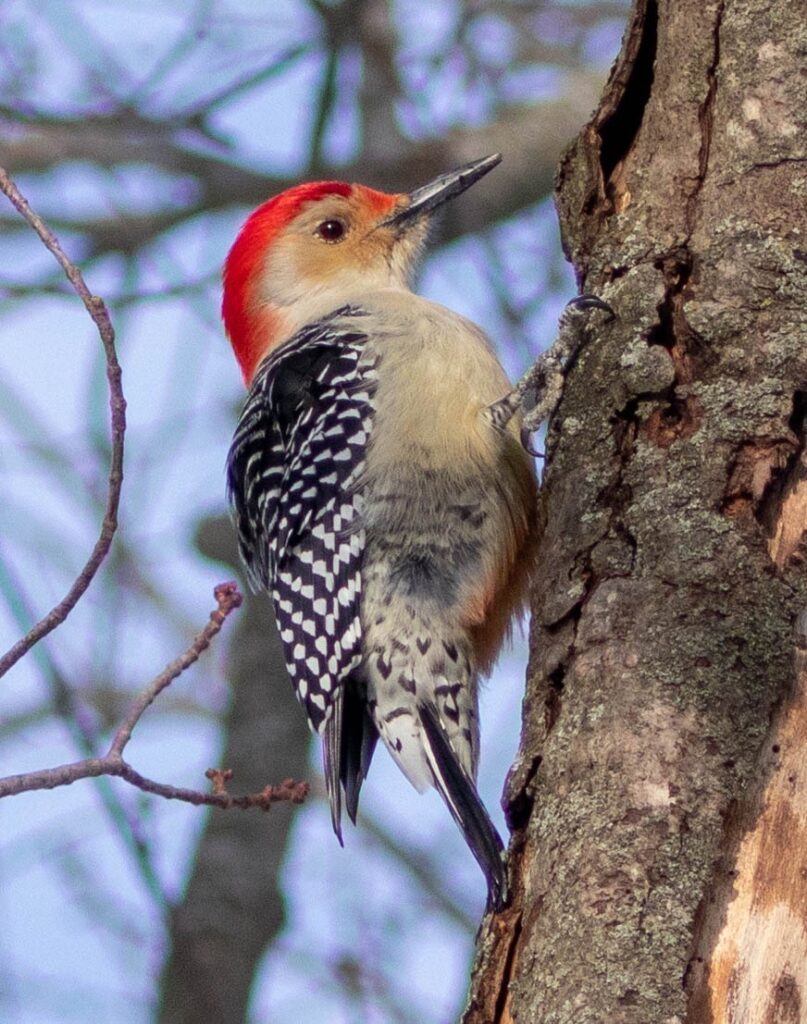
Other songbirds, such as Brown Creepers and Red-bellied Woodpeckers forage for insects in tree bark, but will also eat seeds and visit bird feeders in winter. Red-breasted Nuthatches feed on conifer seeds in winter, but also visit bird feeders and take seeds offered in the hand. Northern Cardinals, Cedar Waxwings, and American Robins often feed on fruit, but supplement their diets with insects and other foods depending on the time of year.
The Guess Who
We were reminded of The Guess Who by a concert recording called “Randy Bachman’s Vinyl Tap Tour: Every Song Tells a Story” we watched on Prime TV. Randy is an entertaining storyteller. He and his band performed the music for an appreciative Winnipeg audience.
After days of frigid weather, temperatures have risen to well above freezing. There have been much fog and so much rain that the snow has disappeared and the river has flood to higher levels that we’ve seen before.
On a crisp day before the rain, we spent a sunny afternoon at The Coves.
Except those at the feeders, the birds were staying under cover. It was challenging to get a focus!
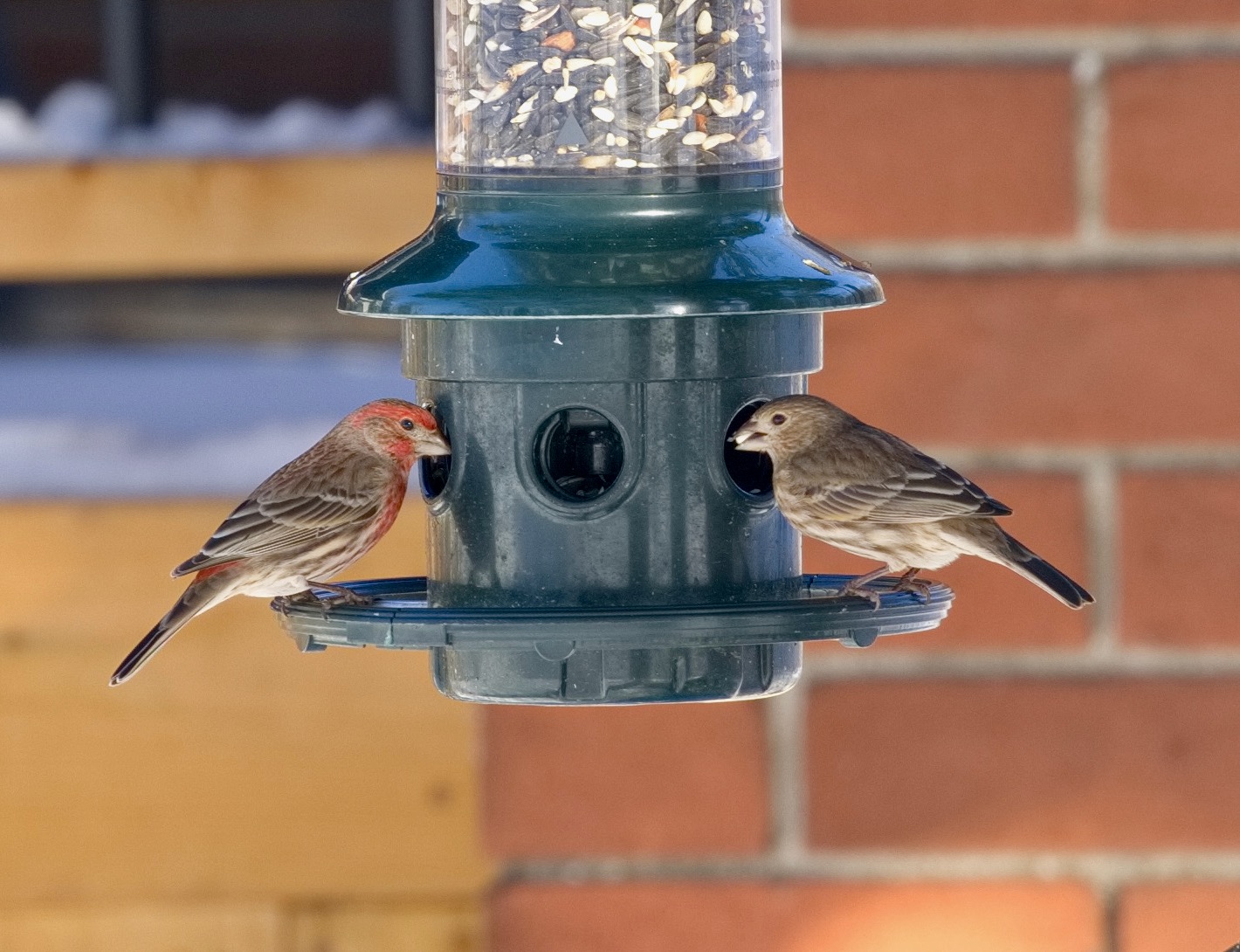
male Northern Cardinalfemale Northern Cardinalmale and female House FinchesDark-eyed Junco
Only the Downy Woodpeckers and Black-capped Chickadees were on an open branch from time to time.
As we walked along, a shadow crossed the path. We were able to track the flight of a Red-tailed Hawk that landed high in a tree across the pond, backlit by the sun. Another photography challenge!
You may be able to see a small oval shape at 8 o-clock in the central tallest tree. That is where the hawk landed. As Glenn took photos, the bird turned its head to watch.
Two days later, we headed to Aylmer Wildlife Management Area (AWMA). By then the temperature had risen, the sky was overcast and there was constant drizzle. With poor light, the damp, and the chance of heavier rain, Glenn left his camera at home.
That day, the feeders were full and bird were busy feasting. Behind the tinted windows of the viewing station, we could see the birds, but photographs were out of the question. Here’s what we saw: Red-bellied Woodpecker, Blue Jay, Black-capped Chickadee, House Sparrow, American Tree Sparrow, Dark-eyed Junco, White-crowned Sparrow, White-throated Sparrow and Northern Cardinal.
The roads at AWMA are lined with trees and shrubs, some still bearing fruit for hungry birds and animals.
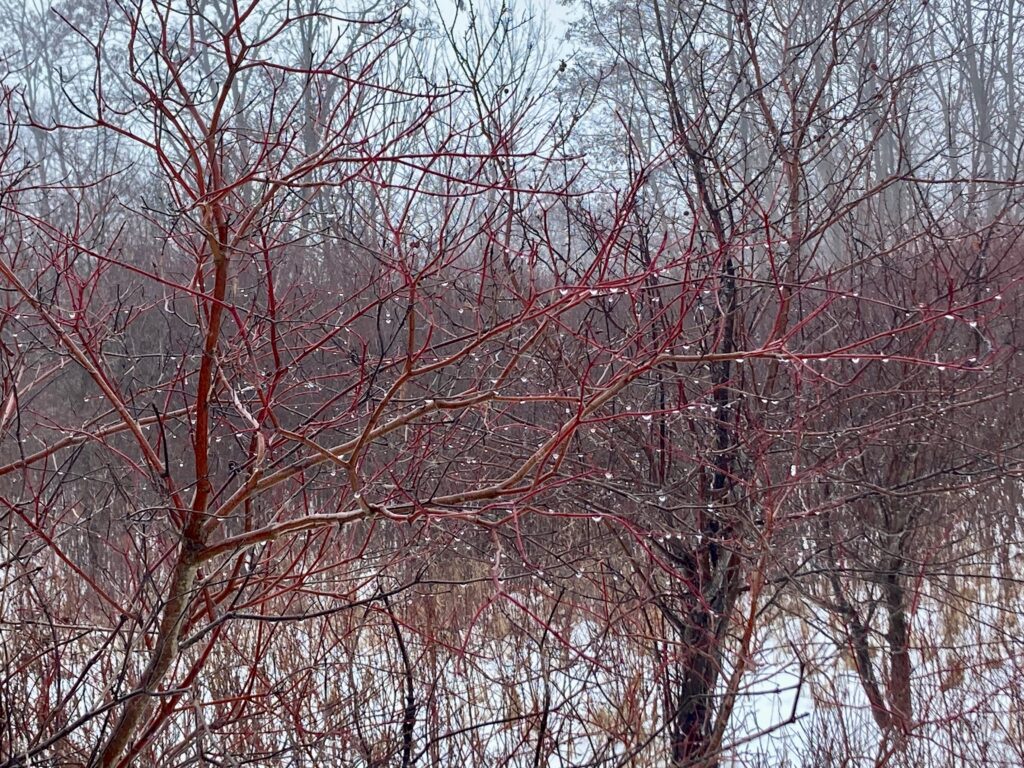
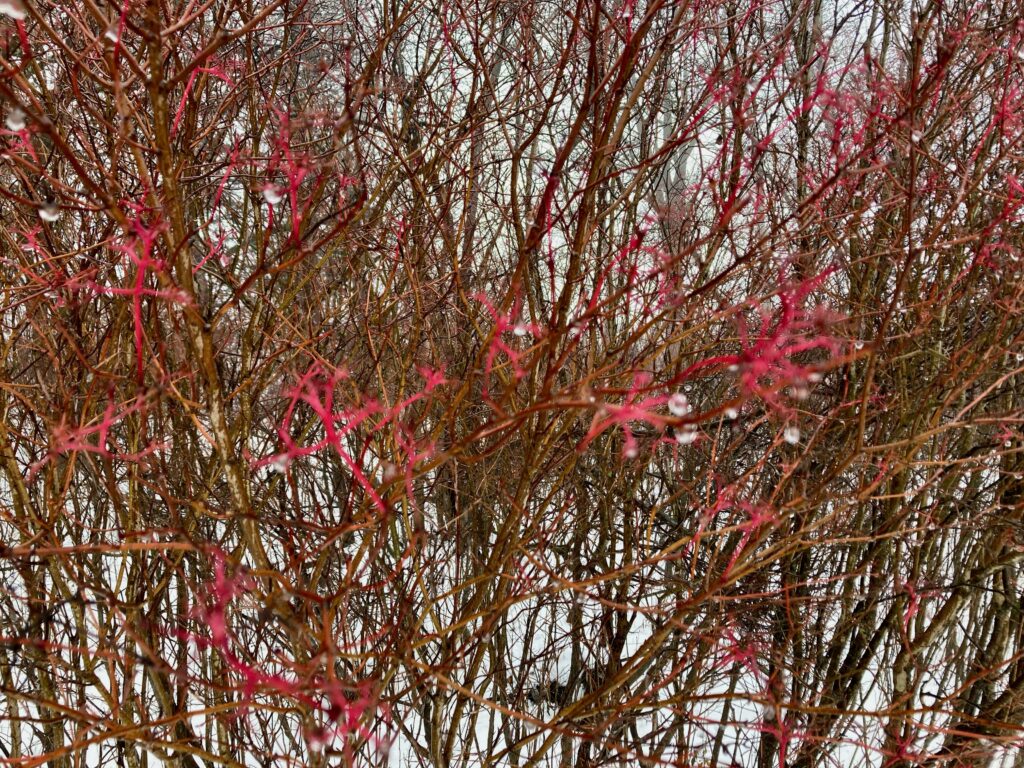
Red Osier DogwoodCommon BuckthornGray Dogwood
As we walked the roads, we heard American Crows calling and saw flocks of European Starlings in flight and roosting in trees. A small flock of White-throated Sparrows and Dark-eyed Juncos foraged at the edge of the road where the snow had melted to expose the grass and seeds.
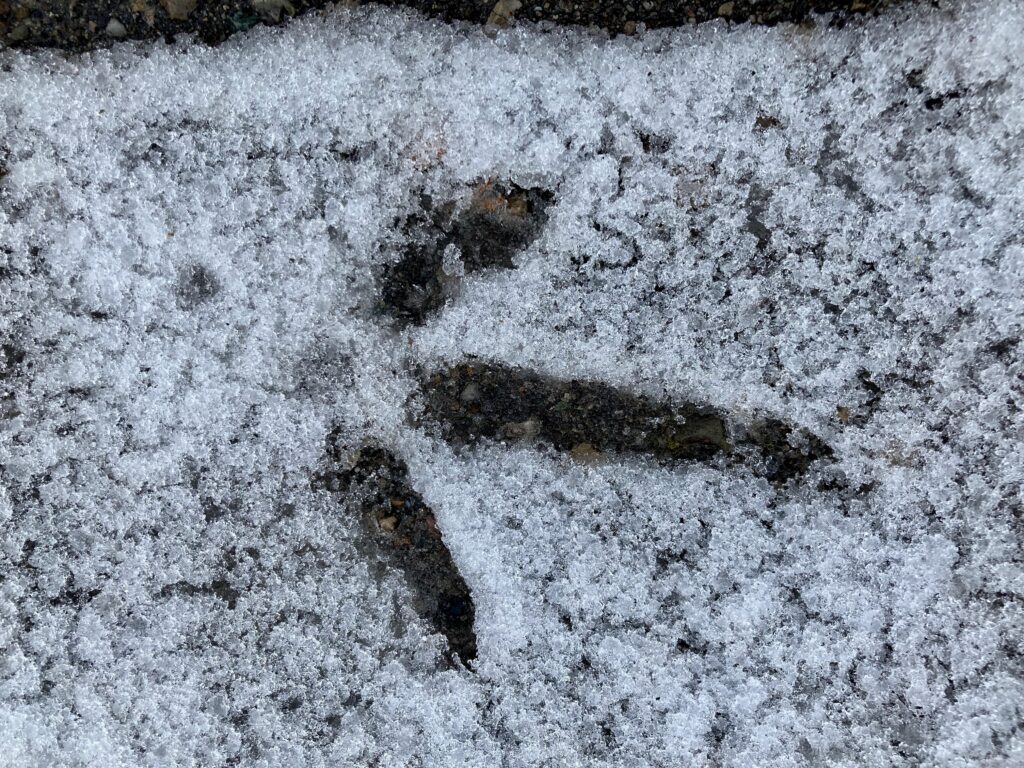
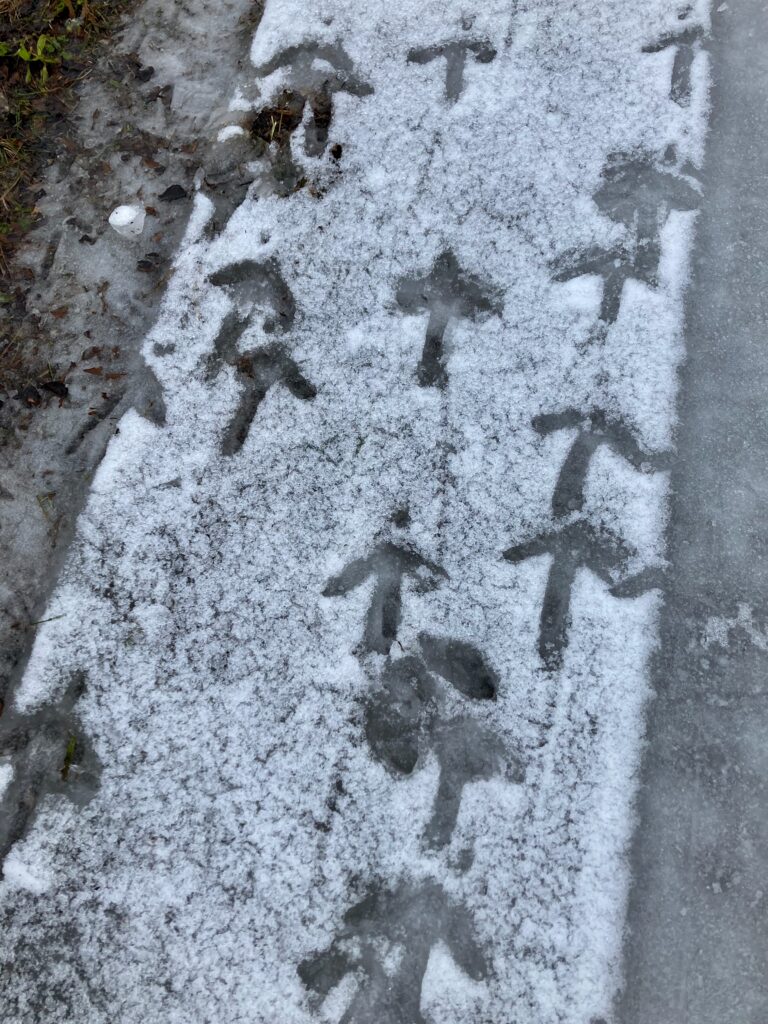
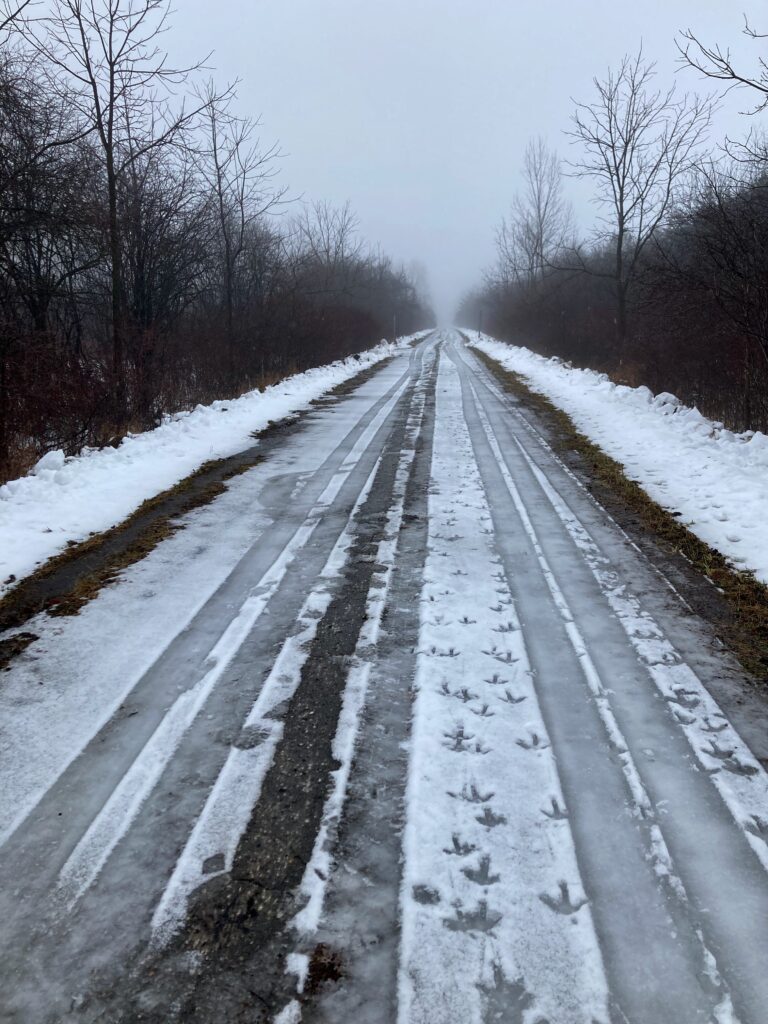
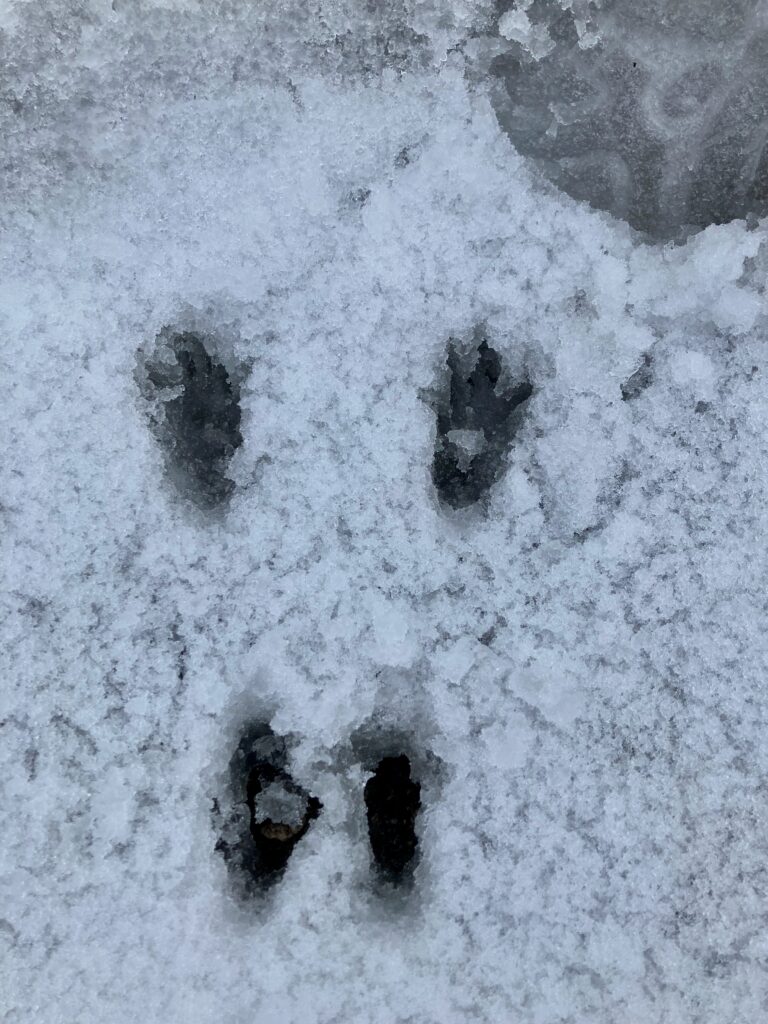
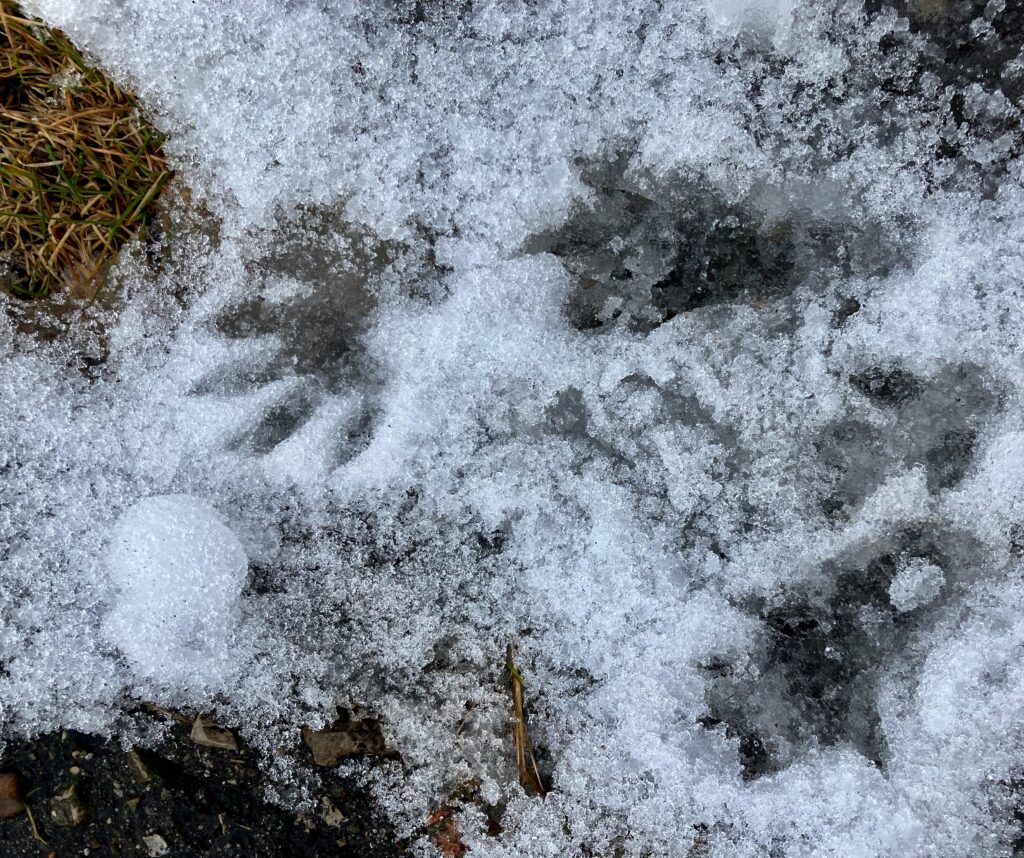
Several other visitors had left tracks on the road:
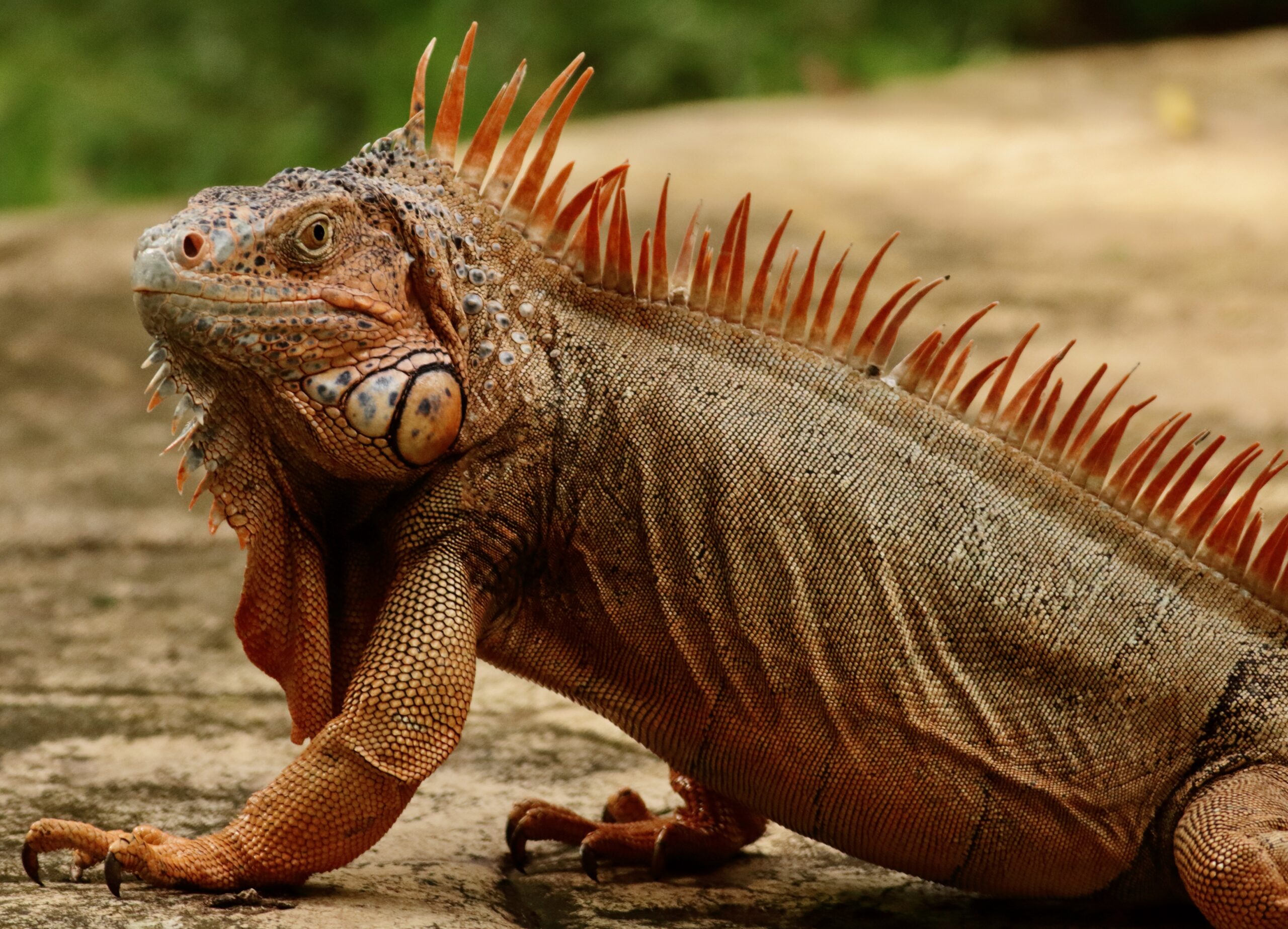
We were fascinated by the prehistoric look of iguanas. They were a common sight around the grounds of the resort as they basked on a sunny tree limb or lawn.
There was an abandoned property next to the resort. The beach there was frequented by Laughing Gulls and a few shorebirds.
In the scrubby growth that bordered the beach, we were excited to find a pair of Summer Tanagers in the distance. They were so far away that our photos are only good for identification.
Summer Tanagers: the female is yellow whereas the male is red.
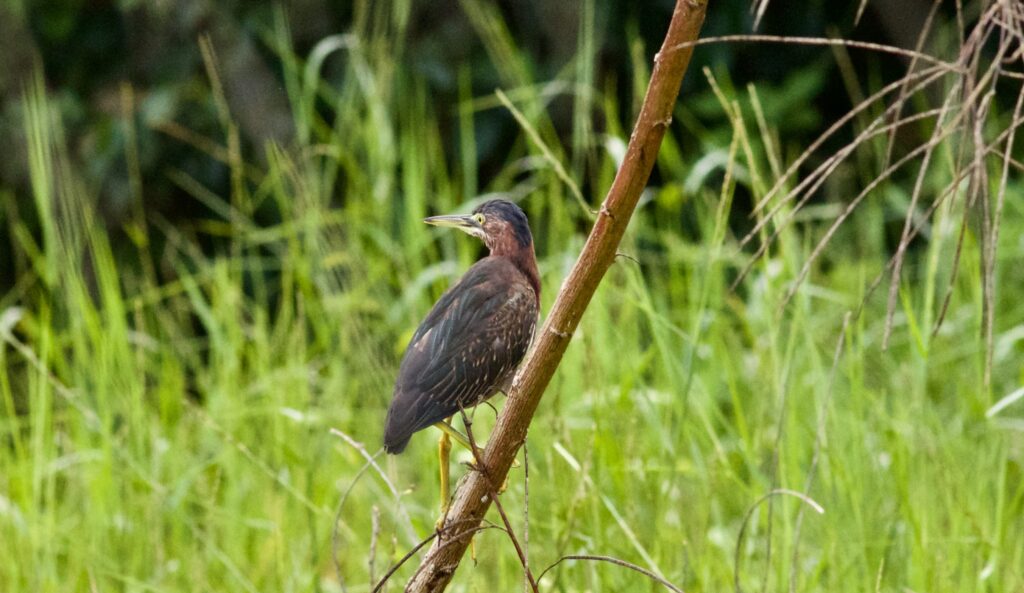
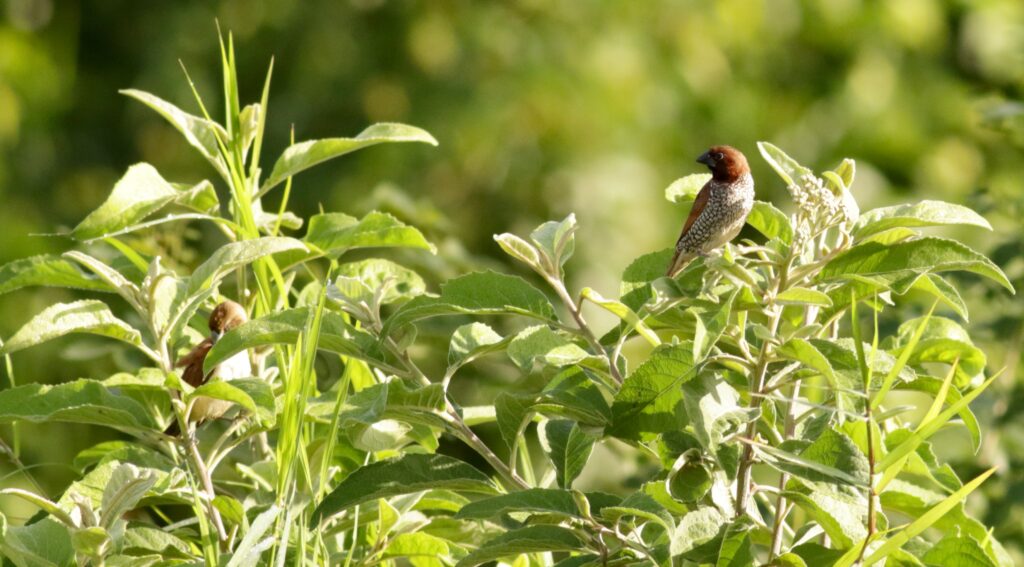
We also spotted a Green Heron and a Scaly-breasted Munia, again at a distance. The Scaly-breasted Munia is a small finch that is native to southern Asia. After they were imported as cagebirds, escapees established wild populations.
Green HeronScaly-breasted Munias
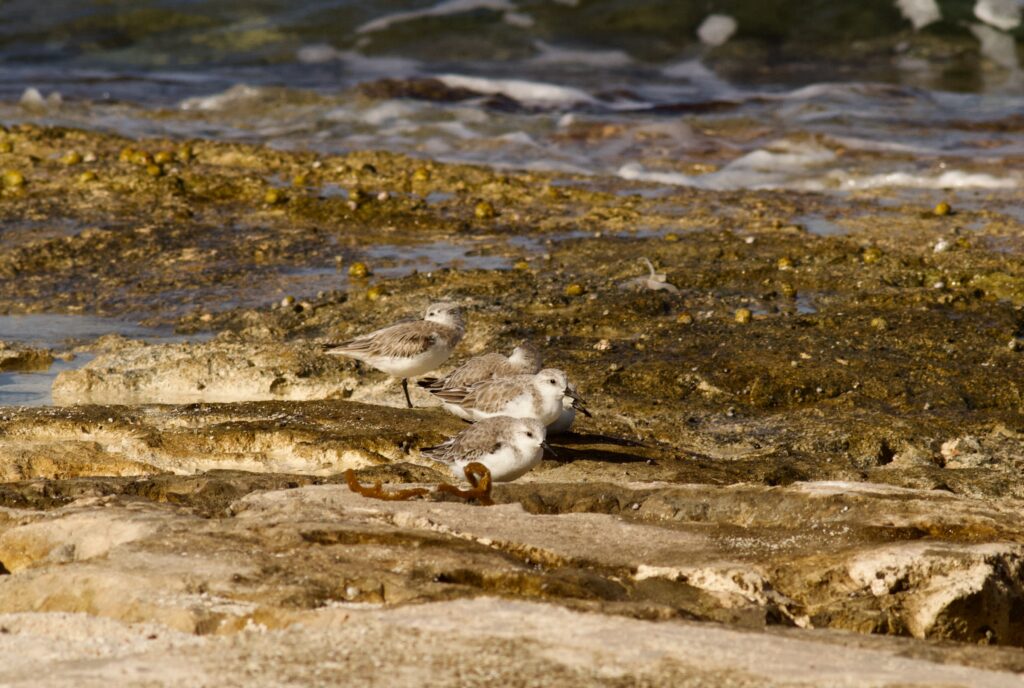
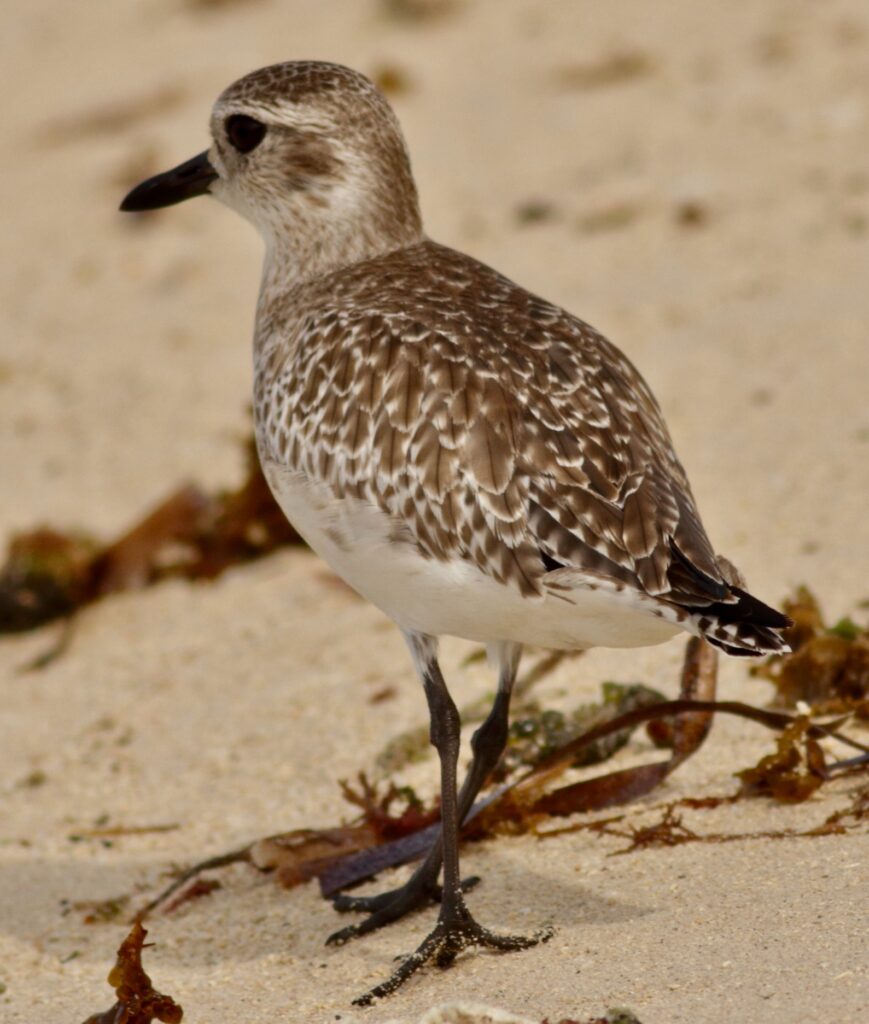
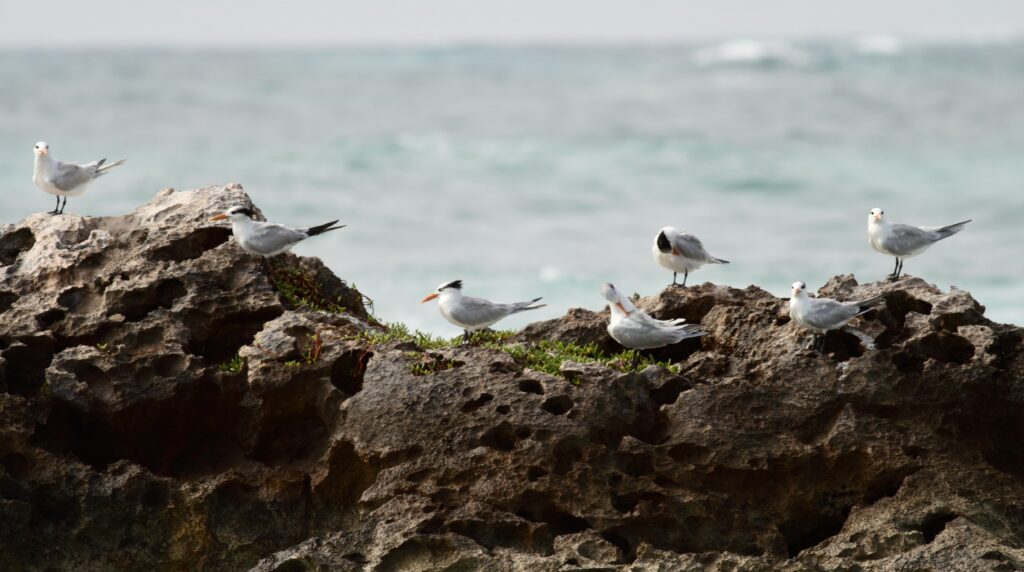
On rocky shores on the opposite side of the island, we found other shorebirds in their non-breeding plumage and rather comical-looking Royal Terns.
Sanderlings Black-bellied Plover
Brown Pelicans posed in the city harbour – a juvenile and an adult.
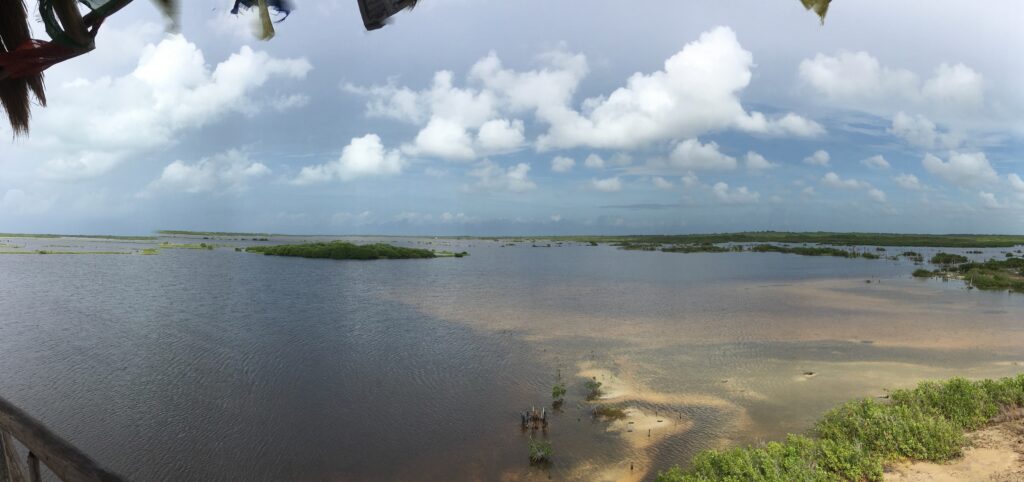
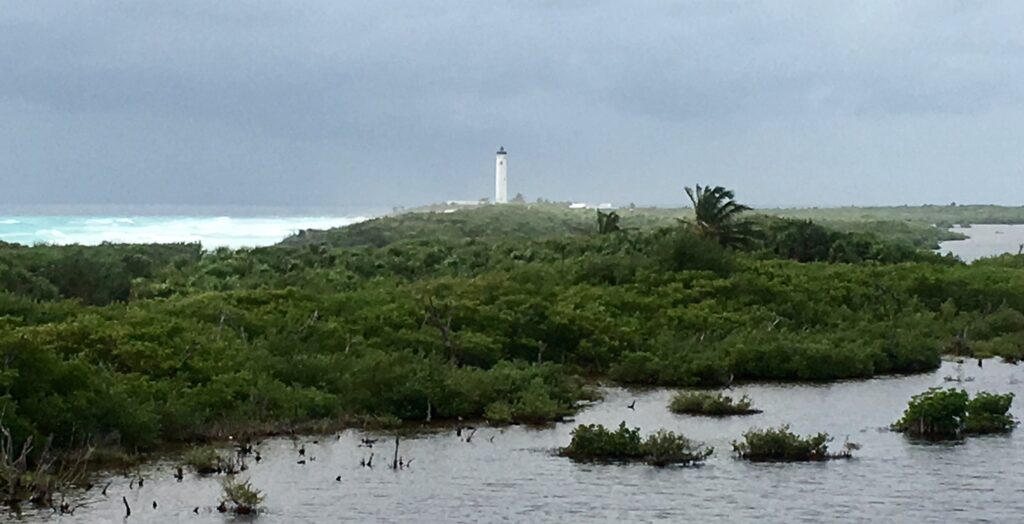
We arranged to visit Punta Sur Eco Park. At that time, it was undeveloped. It seems now to have been transformed into a tourist destination rather than a nature preserve. We could see that there was a lot of bird life there, but the birds were very far away.
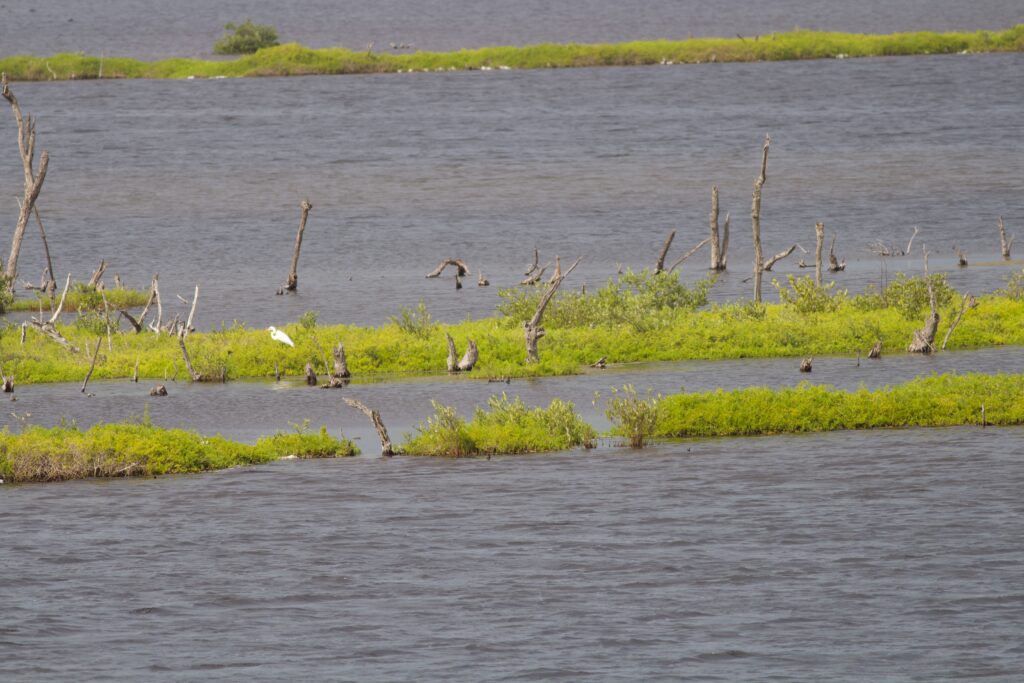
On the left, a White Ibis wading, on the left a far-off egret.
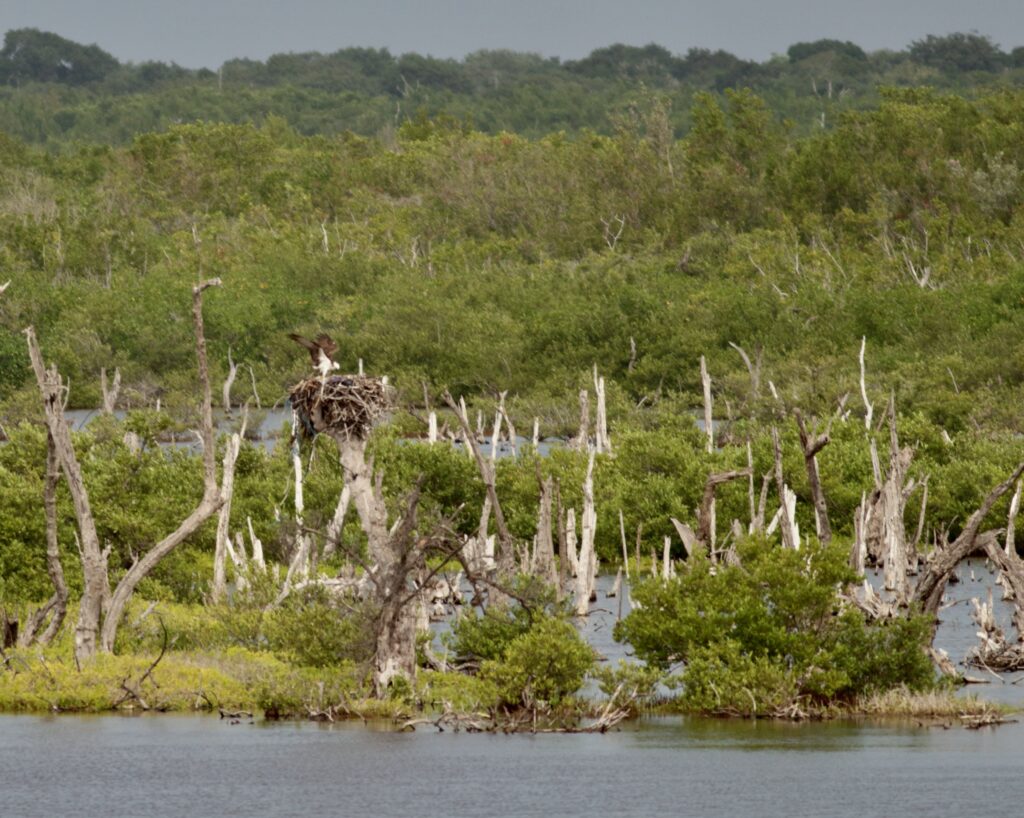
Here, an Osprey lands on its nest.
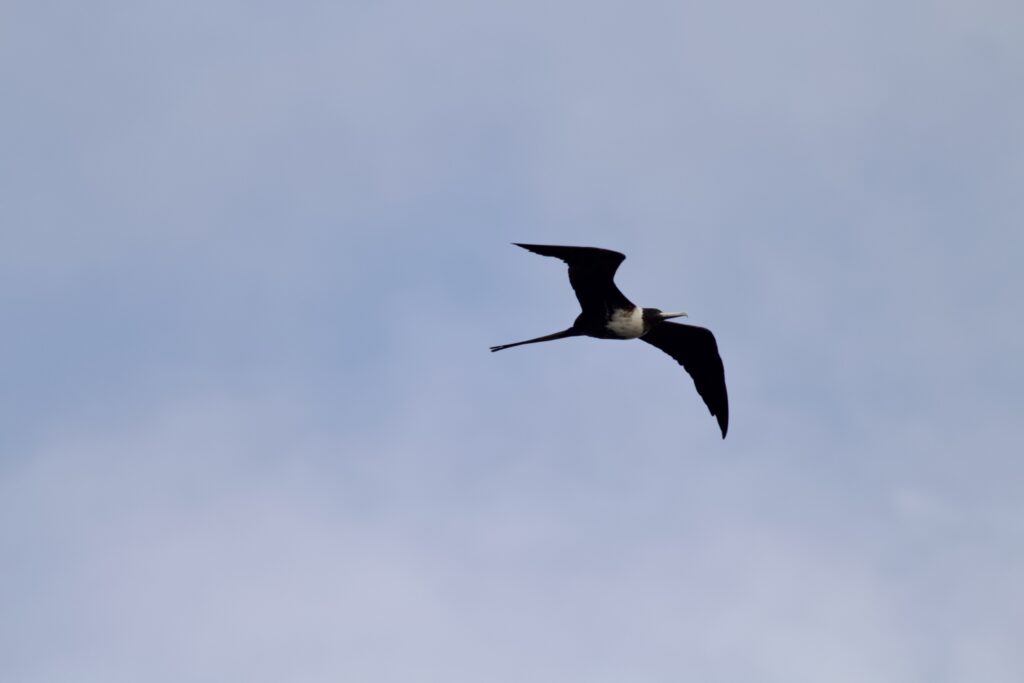
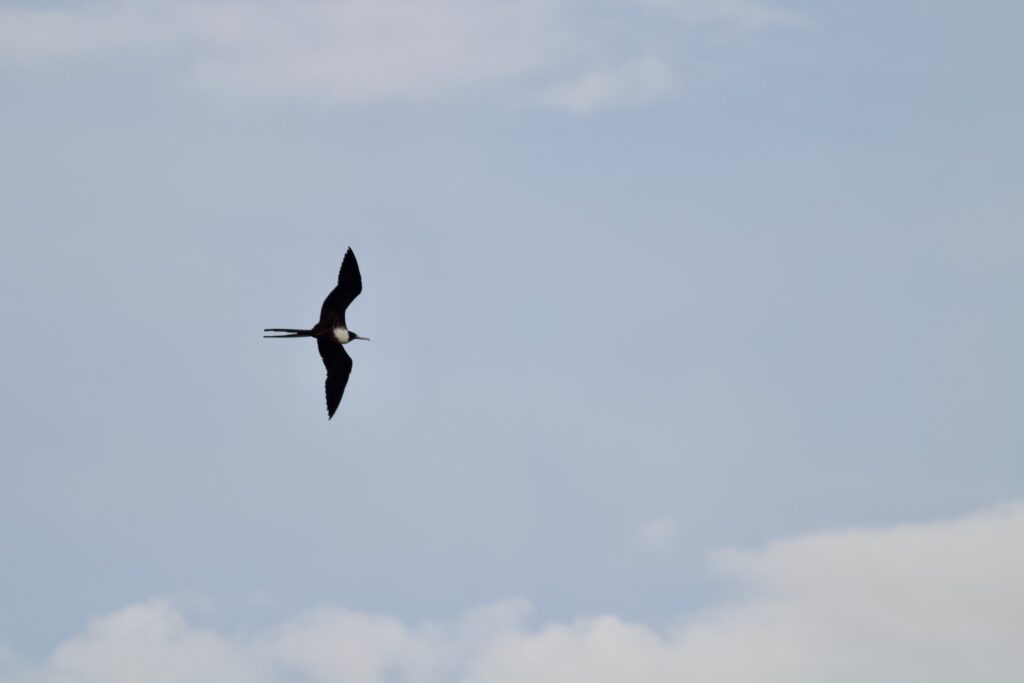
Maginificent Frigatebirds soared overhead.
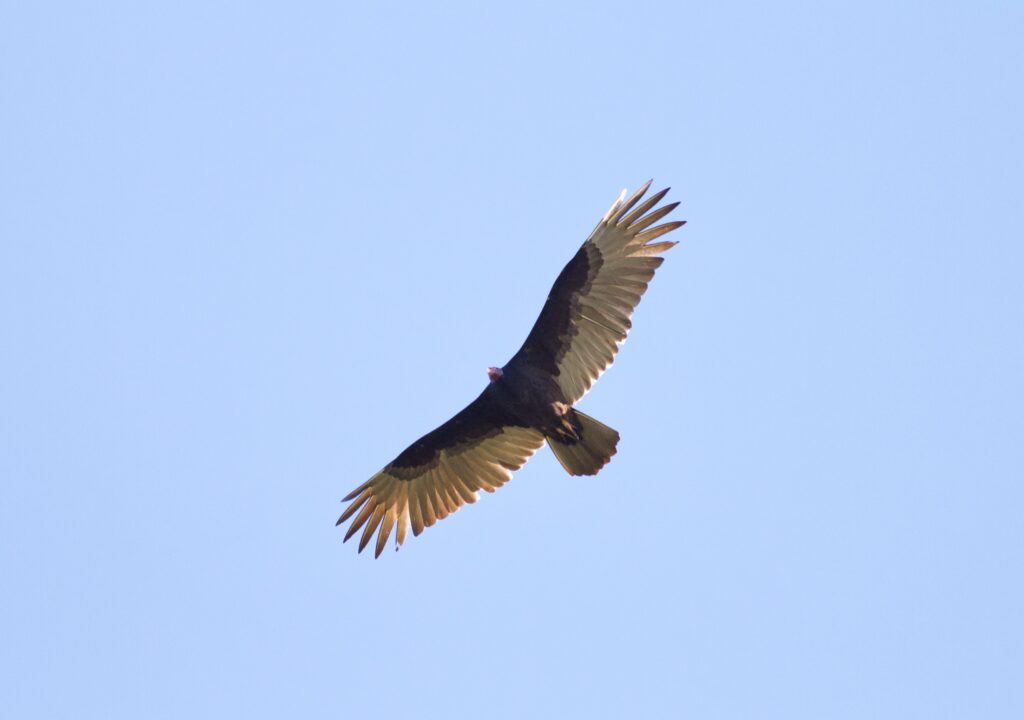
We were used to seeing Turkey Vultures at home, identified by the lighter trailing edge of their flight feathers and way that they teetered when soaring in flight. (We were told that “Turkey Vultures rock.”)
We saw more Black Vultures than Turkey Vultures in Cozumel. They were often perched on roofs. In flight, they display white patches on the ends of their wingtips.
Great-tailed Grackles frequented the dining areas around the resort, watching for a handout or dropped food.
Bananaquits are small, active birds that feed on nectar and fruit. We often saw them foraging in the trees and blossoms.
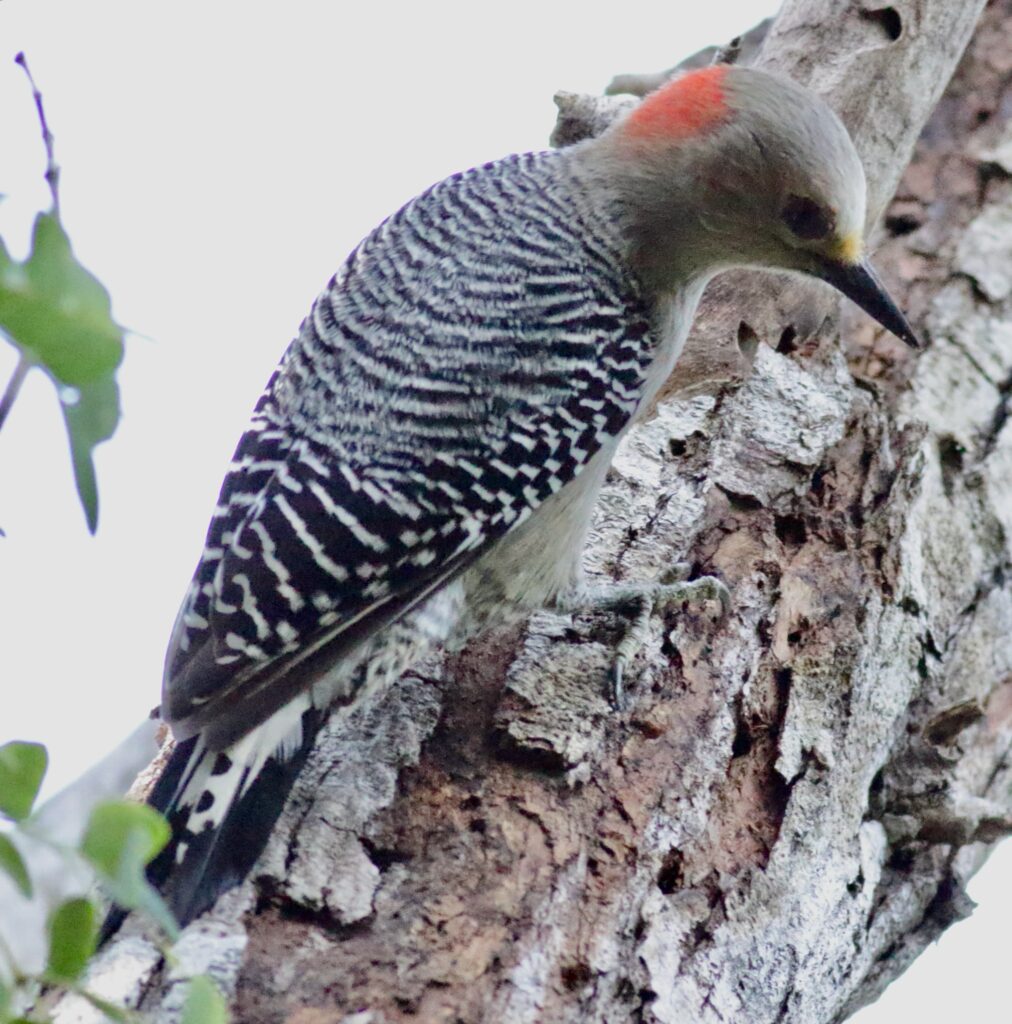
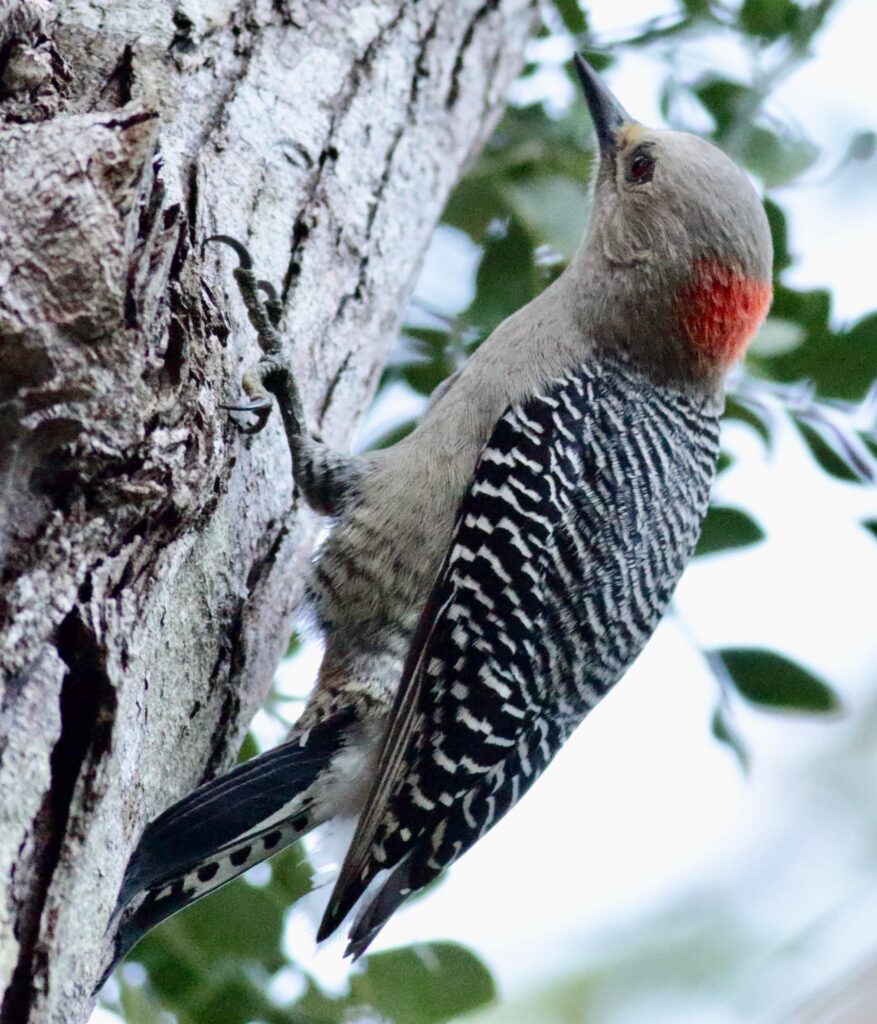
Yucatan Woodpeckers look similar to Red-bellied Woodpeckers, but have yellow feathering at the base of their bills.
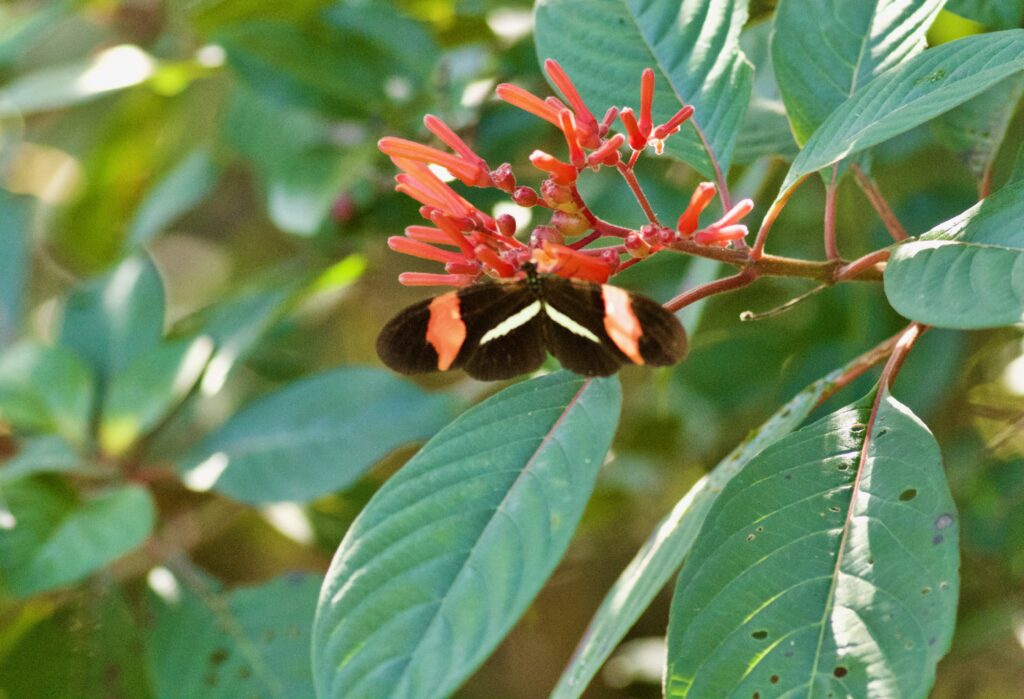
The Red Postman butterfly is also know as the Small Postman, the Red Passion Flower butterfly, or the Crimson-patched Longwing.
Best Bird Photos from Cornell
Click on the green links to view Cornell’s best photos of 2024 as described on the Cornell website: “For our 2024 photo essay we’re celebrating wonderful photos in five themes: the high-speed action of Thrill of the Chase, a look at our avian neighbors with Birds in Built Environments, a sampler platter of food types with Feeding Time, spectacular poses in Birds Never Cease to Amaze, and a peek at some of the world’s rarest birds with Rare Glimpses. In the final section, we say thank you to all the photographers who make the Macaulay Library archive such a uniquely rich resource.”
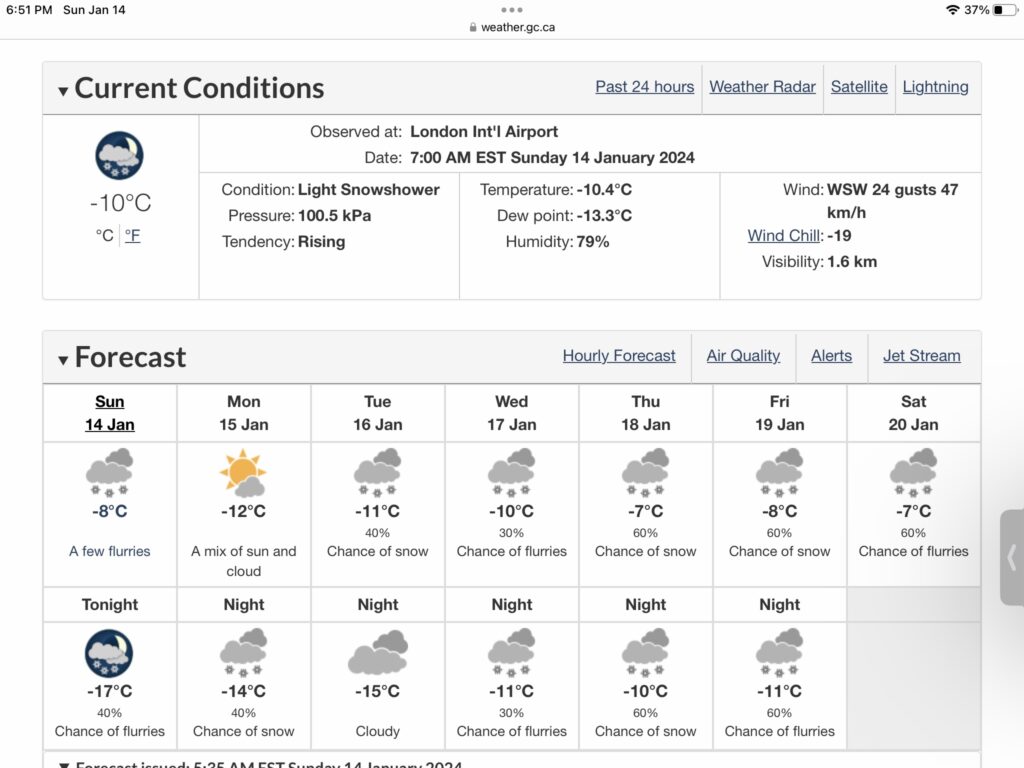
Winter recently arrived with a vengeance, complete with blowing snow and a polar vortex that has brought arctic air south.
Here is this week’s forecast.
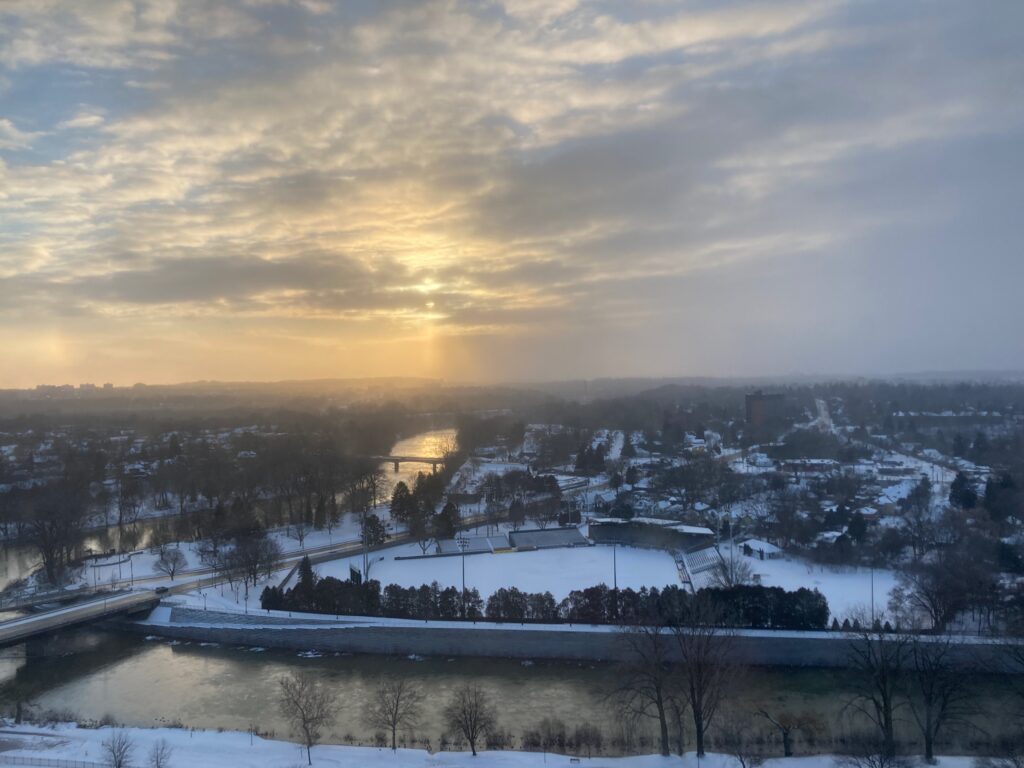
The colder weather has brought glimpses of the sun and blue sky.
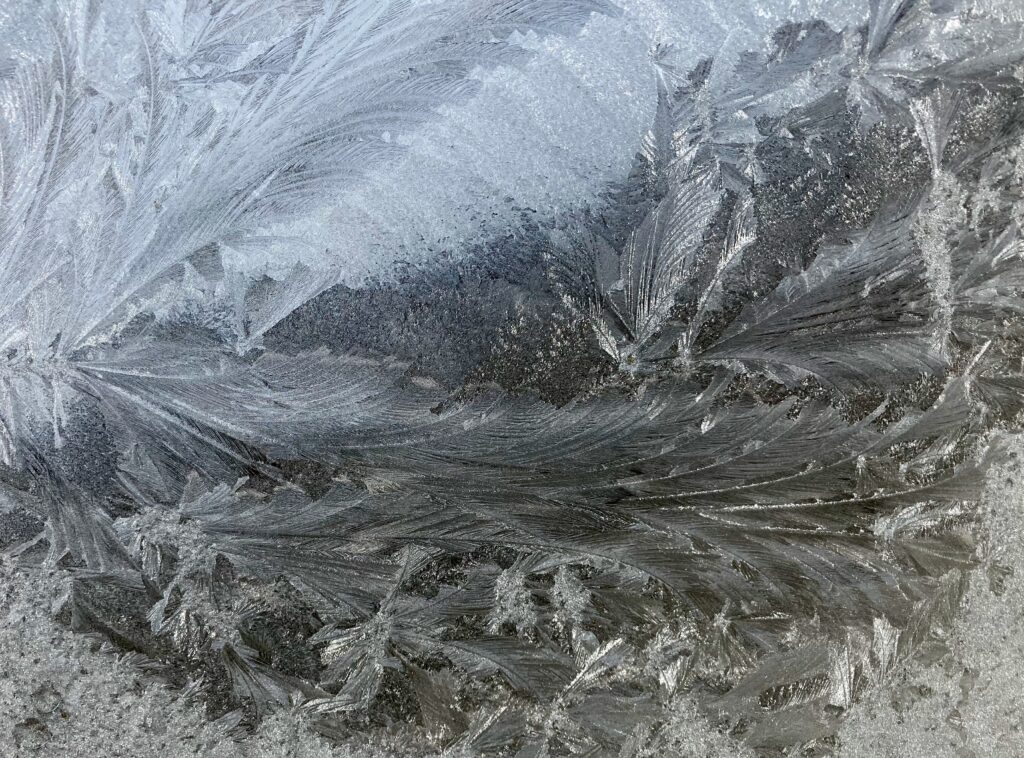
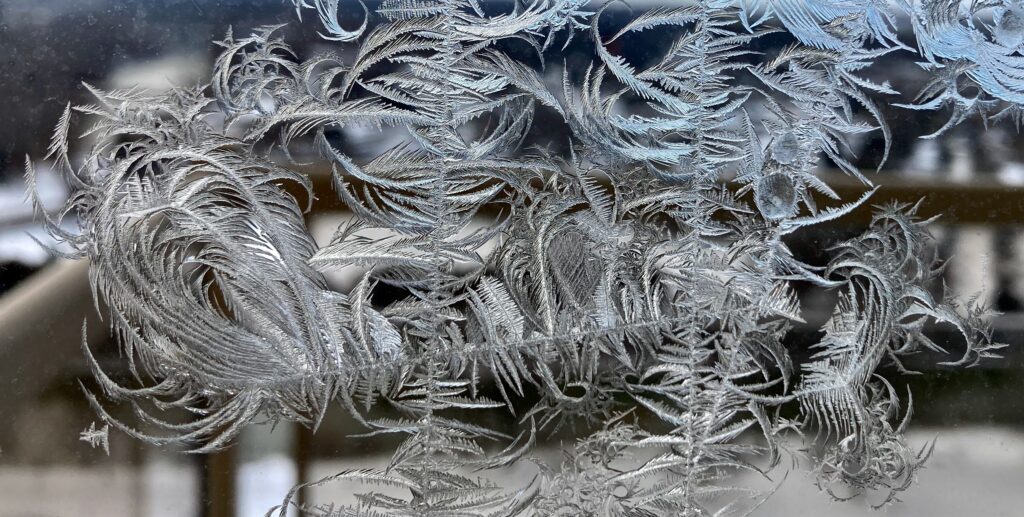
It has also produced frost patterns on our windows that resemble feathers and down.
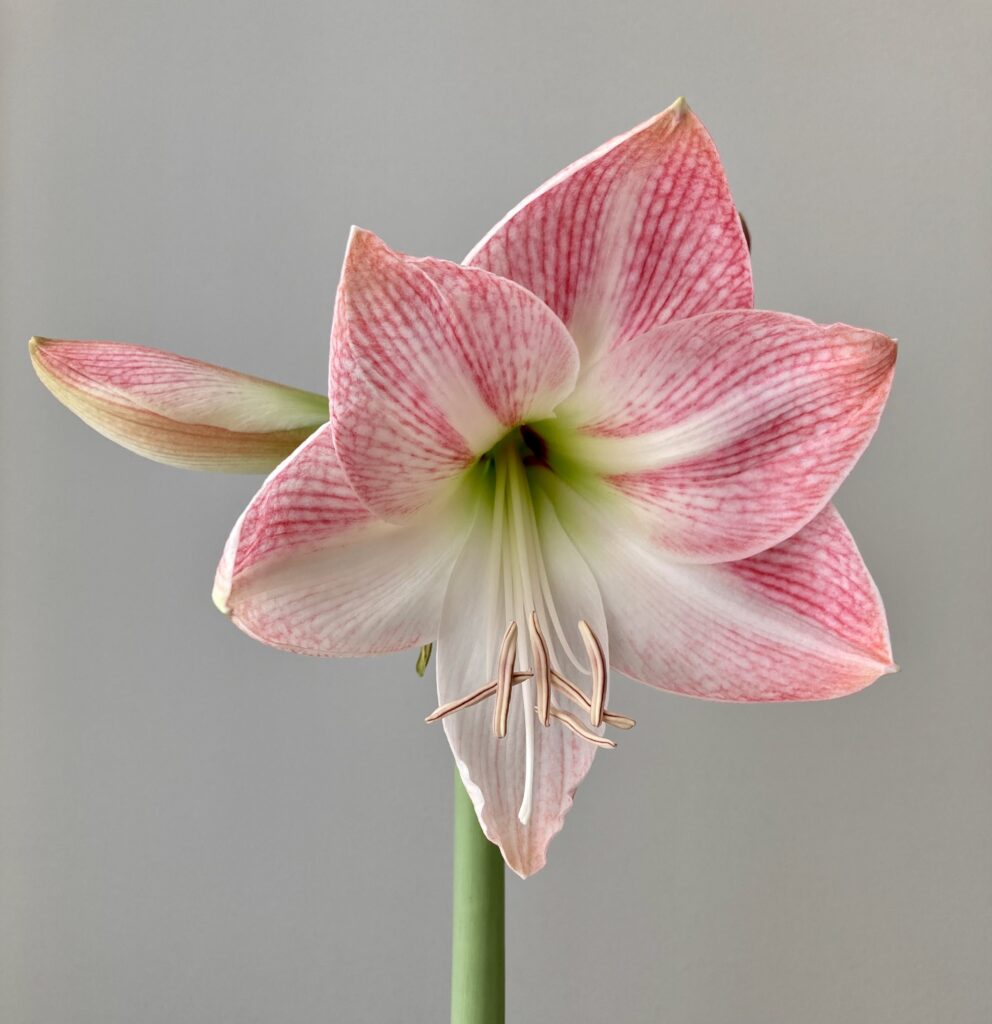
Our orchids have agreed to bloom again this winter, a welcome reminder of tropical climates.
We decided that a visit to the tropics was in order. In December 2016, we went to Cozumel with Susan’s Toronto aquafit instructor and class. It was our first trip to a tropical zone and we were looking forward to discovering new (to us) birds.
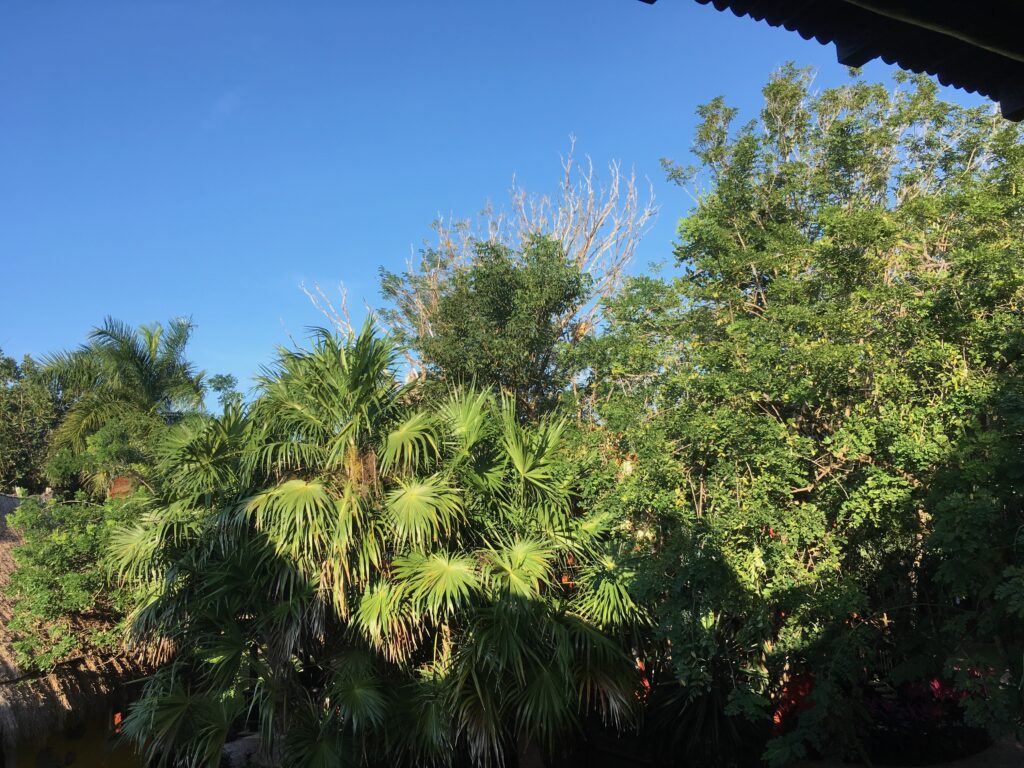
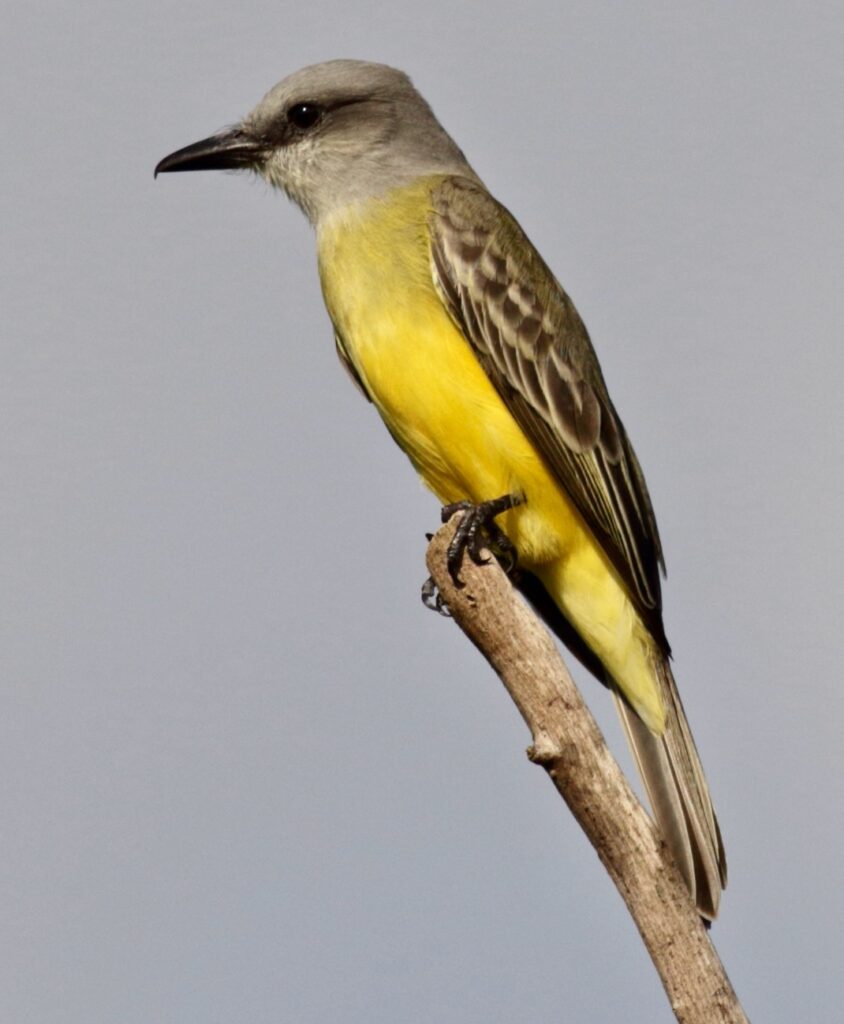
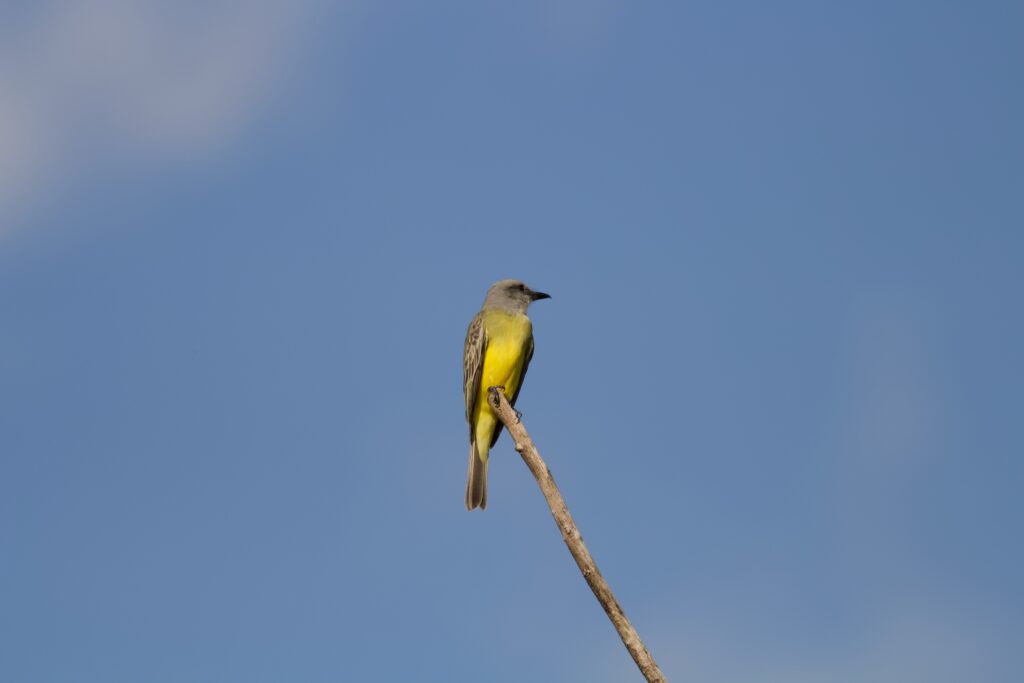
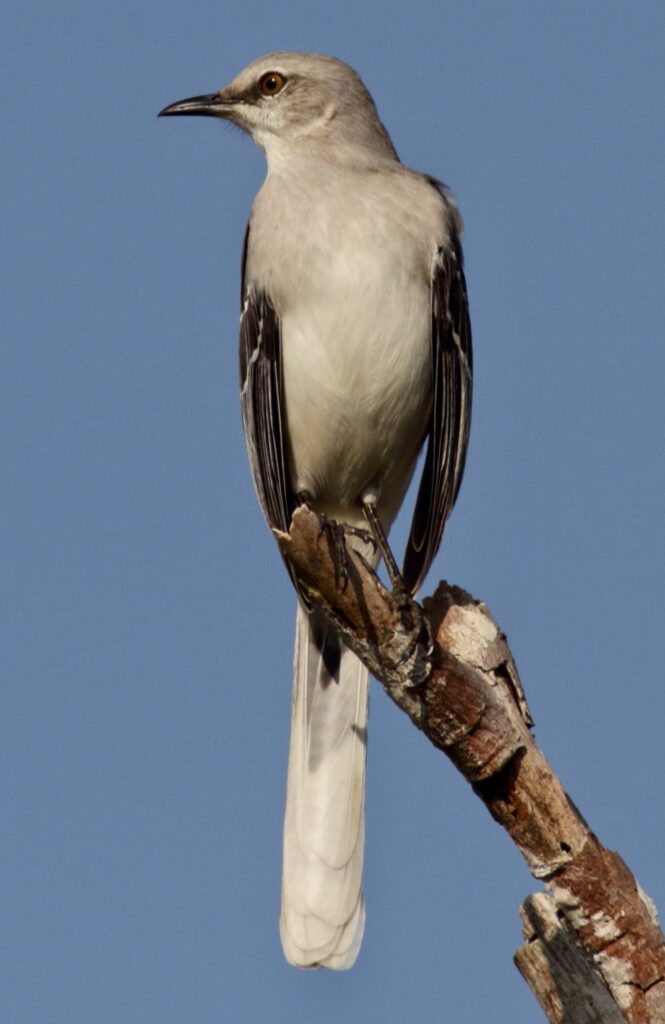
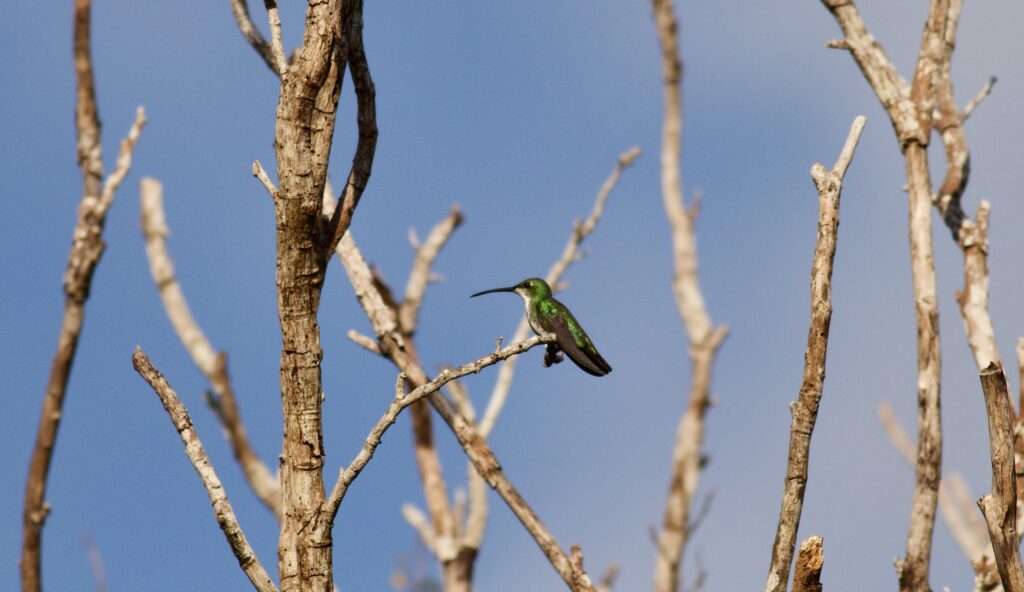
We were happy to find that the resort where we stayed was heavily treed. We had a good view of birds from our balcony. The bare tree served as a perch for local birds such as Tropical/Couch’s Kingbirds and Tropical Mockingbirds. Typical of flycatchers, Tropical Kingbirds perch on a branch, ready to fly out to capture passing insects. We even spotted a Green-breasted Mango one day.
Tropical Mockingbirds are omnivorous and have a variety of feeding strategies. They always put on a good display.
Tropical resorts sometimes house non-native birds on their grounds, despite having an abundance of native birdlife. There is a parrot that is native to Cozumel and the Yucatan region of Mexico, but these parrots don’t appear to be of that variety.
American Flamingos are native to Mexico, but this flock was captive.
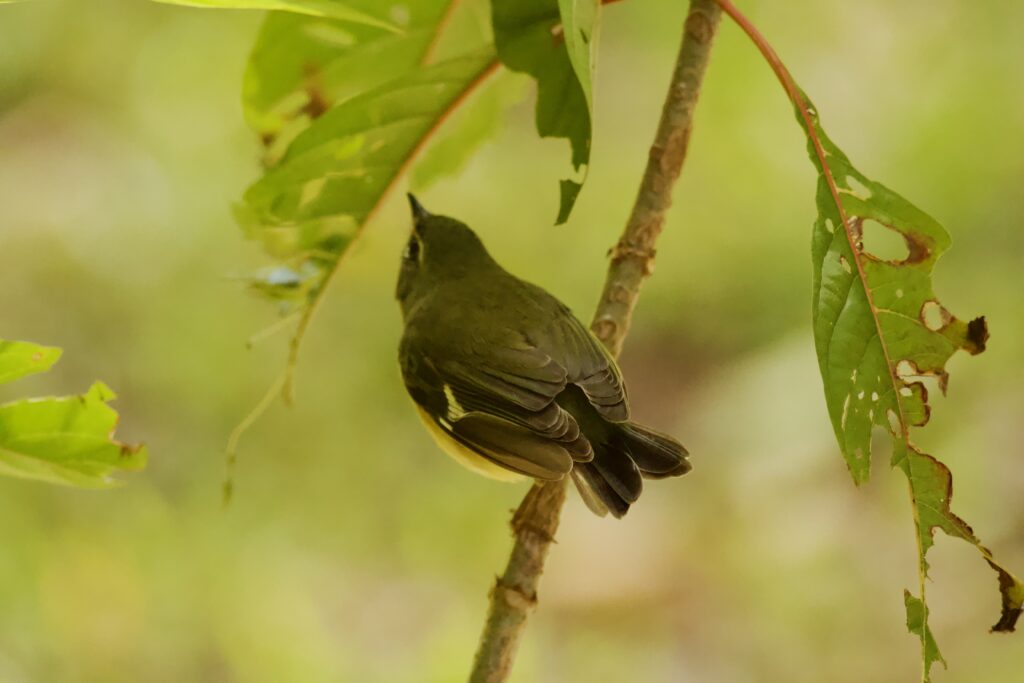
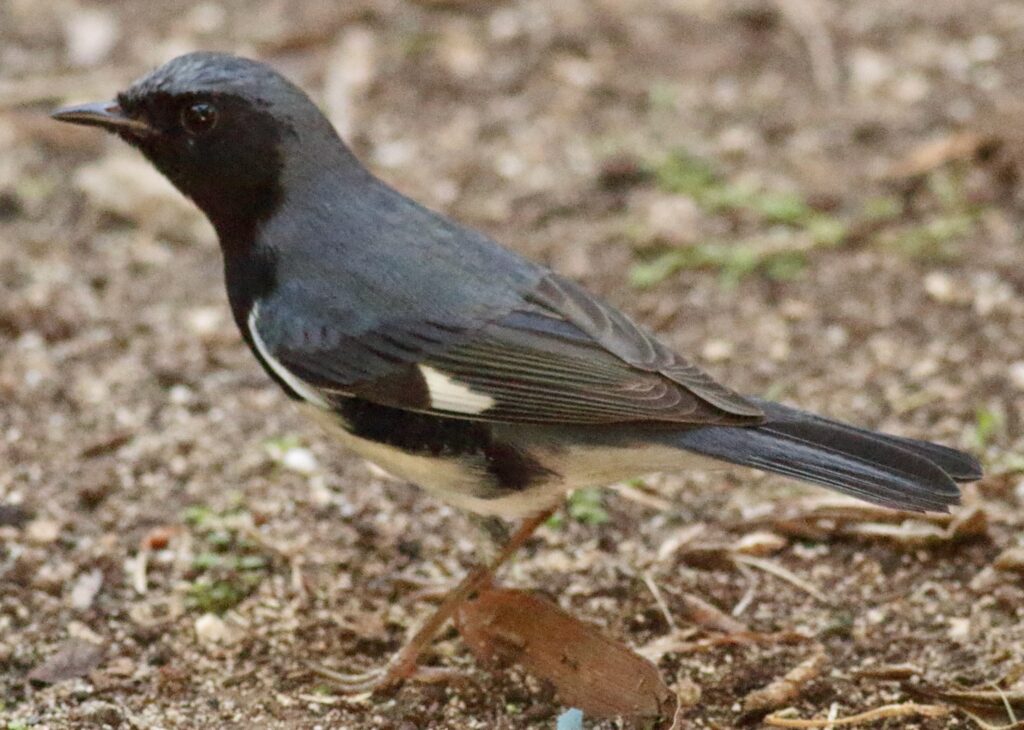
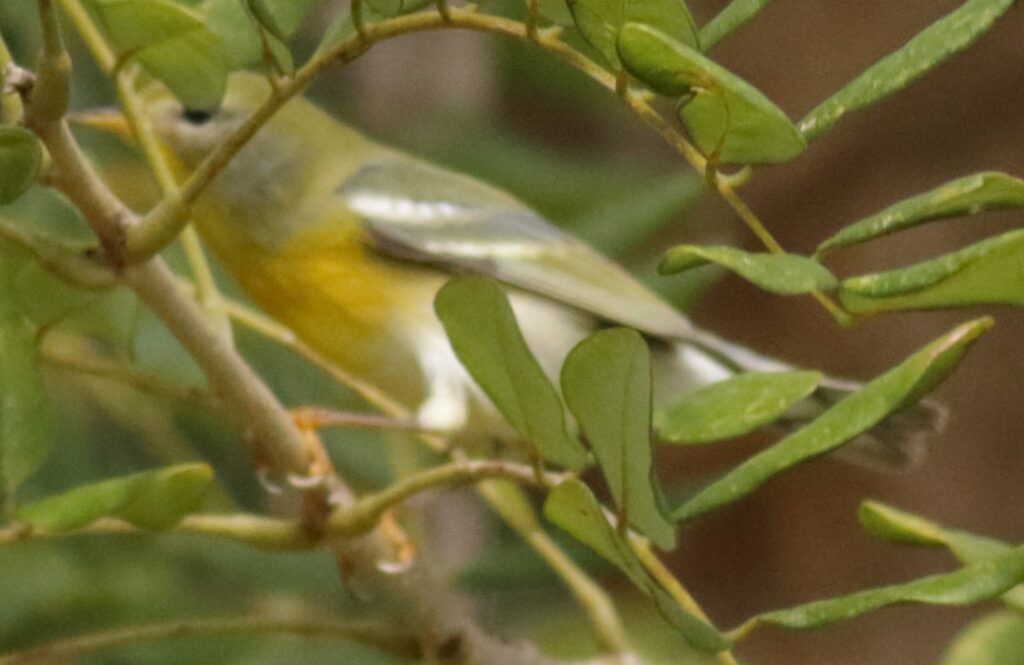
Cozumel is the wintering/non-breeding territory for several species of warblers. In usual warbler fashion, most of these birds moved quickly through areas of dense vegetation, making it hard to photograph them. Still new to birding, we did not always recognize some of the female birds whose plumage differs considerably from that of the males’.
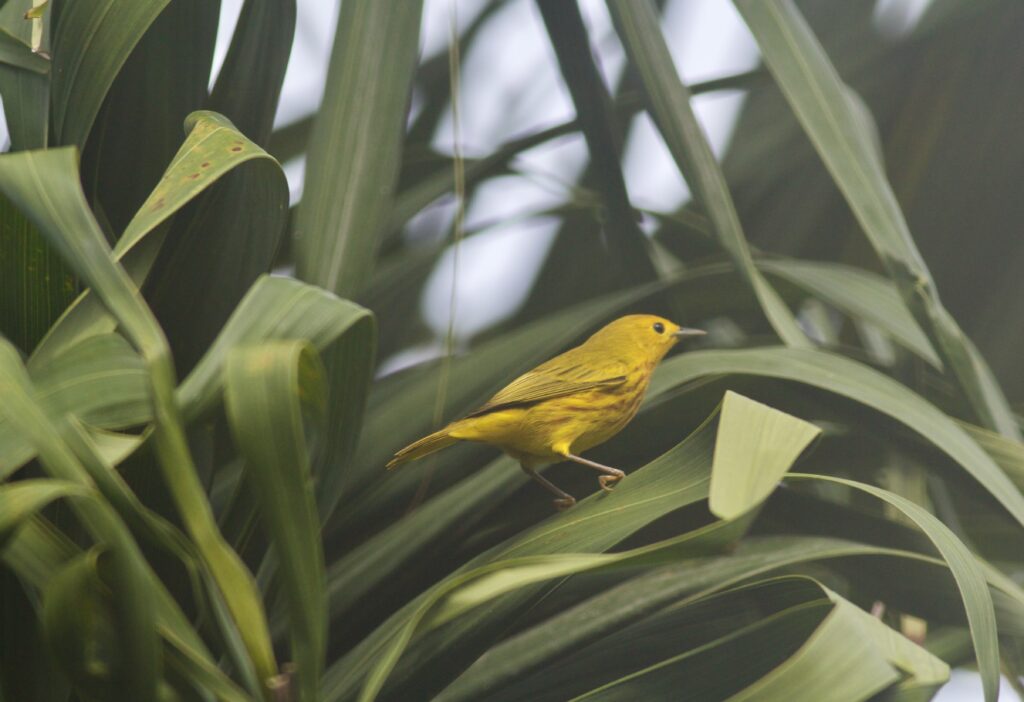
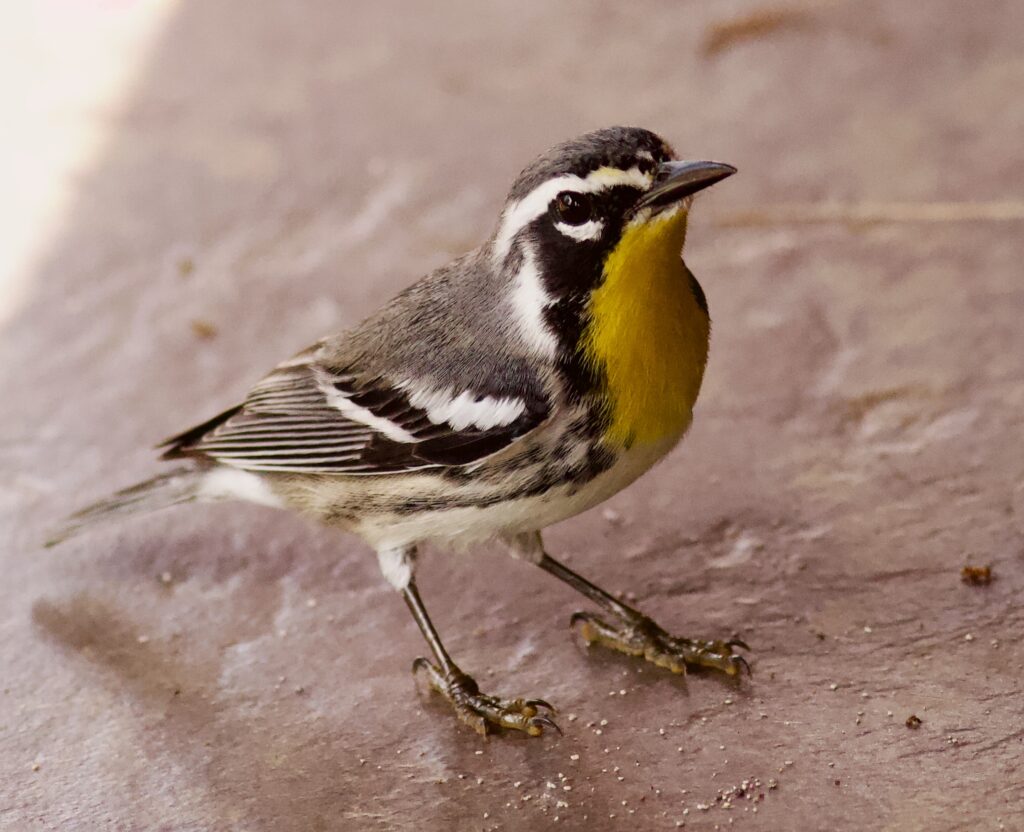
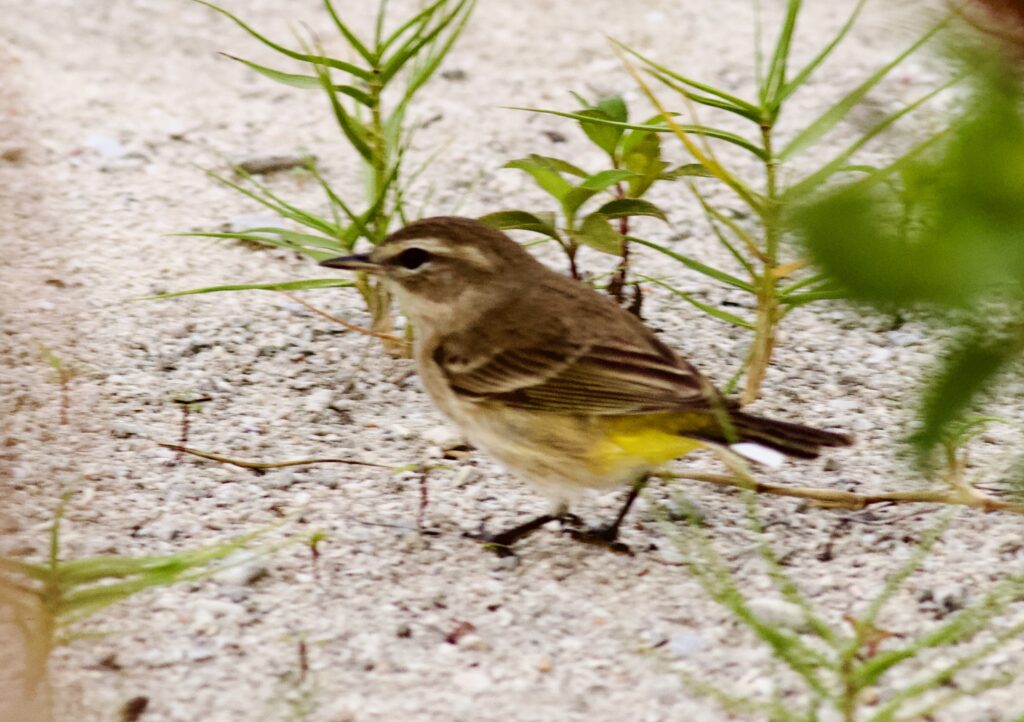
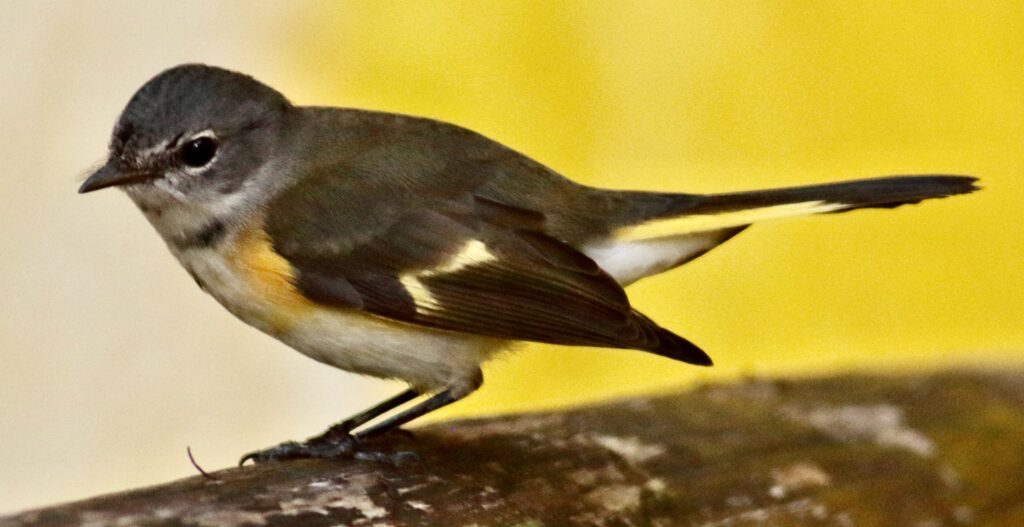
Yellow Warbler (male)Black-throated Blue Warbler (female)Black-throated Blue Warbler (Male)Yellow-throated WarblerNorthern Parula (female)Palm WarblerAmerican Redstart (Female)
Yellow-throated Warblers were typically less shy than other warblers and sometimes posed out in the open.
We had other sightings in Cozumel. We’ll tell you about them next time.
Baby Bird Photos from Audubon
Click on the picture to view the article and photos!
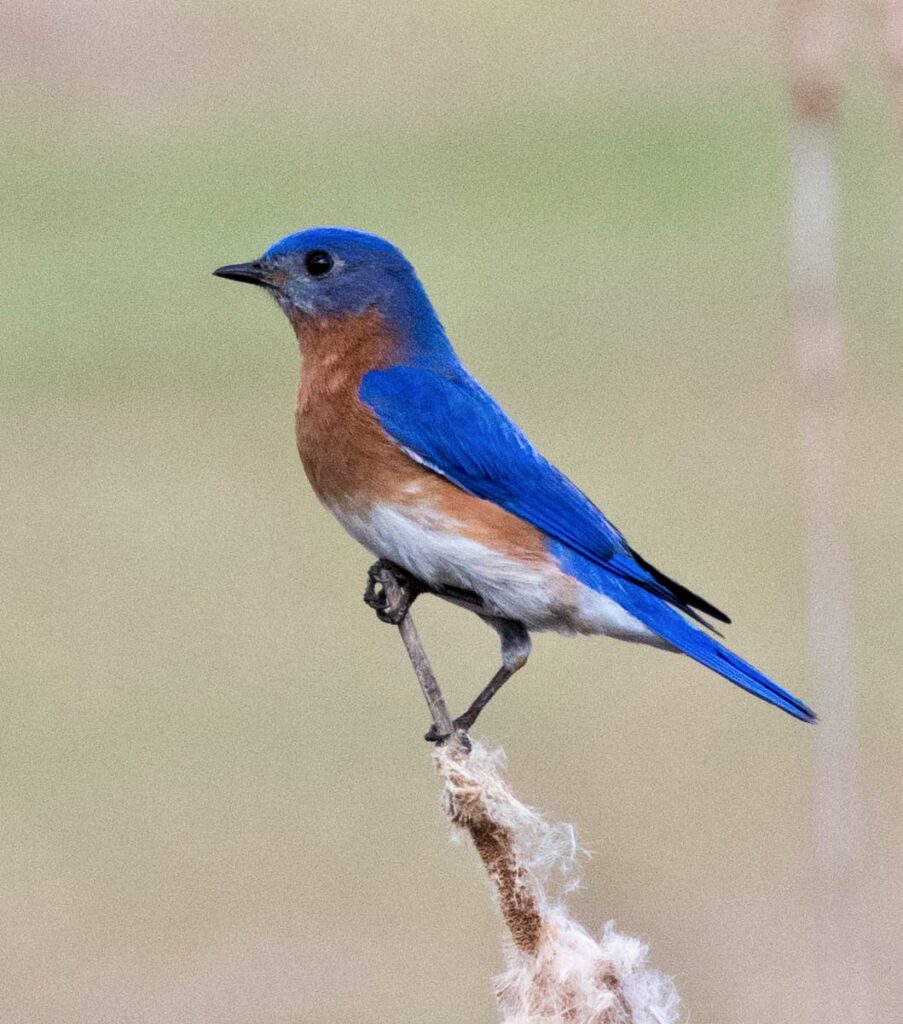
Just as we were escaping winter in Canada for a week, we saw many familiar birds who were also enjoying the milder temperatures in South Carolina. These included Ruby-crowned Kinglet, Song Sparrow, Northern Flicker, American Robin, Red-winged Blackbird, Belted Kingfisher, House Finch, Hermit Thrush, Rusty Blackbird, European Starlings, and Common Grackle among others. Some were likely migrants, and some permanent residents.
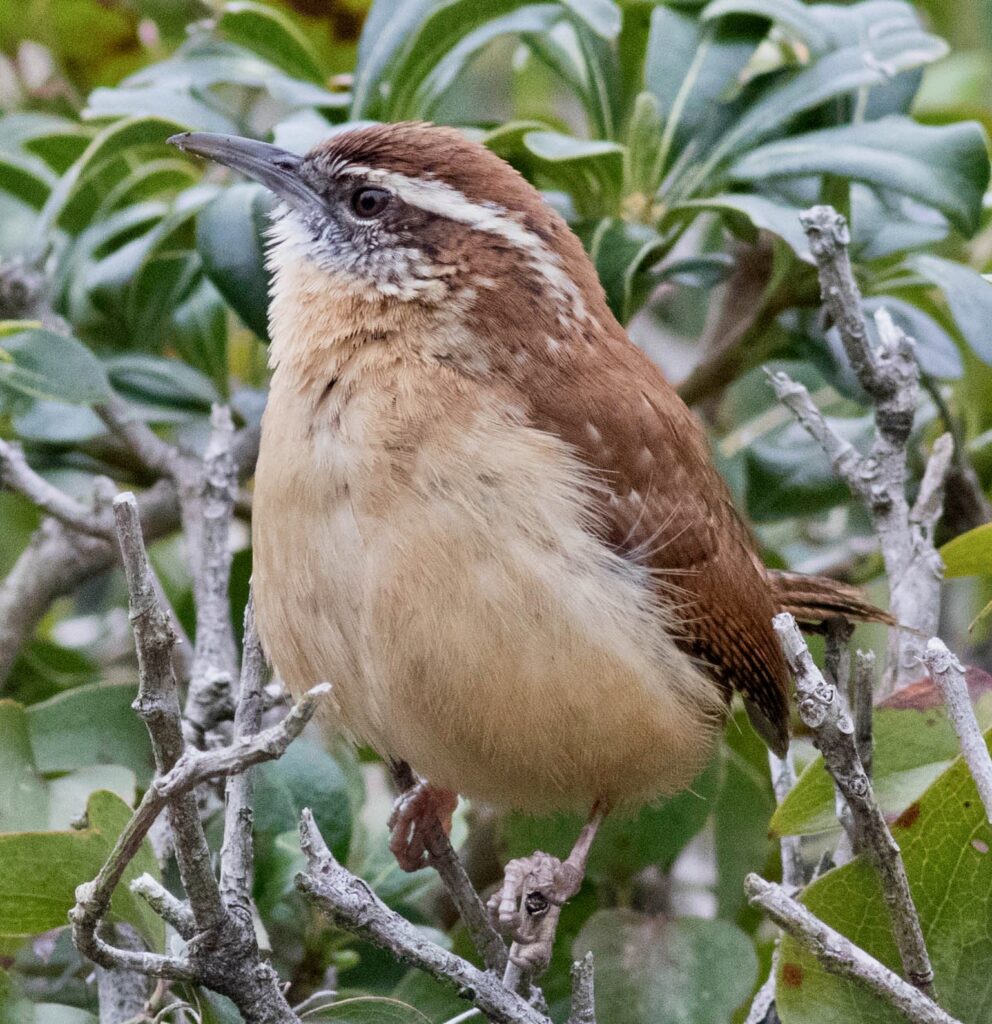
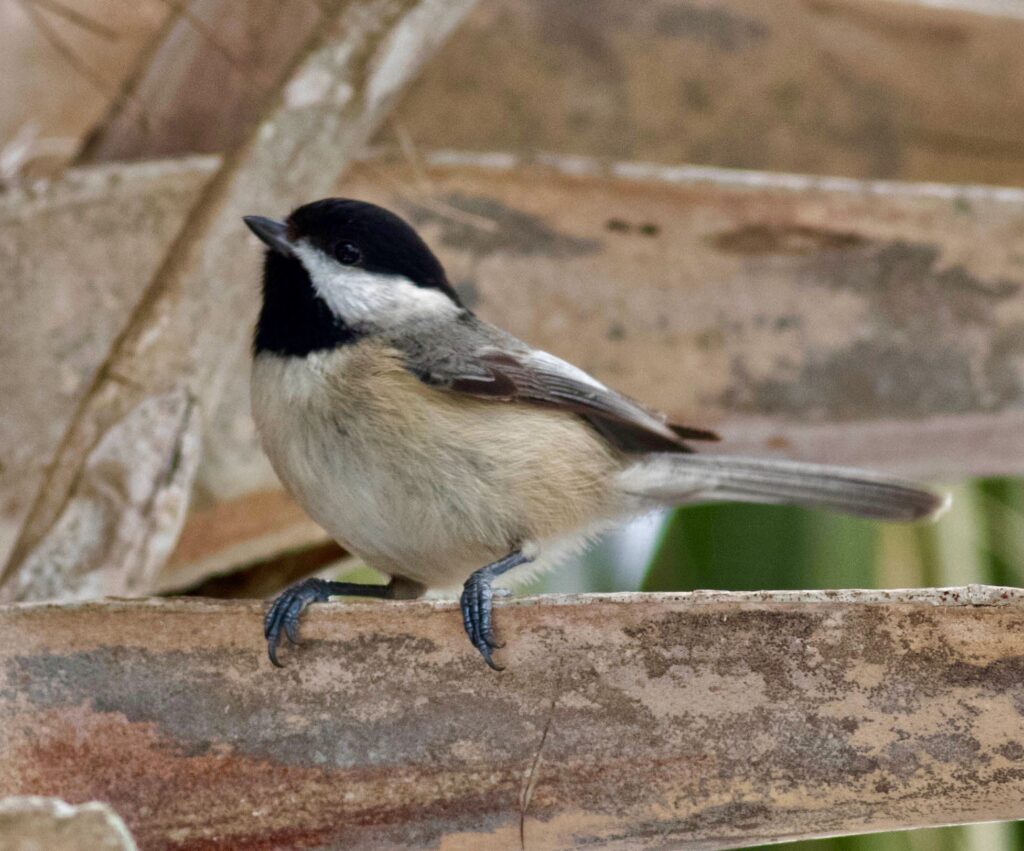
Here are more of the birds we saw that Glenn was able to photograph. Most are ones we have seen in Ontario. The exception is the Carolina Chickadee. While this chickadee is very similar to the Black-capped Chickadee, there is very little overlap in their ranges, their songs differ in noticeable ways, and there are subtle differences in their wing plumage. Red-shouldered Hawks are typically seen in Ontario only during the breeding season whereas they are present in SC throughout the year.
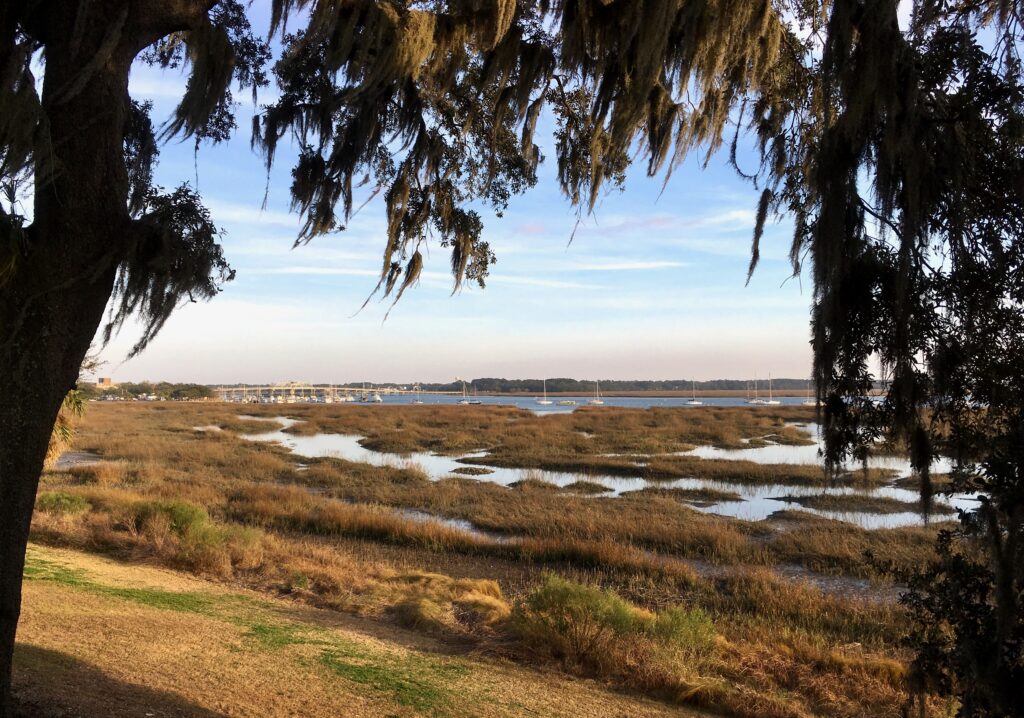
The coastal area of South Carolina is known as the Lowcountry due to its proximity to sea level. It encompasses saltwater and freshwater marshes, islands, and inland ponds and wetlands. Here we found a variety of wading birds and waterfowl.
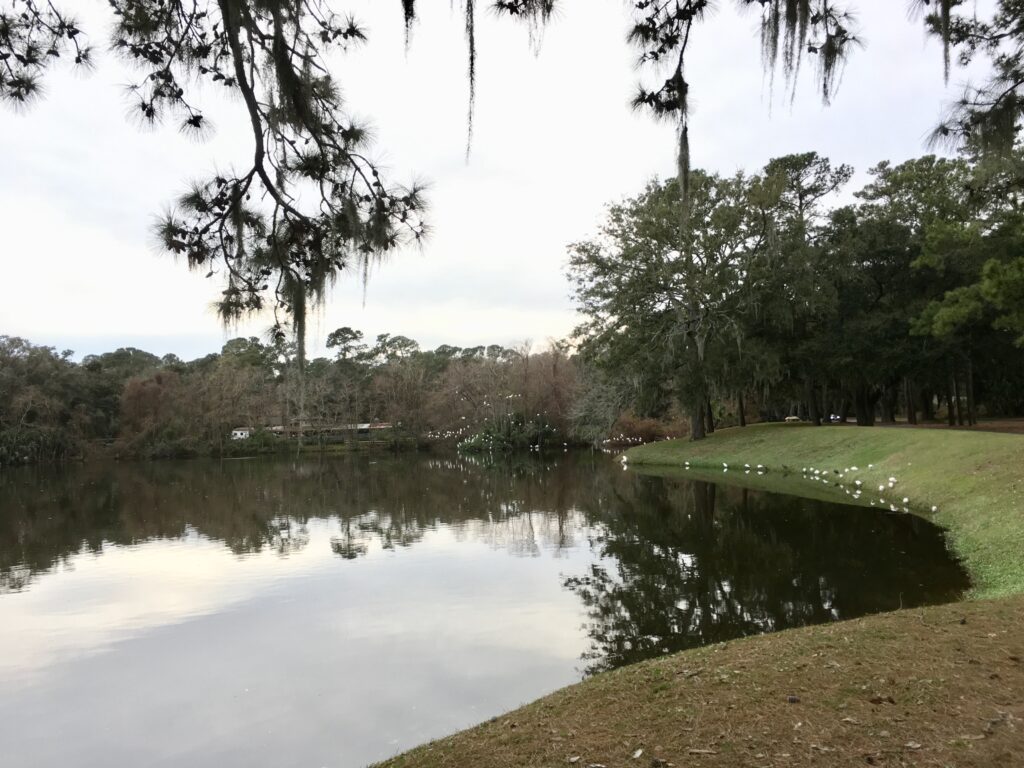
Here are some of the coastal marshes and inland ponds and wetlands we visited.
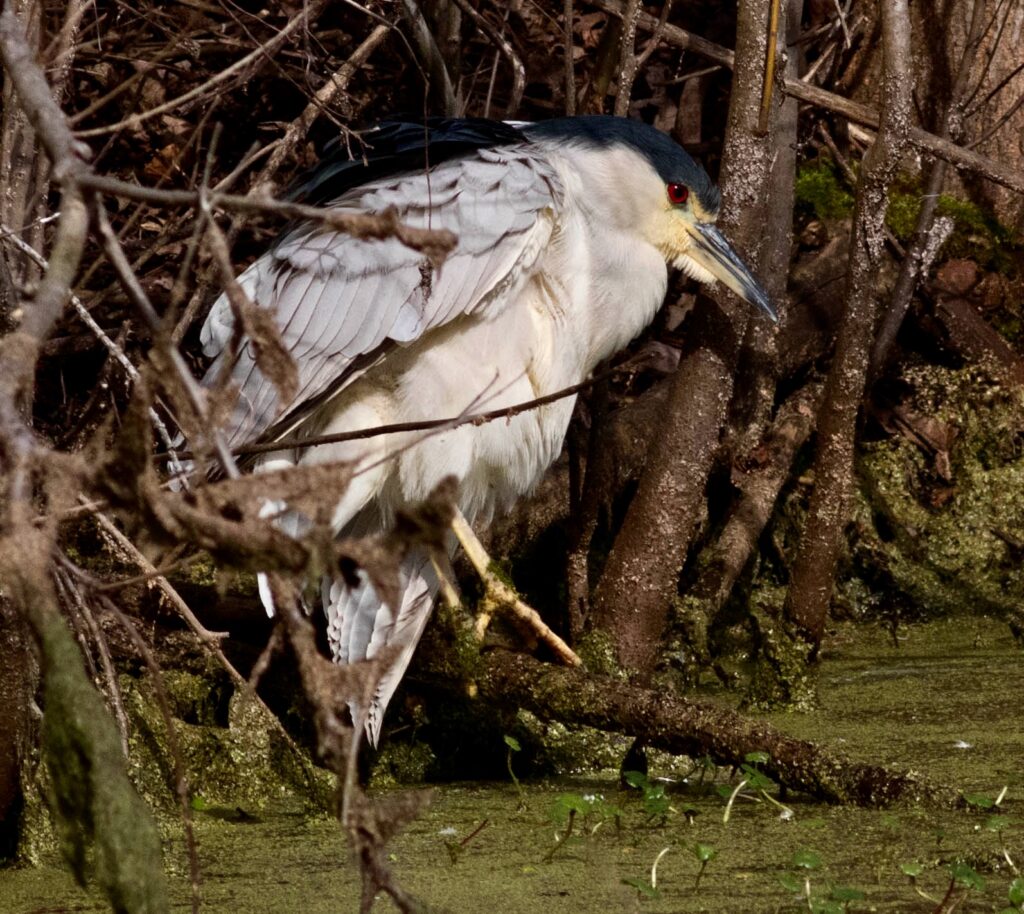
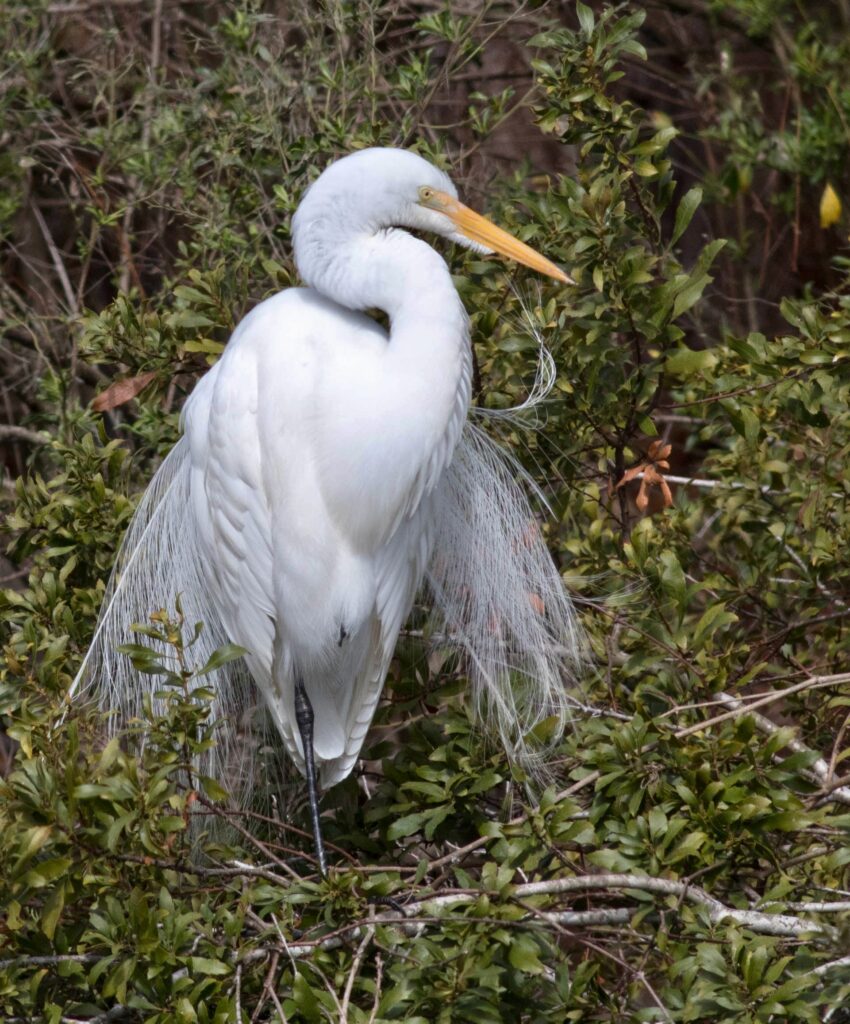
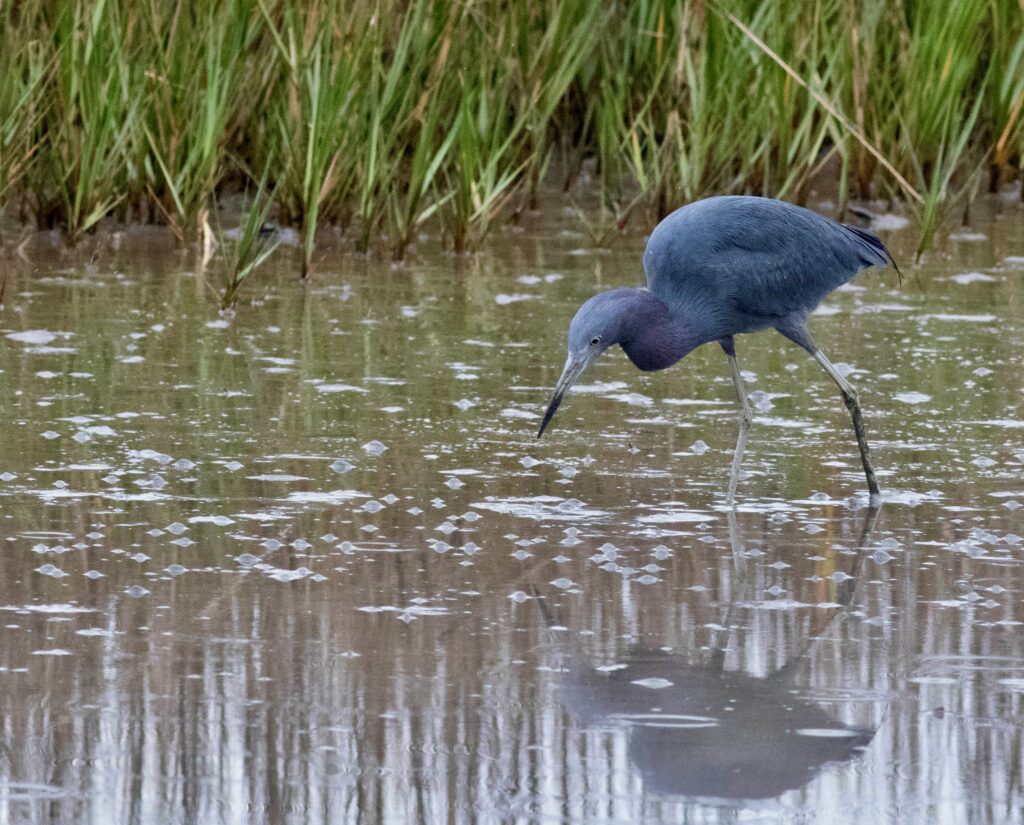
We saw Great Egrets, Snowy Egrets, Great Blue Herons, Tricolored Herons, Little Blue Herons and Black-crowned Night Herons both in salt water and in inland ponds and ditches.
Great Blue Heron Black-crowned Night HeronGreat Egret with showy breeding plumageLittle Blue Heron
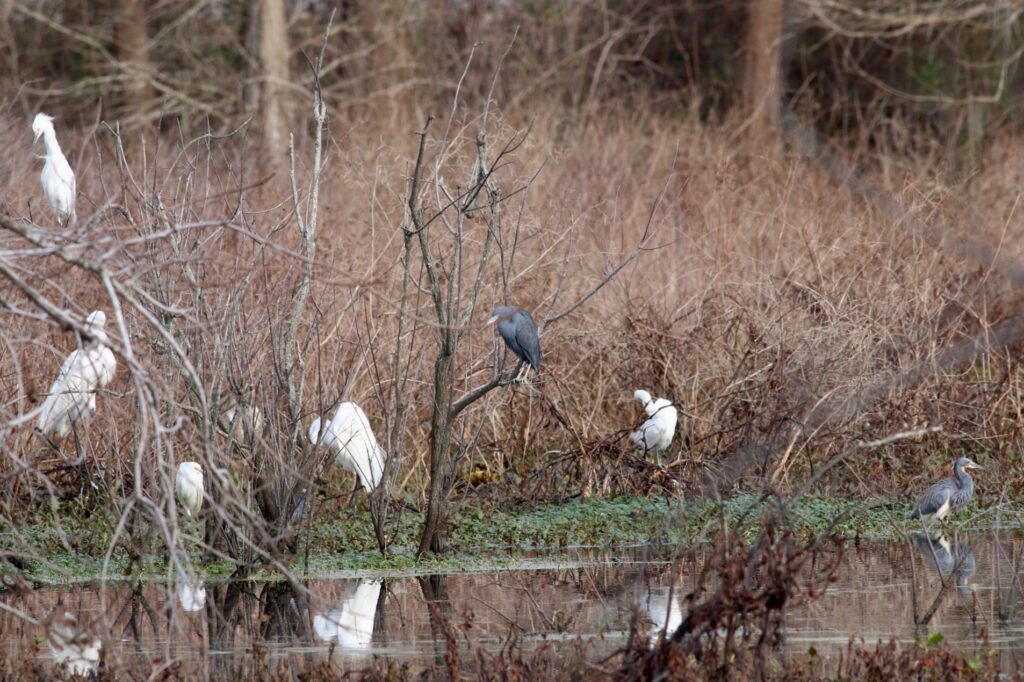
There were colonies of wading birds in some ponds and wetlands. Below, a Little Blue Heron is perched on a central tree. A Tricolored Heron is wading at the right of the photo.
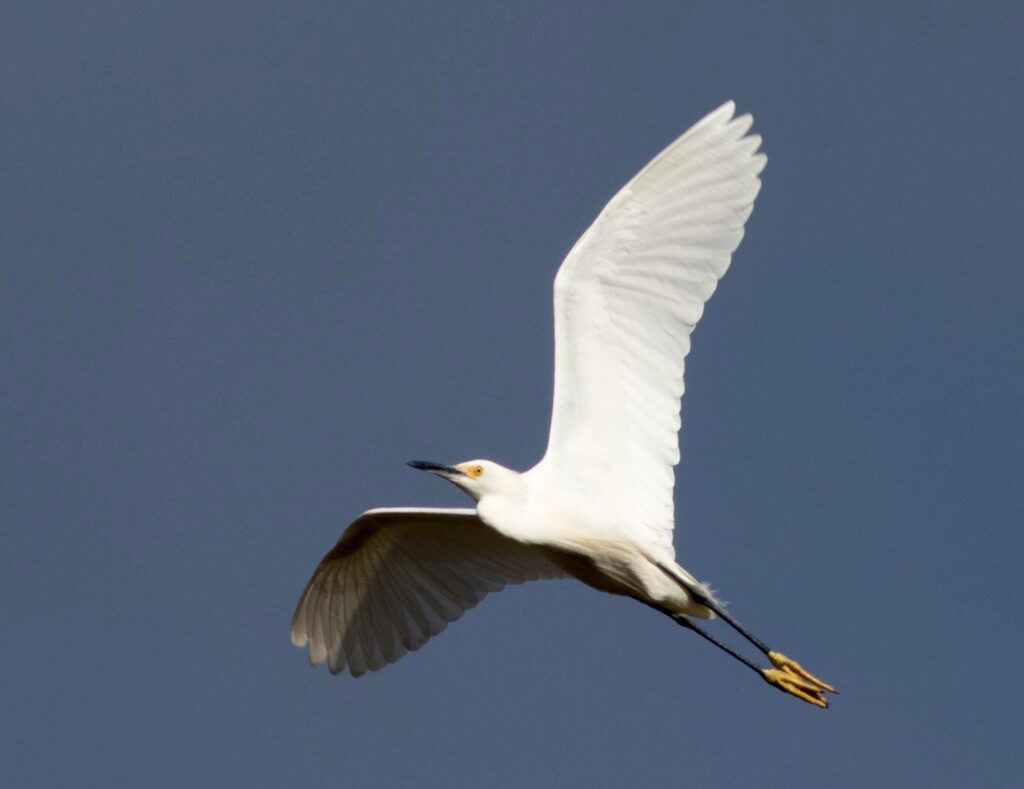
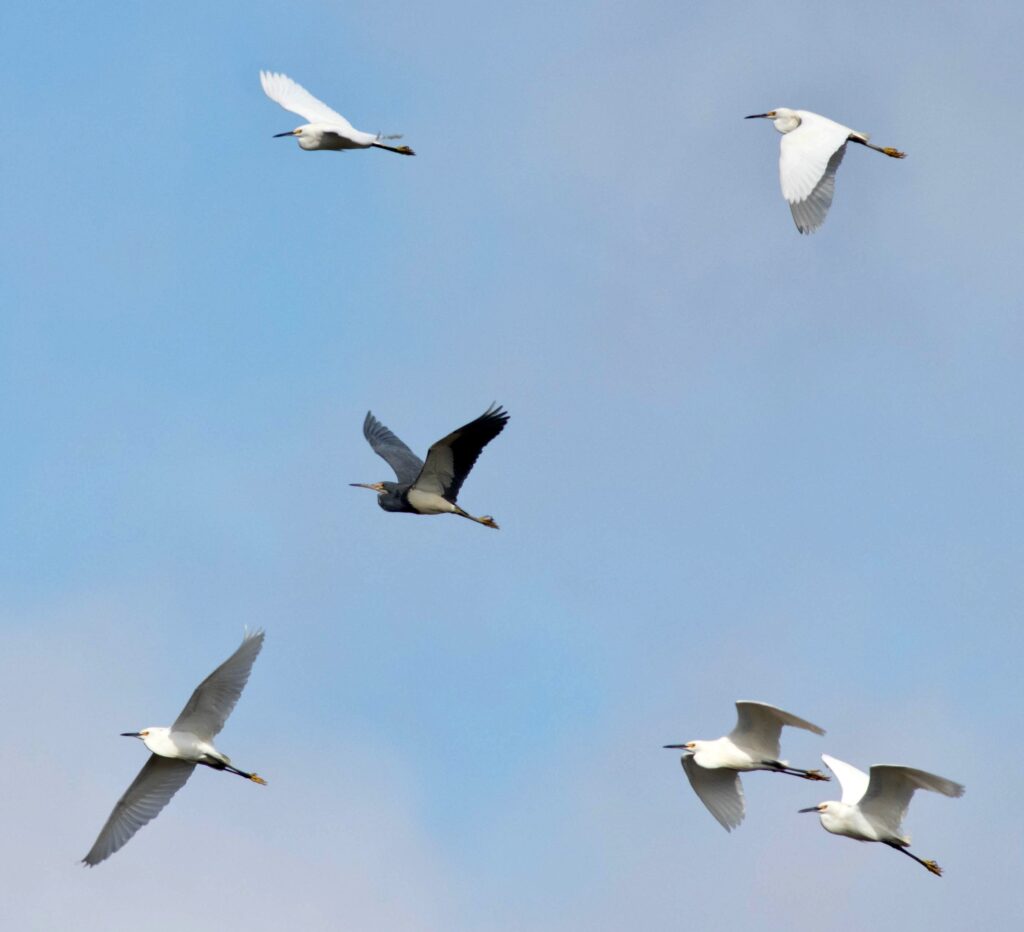
In flight, herons made an impressive display. On the left, a Snowy Egret, distinguished from Great Egrets by their yellow feet, black bills, yellow lores (between bill and eye), and smaller size. On the right, there is a mature Little Blue Heron. The others appear to be a Snowy Egrets.
Snowy Egret
Immature Little Blue Herons are white with black bills and greenish legs and feet. They may have blue tinges on the tips of their wings and darker legs as they start to transition to adult plumage.
Other waterfowl also populated the wetlands.
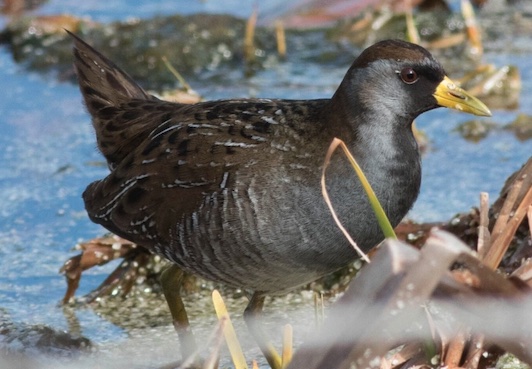
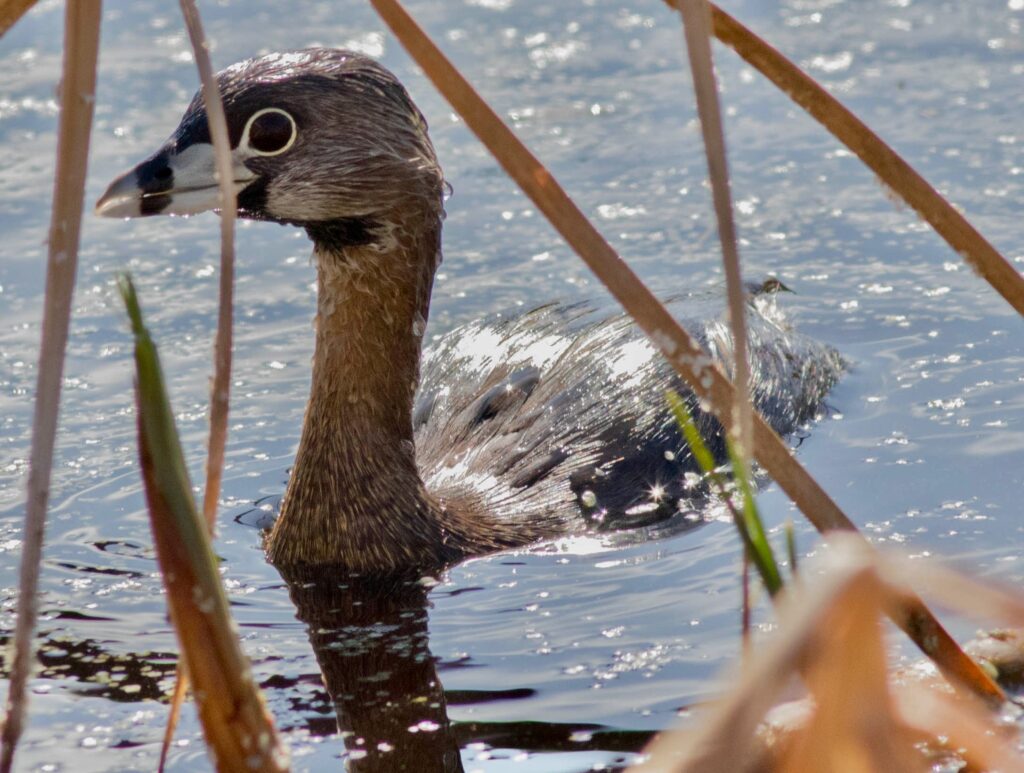
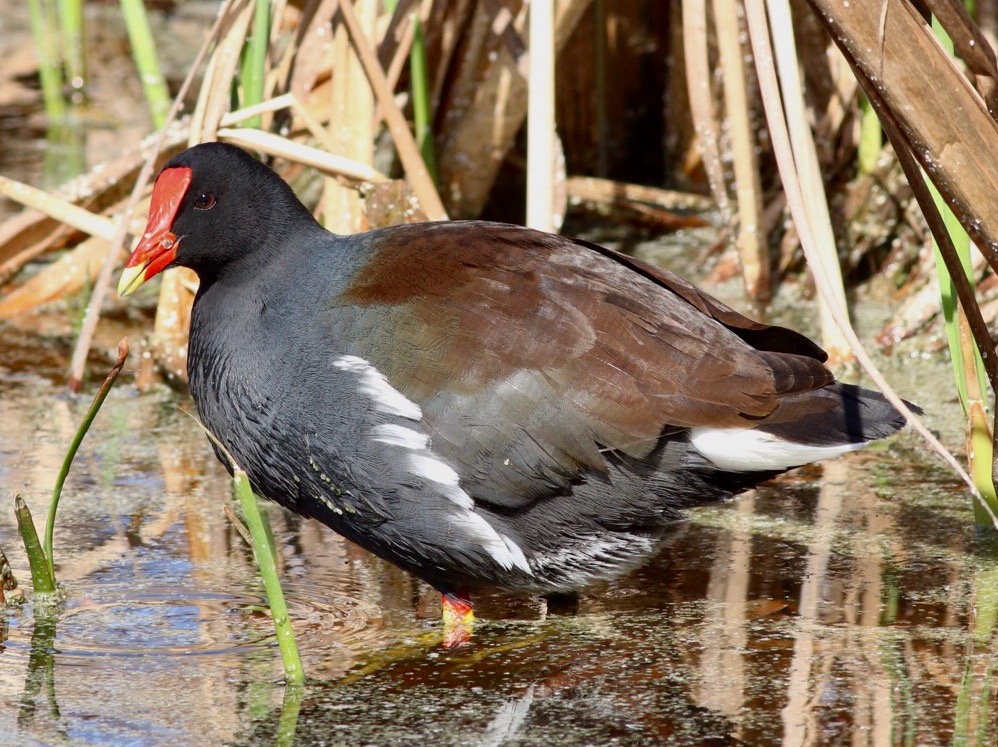
Pied-billed GrebeSoraCommon Gallinule
In other ponds, we found some familiar ducks and some unfamiliar birds.
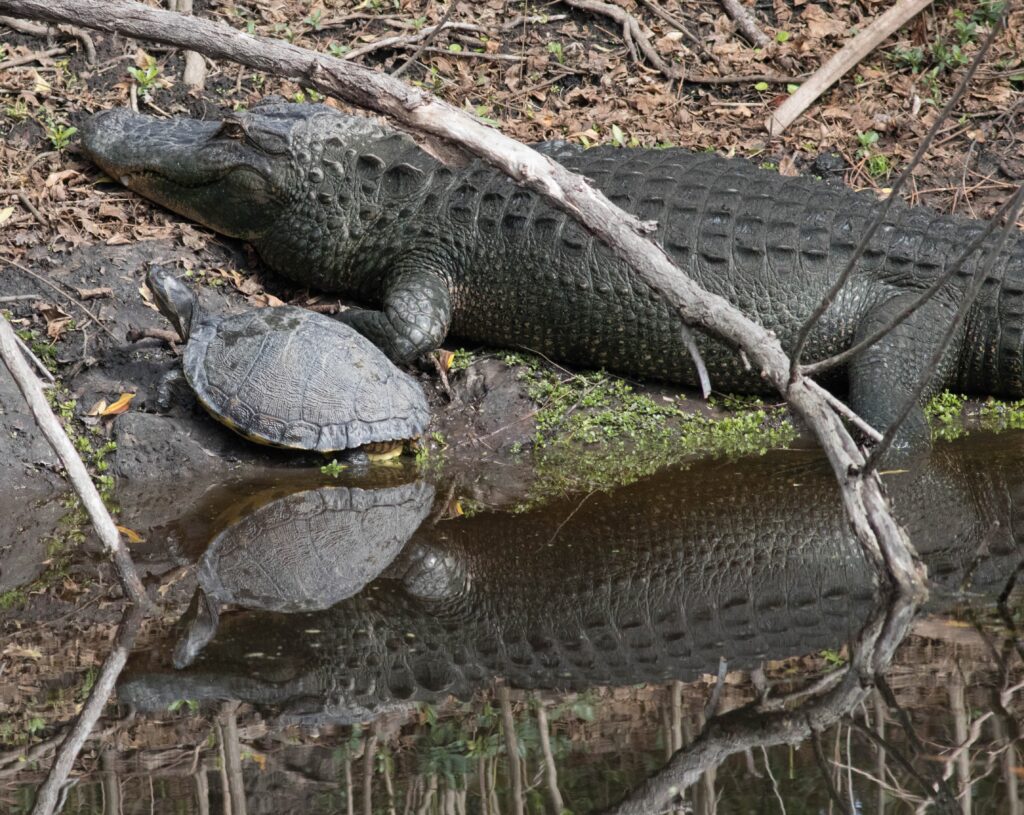
Birds were not the only inhabitants of the water on Hilton Head. We often saw basking alligators and always gave them a wide berth, even though they tend to be sluggish in the cooler winter temperatures.
Boat-tailed Grackles breed in saltwater and freshwater marshes along the Atlantic coast, always staying close to saltwater. When we first saw these grackles, we thought that the males and females were two different species. Males are glossy blue-black whereas females are dark brown and half the size of the males. Note the America Crow perched with the Boat-tailed Grackle.
School of Rock Students
Fair warning, I loved the movie by this name and then started to see branded videos with very talented young performers in great studio conditions. These are some of the many performances I enjoyed enough to share with you. -G
First a little blast of joy featuring four female vocalists.