Author: New Admin

  • A Neighbourhood Walk

    A Neighbourhood Walk

    We’ve resolved that whenever there is sun, we will drop everything and go outside. Tuesday was such a day, especially since the weather forecast held dire warnings about heavy rainfall the next day. As it turned out, Wednesday brought snow, freezing rain, and then heavy downpours accompanied by thunder and lightening.

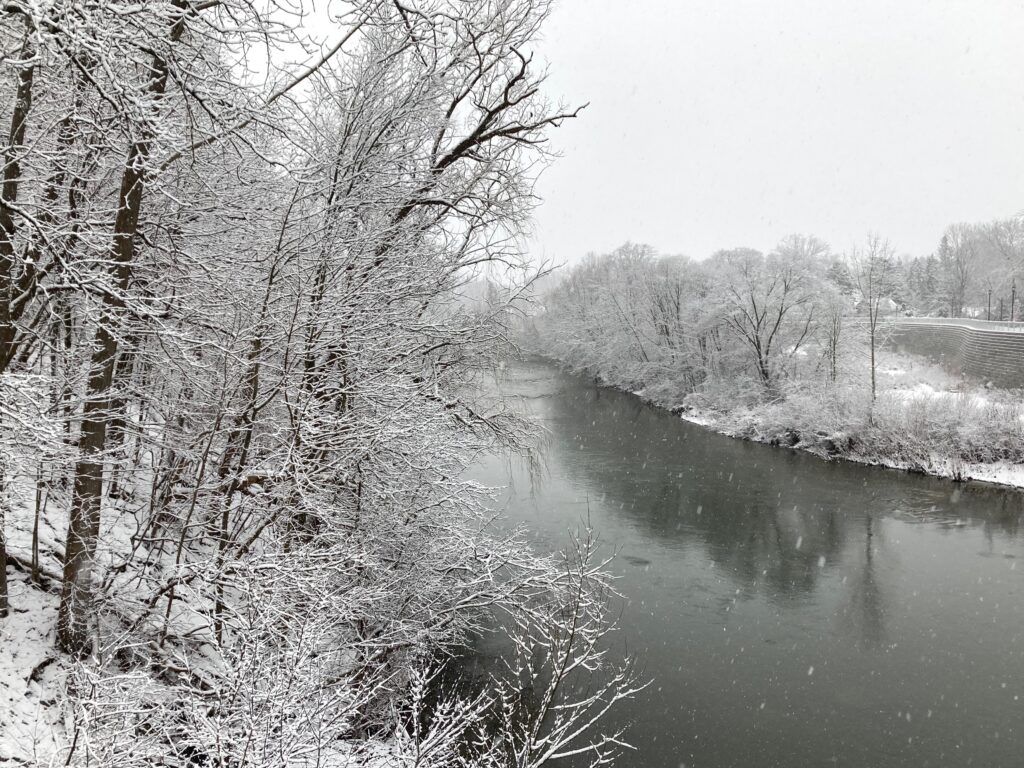
    Ice coated trees and branches, sidewalks and roads.

    Thursday, the level of the river crept ever higher during the day.

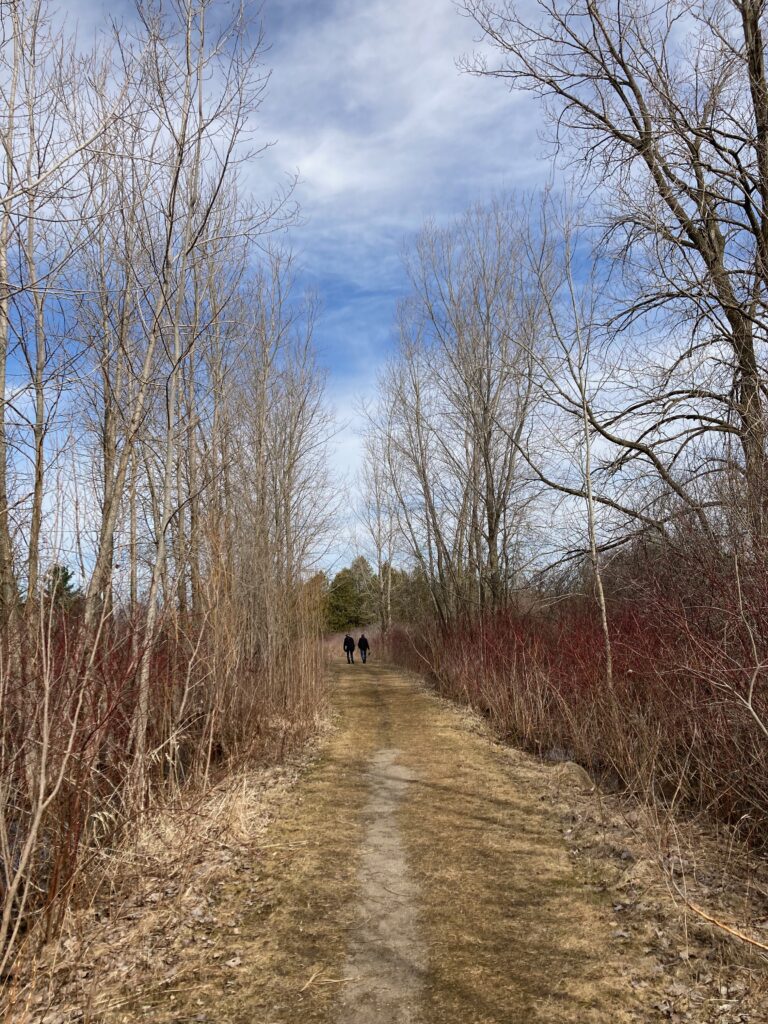
    Tuesday was chilly, but there was sun and blue sky. We walked north along the river. There were encouraging signs of spring – green shoots of day lilies and other plants on the bank warmed by the sun.

    There were patches of Eastern Skunk Cabbage in the wet, boggy areas. For the first time, we got photos of the spadix hidden within the hood or spathe of the plants.

    Skunk Cabbage is one of the first plants to emerge in the spring due to its ability to produce heat even when the ground is still frozen. In Southern Ontario, the plant usually blooms around the last week in March. The flowers are composed of a mottled maroon hood, called a spathe, that appears before the leaves. Inside the hood is a fleshy spike, called a spadix, that is actually many petal-less flowers. As the flower spike matures, it emits the scent of rotting meat to attract pollinators such as flies and carrion beetles. This unpleasant odour is carried on the air by the heat rising from the flower.

    A few birds foraged in the water-logged areas close to the river. A pair of Song Sparrows were keeping company. A female Mallard dozed. A robin and a Dark-eyed Junco were more active.

    There was lots of bird activity along the neighbourhood streets. Canada Geese lounged on the grass. This European Starling had just returned from the hairdresser! The American Robin was less well groomed after searching for worms or insects in the ground.

    There is a noisy flock of House Sparrows in the neighbourhood that often shelters inside a euonymus bush. On a fine day, the birds perch in plain view like tree decorations to capture the warmth of the sun.

    London seems to be home to many House Finches. As we walk downtown, we are often greeted by the warbling songs of House Finches. Male House Finches find positions on buildings that amplify their songs and broadcast them to establish territory and/or attact mates.

    Several pairs of House Finches seem to setting up residence in neighbourhood spruce trees. The males are vibrant in their breeding plumage. The females’ plumage is elegant, but understated. House Finches are year-round residents that eat mostly plant materials such as seeds, buds and fruits. They nest in trees or on buildings.

    On Tuesday evening, we ventured out hoping to see the male American Woodcock’s courtship display, sometimes called a sky dance or display flight. These flights are performed at dawn and after sunset to attract a female.

    While waiting for sunset, we surveyed the nearby pond and watched two muskrats whose den appeared to be inside a storm drain.

    Pussy Willows were growing at the edge of the pond. A Song Sparrow perched on low branches, barely visible in the low light.

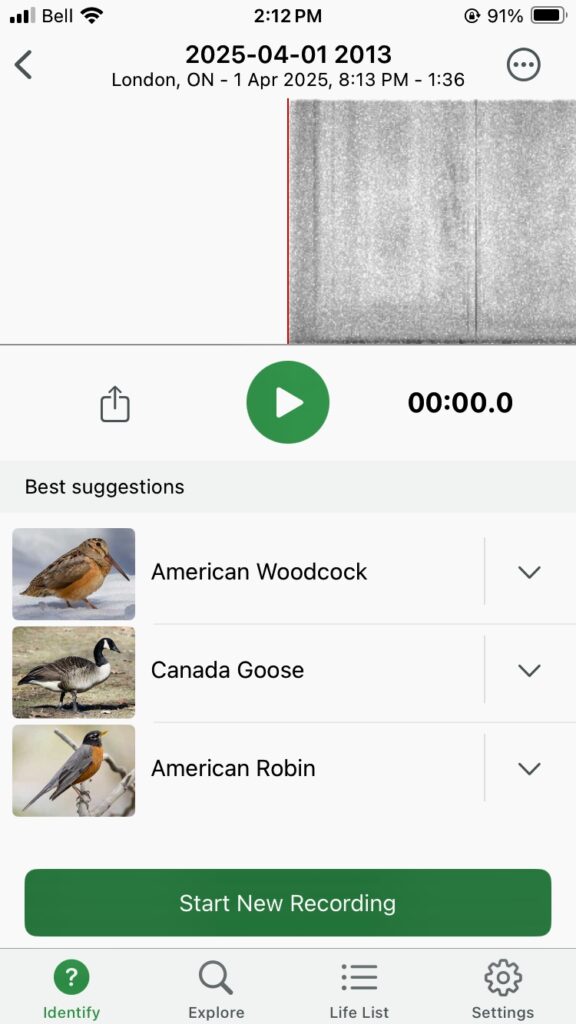
    We looked and listened for woodcock activity. As it grew dark, we heard the distinct “peent” call several times, but saw no movement to help us locate a bird. We’ll have to try another time!

    Screenshot of a Merlin recording of the woodcock…
    Screenshot

    Osprey News

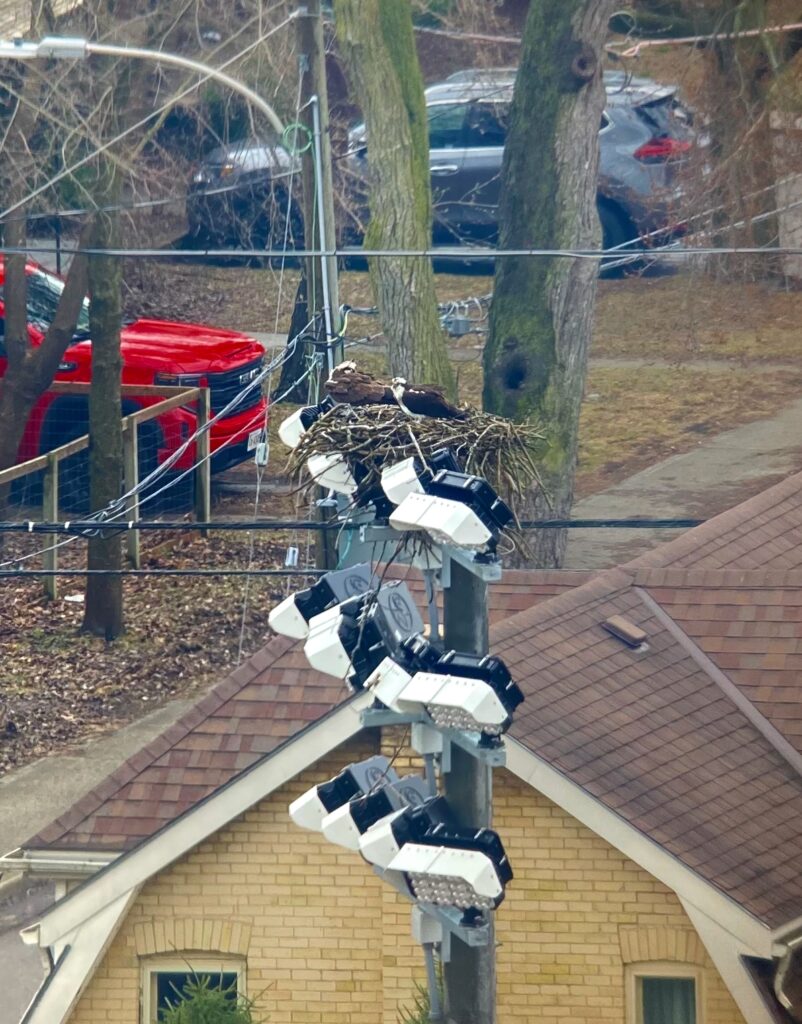
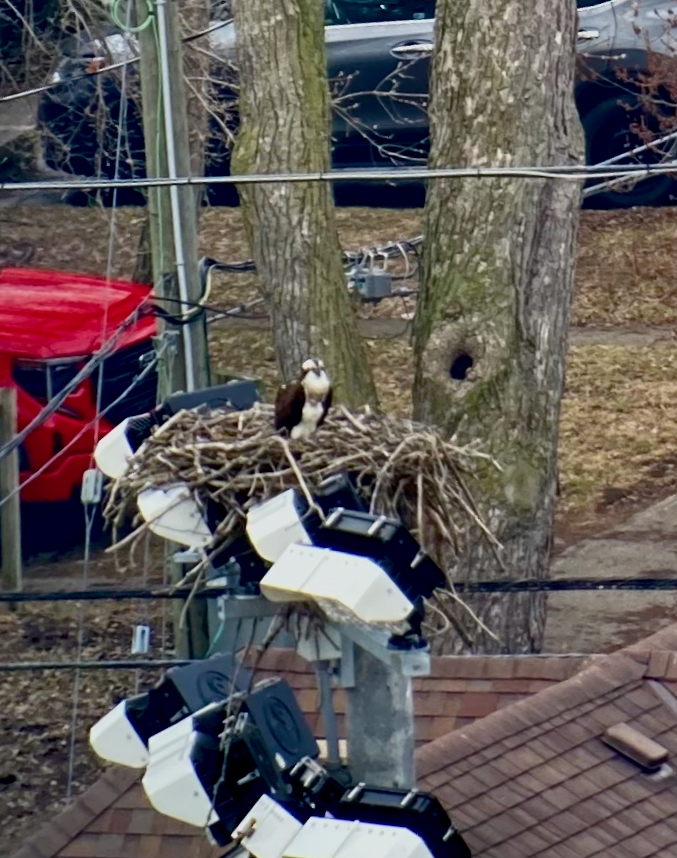
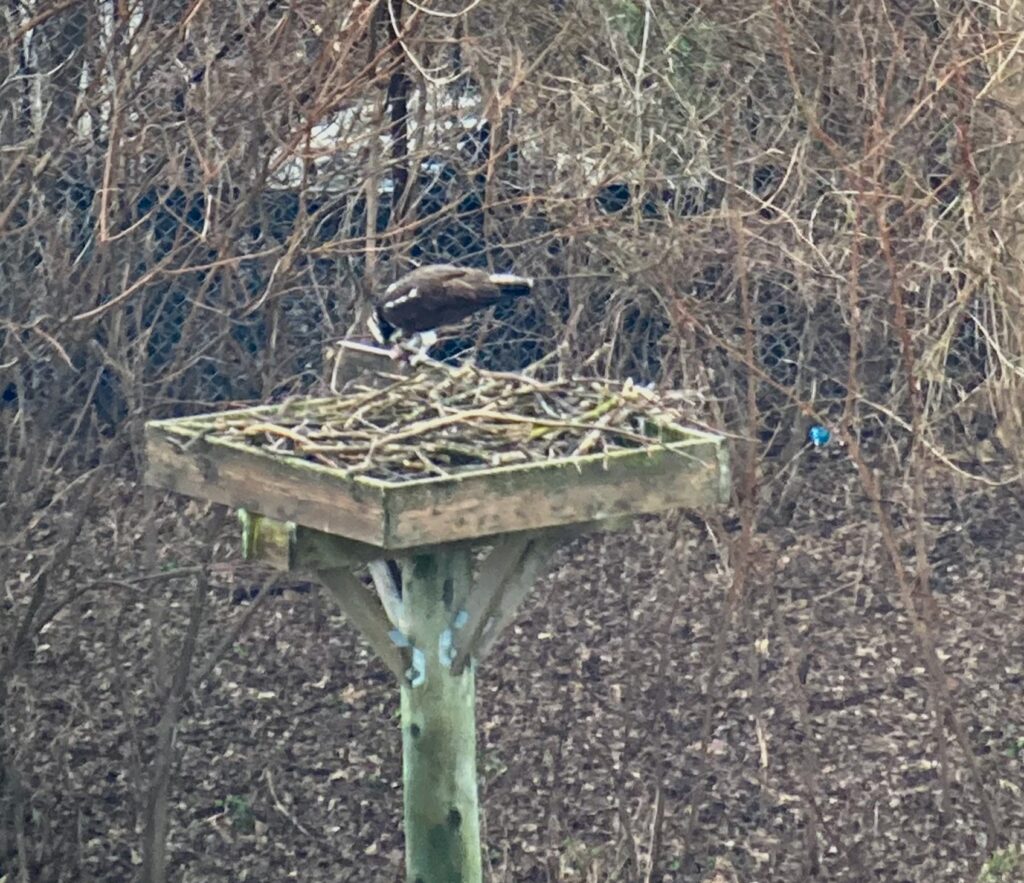
    After arriving on March 27th, the female Osprey spent most of her time on the nest, protecting the site and waiting for her mate to arrive. She caught fish that she consumed on the low platform.

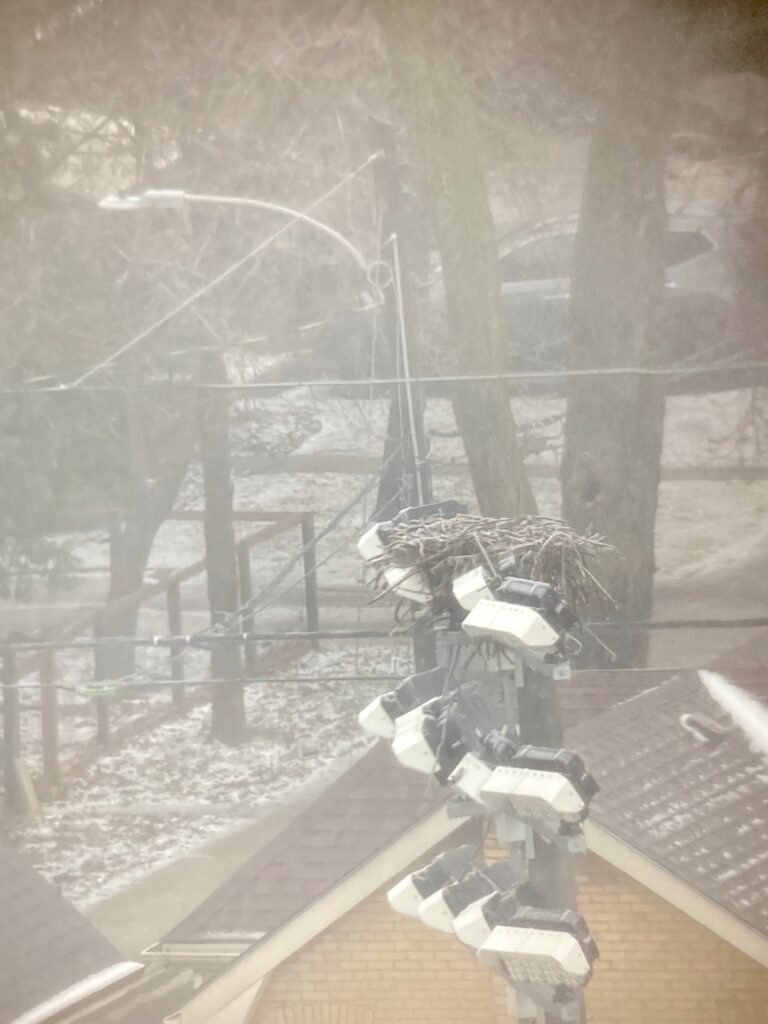
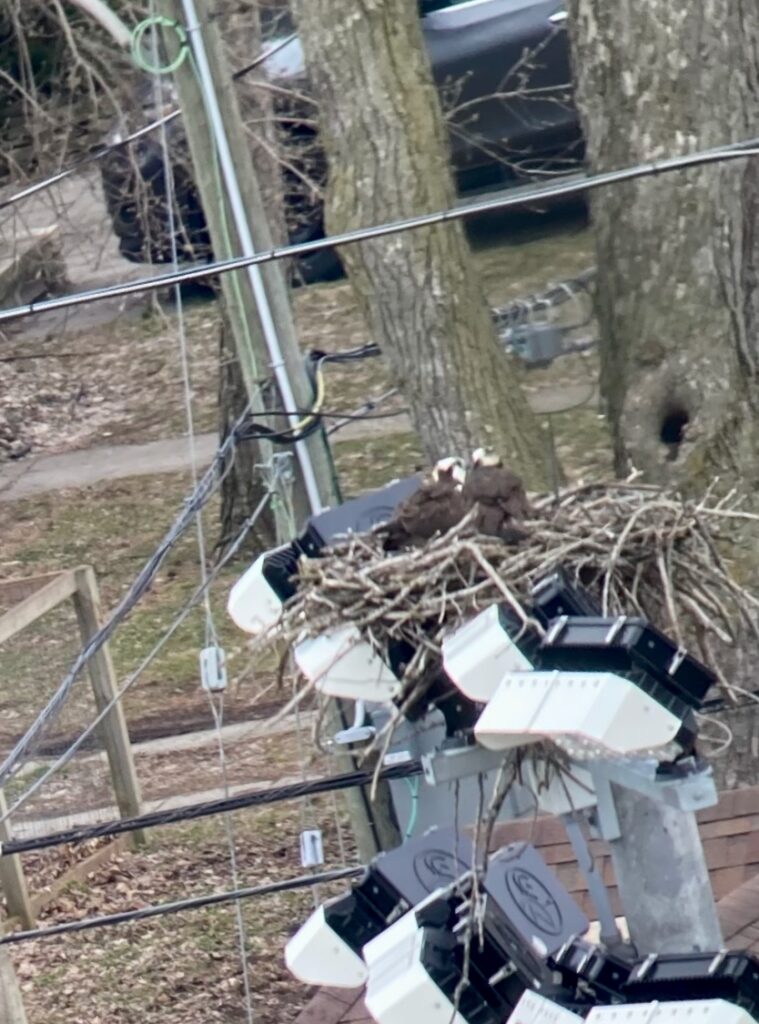
    The male Osprey finally showed up on March 30th. It did not seem to be a joyful reunion. For several days, the two seemed to largely ignore each other, even when on the nest together. We did not witness any courtship behaviour such as the male bringing fish or a stick. The female was usually on the nest, the male often spent time away from the nest or on the low platform. We wondered if he was still intent on nesting there, rather than on the lights. During the snow and rain, both birds were off the nest, but the female returned the next day followed by the male. The male has stayed on the nest with the female for longer periods of time and has been in closer contact with her. We’ve witnessed no mating behaviour as yet…The female continues to spend most of her time on the nest.
    Rock and Roll from 1960 and 1961

    Each image below is for the first song of each playlist. Click on the red button in the centes of each image.
  • Winter Birds – 2

    Winter Birds – 2

    Our few warm days with sun have been replaced by cold gloomy weather and a precipitation that is a mix of rain and snow. The saying about March coming in like a lamb, but going out like a lion may hold true this year (as opposed to coming in like a lion and out like a lamb).

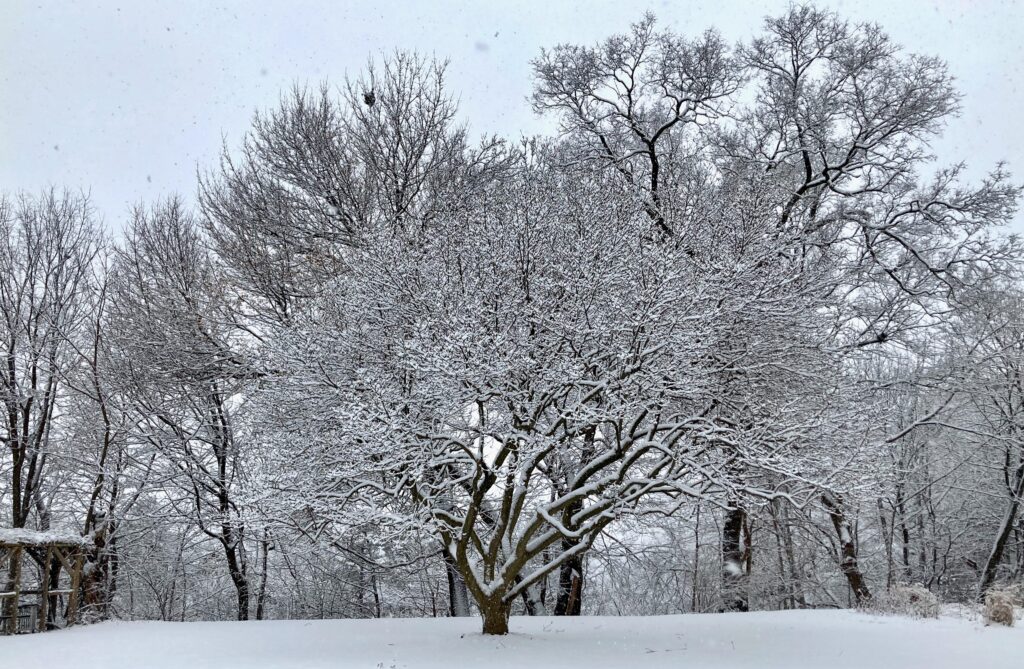
    On March 26, we awoke to snow.

    Perhaps it’s an appropriate time to revisit the rest of the winter birds we encountered in 2018…

    Gadwalls are elegant ducks that breed mainly in the central plains of the U.S. and Canada and winter farther south from the central U.S. into Mexico. A few winter in the open water of the southern Great Lakes where they eat mostly submerged vegetation.

    Two More Elegant Ducks

    American Black Ducks look similar to Mallards and can often be found in their company. Like Mallards, they eat mostly plant matter, adding insects during the breeding season. Black ducks breed throughout northwestern Ontario and Quebec, but some are resident year round in southern Ontario and northeastern U.S.

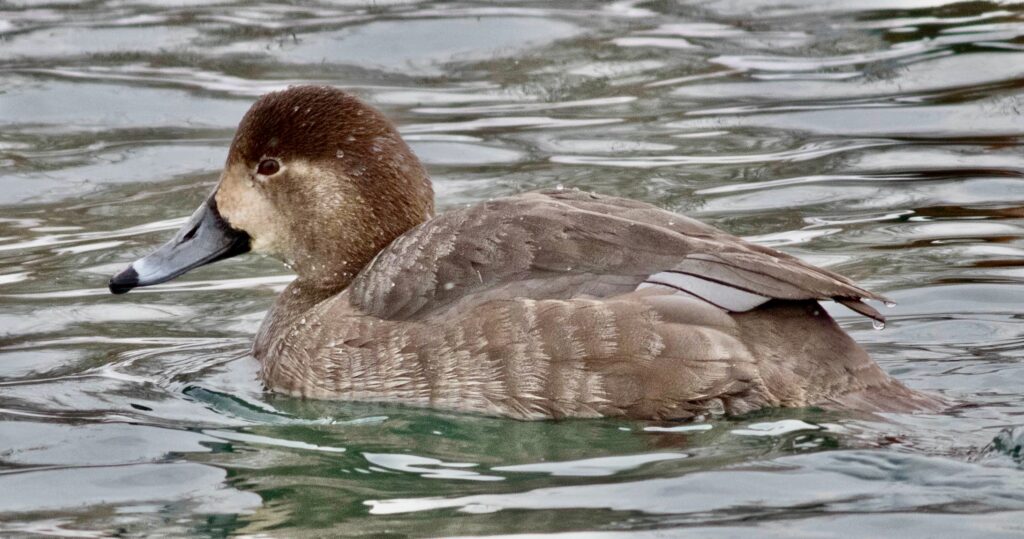
    Ring-necked Ducks are so-named for the subtle reddish ring that is sometimes visible at the base of the male’s neck. Female Ring-necked Ducks are mostly brown with grey faces. They have no neck ring, but do have a grey bill with a white band and black tip similar to the male’s. The question has been asked, why not call these Ring-billed Ducks?! Ring-necked Ducks eat submerged plants and aquatic invertebrates. They breed across most of Canada, but are generally only seen in Southwestern Ontario during migration from their wintering grounds in the southern U.S. and Mexico.

    Not an Elegant Duck

    According to Britannica, rails are “chicken-shaped marsh birds, with short rounded wings, short tail, large feet, and long toes”. American Coots are a species of rail that breed in freshwater wetlands across much of Canada and the northern U.S. They winter in the southern U.S., Mexico and Central America. They seem to be early migrants who appear in Ontario once there is open water.

    According to All About Birds (https://www.allaboutbirds.org/guide/Mute_Swan), all Mute Swans in North America descended from swans imported from Europe from the mid 1800s to adorn large estates, city parks, and zoos. Escapees established breeding populations, including in the Great Lakes, where they disturb local ecosystems and displace native species. When the number of Mute Swans in Lake Ontario increased, conservation authorities took steps to limit reproduction by oiling eggs in nests to prevent hatching.

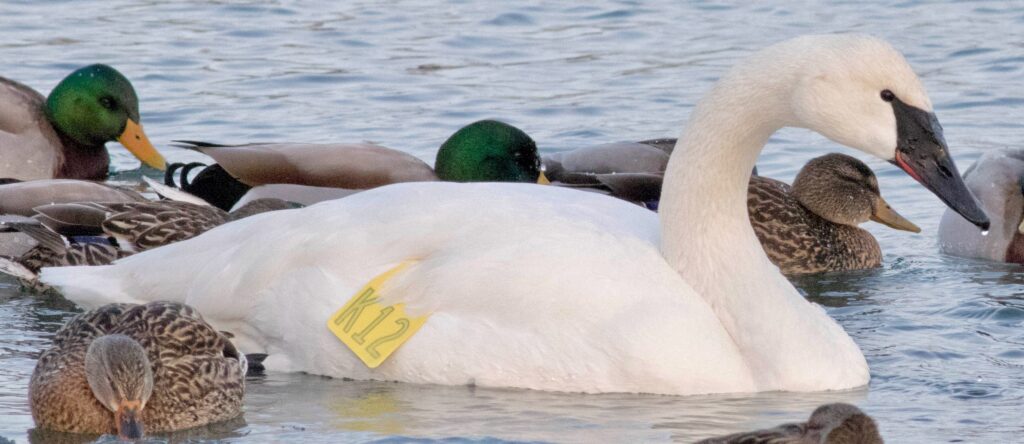
    At the same time, restoration efforts were made to reintroduce native Trumpeter Swans in Ontario. These efforts have been effective in increasing the number of breeding populations in Ontario and beyond. Trumpeter Swan nests are often monitored. Many of the swans are banded with metal leg bands and identified with large yellow plastic wing tags with a three-digit code.

    An immature Mute Swan still has a brownish tinge to its feathers and a dusky-pink bill in contrast to the pure white plumage and bright orange bill of the adult.

    Trumpeter Swans are larger than Mute Swans. They have black bills that are straighter than the bills of Mute Swans.

    Gulls are always a feature along the shores of Lake Ontario. Most commonly seen are Ring-billed Gulls. Herring Gulls are present in smaller numbers. On the right is an adult Herring Gull with an immature Herring Gull below.

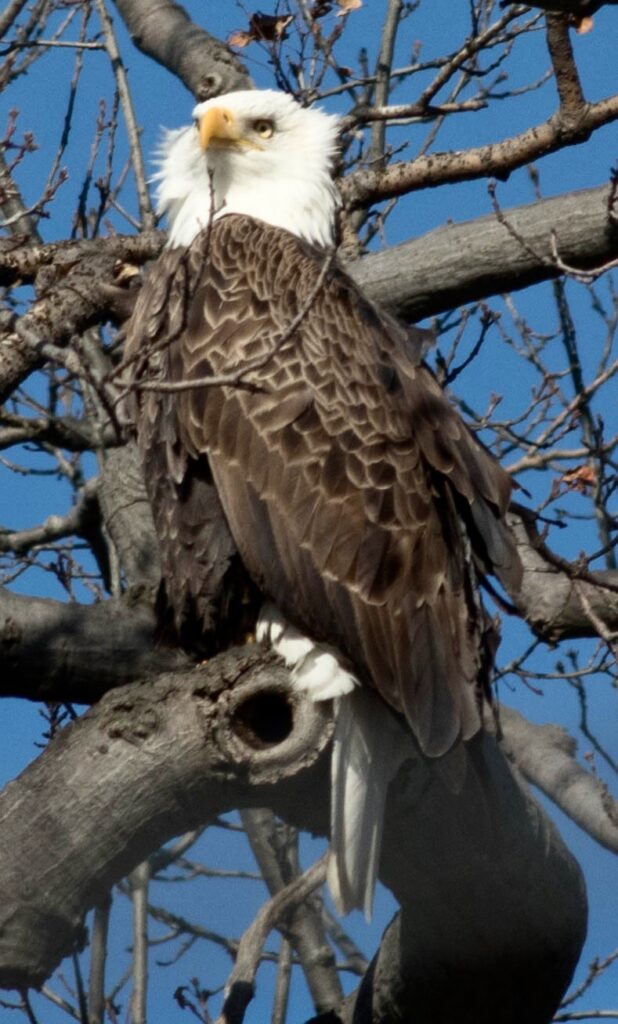
    In past years, Bald Eagles were occasionally seen along the Toronto shoreline. In 2024, there were reports of the first Bald Eagles nesting in Toronto. The location of the nest was a well-kept secret to protect the birds from enthusiastic onlookers.

    Songbirds have a variety of tactics for surviving the winter. Sometimes they take advantage seed scattered along the trails. The Blue Jay below was breaking open a wasp nest to find the soft larvae inside.

    Songbirds and squirrels are often seen soaking up the warmth of the winter sun.

    Northern Mockingbird, Mourning Dove, Eastern Gray Squirrel (black morph)

    Tree Sparrows are winter visitors.

    Most Song Sparrows migrate south for the winter, but a few stay if they can find food.

    Osprey Update

    The female Osprey arrived Thursday afternoon and has been perched on the lights next to the nest and on the low platform that serves as a dining table. We believe this is the female that raised families here for the past four years. Although the male of the Osprey pair is often the first to arrive, “our” female has usually arrived at the nest followed shorthy afterward by the male. This morning, she was on the nest and I made a short video before she left. YouTube

    Introducing Ken Marino

    Ken Marino has been making television and movie appearances for years, often playing a sympathetic jerk. He is also the lead singer of the Middle Aged Dad Jam Band.

    After he calls Kristen Bell “Miss Mars”, she calls Ken “Mr. Van Lowe”, the name of his character on four seasons of Veronica Mars.

    On the remaining three songs, the band does a great job of covering three high energy songs.

    Susan and I started watching the eight episodes of The Residence on Netflix. Ken is one of the stars. He spends the entire time frantically trying to do damage control after the head usher is found dead in the White House while a state dinner is underway. We loved that the detective in this show is also an avid birder (even though the birding scenes in the series are somewhat lame).

  • March 15th to 19th, 2025

    March 15th to 19th, 2025

    We’ve had every kind of weather this week including sun, rain, temperatures of up to 18C and snow.

    Spring arrived this week with the vernal/spring equinox when the hours of daylight and darkness are equal. Daylight hours will continue to increase until the summer soltice on June 21.

    One sunny day took us along the river to look for signs of spring. We found snowdrops in the park and Silver Maple trees in bloom.

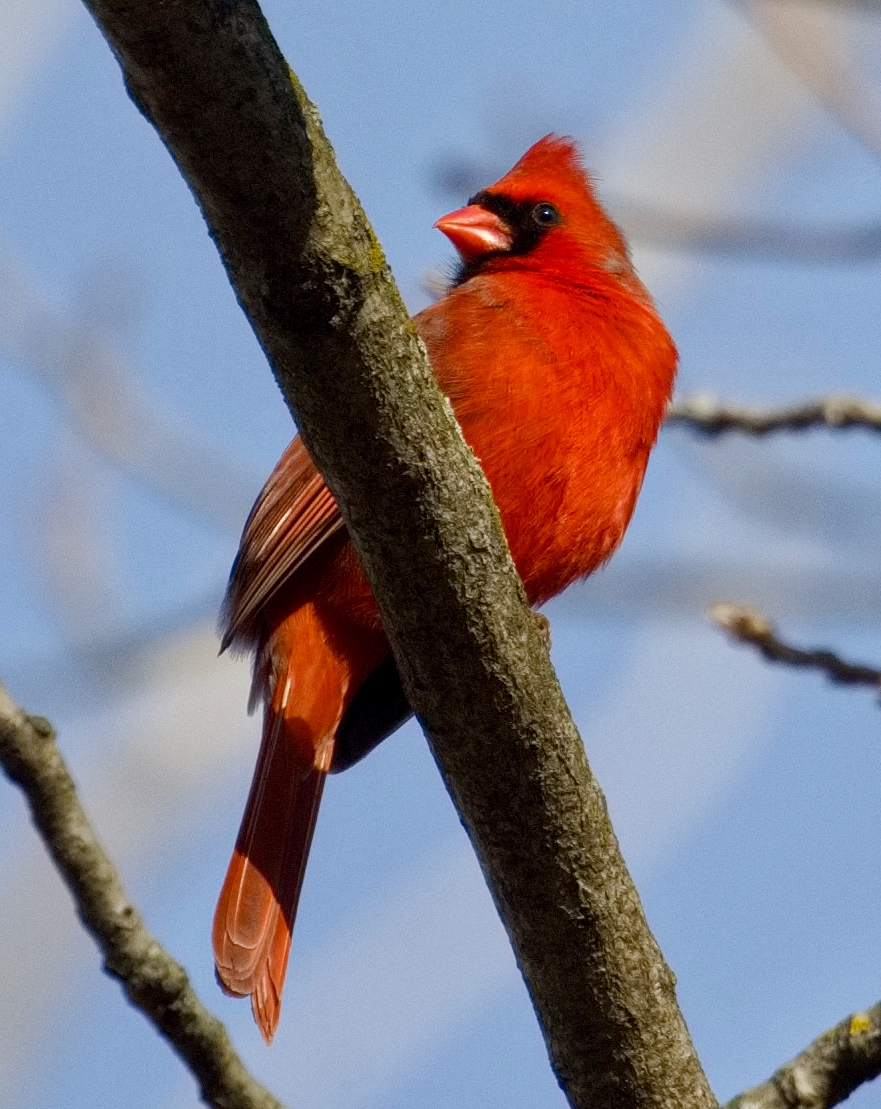
    Birds were not too plentiful, but included this wind-blown House Sparrow and a handsome American Robin. Two Northern Cardinals sang from different trees. Along the riverbank, we heard a Song Sparrow for the first time this year.

    Mallards, in full breeding plumage, have started to search for nesting sites.

    Aylmer Wildlife Management Area

    March 19 was very warm – prefect for a day spent with friends.

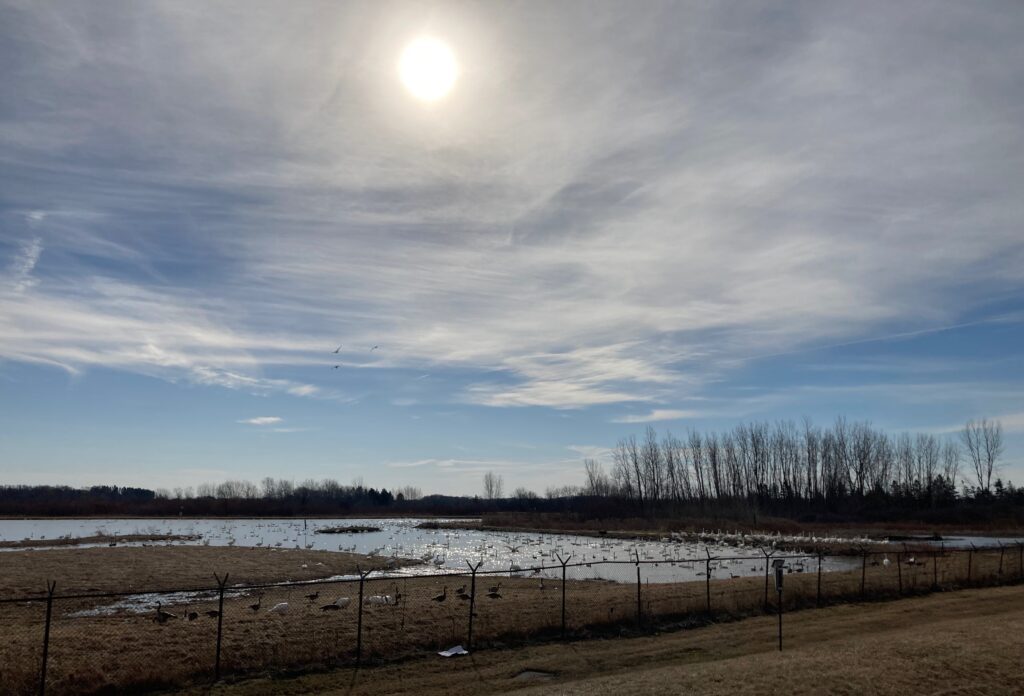
    In the morning, we visited the Aylmer Wildlife Management Area to take in the spectacle of the migrating Tundra Swans that stop to refuel on the grain provided there. That morning there were hundreds of swans resting, grazing and clamouring.

    Unfortunately, the sun shining through high, thin cloud cover cast a glare that was extremely unkind to photographers.

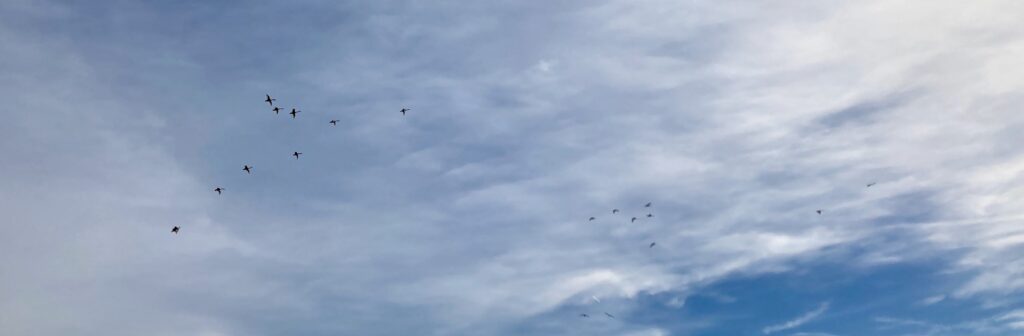
    As we watched, small skeins of swans would circle and land in the pond.

    Here are some shaky, hand-held videos of the action and noise. In flight, the swans hold their feet straight back. As they aproach the water, they hold their feet apart and steer with them for a precise landing location. Just before spashdown, they swing their feet forward to slow down on the water.

    The closest views of the birds were through the chain link fence or through the shaded glass of the observation cabin that overlooks the bird feeders. You can see the trails of grain scattered for the birds.

    There were a few birds still taking advantage of the feeders.

    Mourning Dove, Brown-headed Cowbird, House Sparrow collecting swan feathers for nesting material, White-crowned Sparrow, Red-winged Blackbird and Common Grackle.

    We walked to the back ponds where far-off Ring-necked Ducks and Hooded Mergansers were diving for food. We counted 17 species for the morning.

    Port Stanley Sewage Lagoons

    The settlement ponds of sewage lagoons are popular birding hotspots around the province. The ponds are important stopover places for migrating ducks and waterfowl. The afternoon viewing conditions at the Port Stanley lagoons were again affected by the glare off the water.

    Despite the cover of the hides, the birds remained distant in the far reaches of the pond, often obscured by the vegation. With the help of our friends and a spotting scope, we identified 10 species of waterfowl (Mute Swan, Northern Shoveler, Gadwall, Mallard, Ring-necked Duck, Redhead, Bufflehead, Hooded Merganser, Ruddy Duck, American Coot).

    The best sighting of the afternoon, thanks to our sharp-eyed friends, was a pair of Sandhill Cranes that circled overhead before continuing on their way.

    Cheerful Sentimental Songs (1950s)

    I realized that I still remember many popular songs from the 1950s that are not rock and rock. They are tender without being sappy. Some of the doo-wop tunes have a bit of bounce.

  • March 9, 11 & 12, 2025

    March 9, 11 & 12, 2025

    Bonus Content from March 14

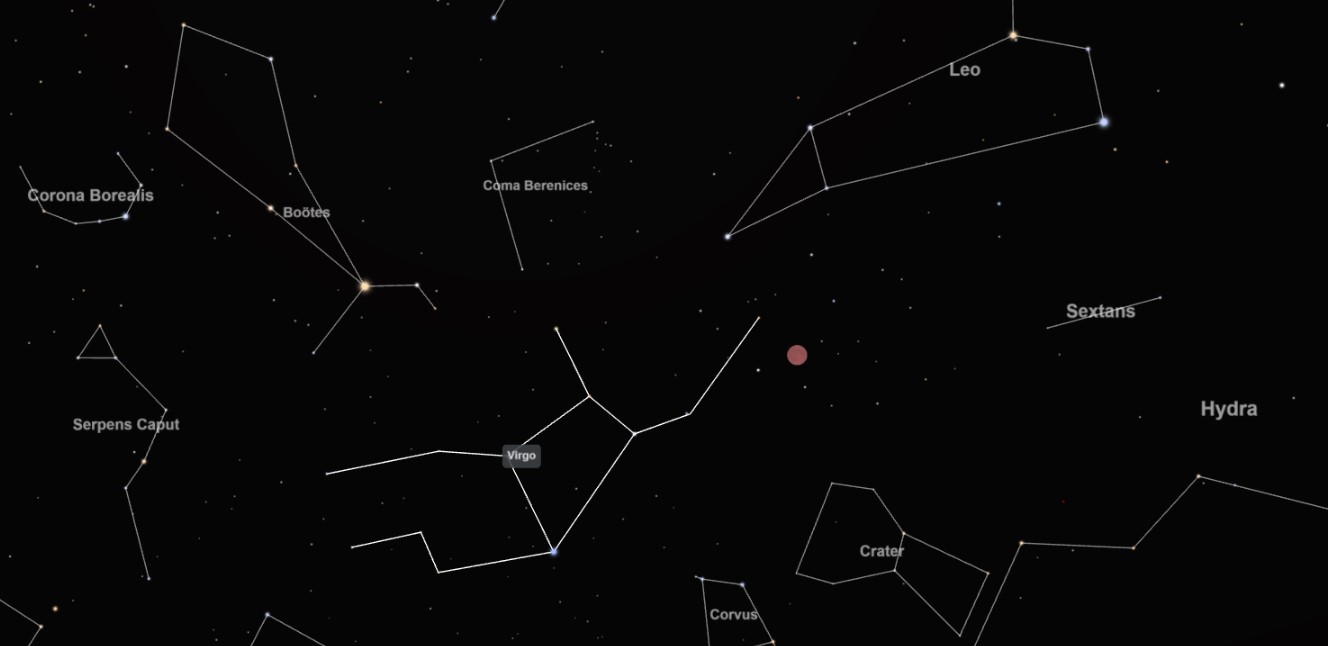
    Taken from our balcony in downtown London at 2:34 am.

    On the star map for 2:25 am, it looks like Virgo has just batted the moon like a volleyball. My timing was accidental. Total eclipse was only 10 minutes away.


    We have continued to have exceptionally warm temperatures for early March, about 5C to 10C above the expected 0C. The sun and warmer weather have inspired us to get outside.

    On Sunday, we decided to visit Woodland Cemetary to see a pair of Great Horned Owls that have nested there for several years. We found the female deep in the cavity of a hollow tree, presumably brooding eggs or possibly young. We didn’t locate the male who is often roosting in a nearby spruce tree.

    We did not stay long at the nest tree as there was already a photographer camped out watching the nest, perhaps hoping to catch a delivery of food by the male owl.

    As we walked, there were no birds to see or hear except for a few Canada Geese grazing or dozing on the grass and a couple of vocal Red-bellied Woodpeckers busily searching for insects.

    We decided to work our way along the fence line between the cemetary and some homes, hoping to find birds at backyard birdfeeders. We finally found one property with birds flying from nearby trees to collect seeds and nuts from several birdfeeders. By the end of the our time there, we had tallied 13 more species of birds. Most were winter residents, but there was also a newly-arrived Red-winged Blackbird, the first we’d seen this year.

    Below: Red-breasted Nuthatch, American Crow, European Starling (two photos because their plumage is so gorgeous at this time of year), Dark-eyed Junco, Northern Cardinal, White-breasted Nuthatch, Black-capped Chickadee, Red-winged Blackbird (non-breeding male).

    Monday’s sunset promised another fine day on Tuesday. The forecast was for even warmer temperatures. This time, our walk took us along the Thames in our neighbourhood. The river was wide and flowing fast because of the snowmelt.

    In contrast to Sunday, the warm weather seemed to have prompted a constant chorus of birdsong. Northern Cardinals were in full voice. Flocks of Common Grackles chucked and squealed. Male Red-winged Blackbirds trilled from lamp posts and the tops of trees.

    We heard our first Killdeer of the year across the river. It took time to locate the birds on the mud flats at the water’s edge created by the park renovations currently underway. Three Killdeers seemed to be in an extended conference. Sometimes, there was a brief dispute between two of the birds before the conversation continued. We would love to know what was being discussed!

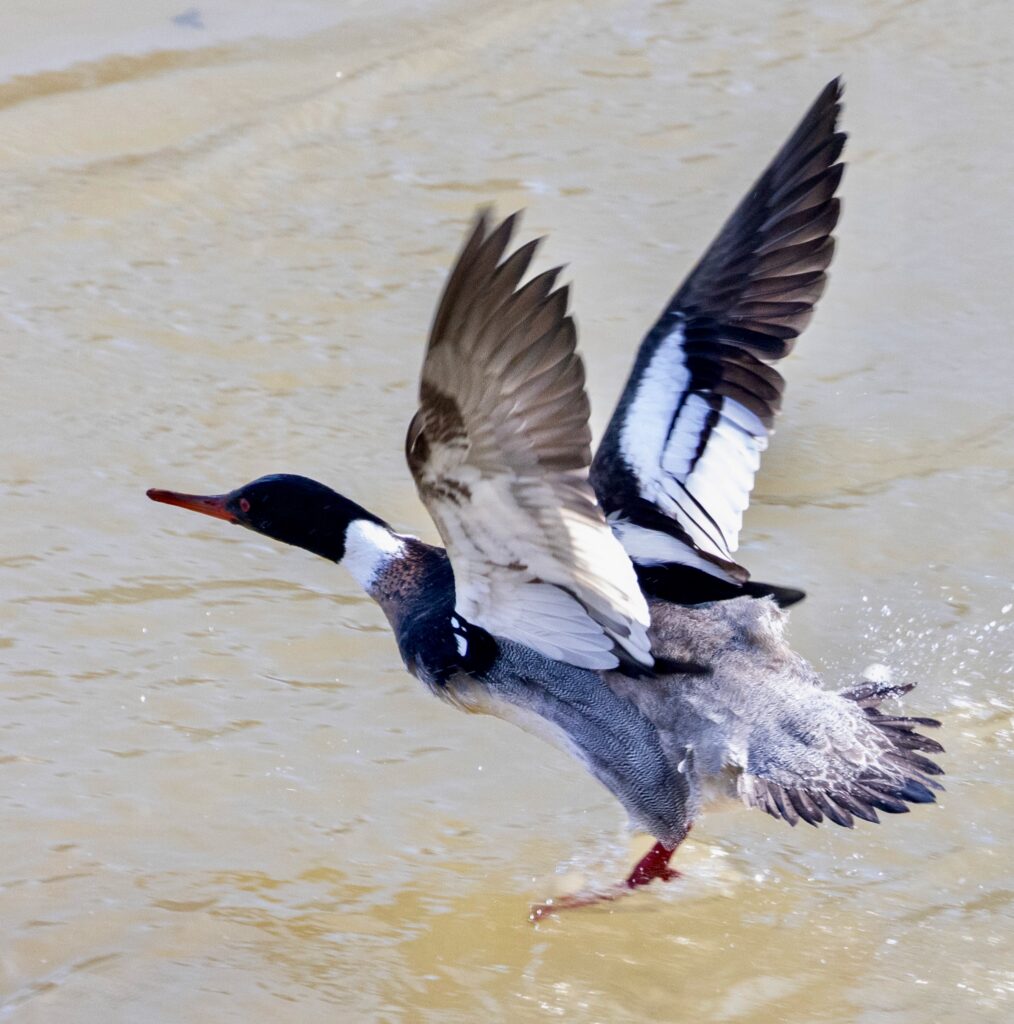
    Across the river, a Red-breasted Merganser landed and then preened in the shallow water.

    House Sparrows have paired up and started nesting.

    On Wednesday, the temperature was cooler and the birds were again quiet. There were no birds in the fast-flowing river at Springbank Park.

    On the trail overlooking the river, we found a few woodpeckers, a lone American Robin and an elusive chickadee. We were approached by an Eastern Gray Squirrel, perhaps hoping to be fed.

    Male and female Downy Woodpeckers.

    As we headed to the car, a Red-tailed Hawk soared overhead. When the photos were processed, we saw that it had been carrying a small branch in its beak. Nest building, another sign of spring.

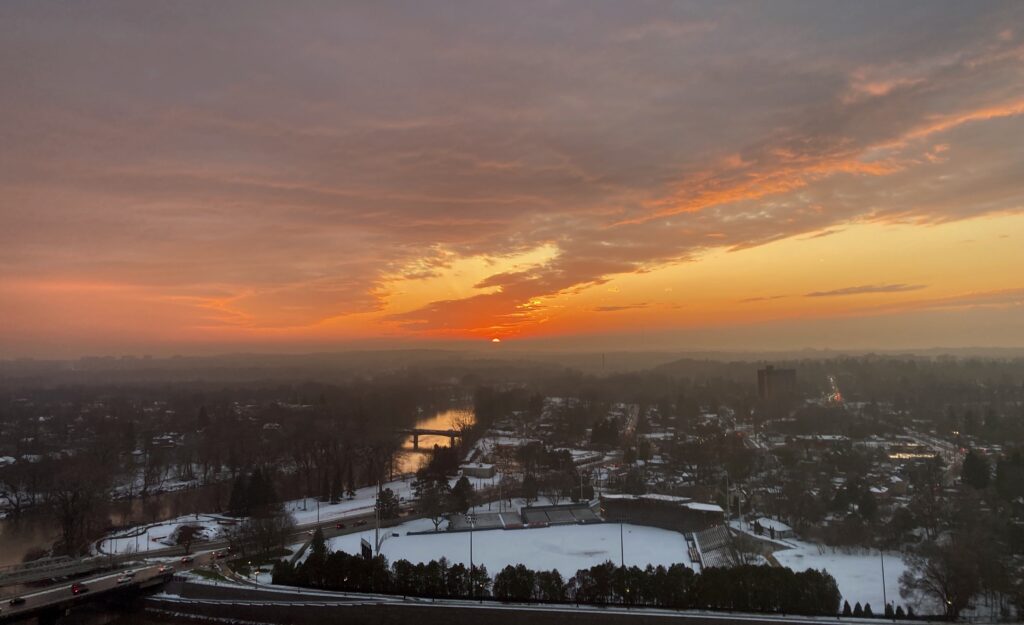
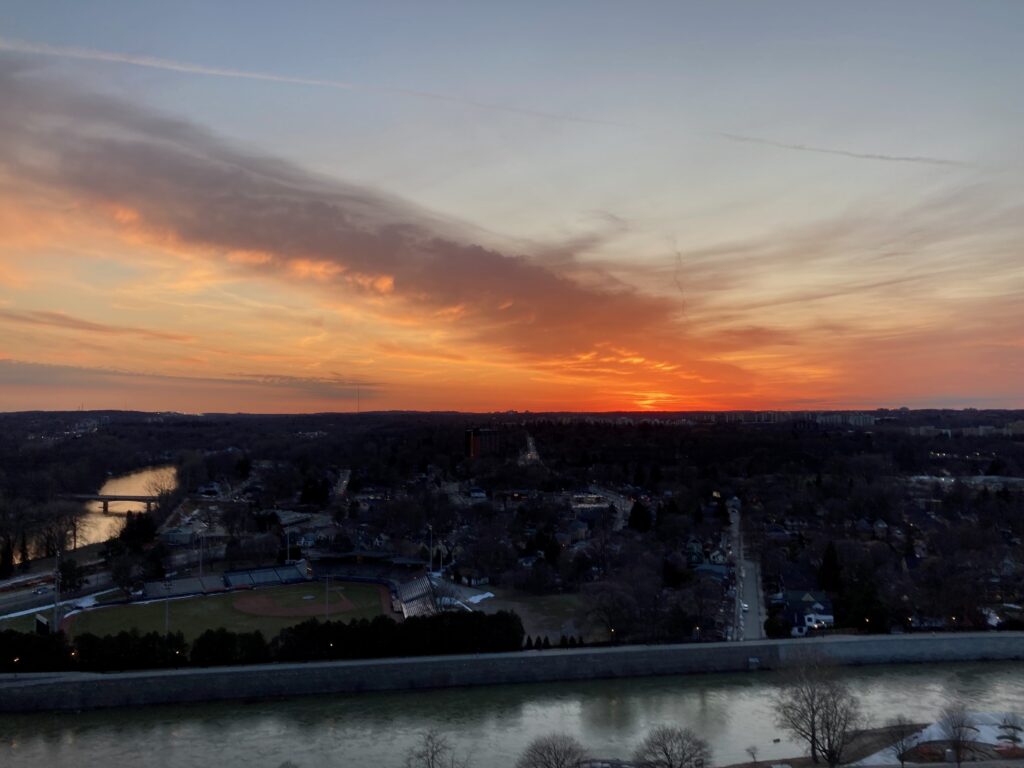
    A sure sign of spring is the progressive shift in the position of the setting sun as the days grow longer. Earth takes 364.25 days to complete its eliptical orbit around the sun. Because it is tilted on its axis, days in the northern hemisphere grow progressively longer and warmer from the winter soltice on December 21st until the summer equinox on June 21st.

    From our vantage point facing west, the setting sun has shifted to the north.

    Spring is on its way!

    Best Bird Videos from Macauly Library

    Rock and Roll 1958 & 1959

    I might have first heard some of these songs on my 6-transistor radio. I would hide the radio under my pillow at night while listening on the earpiece. We lived in Windsor at the time, just across the Detroit River from Motown.

    Chuck Berry and Buddy Holly were “in my ear”, but I was not paying much attention yet. My mother was the one who chose which station was on in the kitchen and the car so I heard a lot of much softer music that was still very popular. I often recognized songs on the radio in an instant.

    In 1958, we were still four years away from the time period featured in the movie, American Graffiti. Here are my picks for 1958.

    Chuck Berry starts the list of 1959.

    On February 3, 1959, Buddy Holly died in a plane crash along with Ritchie Valens and the Big Bopper. I learned about the crash from a classmate who adored Ritchie Valens and his song, Donna.

  • Winter Beauty and Winter Birds

    Winter Beauty and Winter Birds

    We know winter can be beautiful and hold charms of its own. Still, our recent winter has been one of extremes. This week, we have had a winter thaw with temperatures reaching a spring-like 8C yesterday followed by heavy rain, high winds and a precipitous drop in temperature that prompted warnings of a flash freeze. The rain and melting snow have caused the Thames to overflow its banks once again.

    It would be more tempting to be outside on a day such as this late January day in 2023.

    The Thames River from Blackfriars Bridge
    Magnolia tree at Eldon House

    Our sightings of wintering ducks and waterfowl at Gibbons Park last week, reminded us of the abundance of wintering ducks we used to see along the shores of Lake Ontario in Toronto.

    Here are some of our favourite locations and sightings from January and February 2018. We know you’ve seen them before, but we hope you enjoy seeing them again as much as we do.

    Both Greater and Lesser Scaup are among the Arctic-breeding birds that flock to Lake Ontario. There, they dive for zebra mussels and other crustaceans in the winter. Scaup have muscular gizzards that grind the shells in splinters.

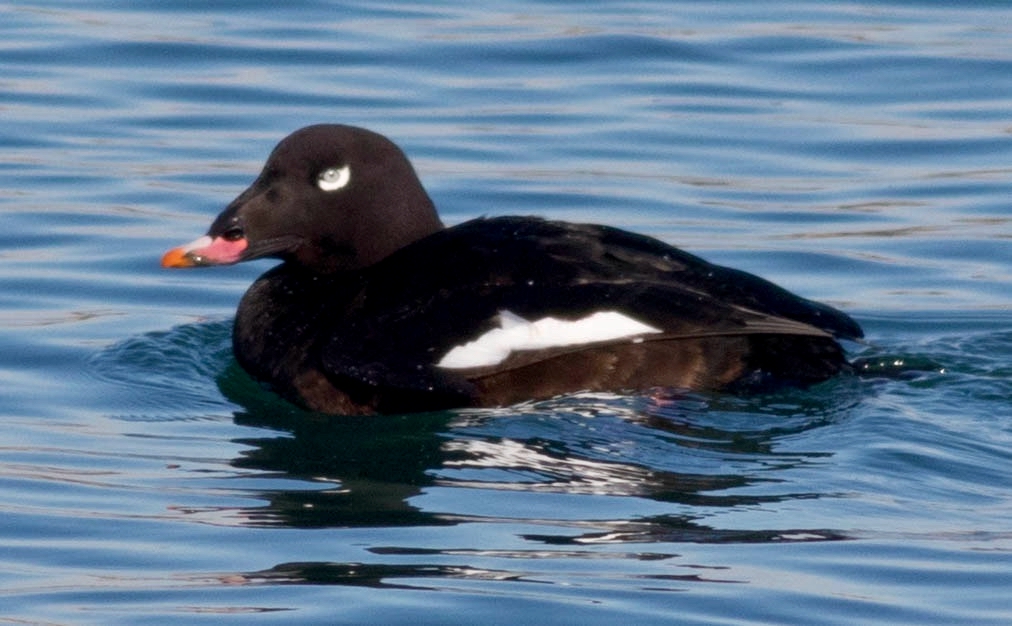
    White-winged Scoters arrive in smaller numbers, also attracted by the abundance of zebra mussels and other mollusks. Since female White-winged Scoters have a white patch on their cheeks, the brown birds in the photos below are of immature males. The lower one appears to be changing its bill colour.

    Buffleheads are small, but mighty diving ducks that arrive for the winter to feed on crustaseans, invertebrates and mollusks. They largely breed north and west of Lake Superior.

    One frigid winter day in February 2018, we watched as this female Bufflehead repeated dove through the pounding waves in search of food. Also in the photo on the right is a female Common Goldeneye.

    Common Goldeneyes also dive for crustaceans, mollusks, fish, insects and vegetation.

    Female Goldeneyes

    Long-tailed Ducks are the final diving ducks in this collection. They, too, eat mostly crustaceans, mussels and small fish. They breed on the Arctic tundra, often near freshwater wetlands. The males of the species give Long-tailed Ducks their name.

    Red-breasted Mergansers dive for small fish, and sometimes also consume crustaceans, insects, and tadpoles. They breed in wetlands of the boreal forest.

    Redheads are among Susan’s favourite ducks. Redheads sometimes dive for invertebrates, but also dabble for submerged vegetation. Some breed along the lower Great Lakes and St. Lawrence River whereas many breed in the Prairie provinces and in the northern U.S. midwest. There are some scaup mixed in the the male and female Redheads in the first photo.

    Female Redhead

    In our next missive, we may be tempted to send you photos of other ducks and waterfowl that dabble for vegetation…

    Early Rock and Roll

    Long before I was 10-years-old in 1958, teenagers were dancing to rock and roll songs. These songs are so old that good quality recordings are scarce. We are lucky to have a few of them.

    From 1956 and earlier, we have Heartbeak Hotel, Blue Suede Shows, and Long Tall Sally. Each is performed by the original artists.

    From 1957, we have two versions of the same Jerry Lee Lewis song, two more songs from the Elvis Songbook, Chuck Berry, Everly Brothers, Buddy Holly. It was YouTube videos of Tom Jones on The Voice that reminded me how much I still love energetic Rock and Roll. I was never a fan of Tom Jones, but I love how he could attract great performers join him on television.

  • Greenway and Gamboa

    Greenway and Gamboa

    Greenway Park – February 22, 2025

    Last weekend when the weather was bright and not too cold, we spent time at Greenway Park. The Thames is deep enough there to attact diving ducks from farther north that are in search of open water. The ducks typically feed on small fish, aquatic insects, crustaceans (especially crayfish), amphibians, vegetation, and mollusks.

    The most numerous birds, both on the water and on the shore were Canada Geese and Mallards.

    Diving along the river were a number of birds we were used to seeing in greater numbers off the shores of Lake Ontario in Toronto – Common Goldeneye (m) accompanied by two Black Ducks, a female Red-breasted Merganser, a Long-tailed Duck (m), a Bufflehead, and two more male Goldeneyes. The female Goldeneyes did not pose for photos. A less-frequent visitor to the river was a handsome male Canvasback.

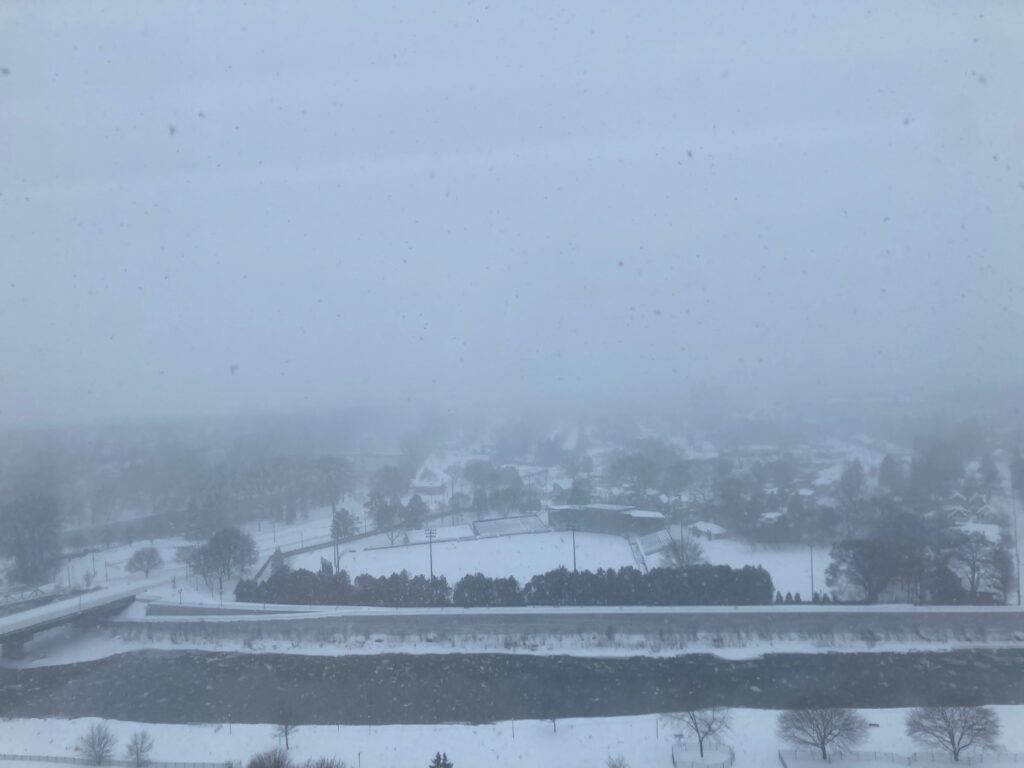
    We hope there will be more days of winter birding to report before spring arrives. For now, it is foggy as the temperature has risen just above freezing.

    Here are the last of our photos from our February 2019 visit to Panama.

    Gamboa

    Gamboa is a town in the Canal Zone that was established in the 1930s. The Canopy B&B is located in a quiet residential neighbourhood that was home to many canal workers during the years the Americans managed the canal. The large, comfortable house is surrounded by tropical trees and a garden that features a well-stocked fruit feeder. It is a 5-minute walk to the canal and a short walk to the lowland rainforest of the Soberania National Park that surrounds the area.

    After the nonstop pace of outings at the lodge and the tower, we were happy to spend time relaxing in the garden as we watched the birds and other visitors attracted by the feeders.

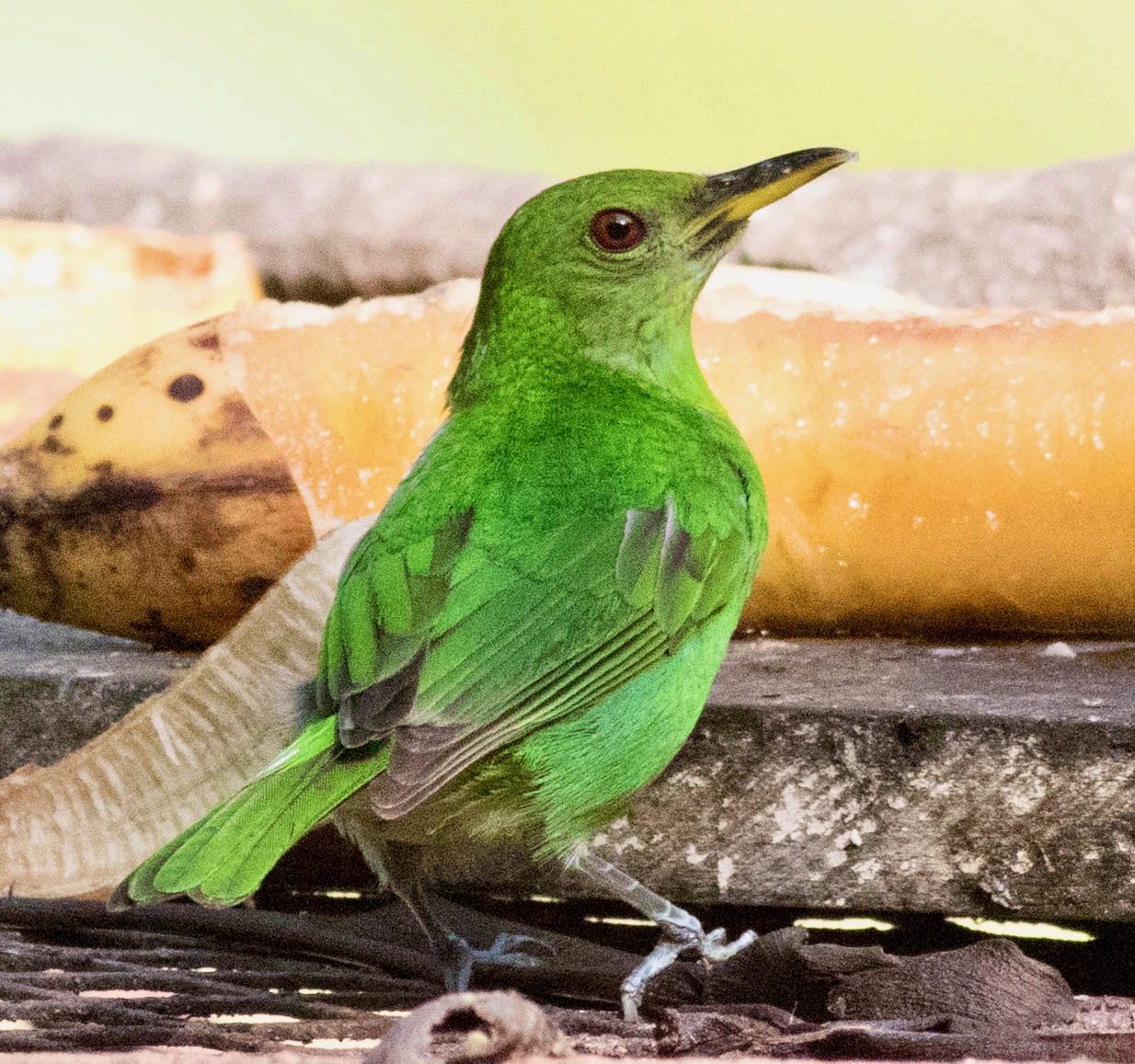
    Blue-grey and Golden-hooded Tanager, Plain-coloured Tanager, Buff-throated Saltator, Crimson-backed Tanager, Summer Tanager, Green Honeycreeper, Red-legged Honeycreepers (female and male), Orange-chinned Parakeet, Blue-crowned Motmot, Buff-throated Saltator

    The Yellow-headed Caracara and the Grey-headed Chachalaca may have visited the feeder when we weren’t watching.

    Other visitors to the feeder: Geoffroy’s Tamarin, Central American Agouti, Green Iguana

    Although we don’t think the agouti ever made it onto the feeder platform, we did see the igaua drop gracefully onto it from an overhanging tree. Its dismount onto the ground was much less graceful.

    Before it was time to leave Panama, we had time for a walk along the canal and Gatun River and lunch at a nearby resort.

    There were opportunities for just a few more photos.

    Black-bellied Ducks and Southern Lapwing

    Social Flycatcher and Sloth

    Tropical foliage, Banded Peacock butterfly, Leaf-cutter ant carrying a blossom. Leaf-cutter ants carry leaves and other plant matter underground where they use the plant matter to fertilize fungus gardens. The fungus provides nutrition for the ants.

    It was time to head home, however reluctant we might be to leave. These are our final views of Panama as we headed through Panama City to the airport at low tide.

    Fading Flowers

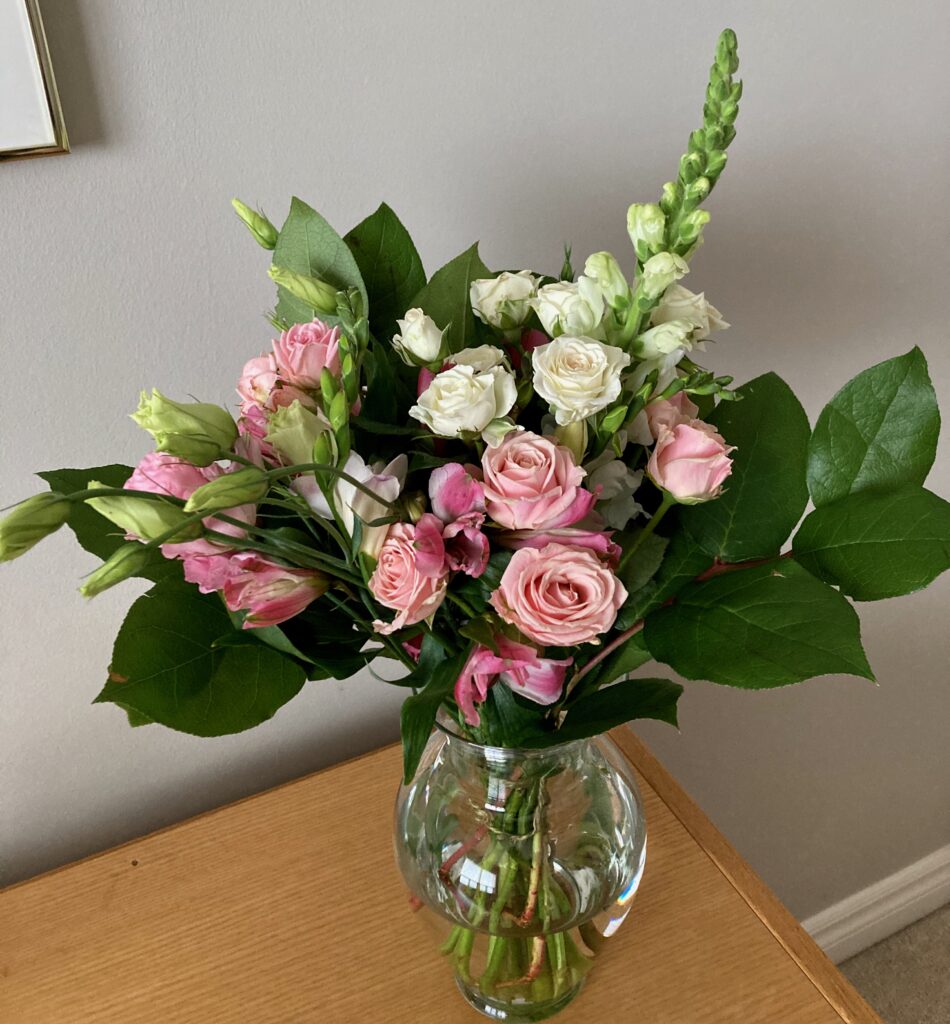
    Valentine’s Day flowers, fading, but still giving pleasure.

    Queen Songs

    Only one of the songs in the playlist is sung by Queen. Other than the word, queen, very little connects these songs. I could find dozens of songs I liked with queen in the title, but almost none with king in the title. Hmmm.

  • Boat Tour on the Chagras River & Gatun Lake

    Boat Tour on the Chagras River & Gatun Lake

    After back-to-back snow storms, we are now under a cold weather advisory for the next few days. Wind chill overnight was in the -30C range and is currently -21C. Plates of ice are floating down the Thames adding to the accumulating ice at the forks and narrowing the river channel.

    Panama Boat Tour

    It is definitely time to return to Panama, even virtually!

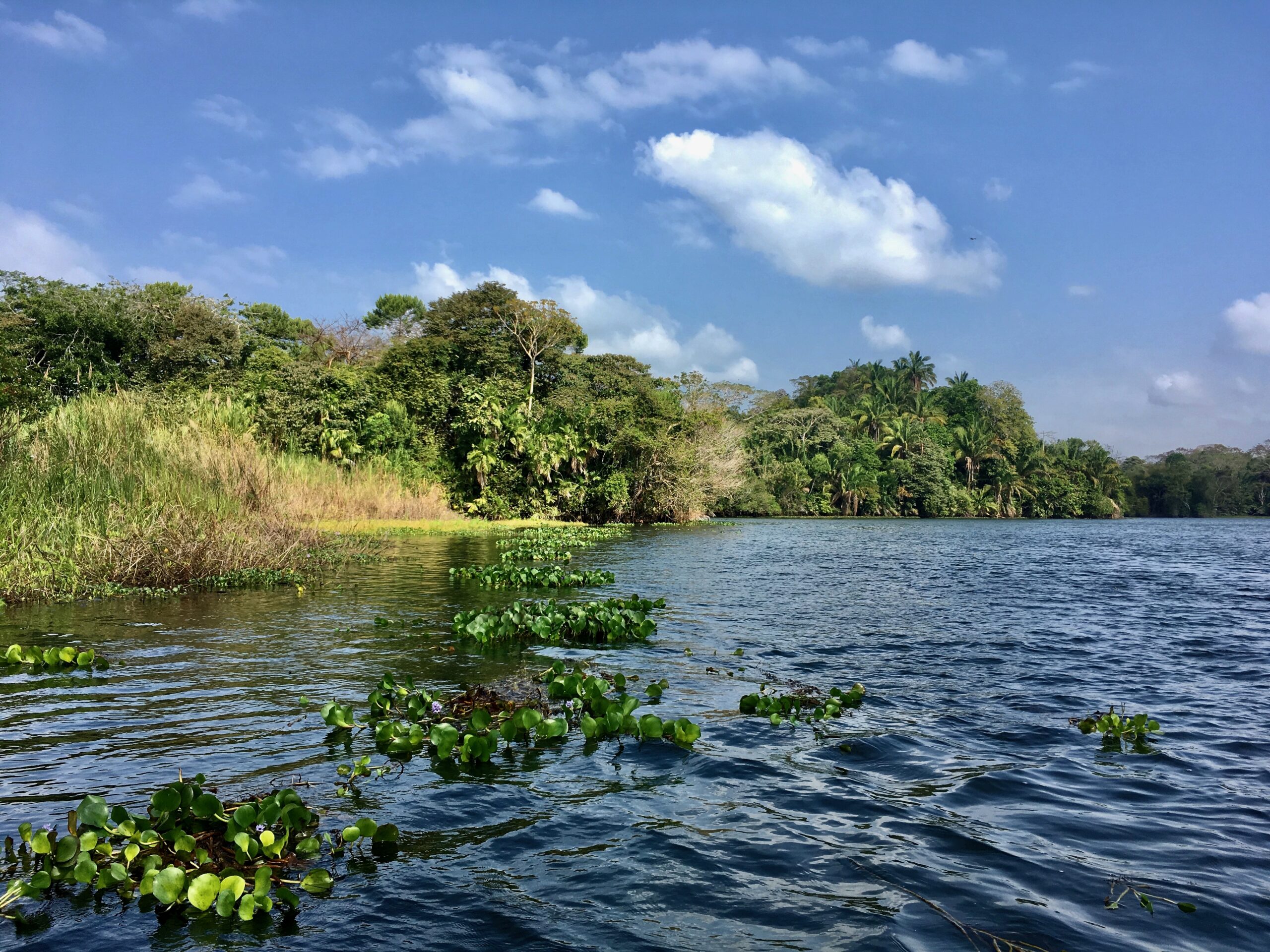
    The shallow, marshy area at the boat launch on the Chagras River was a perfect place to find water birds wading and walking across the vegetation.

    A pair of Wattled Jacanas with their striped offspring and Purple Gallinule

    The boat stayed close to shore for the mostpart, providing close views of the plant and animal life.

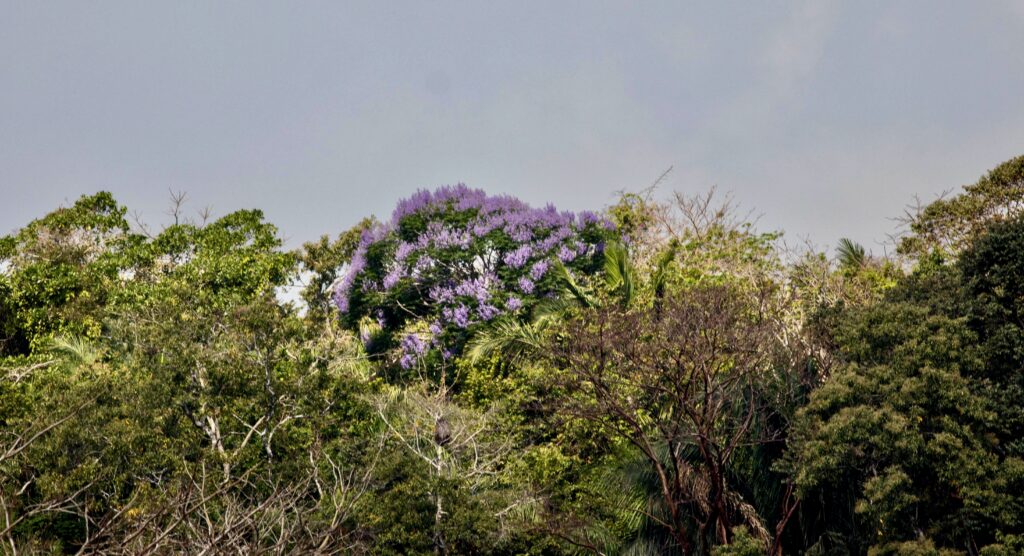
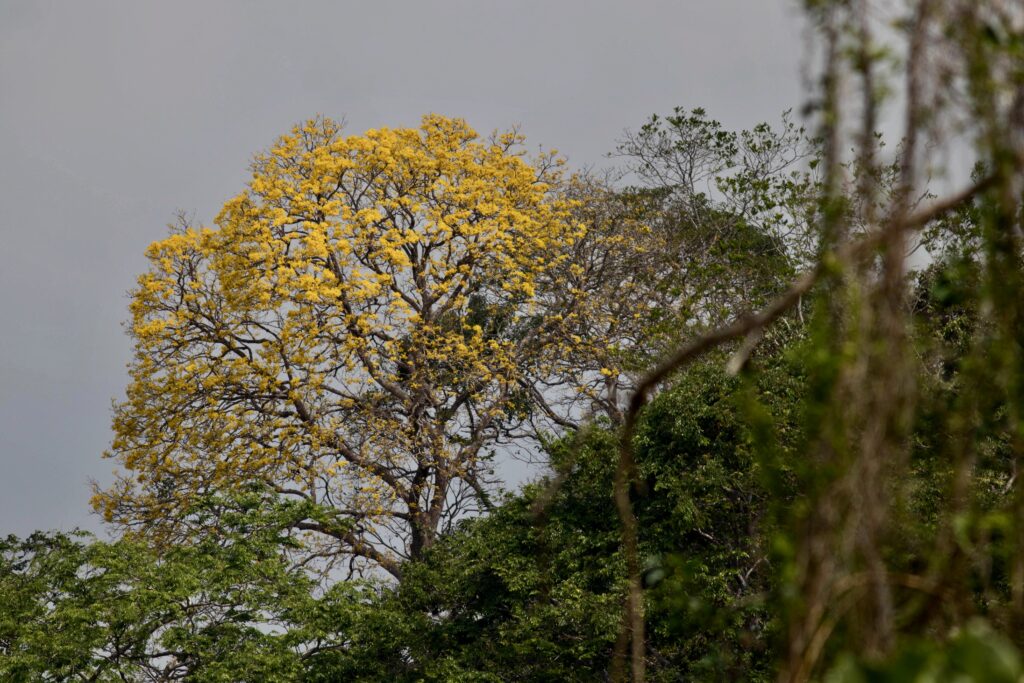
    Because we were in Panama in February, during the dry season (mid-December to mid-April), the skies were clear. The dry season is when some deciduous trees lose their leaves. It is also the time that many plants and trees, especially those that depend on insect pollinators, come into bloom and start producing fruit. The timing of flowering and fruiting varies with the species of plants and their needs.

    Some aquatic plants were also in bloom.

    A variety of wading birds posed along the banks of the river and the lake.

    A Tri-colored Heron and and a Little Blue Heron were bold enough to perch at the dock, perhaps waiting for fish from returning fishing expeditions.

    Below: an immature Little Blue Heron (white plumage, greenish legs), a Great Blue Heron, a Limpkin and a Snowy Egret (black legs, yellow feet).

    Limpkins are tropical wetland birds that feed on apple snails. Limpkins sighted recently at Point Pelee and Niagara Falls have caused quite a stir. They have dispersed even farther north at times, part of a trend noted in eBird.

    Limpkins are not the only birds that feed on apple snails. Our tour boat entered an area of the lake with apple snails bobbing on the surface and Snail Kites diving to pick them out of the water. The kites then carried the snails to a perch on a branch where they steadied the mollusks with their talons and pulled the snails from their shells with their beaks.

    Another special stop along the way was to “monkey island” where a colony of Geoffroy’s tamarins were eager to collect bananas from those foolish enough to offer them. Our boat did not stay long in the chaos created by monkeys hopping onto boats full of people.

    Spontanious encounters with wildlife along the way were much more satisfying.

    White-faced Capuchin (note the yellow pollen on its nose), Variegated Squirrel,

    Caiman (a member of the alligator family), Tropical Sliders (turtle)

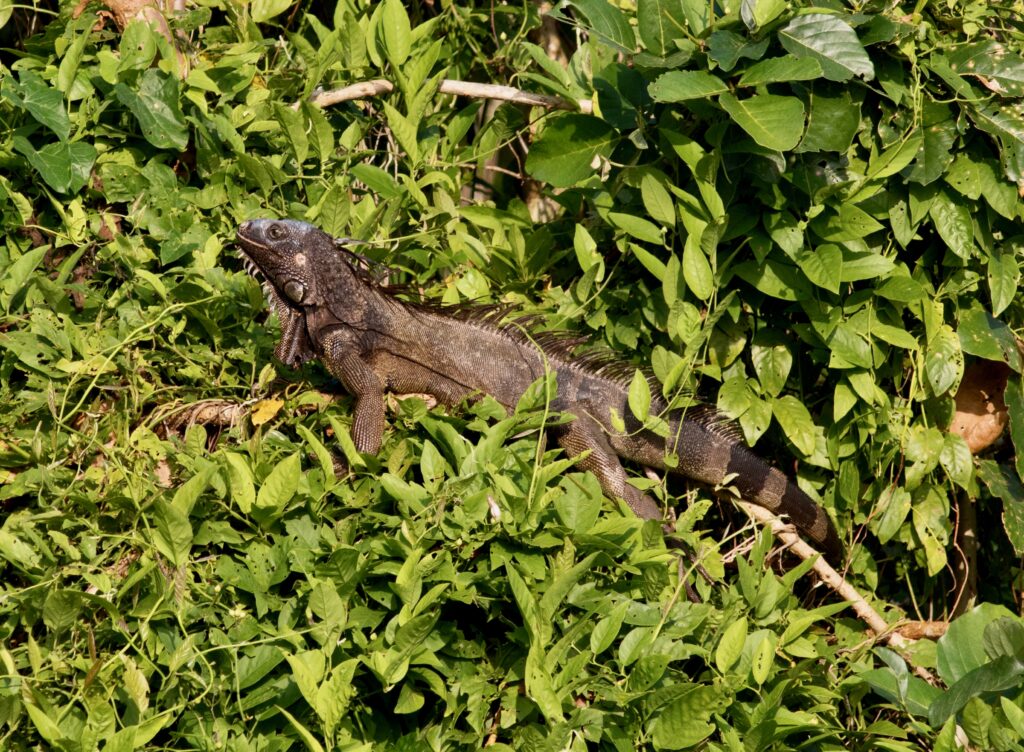
    Spiny-tailed Iguana, Green Iguana

    We came across only two duck species.

    A female Ring-necked Duck wintering in Panama and a resident/tropical Masked Duck.

    There was much interesting bird activity in the trees along the water:

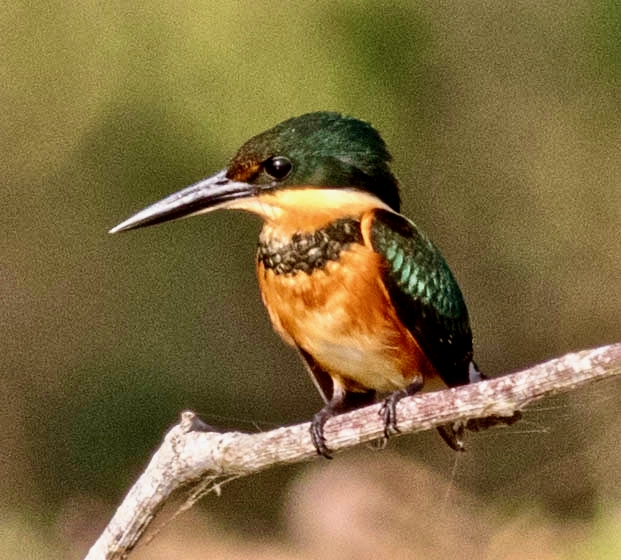
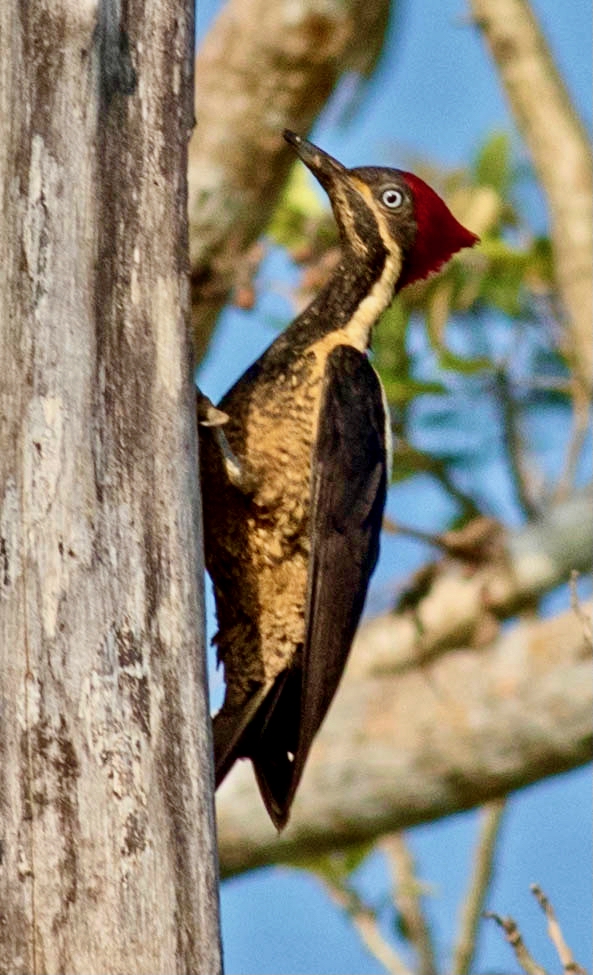
    Lineated Woodpecker, Ringed Kingfisher, American Pygmy Kingfisher

    Yellow-rumped Caciques weaving nests.

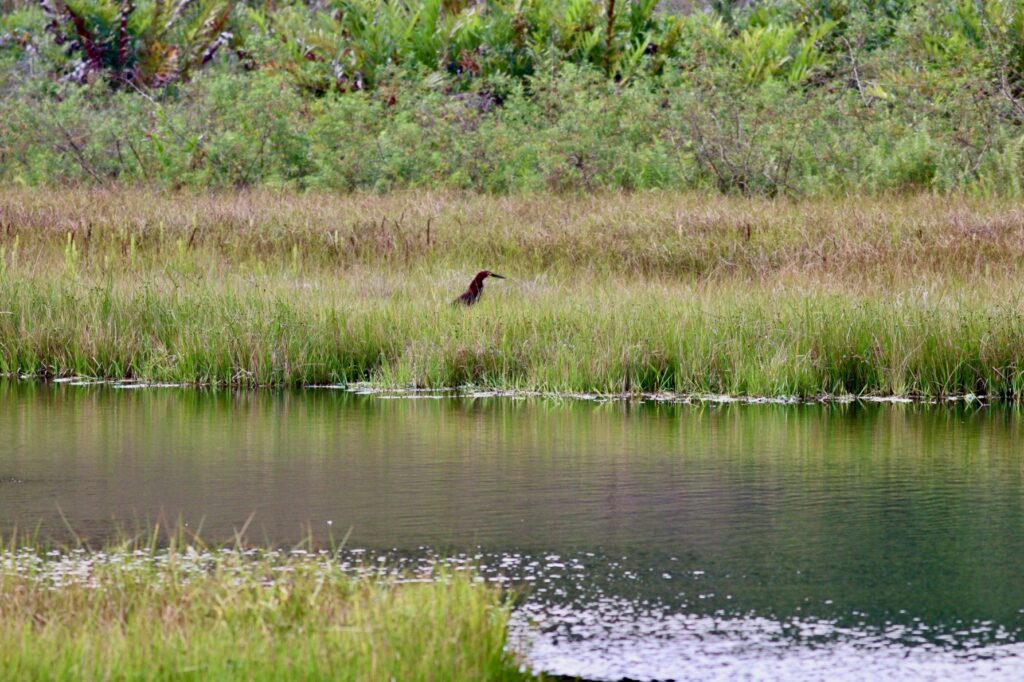
    A Black Vulture, preening, and a Rufescent Tiger Heron consuming a water snake.

    All told, the morning’s tour was a rich and varied experience. As we headed back to our starting point, our boat took a faster, more direct route on Gatun Lake, along the route taken by cargo ships transiting the Panama Canal. The immensity of the ships compared to our tour boat was impressive and somewhat unnerving.

    When our time at Canopy Tower was up, we couldn’t bear to leave Panama just yet. We moved a short distance to stay at the Canopy B and B for a few days to take in the sights on our own.

    Valentine’s Day Flowers from Wandering Bee

    These flowers were sourced from local Canadian growers since Wandering Bee doesn’t have the facilities for winter blooms.

    Songs of Hope

    I hope these songs cheer you up.

  • Canopy Tower Outings

    Canopy Tower Outings

    As we put this together, there is a snowfall warning in effect. Snow fell overnight and and is expected to continue into Friday with an accumulation of about 15 cm (6 inches). Last Friday, we thought we might find some wintering ducks and gulls in the open water of Lake Erie. We headed to Port Stanley only to find that the freezing rain and cold temperatures earlier in the week had frozen the shallow water of the lake and left a coat of ice on the ground. There were no birds in sight and no safe way to walk more than a few steps.

    Canopy Tower

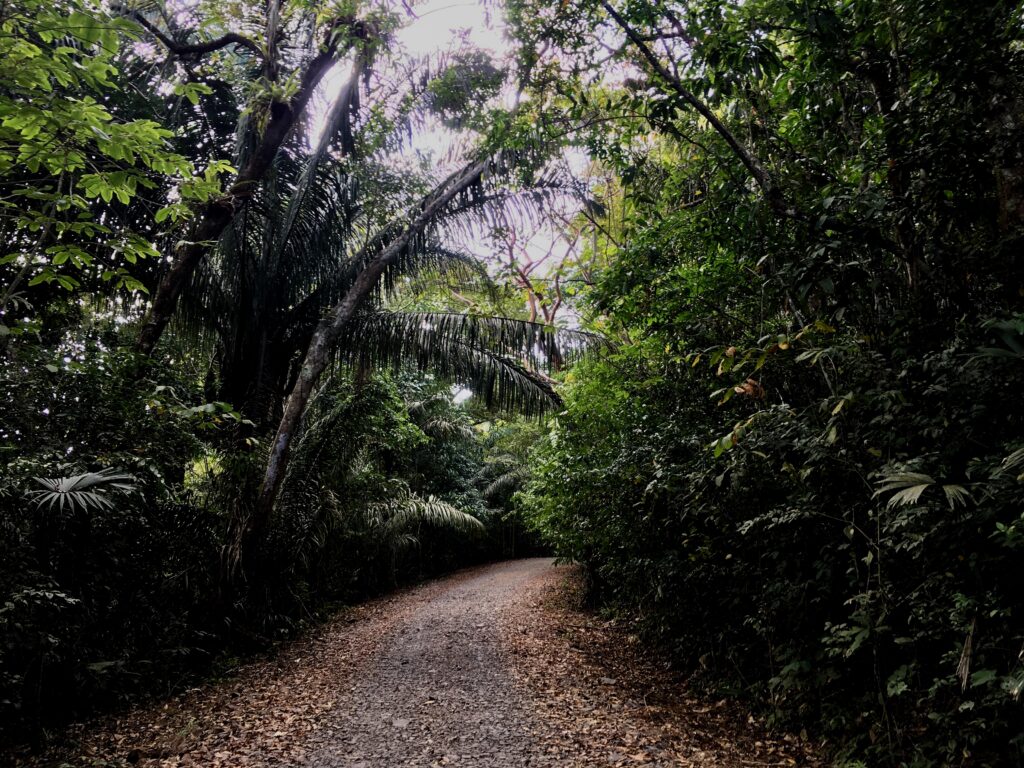
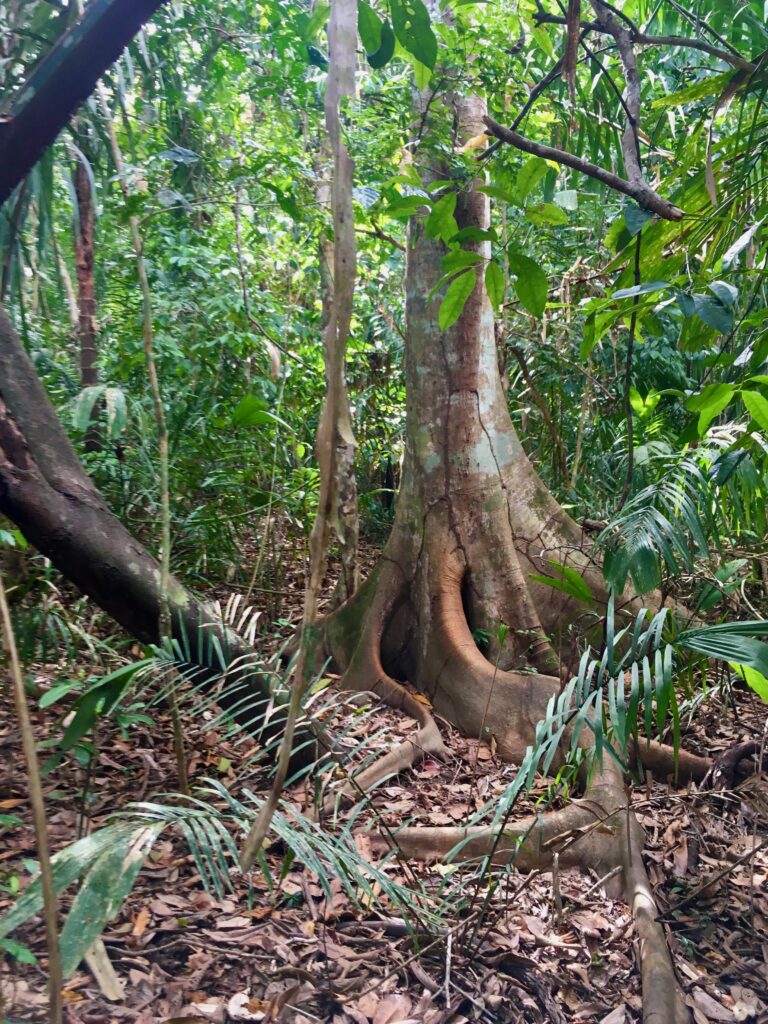
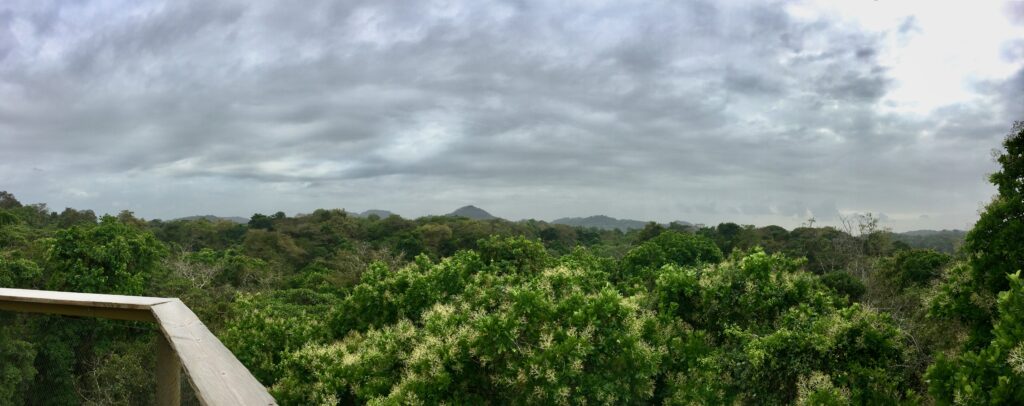
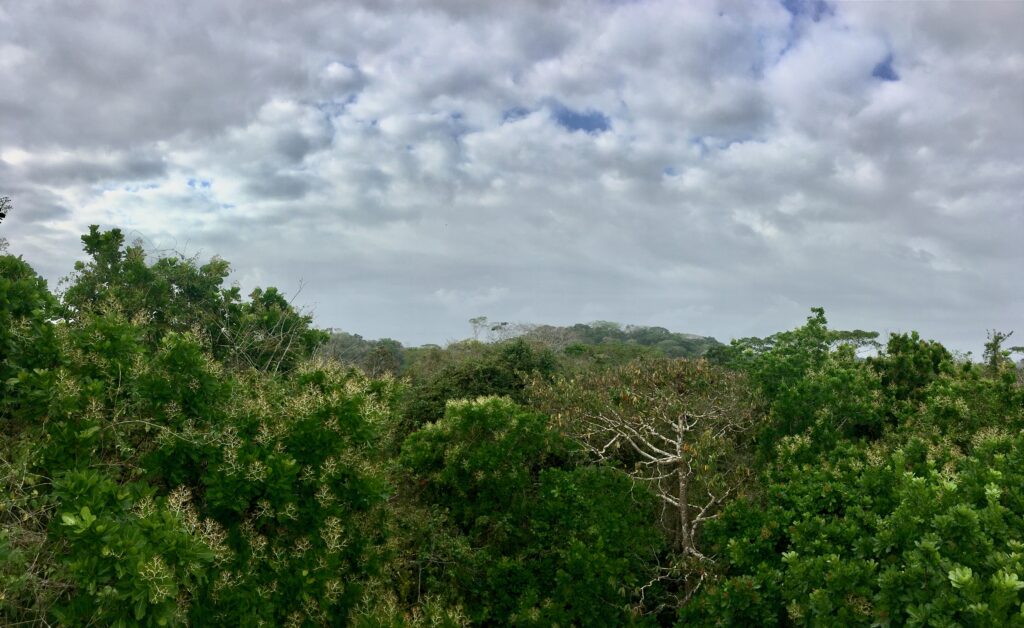
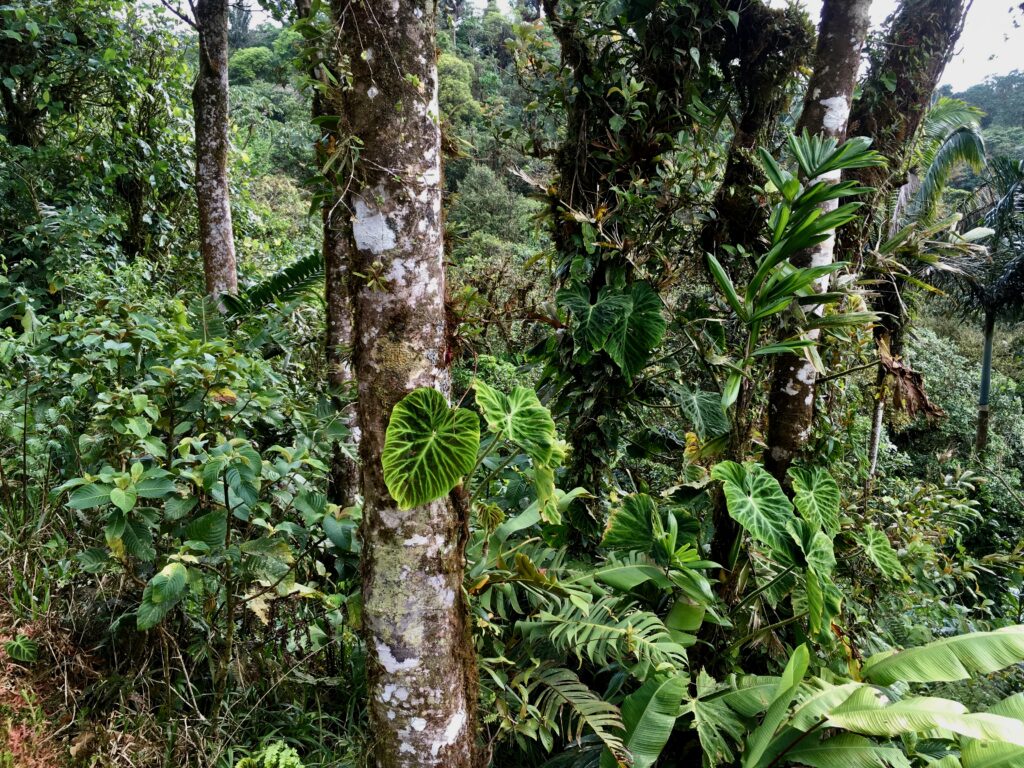
    On our excursions from Canopy Tower, we visited the Soberania National Park and the Rainforest Discovery Center among other locations. During our time along Pipeline Road and from the observation tower at the discovery centre, we saw some familiar birds and some that we had not encountered before.

    Ammo Ponds, Pipeline Road in Soberania National Park, and the view from the observation tower.

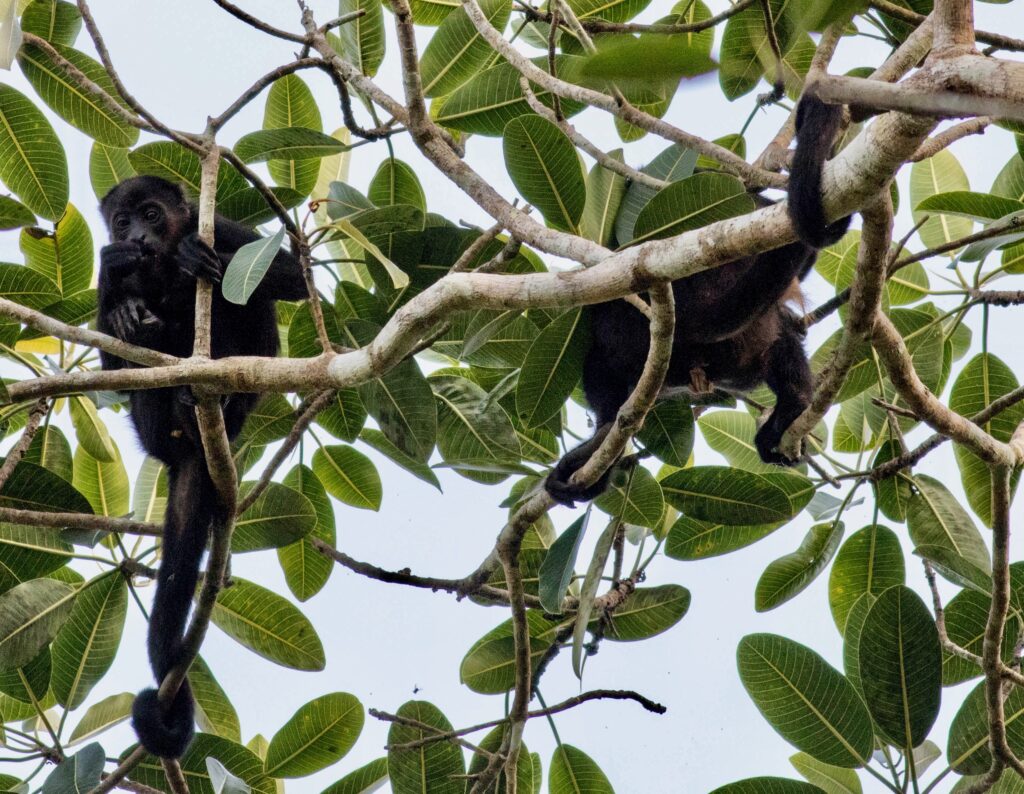
    From the tower, we saw many birds in the distance and a troop of Howler monkeys.

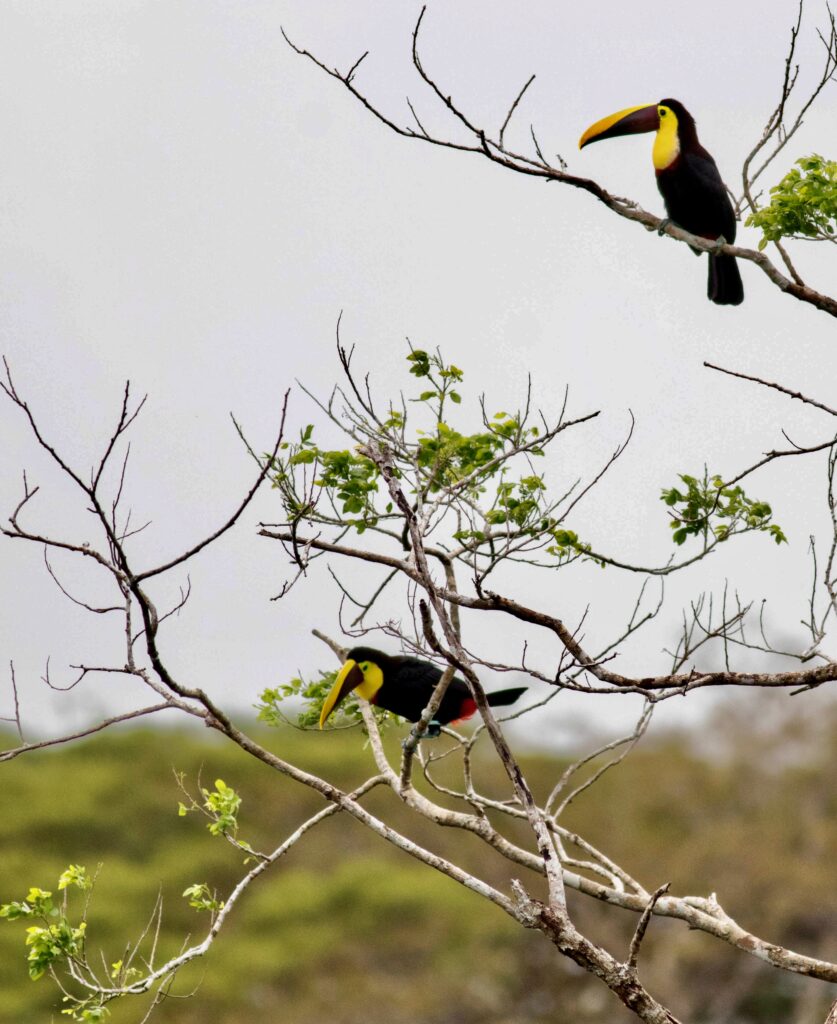
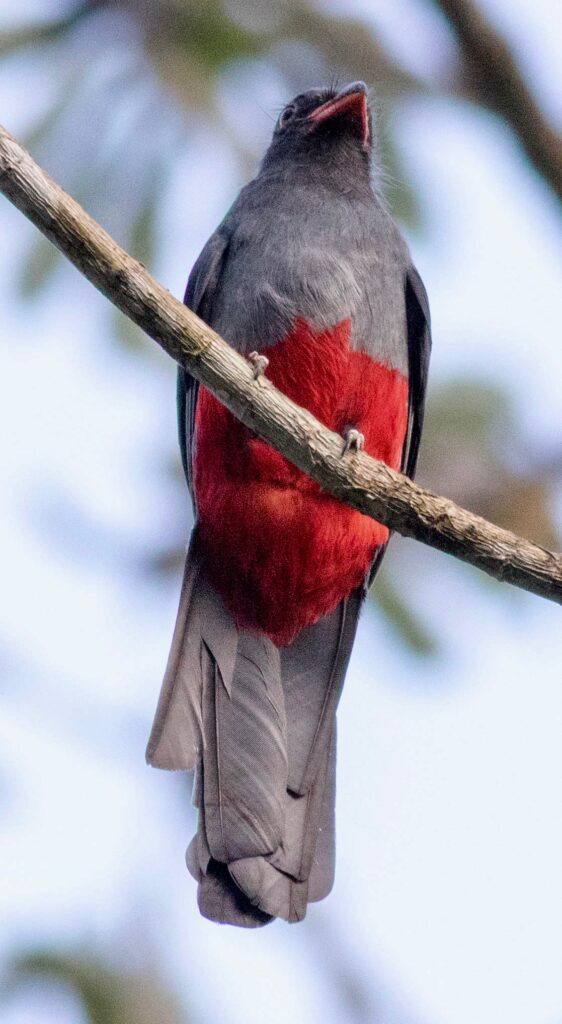
    Broad-billed Motmot, Olivaceous Flatbill, Spotted Antwren, Whooping Motmot, Slaty-tailed Trogon, Black-throated Trogon, White-whiskered Puffbird

    Golden-hooded Tanager, Blue-grey Tanagers

    Black-bellied Whistling Duck, Greater Ani, Rufescent Tiger Heron

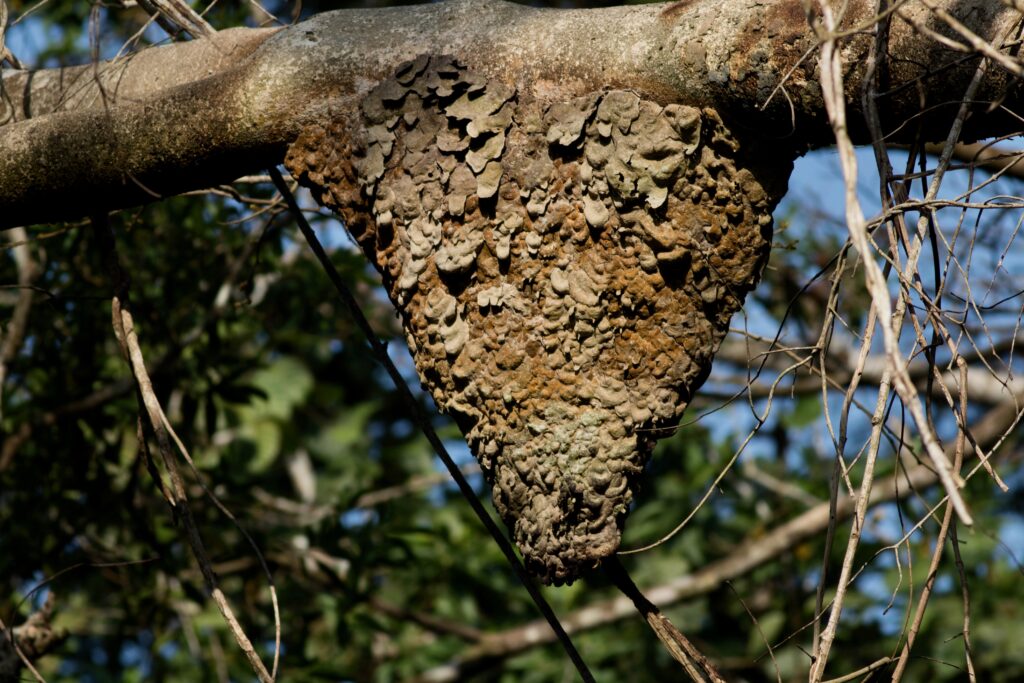
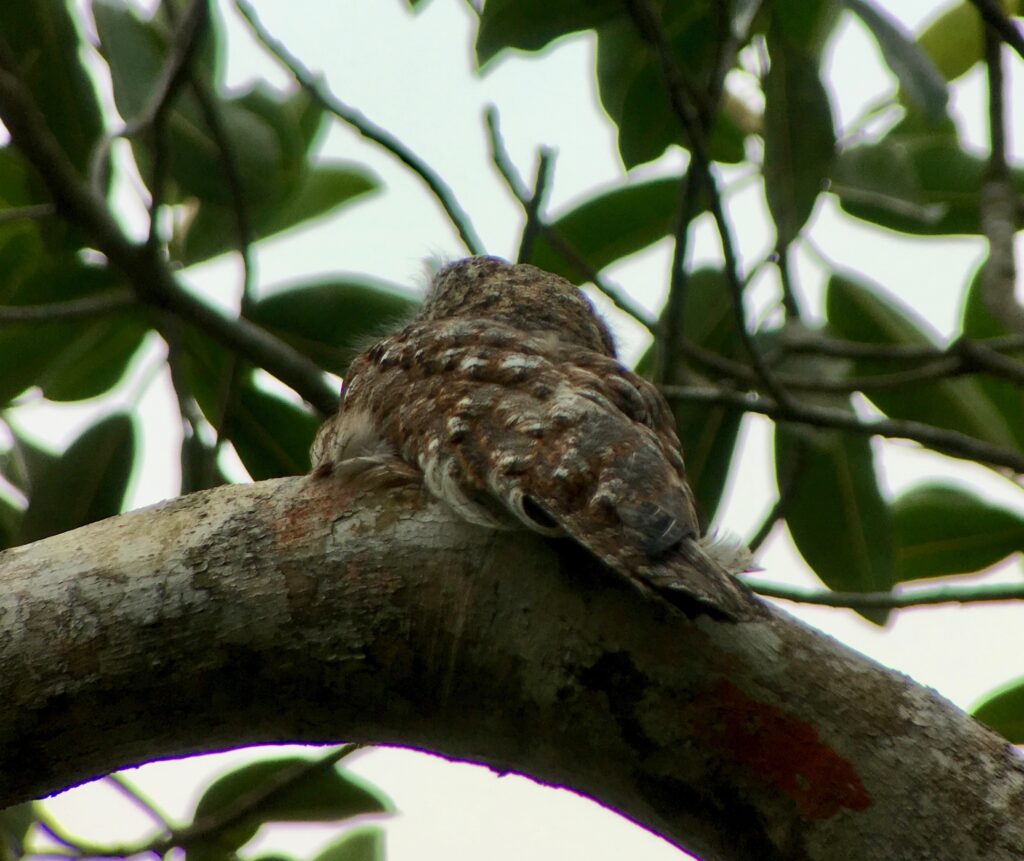
    On the left: a termite mound. On the right: a Great Potoo. The potoo is a nocturnal hunter that roosts during the day, staying motionless and blending in with its roosting site.

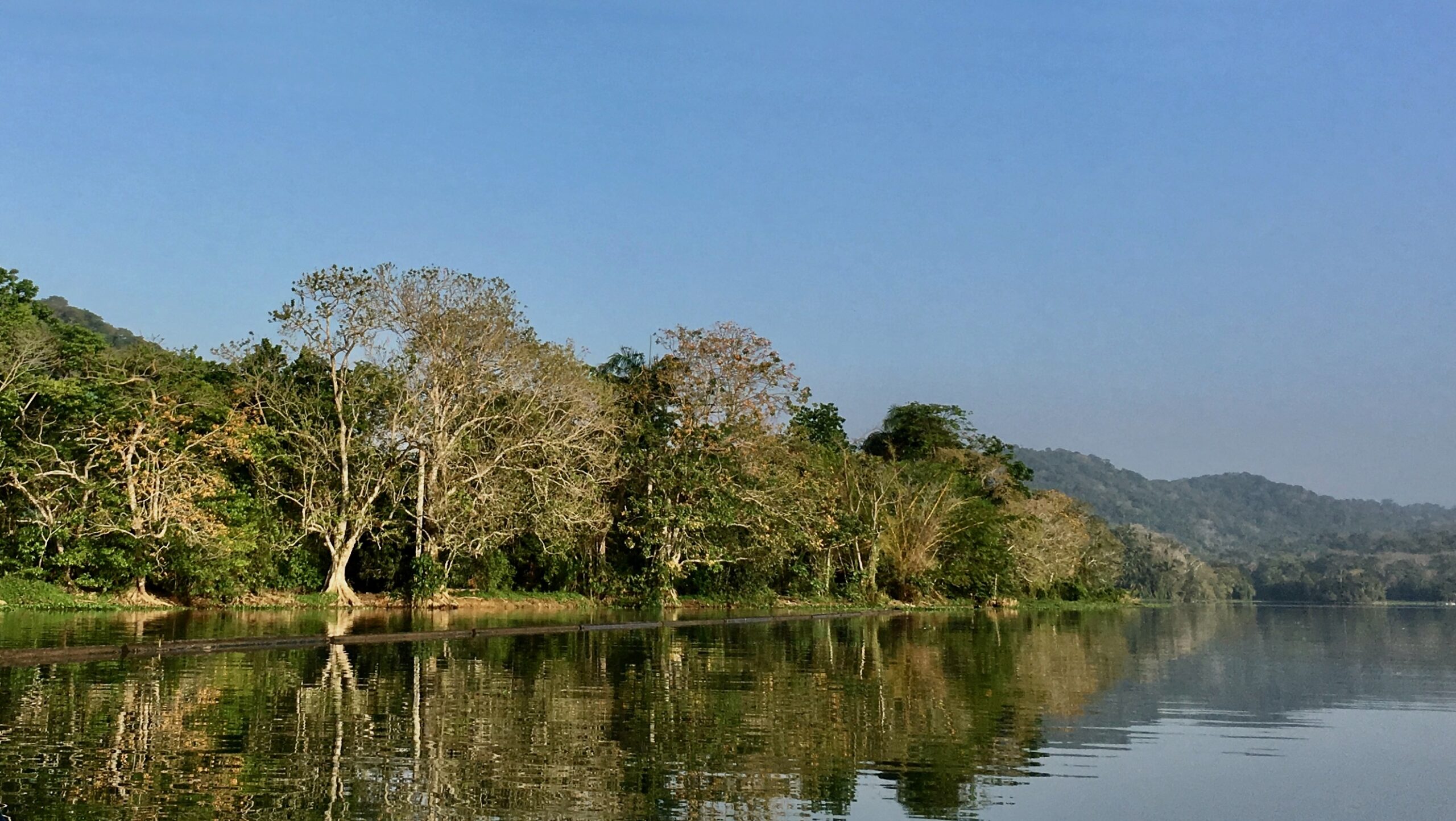
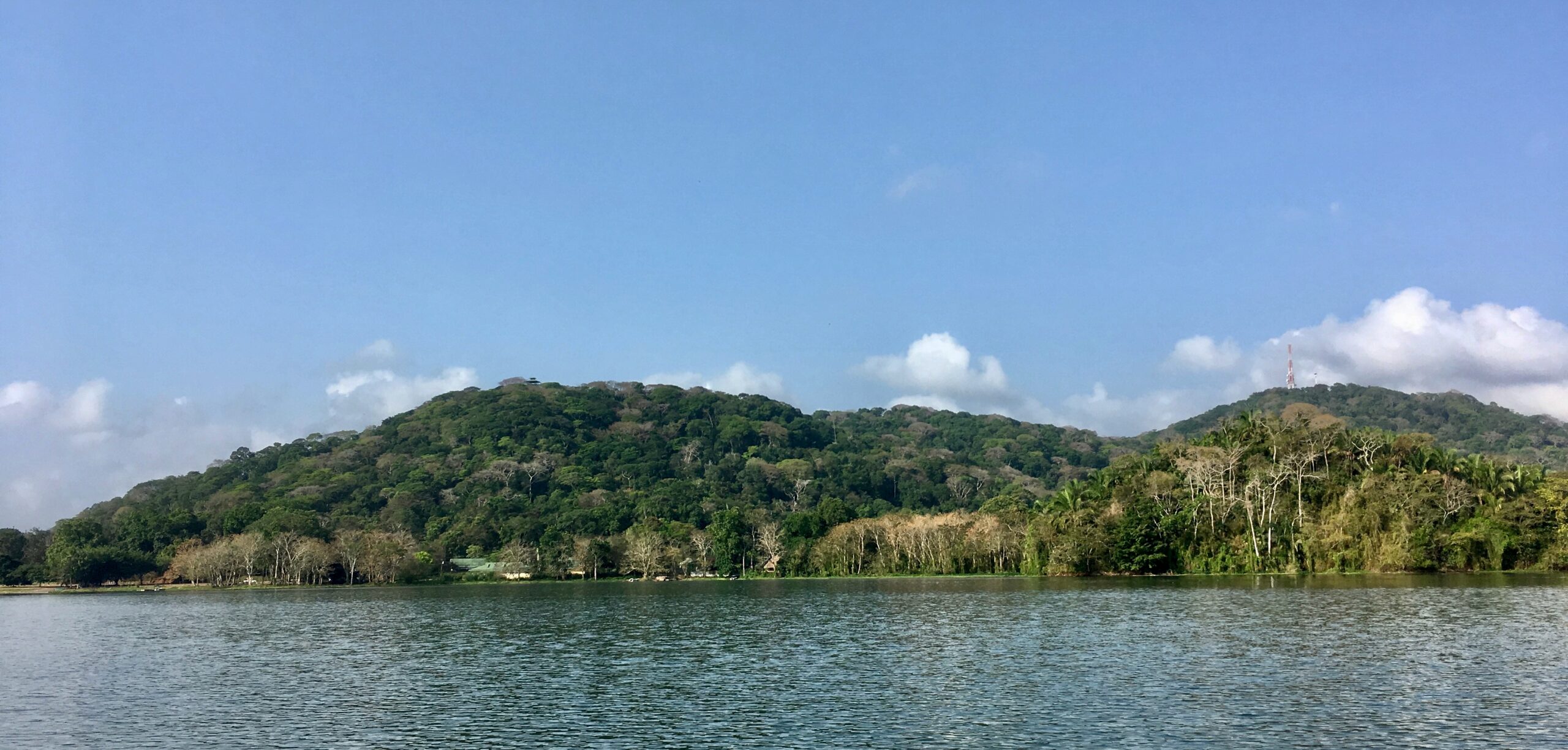
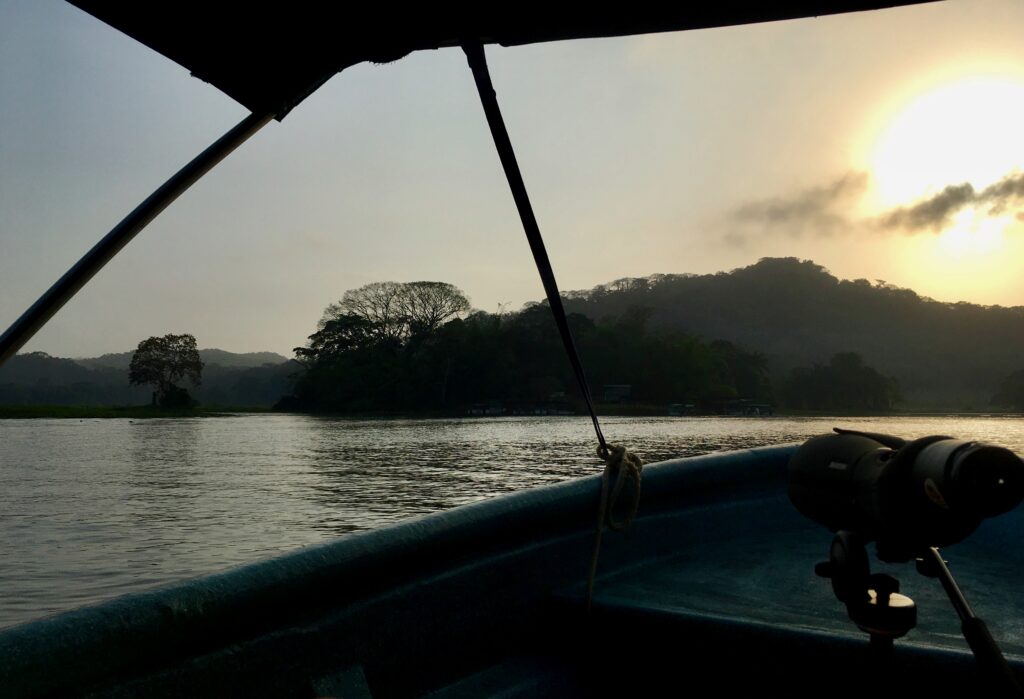
    Our most memorable outing from Canopy Tower was a morning spent on the Chagras River and Gatun Lake. Gatun Lake is a large man-made lake that forms part of the Panama Canal.

    Next time, we will take you along on the cruise.

    Happy Valentine’s Day

    The theme for this week is, of course, love. These are all versions of love songs that I am happy to listen to more than once. You can jump to the next song in the playlist at any time. I may have have missed some of your favourites.

  • Canopy Lodge to Canopy Tower

    Canopy Lodge to Canopy Tower

    Our weather continues to be variable, but largely inhospitable for walking far or seeing many birds.

    More Panama!

    February 14 was a short day for us, but one with the sighting of a remarkable bird, the Montezuma Oropendola. This bird is described by eBird as a “spectacular, very large ‘blackbird’ of tropical lowlands.” It is known for weaving nest sacks that hang down three feet or more from tree branches and for its gurgling song that sounds like water pouring from a bottle: https://ebird.org/species/monoro1

    Our final day at Canopy Lodge took us to Altos del Maria, a gated community high in the cloud forest. The clouds rose and descended throughout the day, presenting the usual photography challenges.

    Here are a few of the many birds we saw: Blue-crowned Motmot, Northern Emerald-Toucanet, Orange-bellied Trogon, Tufted Flycatcher, Clay-coloured Thrush, Broad-billed Motmot, Black-and-white Warbler, Great Kiskadee, Green-crowned Brilliant.

    There was so much else to see given the rich flora and fauna of the area.

    Owl and White Peacock butterflies

    Before we left Canopy Lodge on February 16, we were fortunate to see a colourful visitor to the fruit feeder, a Rufous Motmot. This bird is similar in colouring to the Broad-billed Motmot, but is a much larger bird.

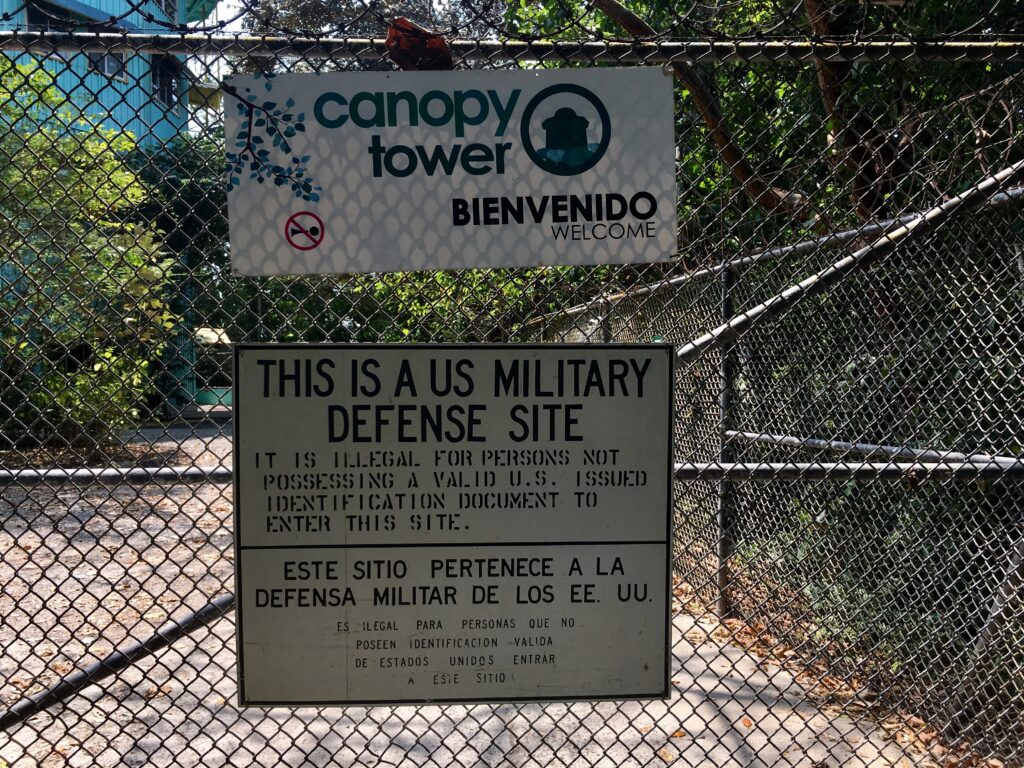
    Canopy Tower is located high on Semaphore Hill in the rainforest within Soberanía National Park, 35 miles north of Panamá City. The tower was formerly used by the U.S. as a radar station to monitor traffic along the Panama Canal.

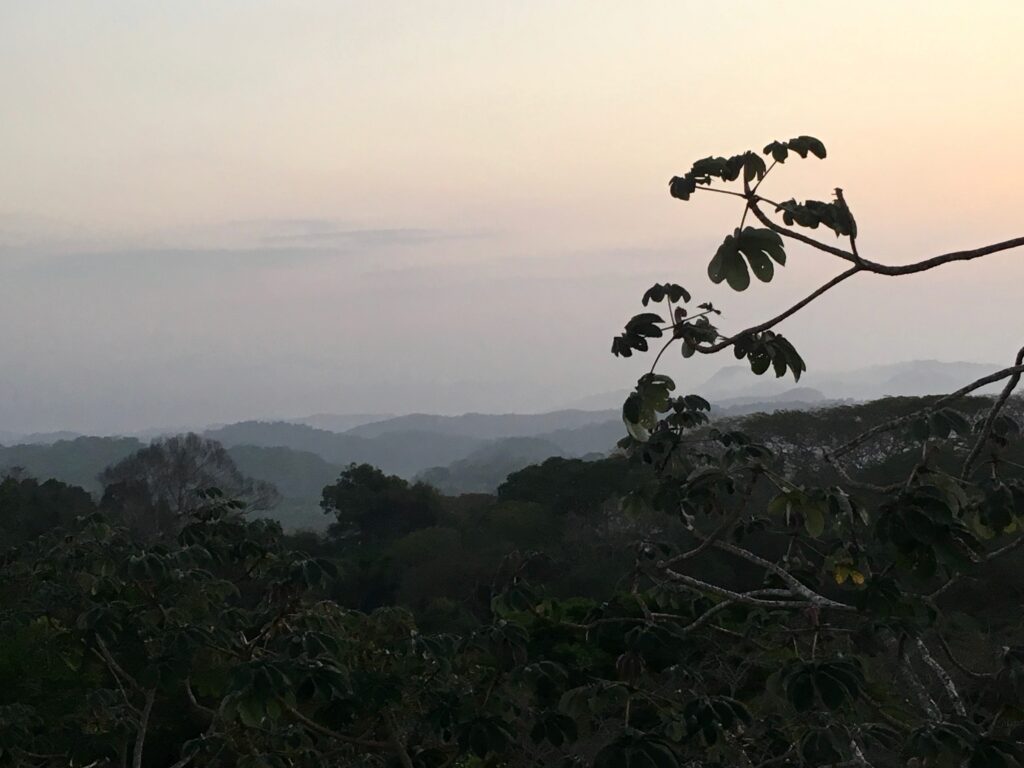
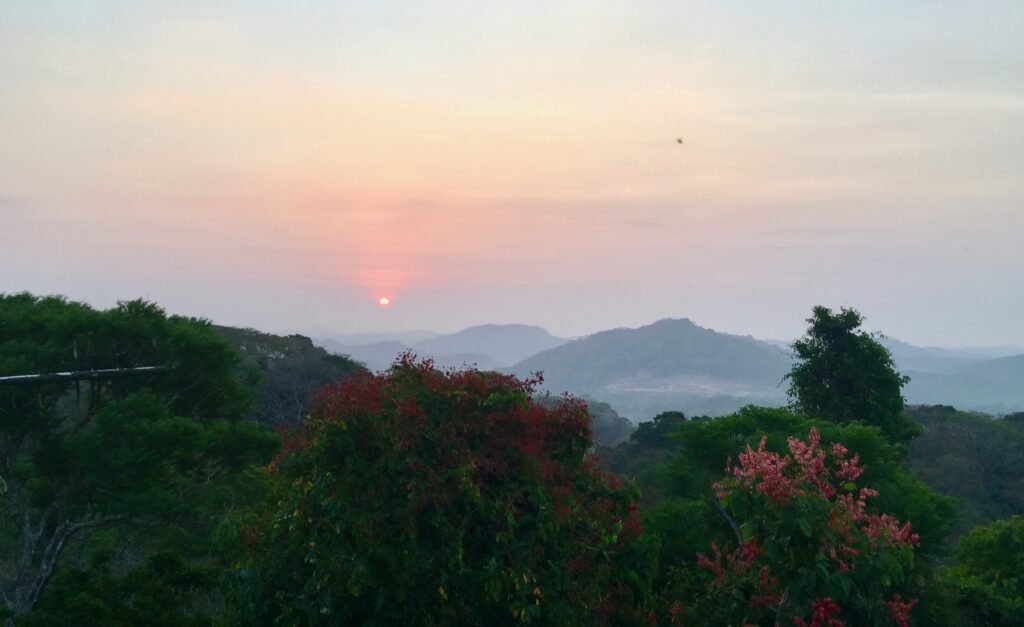
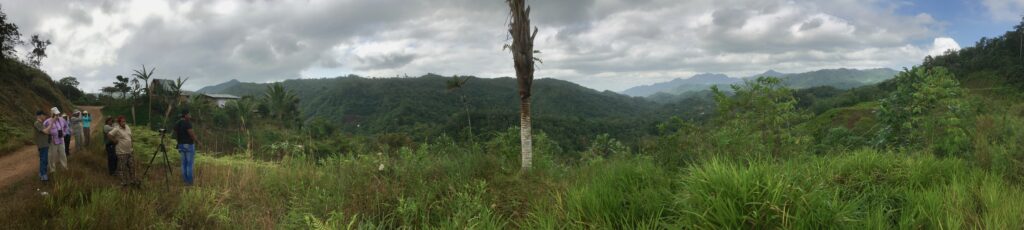
    There are panoramic views from the observation deck at the top of the tower.

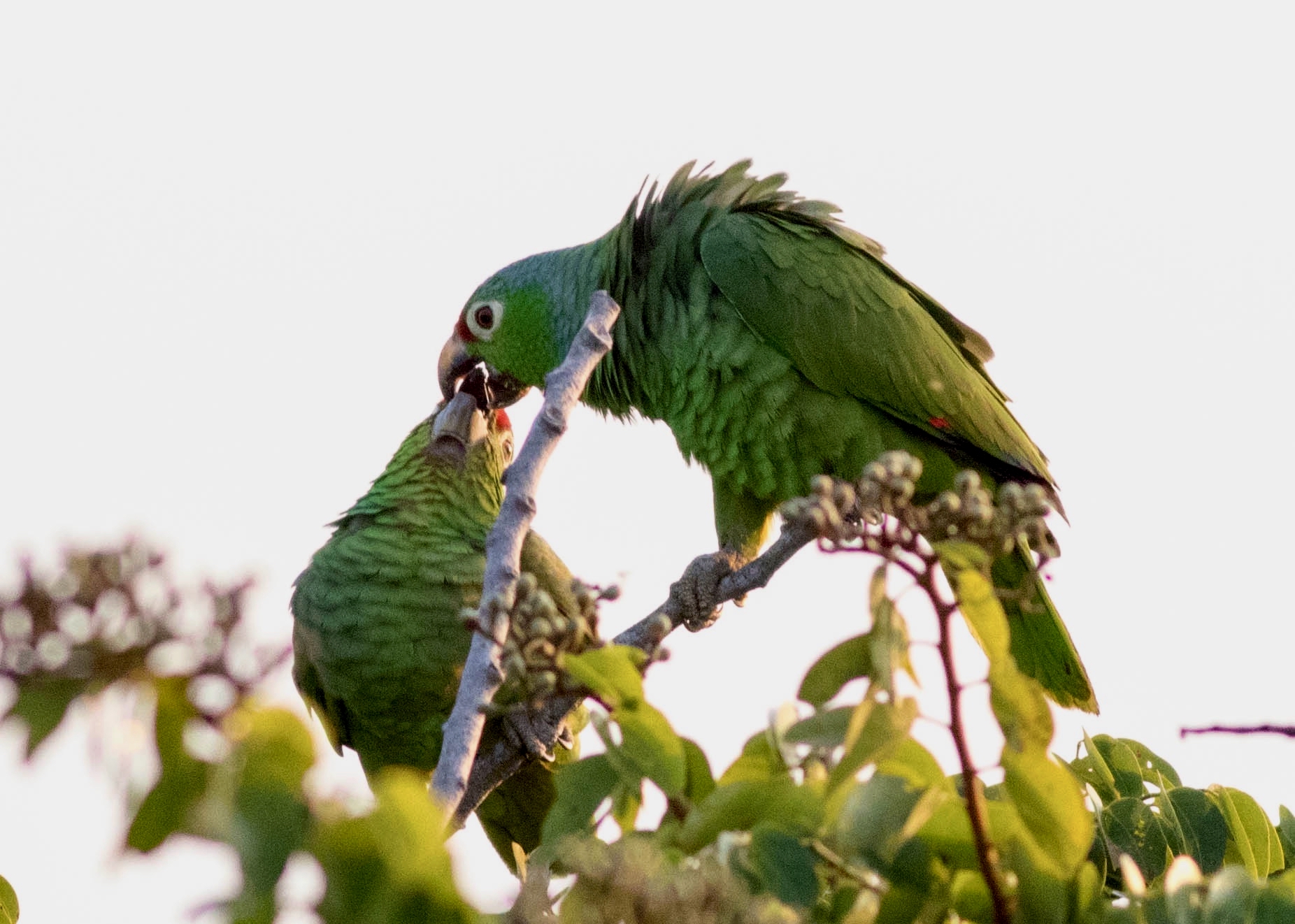
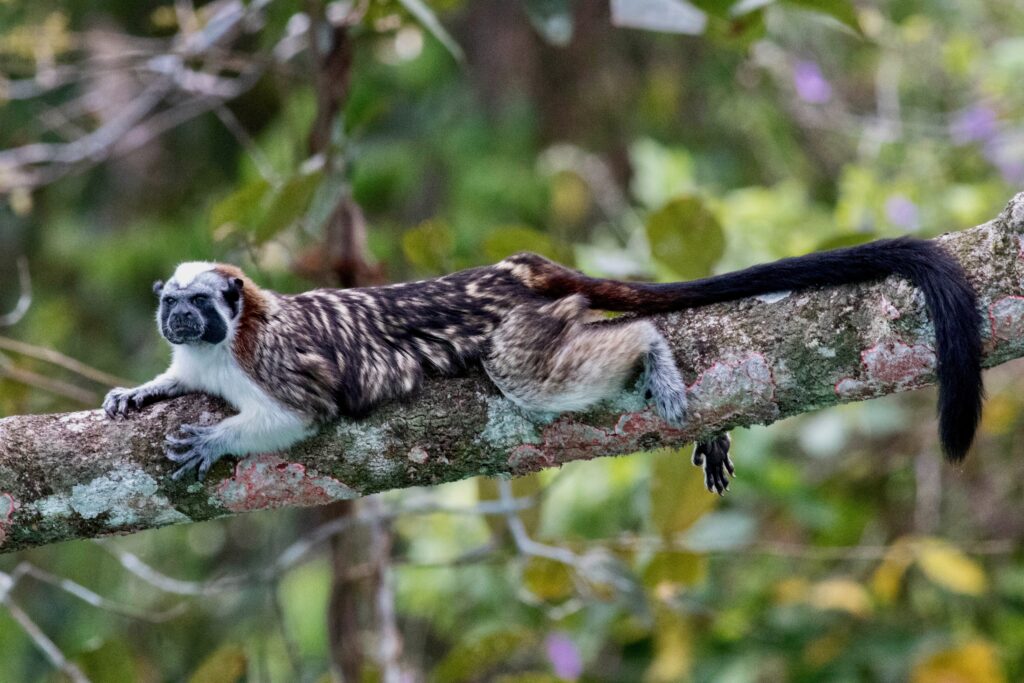
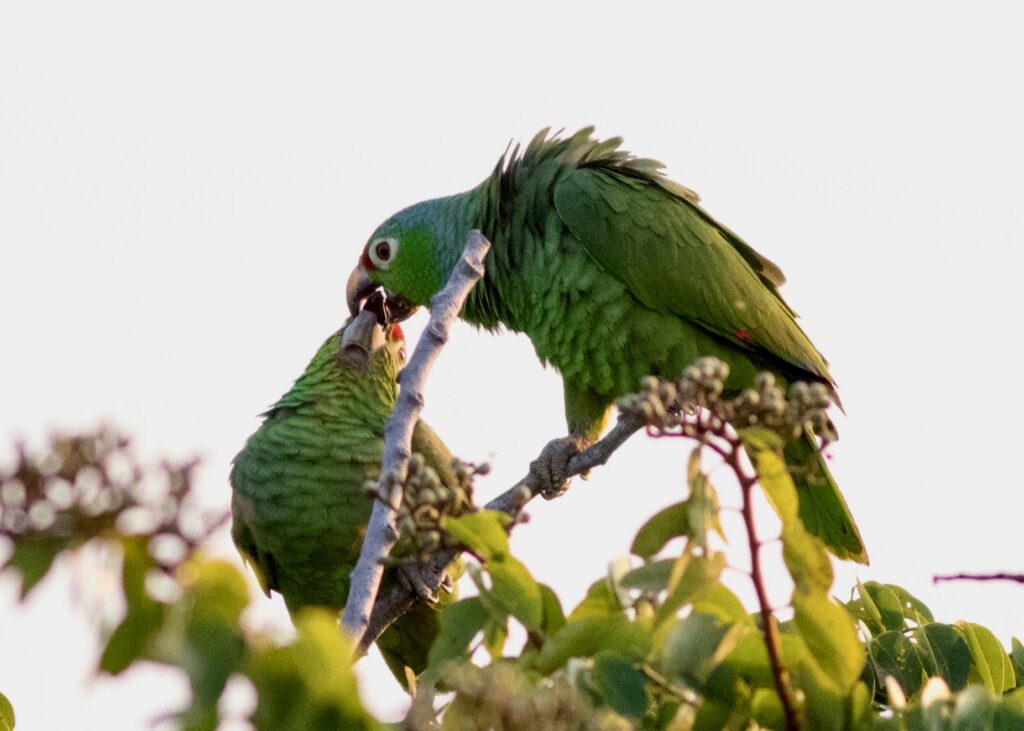
    Sometimes birds and other creatures are within closer view: Geoffroy’s Tamarin, Palm Tanager, Buff-throated Saltator, Red-lored Parrot.

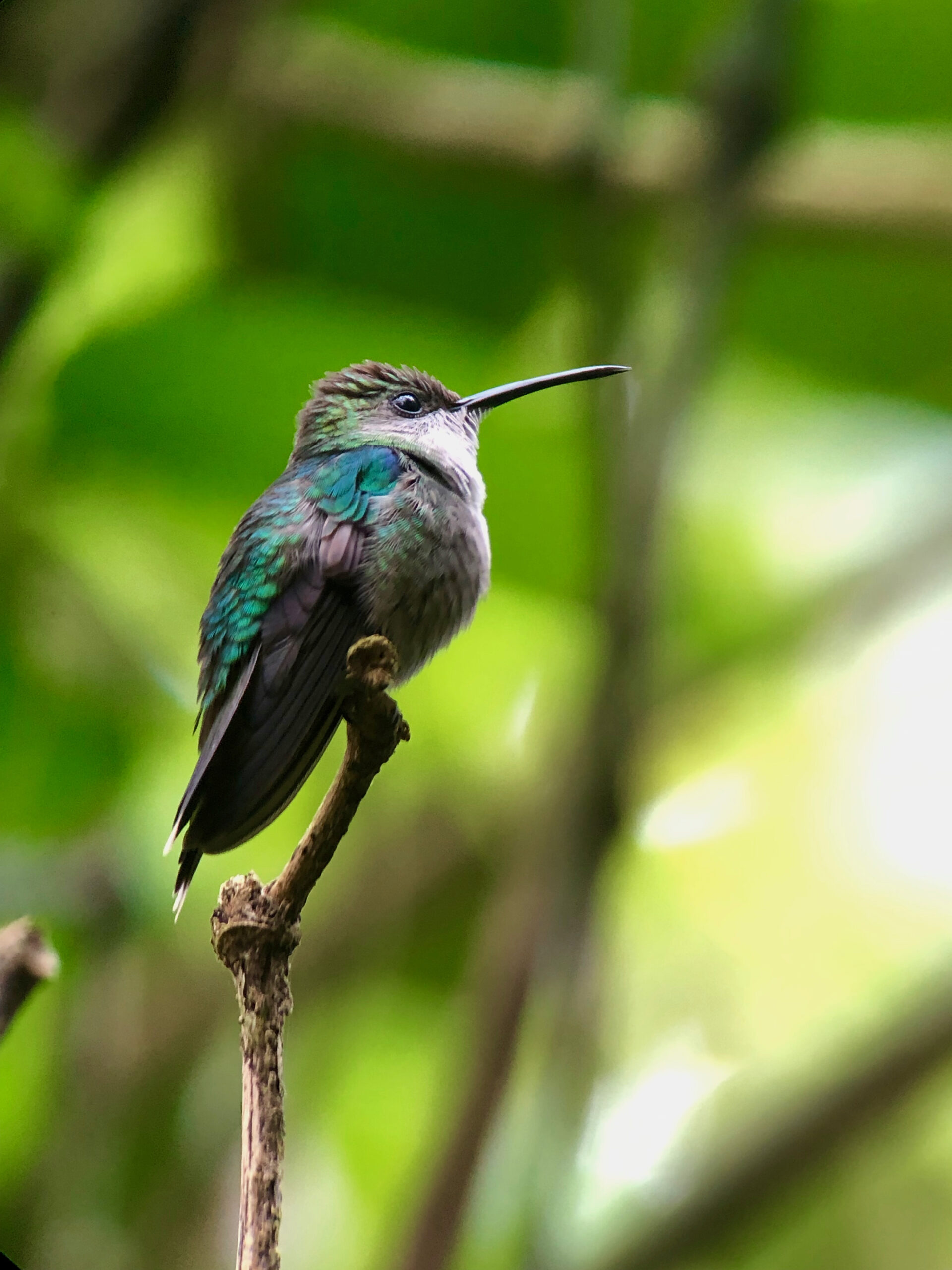
    Hummingbird feeders and blossoms around the property were also an attraction.

    Geoffroy’s Tamarins had learned to reel in bananas on a line from the dining room window that was near the top of the tower.

    We would have three days of excursions from the tower. More to look forward to!

    Orchids

    Our little bit of the tropics!

    Country Comfort

    The Netflix original sitcom Country Comfort brought a bit of down-home charm. Country Comfort stars Katharine McPhee as Bailey Hart, a down-and-out country singer who takes a job as a nanny for a cowboy widower. I kept waiting for other similarities with The Sound of Music. Throughout its 10 episodes, the series delivered consistent family-friendly laughs and allowed its multi-talented star to shine as both an actor and singer. The other cast members were a good match for the star.

    YouTube introduced me to this song. I was intrigued as to how this could be part of a story. Why was the singer frozen in place until the children collaborated on the start of the song? Was it their father or just the children at the end of the road for her? We never find out because the series was cancelled after 10 episodes. Beware of starting any Netflix series – they are not always continued.

    If you are not a fan of soap operas, you might still enjoy the musical numbers that were often part of the storyline.

  • A brief visit to Kilally Meadows followed by Canopy Lodge Revisited 2

    A brief visit to Kilally Meadows followed by Canopy Lodge Revisited 2

    Until late this week, we continued to have exceptionally cold weather, windy, overcast weather. Thursday, the sun was shining and the emperature rose to just below freezing. It was inviting us to go out!

    We spent a pleasant hour walking the trails at Kilally Meadows Environmentally Significant Area. There were few birds in evidence in the afternoon apart from a pair of Northern Cardinals and a small flock of Black-capped Chickadees near some open water in the woods and Canada Geese, Mallards and a lone Common Merganser on the river.

    Here are few photos and the view from our balcony through a frost-etched balcony panel./

    We are still reluctant to leave the warmth and colour of our Canopy Lodge stay in Panama!

    On February 12, our morning excursions took us to nearby venues with different habitats. The Lodge’s collaboration with local farmers meant that we sometimes traversed farmer’s fields to reach more heavily vegitated destinations, this time the Candelario Trail.

    Different habitats meant finding different bird species.

    Rufous-and-white Wren, Black-throated Trogon (f), Black-thoated Trogon (m), Crowned Woodnymph (f)

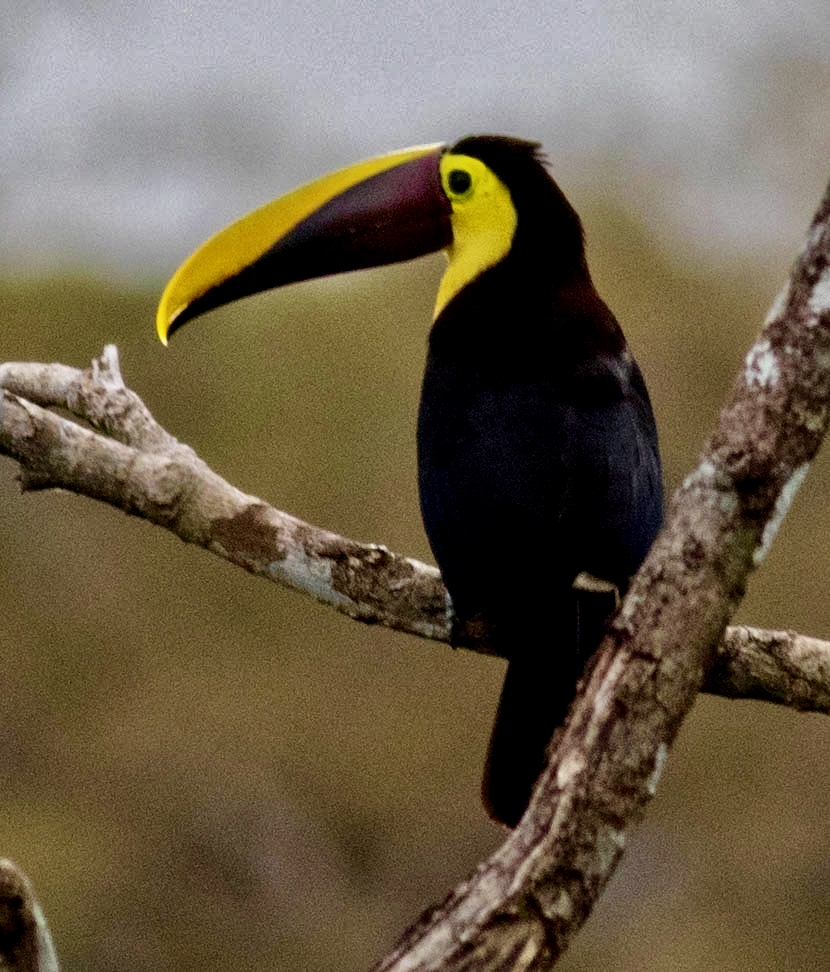
    Keel-billed Toucan, Flame-rumped Tanager (m), Roadside Hawk. Our guide used a spotting scope to show us roosting Tropical Screech-Owls. And yes, Roadside Hawks were typically seen perched along roadsides.

    At lunchtime, back at the lodge, this Chestnut-headed Oropendola visited the fruit feeder.

    The afternoon took us to quiet treed road, Via Chiquito. It yielded only a few good photos – Crimson-backed Tanager and Yellow-backed Oriole.

    On February 13, we headed out early on our way to the cloud forest. Found at higher elevations, cloud forests have frequent low-level cloud cover at the canopy level. According to Wikipedia, much of the precipitation in a cloud forest comes directly from the clouds that filter through the trees.

    Our route took us past road construction on the mountainside.

    The mist and distance sometimes made for challenging photography conditions, but we still saw a variety of birds: Barred Puffbird, Keel-billed Toucans, Rufous-capped Warbler, Black-cheeked Woodpecker, White-necked Jacobin.

    At our lunch stop, we found a few birds (and a butterfly) at closer range: Yellow-billed Cacique, Cocoa Woodcreeper, Fasciated Tiger-Heron, White-whiskered Puffbird. The butterfly is a type of swallowtail known as a a cattleheart.

    On our return journey, our highly accomplished guide, Danilo Sr., stopped at a location where Black Hawk-Eagles were sometimes sighted. Danilo whistled for several minutes in an attempt to attract the hawk-eagle. When the bird failed to appear, we trailed back to the van. Just as the last passenger was about to board, she spotted a soaring bird and asked if it might be the one we were looking for. Here was the Black Hawk-Eagle for all to see!

    Fascinating Bird Behaviour

    Click this link to another collection of photos from the Audubon Photo contest, this time featuring fascinating bird behaviour.

    Shania Twain

    I recently watched a documentary on the life and career of Shania.

    Here are some her songs and some of her covers in a playlist.